MOT Repair or Replace Your Car? Know When
An MOT failure can leave you asking one expensive question: MOT repair or replace car – which is the sensible move? If you need your vehicle for work, school runs or getting around Lowestoft, it is tempting to make a quick decision. But the right answer depends on the actual fault, the overall condition of the car and what you will realistically spend over the next year or two.
A failed MOT does not automatically mean the car is finished. We often see vehicles fail on brakes, tyres, suspension components, lights or emissions issues that can be repaired properly and give the car plenty of reliable life left. Equally, a list of failures may reveal that several major parts are reaching the end at once. That is when replacing the car may be worth serious consideration.
MOT repair or replace your car: start with the failure sheet
The MOT failure sheet tells you what has failed, what is advisory and whether the car has dangerous defects. It is a useful starting point, but it does not always tell the whole story. An advisory such as corrosion, oil leakage or worn suspension can range from minor to serious depending on where it is and how far it has progressed.
Start by separating immediate safety faults from future maintenance. Dangerous defects, such as badly worn tyres, ineffective brakes or insecure steering parts, need attention before the car is driven again. Major defects also mean the vehicle has failed and needs repair and a retest. Minor defects and advisories do not fail the MOT, but they should not be ignored simply because the certificate has been issued.
In most cases, the best next step is a proper inspection and diagnosis. A garage should explain what has caused the failure, what must be done now and what can reasonably wait. That stops you paying for work that does not solve the root problem.
When repairing your car makes sense
Repairing is often the better option when the MOT failure is limited to normal wear-and-tear items. Brake discs and pads, tyres, bulbs, wiper blades, drop links, springs and exhaust sections all have a working life. Replacing them does not necessarily mean the car is unreliable.
For example, a car may fail because a rear spring has snapped and the front brakes are worn close to the limit. Neither issue is unusual, especially on a vehicle used daily on local roads. Once repaired using quality parts, the car may be perfectly sound for several more years.
Repair is also usually sensible if the vehicle has been regularly serviced, starts easily, drives well and has no pattern of costly breakdowns. A clean service history does not guarantee trouble-free motoring, but it gives you a clearer picture of how the car has been looked after.
The value of the car matters, but it should not be the only deciding factor. Spending more on repairs than the car’s sale value can still make sense. Replacing a familiar car with an unknown used vehicle brings its own risk. You may spend money changing cars, then find the replacement needs tyres, servicing, brakes or a clutch soon afterwards.
Ask yourself a practical question: after these repairs, would you trust this car for the journeys you need to make? If the answer is yes and there are no bigger problems underneath, repair can be the lower-risk choice.
Faults that need a closer look
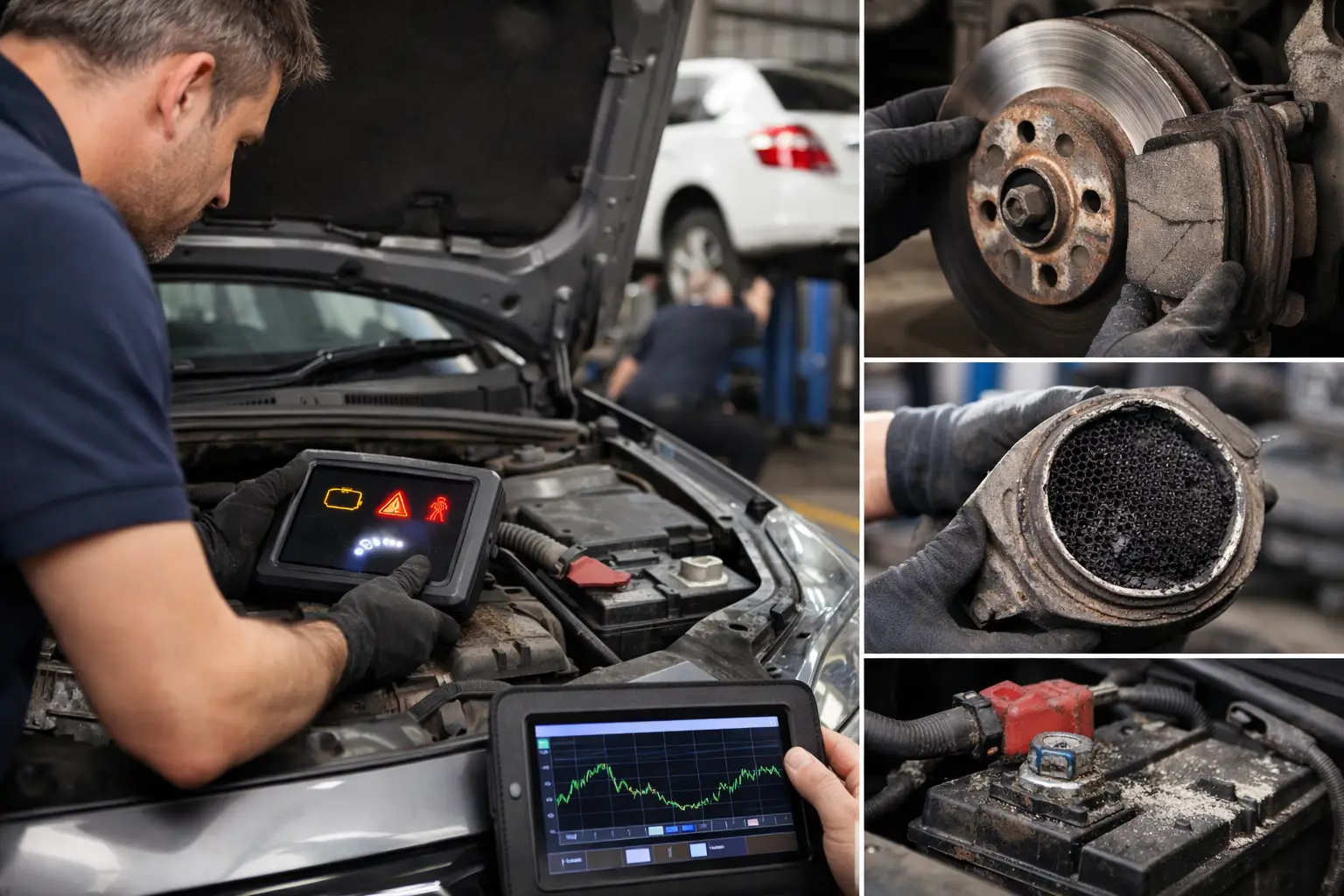
Some MOT failures are straightforward. Others point to a wider issue. A warning light, emissions failure or excessive smoke, for example, may be caused by something relatively simple such as a sensor fault, but it can also be linked to DPF problems, injector issues or poor engine performance.
Likewise, a brake failure may only need pads and discs. But if brake pipes are corroded, a caliper is sticking and the handbrake is weak, the full repair plan needs to be clear before you approve work. This is why guessing from an MOT sheet alone can lead to the wrong decision.
Signs replacing the car could be wiser
Replacing your car may be the sensible option when the MOT failure is part of a repeated pattern, rather than a one-off repair. If it has needed frequent work over the past year, regularly leaves you stranded or has several serious faults at the same time, the costs and disruption can soon outweigh the benefit of keeping it.
Structural corrosion is one of the biggest warning signs. Surface rust on a non-structural area may be manageable. Corrosion around suspension mounting points, seatbelt mountings, subframes or the main structure of the vehicle is different. Repairs can be extensive, and fresh corrosion may appear elsewhere later.
A major engine or gearbox fault also changes the calculation. Loss of power, persistent overheating, heavy oil use, clutch problems combined with gearbox noise, or repeated DPF and emissions faults can mean more than one repair is coming. It does not always mean replacement is essential, but it is a point where honest advice matters.
You should also consider whether the car still fits your needs. If it is too small for the family, unreliable for a long commute or becoming difficult to source parts for, putting more money into it may not be the best use of your budget.
Do not compare one repair bill with a replacement car price
A common mistake is seeing a repair estimate and comparing it only with the price of another used car. The real comparison is between keeping a car whose condition you understand and buying another vehicle with unknown history and possible faults.
Before deciding, factor in the cost of changing cars, insurance changes, tax, an initial service and any immediate repairs the replacement may need. A used car with a fresh MOT can still have advisories, worn components or problems that are not tested during an MOT.
On the other hand, do not keep spending simply because you have already spent money on the current car. Previous repairs are gone. The decision should be based on what needs doing now, what is likely to be needed next and whether the car will be dependable afterwards.
A clear inspection can help here. We can often tell whether a vehicle needs one contained repair or whether it has several age-related issues building up. That gives you facts to work with, not pressure to spend.
Get a repair plan before making the call
If your car has failed its MOT, ask for the faults to be explained in plain English. You need to know what is safety-critical, what is causing the problem and whether any related parts need checking. A good repair plan should set out the work required, the likely outcome and any advisories worth planning for.
For emissions faults, warning lights, limp mode or electrical problems, diagnostics should come before replacing parts. We often see this issue when a previous repair has treated the symptom rather than the cause. Fitting parts without confirming the fault can make an already frustrating MOT failure more expensive.
At AutoFix4u, the approach is simple: identify the fault properly, explain your options clearly and carry out the repair only when it makes sense. For drivers in Lowestoft and nearby areas, same-day help may be possible for straightforward MOT repairs, depending on parts and workshop availability.
What to do if your MOT has already expired
If the MOT has expired and the car has failed, do not use it for normal journeys. You may drive it to a pre-booked MOT test or to a pre-booked repair appointment, provided the vehicle is roadworthy and you are insured. If it has been marked with a dangerous defect, arranging recovery is usually the safer option.
Do not delay a brake, tyre, steering or suspension fault because the car still seems to drive normally. These problems can worsen quickly, and an MOT failure is often the first clear warning that a part is no longer safe.
The useful next step is not to assume the worst. Get the failure checked, ask for a clear repair plan and decide based on the condition of the whole car. If you are unsure whether repair is worthwhile, contact a local garage for honest diagnostics and a quote before committing to either option.


