Garage Recovery Versus Jump Start
You turn the key, press the start button, and get nothing but a slow crank or a click. At that point, most drivers ask the same thing – do I just need a jump start, or do I need proper help? That is where garage recovery versus jump start matters. One gets you moving again if the battery is simply flat. The other is often the safer option when the real fault is something deeper.
We see this a lot with local drivers who rely on one car for work, school runs, or daily errands. The mistake is assuming every non-start is just a dead battery. In most cases, it can be. But not always. If the wrong choice is made, you can lose more time, risk another breakdown, or even damage electrical components.
Garage recovery versus jump start – what is the difference?
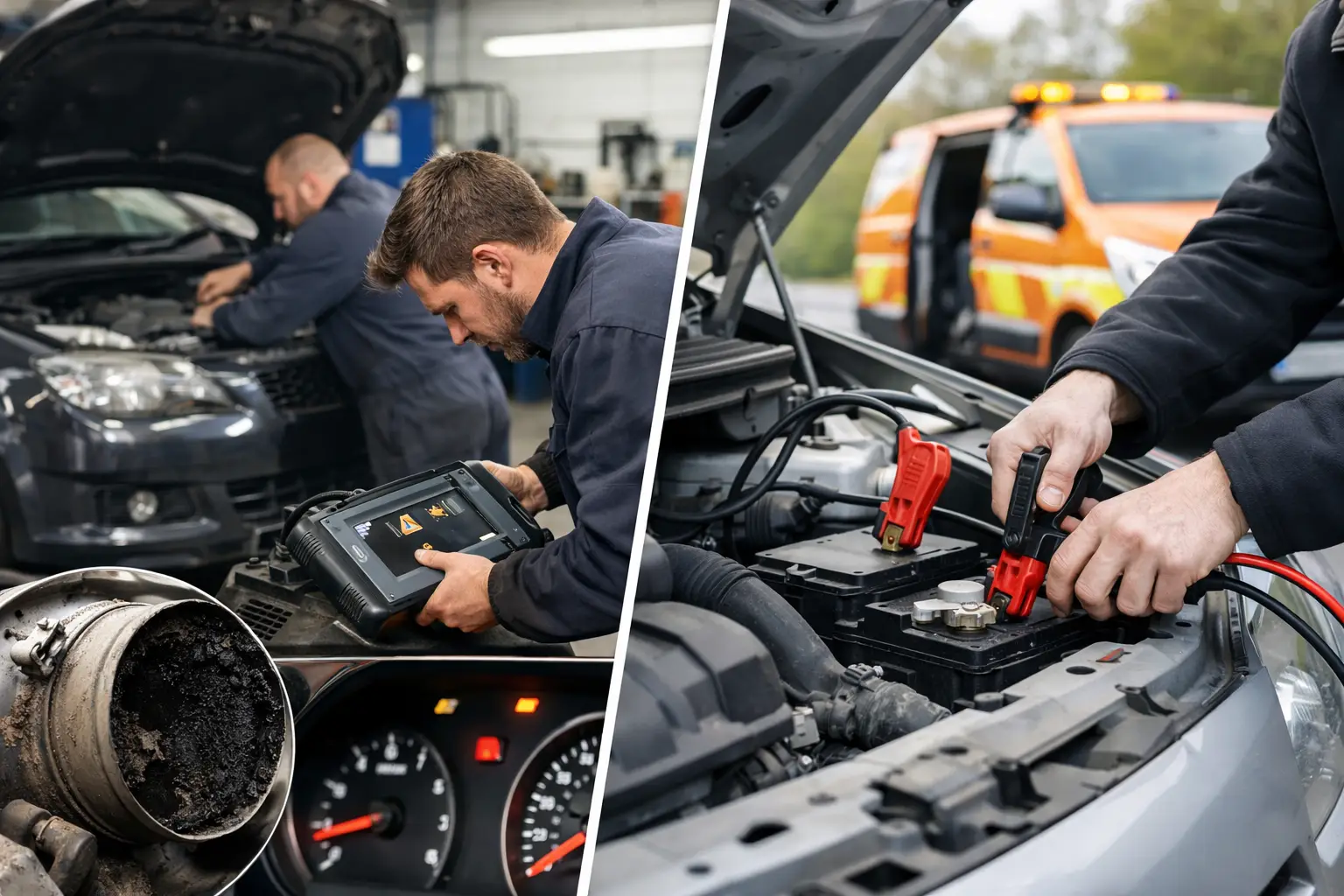
A jump start is exactly what it sounds like. It gives the battery enough power to start the engine, usually using jump leads or a booster pack. If the battery has gone flat because the lights were left on or the car has been sitting unused, this can be all that is needed.
Garage recovery is different. That is when the car is transported or brought in for proper inspection and repair because it is not safe, reliable, or sensible to just boost it and send it on its way. Recovery is usually the right choice if the car will not restart consistently, there are warning lights on the dash, or the battery problem looks more like a symptom than the cause.
A jump start solves the immediate problem. Recovery helps deal with the reason it happened.
When a jump start is usually enough
In straightforward cases, a jump start is the quickest answer. We often see this after cold weather, short journeys, or a car being left parked for several days. Batteries do not like sitting partially charged, and winter puts them under more strain.
If the engine starts normally once boosted, and there are no warning lights or obvious electrical faults, the car may simply need a battery recharge from a decent drive. Even then, that is not a guarantee the battery is healthy. A weak battery can take a jump start one day and fail again the next.
This usually happens because the battery is ageing, the car is doing too many short trips, or the charging system is not topping it up properly. If the car starts after a jump but seems sluggish again later, it needs testing rather than guesswork.
When recovery is the better option
Sometimes the car is telling you a jump start is not enough. If you have repeated flat batteries, dim lights, multiple warning lights, or the engine cuts out after starting, the problem may be with the alternator, starter motor, wiring, battery condition, or an electrical drain.
We often see this issue when drivers have already had one or two jump starts from friends or neighbours and the car still will not stay reliable. At that stage, carrying on with another boost usually just delays the proper fix.
Recovery also makes more sense if the vehicle is stuck somewhere unsafe, if you cannot access it properly, or if the fault is affecting more than just starting. For example, if the engine warning light is on, the car is in limp mode, or there is a strong smell, strange noise, or signs of overheating, it needs diagnosing before anyone recommends driving it.
The common causes behind a non-start
A flat battery is only one possible cause. That is why garage recovery versus jump start should always come back to the bigger question – why did the car not start in the first place?
In a working garage, the most common causes include a worn battery, poor battery connections, alternator failure, starter motor faults, parasitic drain from an electrical issue, and sometimes ignition or fuel system problems. Modern cars can also behave oddly when voltage drops. You may see dashboard messages, warning lights, radio issues, central locking faults, or stop-start problems.
Diesel vehicles can add another layer. In colder conditions, if the battery is already weak, the extra demand of starting a diesel engine can push it over the edge. Some drivers think the battery is the whole story, but the battery may just be exposing another fault.
Why repeated jump starts are a bad habit
There is nothing wrong with a jump start when it is used in the right situation. The problem is relying on them instead of fixing the cause.
If your car needs boosting every few days, that is not normal. It means the battery is not holding charge, the alternator is not charging properly, or something is draining power when the car is parked. We often find drivers have spent a week trying to manage the issue around work and family life, only for the car to fail completely at the worst time.
There is also the risk of incorrect jump starting. Poor connections, wrong sequence, or cheap leads can create more problems. On some vehicles, voltage spikes can upset sensitive electronics. That does not mean jump starting should be avoided altogether. It means it should be done properly, and the vehicle should be checked if the problem comes back.
How we look at it in the workshop
The practical way to handle this is simple. Start with the symptom, then confirm the cause.
If a vehicle comes in after a jump start, we do not just assume it needs a battery. We test battery condition, charging output, and the starting system. If needed, we also check for parasitic drain. That tells us whether the battery failed on its own or whether something else caused it.
This matters because replacing the battery without checking the charging system can waste your money. The same goes the other way round. An alternator can test fine, but an old battery may still collapse under load. Good diagnosis stops parts being fitted on guesswork.
That is usually the difference between a temporary fix and a reliable one.
Garage recovery versus jump start for everyday drivers
For most people, the decision comes down to risk and convenience. If you are at home, the car has simply been left standing, and there are no other warning signs, a jump start may be worth trying. If it starts, you should still keep an eye on it and get it checked if there is any doubt.
If you are on the roadside, late for work, stuck in a car park, or the car has failed more than once, recovery is often the smarter move. It avoids the cycle of restarting the car only for it to die again later. It also gets the problem looked at properly, which is what saves time in the long run.
This is especially true if you use your car every day. One breakdown can throw off the whole week. School run, commuting, shopping, appointments – everything starts depending on whether that engine fires up. In those cases, confidence matters as much as getting the car running once.
Signs you should stop trying to jump start it
There are a few clear warning signs. If the battery is flat again soon after a boost, stop there. If the dashboard lights flicker badly, the starter just clicks, or the engine starts and then stalls, it needs proper inspection. The same applies if there is a battery warning light while driving, as that often points to a charging fault rather than a flat battery alone.
You should also avoid repeated attempts if the terminals are corroded, the battery casing looks swollen, or there is any smell of burning. Those are not signs to ignore.
In most cases, one failed start is inconvenient. Repeated failed starts usually mean there is a fault behind it.
The best next step if your car will not start
If you are choosing between garage recovery versus jump start, think about what happened before the car failed. Was it left idle? Were the lights left on? Has it been slow to start for days? Are there warning lights? Has it already had a boost recently?
Those details matter. They help separate a one-off flat battery from a fault that needs workshop time. If you are not sure, that is usually your answer. Guessing with electrical faults can waste a lot of time.
For drivers around Lowestoft and the nearby area, the sensible option is to get the car assessed properly if the issue is repeated, unexplained, or urgent. A quick jump start can be useful. A proper diagnosis is what gets you back to reliable motoring.
If your car will not start and you need a clear answer, get in touch. We can advise whether it sounds like a simple battery issue or whether recovery and diagnostics are the better route. Better to sort the cause now than be stranded again next week.