
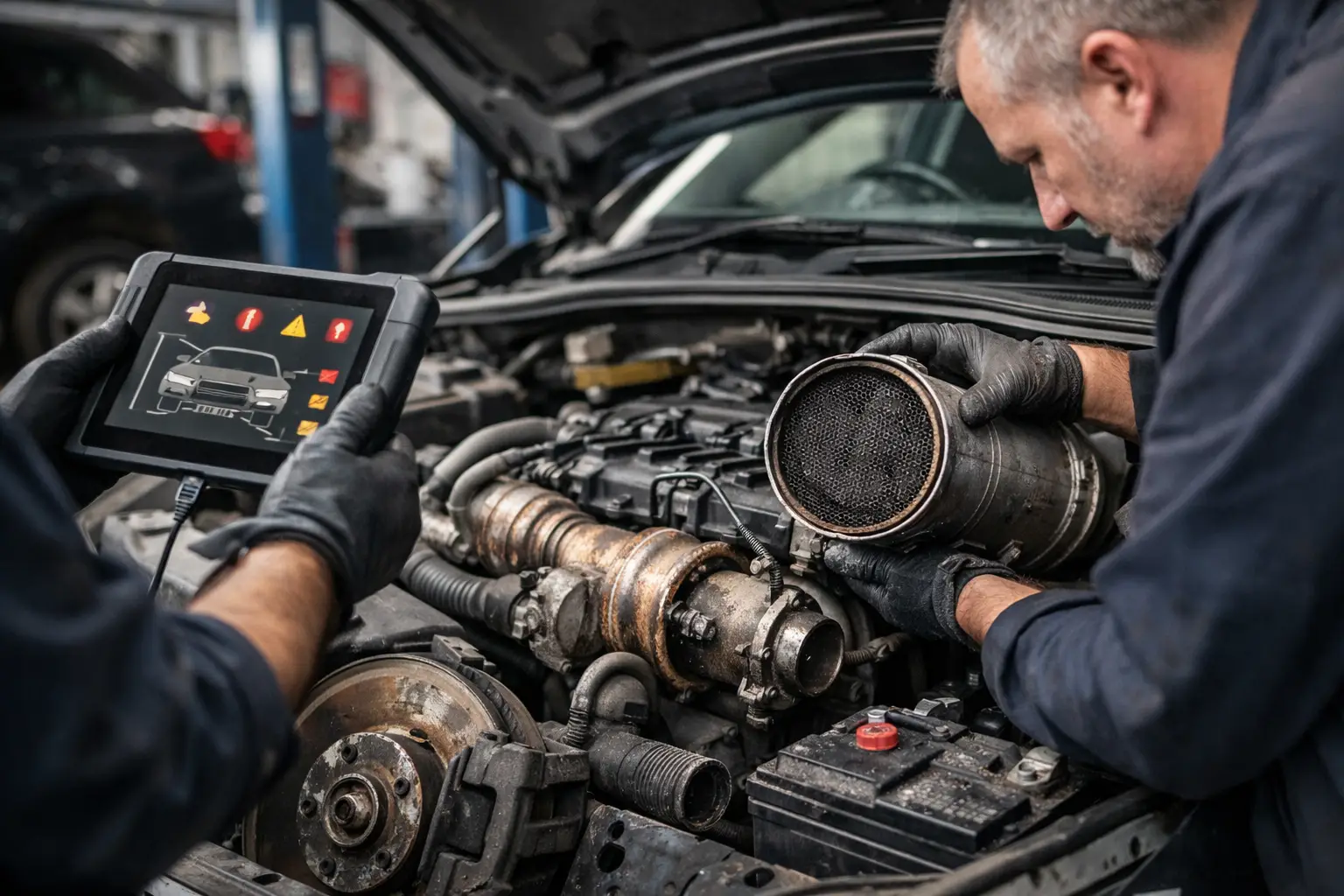
Diesel Power Loss Diagnosis Made Simple
You notice it on a hill first. The car still starts, still drives, but it feels flat. It struggles to pull, throttle response is slow, and sometimes the engine warning light comes on. That is usually when diesel power loss diagnosis becomes urgent, because a small fault can quickly turn into a breakdown, limp mode, or a repair bill that grows if you keep driving.
In most cases, loss of power in a diesel is not random. The engine is usually reacting to a fault somewhere in the air, fuel, emissions, or turbo system. Modern diesel vehicles are designed to protect themselves, so when something is not right, they often reduce performance rather than carry on as normal. That can feel frustrating, but it is also a warning sign worth taking seriously.
What diesel power loss usually feels like
Drivers describe this problem in different ways. Some say the car feels sluggish. Others say it will not go above a certain speed, struggles to accelerate, or suddenly drops into limp mode. You may also notice excess smoke, poor fuel economy, rough running, or a warning light on the dash.
We often see this issue when the car still seems usable, which is why people delay getting it checked. The trouble is that diesel faults tend to overlap. A blocked filter can affect turbo performance. A sensor fault can trigger limp mode. A fuel supply issue can feel like a gearbox problem. Proper diagnosis matters because guessing gets expensive very quickly.
Diesel power loss diagnosis starts with the symptoms
A good diesel power loss diagnosis is not about swapping parts and hoping for the best. It starts with the way the fault presents itself. When does the power drop happen? Is it worse under load? Does it come and go? Is there smoke? Has the engine warning light appeared? Has the car recently had a DPF warning or regeneration issue?
Those details matter because they point the testing in the right direction. If the fault happens mainly at higher speeds or uphill, that can suggest boost or fuel delivery problems. If it cuts power after a short drive and brings on limp mode, the emissions system or a sensor fault may be involved. If the engine is hard to start as well as lacking power, fuel pressure becomes more likely.
Common causes of diesel power loss
Blocked DPF
This is one of the most common causes on modern diesel cars. The diesel particulate filter traps soot, and when it gets too full, the engine cannot breathe properly. The car may try to regenerate, but if that process is interrupted too often by short journeys, the blockage gets worse.
This usually happens because the car is not getting the right driving conditions to clear the filter, or because another fault is preventing regeneration. In many cases, the driver notices reduced power, higher fuel use, cooling fans running on, or warning lights. Leave it too long and the car can go into limp mode.
Turbocharger or boost leaks
If the turbo is not building pressure properly, the engine will feel weak and slow to respond. That can be caused by a split hose, leaking intercooler pipe, sticking actuator, vacuum issue, or turbo wear.
A boost leak does not always make a dramatic noise. Sometimes the only real symptom is a lack of pull, especially when accelerating. In other cases, you may hear a hiss, notice smoke, or feel the power come and go.
Faulty air flow or boost sensors
Diesel engines rely on sensor data to control fueling and turbo operation. If the mass air flow sensor, boost pressure sensor, or another related sensor starts giving false readings, the engine management system may cut performance to protect the engine.
We often see this issue when there is no obvious mechanical failure, but the car still feels flat. A sensor problem can easily be misread as a bigger fault if no proper testing is done.
Fuel delivery problems
A diesel engine needs correct fuel pressure to perform properly. If the fuel filter is restricted, an injector is not working as it should, or the high-pressure system is struggling, the engine can lose power under load.
This fault may show up as hesitation, poor starting, rough idle, or lack of acceleration. Sometimes it is steady. Sometimes it only appears when you ask for more power, such as joining a dual carriageway or climbing a steep road.
EGR valve issues
The EGR valve recirculates exhaust gases to control emissions. When it sticks open or becomes heavily contaminated with carbon, it can upset airflow and cause sluggish performance, smoke, and hesitation.
This is common on vehicles used mainly for shorter trips. The symptoms can feel very similar to a DPF problem, which is why diagnosis needs to be based on testing, not assumptions.
Why warning lights and limp mode happen
When a diesel detects readings outside normal limits, it may restrict power to prevent damage. That is what drivers call limp mode. It is the vehicle’s way of saying something is wrong and needs attention now, not next month.
The engine warning light is often the first clue, but not always. Some faults store codes before any light appears. Others only trigger a warning under certain driving conditions. That is why a quick code scan on its own is not enough. Fault codes point you in a direction, but they do not always tell the full story.
How a proper diagnosis is carried out
Fault code reading is only the start
The first step is usually a diagnostic scan to see what faults are stored and what systems are affected. That helps narrow things down, but real diagnosis goes further than reading codes.
Live data is often the key. This lets a technician see what the engine is doing in real time – boost pressure, airflow readings, fuel pressure, DPF load, regeneration status, and sensor values. If a reading does not match what the engine should be doing, that is where the fault finding becomes clearer.
Physical checks matter as well
Not every problem is electronic. Split hoses, loose clips, vacuum leaks, blocked filters, and damaged wiring can all cause power loss. A proper inspection under the bonnet and underneath the vehicle is often what confirms the issue.
In some cases, the root cause is obvious once tested. In others, it takes a bit more time to rule out one system after another. That is still better than replacing parts blindly and hoping the fault disappears.
Can you keep driving with diesel power loss?
It depends on the cause and how severe it is. If the vehicle has suddenly gone into limp mode, is smoking heavily, or is struggling badly, it is best not to keep pushing it. Driving with a blocked DPF, failing turbo, or fuel pressure issue can make the problem worse.
If the power loss is mild and there are no warning lights, the car may still be drivable for a short time, but that does not mean the fault is harmless. Diesel systems are closely linked. One problem often puts strain on something else. Getting it checked early is usually the cheaper option.
When to book diesel power loss diagnosis
If the car feels noticeably weaker than normal, do not wait for it to break down completely. Book diesel power loss diagnosis if you have reduced acceleration, limp mode, warning lights, repeated DPF issues, excessive smoke, or the car struggles under load.
For drivers around Lowestoft, Oulton Broad, Carlton Colville, Beccles and nearby areas, this is the sort of fault that is worth sorting quickly. A daily-use vehicle that cannot accelerate properly is not just inconvenient – it can become unreliable and unsafe in traffic.
At AutoFix4u, the focus is on finding the actual cause, explaining it in plain English, and giving you a clear repair plan with no surprise extras. Same-day diagnostic slots may be available depending on workload, and in many cases the fix is more straightforward than drivers expect.
What to do next
If your diesel has lost power, feels flat, or has dropped into limp mode, the best next step is to stop guessing and get it tested properly. The sooner the fault is identified, the better the chance of avoiding a bigger repair.
Call now, book a diagnostic check, and get a clear answer on what is causing the problem. A diesel that is down on power rarely fixes itself, but it often can be sorted quickly once the right fault has been found.


2 thoughts on “Diesel Power Loss Diagnosis Made Simple”