Diesel Power Loss Example and What Causes It
You are joining a dual carriageway, press the accelerator, and the car simply will not pick up speed. It may struggle past 40 or 50 mph, feel flat going uphill, or bring on the engine warning light. This diesel power loss example is one we see regularly in the workshop, and it is usually the car protecting itself from a fault rather than the engine suddenly being beyond repair.
The key is not to guess at the part causing it. A loss of power can come from an air, fuel, emissions or sensor issue, and several of those faults produce very similar symptoms. Proper diagnostics find the cause before money is spent on parts the vehicle does not need.
A typical diesel power loss example
A common situation is a diesel car that drives normally around town but loses power when accelerating hard or climbing a hill. The engine warning light may come on and the vehicle can feel as though the turbo has stopped working. After switching the ignition off and back on, it may drive better for a short time.
In most cases, that points to limp mode. The engine control unit has detected a reading outside its safe operating range, such as incorrect turbo pressure or restricted exhaust flow. It limits power to reduce the risk of further damage.
Limp mode is a symptom, not a diagnosis. Restarting the car may temporarily clear the restriction, but the stored fault code remains and the underlying problem is still there. If it returns, it needs checking properly.
What usually causes diesel power loss?
A blocked or overloaded DPF
The diesel particulate filter, usually called the DPF, traps soot from the exhaust. It is designed to burn that soot off during a regeneration cycle, normally when the engine is fully warm and the vehicle has a steady run.
We often see DPF problems on cars used mainly for short local journeys. The engine does not get enough time at temperature to complete a regeneration. As soot builds up, exhaust flow becomes restricted and the car may lose power, enter limp mode or show a DPF or engine warning light.
A forced regeneration or professional DPF cleaning can help in the right circumstances. It depends on how blocked the filter is and why it became blocked in the first place. If a faulty sensor, EGR valve or boost problem has caused excess soot, cleaning the DPF alone may only provide a short-term fix.
A split turbo hose or boost leak
Diesel engines rely on pressurised air from the turbocharger. A split hose, loose connection or damaged intercooler pipe lets that air escape before it reaches the engine.
The result is often a noticeable hiss under acceleration, black smoke from the exhaust, poor pulling power and sometimes an engine warning light. A small split can be difficult to spot without inspection, especially where hoses are tucked behind covers or low down in the engine bay.
This is one reason a quick visual check is useful, but it should not be the end of the job. We check the pipework, connections and live sensor readings to confirm whether the boost pressure is actually reaching the level the engine expects.
EGR valve problems
The EGR valve recirculates a controlled amount of exhaust gas back into the engine to reduce emissions. Over time, soot can cause it to stick open, stick closed or move sluggishly.
If it sticks in the wrong position, the engine gets the wrong mix of air and exhaust gas. The car may hesitate, run unevenly at low revs, smoke more than usual or feel weak when you ask it to accelerate. It can also contribute to DPF loading because the engine is not burning as cleanly as it should.
Sometimes an EGR valve can be cleaned and tested. Other times, replacement is the sensible repair. The right answer depends on its condition and the fault information, not just the warning light.
Faulty air or pressure sensors
Modern diesels use sensors to measure airflow, turbo pressure and exhaust pressure. If one sends inaccurate information, the engine control unit may cut power as a precaution.
A mass airflow sensor fault, for example, can make the car feel sluggish without an obvious mechanical noise. A DPF pressure sensor can wrongly suggest that the filter is blocked. Replacing sensors on suspicion is a costly way to work, so we compare fault codes with live data and physical checks before recommending a repair.
Fuel supply issues
A restricted fuel filter, contaminated fuel, injector fault or low fuel pressure can also cause a diesel to lose power. These faults may be more noticeable under load, when the engine needs more fuel.
You may notice rough starting, uneven running, hesitation or a longer crank before the engine fires. Fuel system work needs careful testing. Diesel fuel systems operate at high pressure, so this is not a job for trial-and-error repairs at home.
Why fault codes do not tell the whole story
A basic code reader can be helpful, but the code is often a clue rather than a final answer. For example, a turbo underboost code does not automatically mean the turbocharger has failed. It could be a split hose, a vacuum control issue, a sticking actuator or a sensor reading incorrectly.
Likewise, a DPF-related code does not always mean the DPF itself needs replacing. The filter may be loaded because the car has been used for short runs, but it may also be responding to another fault further up the system.
This is where a diagnostic-first approach saves time. At AutoFix4u, we read the stored faults, check the live operating data, inspect the relevant components and then explain what has failed in plain English. You get a clear repair plan and transparent pricing before work goes ahead.
Can you keep driving with reduced diesel power?
It depends on the symptoms. If the vehicle is in limp mode but running smoothly, you may be able to drive carefully to a local garage. Avoid hard acceleration, heavy loads and long high-speed journeys until it has been checked.
Do not continue driving if there is excessive smoke, a strong burning smell, overheating, loud turbo noise, severe misfiring or a flashing warning light. Pull over safely and arrange assistance. Pushing on can turn a hose, sensor or DPF fault into a much larger repair.
If the car loses power while overtaking, joining fast traffic or towing, treat it as a safety issue. Reduced performance leaves less margin to react, even if the engine still runs.
What happens during diesel power loss diagnostics?
A proper check starts with how the problem happened. Does it only occur at motorway speed? Is it worse on hills? Did it start after lots of short trips? Has the DPF warning light appeared, or does the problem disappear after a restart? Those details help narrow the search.
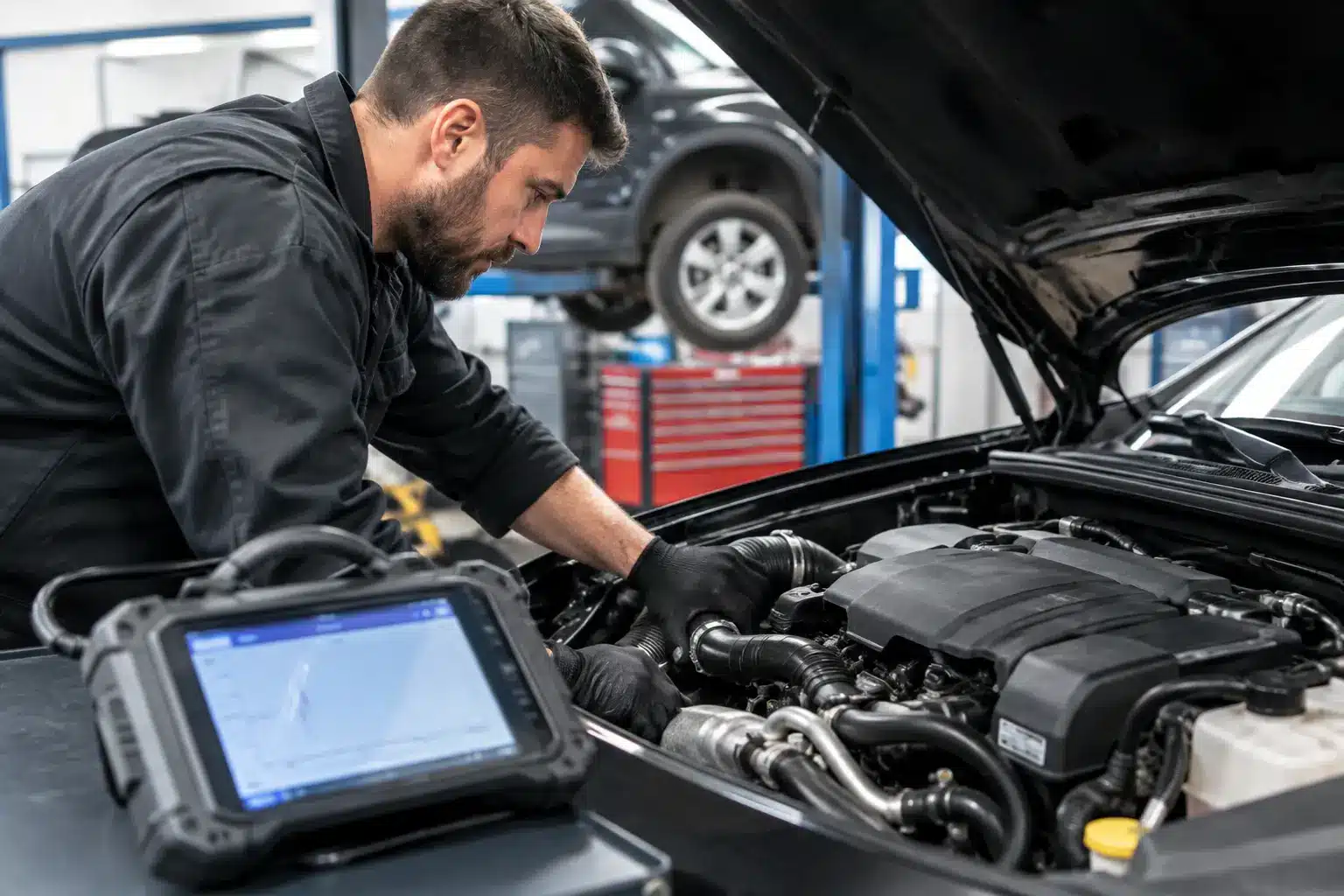
We then scan the vehicle for stored fault codes and look at live readings such as requested versus actual turbo pressure, airflow, DPF soot level and pressure readings. The engine bay and boost pipes are inspected for leaks, damage and loose connections. If the evidence points to a DPF issue, we assess whether regeneration, cleaning or another repair is appropriate.
The aim is simple: identify the root cause, explain it clearly and fix the issue for long-term reliability. There is little value in clearing a warning light if it is likely to return on the next journey.
Get the loss of power checked before it becomes a breakdown
A diesel that feels weak is giving you an early warning. It may be something straightforward, such as a damaged hose or service item, but it can also be the first sign of a DPF, EGR or fuel-system problem that will worsen if ignored.
If you are in Lowestoft or nearby and your diesel has gone into limp mode, lost acceleration or brought on an engine warning light, book a diagnostic check. Same-day slots may be available, and we will give you honest recommendations, clear pricing and no surprise extras. Getting the cause confirmed now is usually far easier than dealing with a non-start or breakdown later.


