
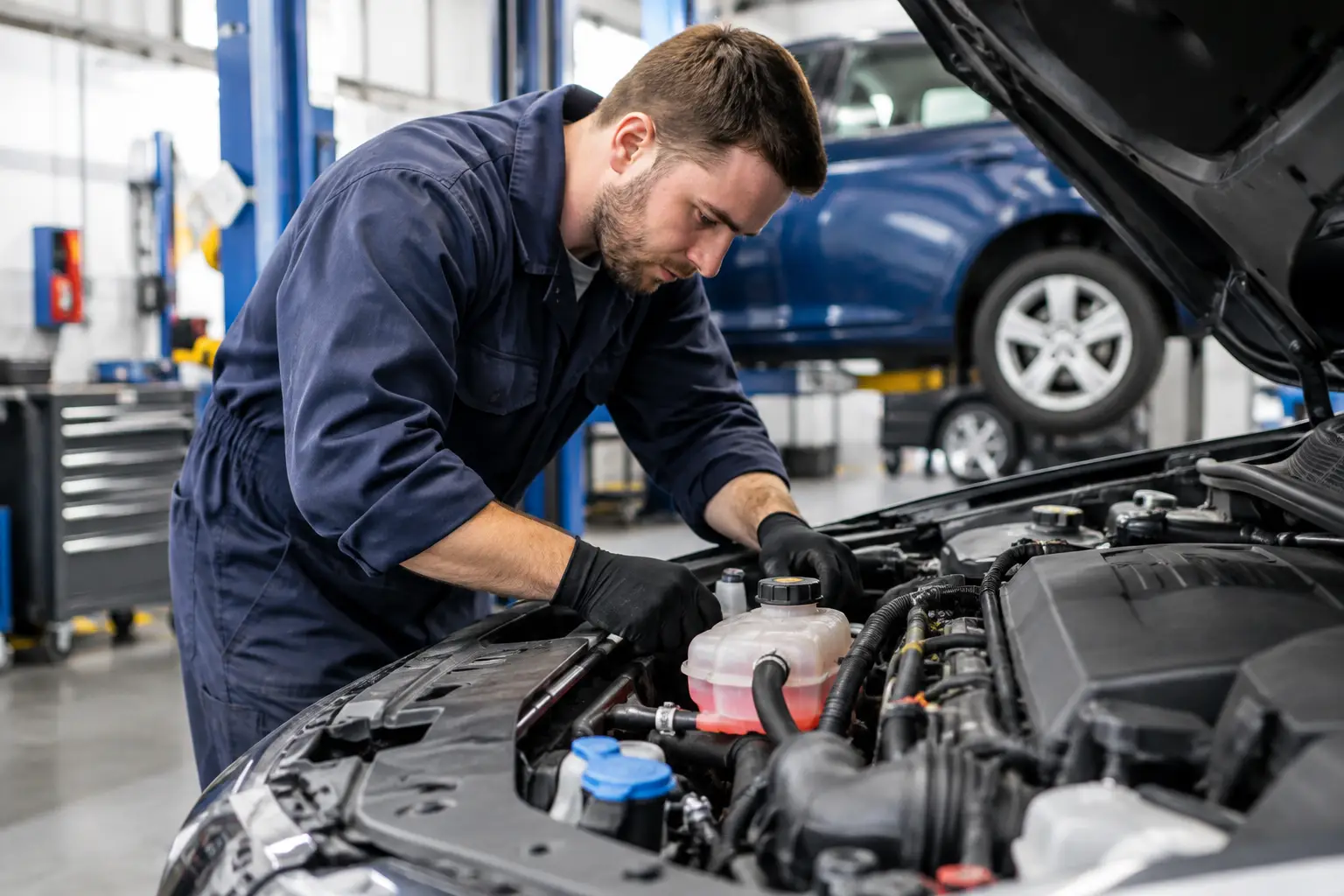
A temperature warning light on the way to work, steam from under the bonnet or a heater that suddenly blows cold air can turn an ordinary journey into a stressful one. This cooling system care guide explains what those signs can mean, what you can safely check yourself and when it is time to stop driving and arrange a proper inspection.
Your engine produces a huge amount of heat. The cooling system moves that heat away using coolant, a water pump, hoses, a radiator and, when needed, an electric cooling fan. When one part is not doing its job, the engine can overheat quickly. Carrying on regardless can cause far more damage than the original fault.
What drivers usually notice first
Many cooling problems give a warning before the car actually breaks down. You might notice the temperature gauge sitting higher than normal, a red temperature warning light, a sweet smell from the engine bay, or a puddle of coloured liquid where the car has been parked. Coolant can be pink, blue, green, orange or yellow depending on the type used, so colour alone does not identify the fault.
Other signs are less obvious. The heater may blow cold when the engine is warm, especially at idle. The cooling fan may run loudly for longer than usual after a journey. You may need to top up the coolant repeatedly, or the engine warning light may appear alongside poor performance.
A hot engine is not always an immediate disaster, but it should never be ignored. If the gauge enters the red, a temperature warning comes on, or steam is coming from the bonnet, pull over somewhere safe as soon as possible. Switch off the engine and do not open the coolant cap while it is hot. The system is pressurised, and hot coolant can cause serious burns.
Why a car can overheat
There is no single answer to an overheating car. A low coolant level is common, but the reason it is low still needs finding. It may be a small leak from a hose, radiator, expansion tank, water pump or thermostat housing. Some leaks only show when the engine is hot and the system is under pressure, which is why a quick look under the bonnet does not always reveal the cause.
A thermostat can also cause trouble. This is a valve that controls coolant flow through the engine and radiator. If it sticks shut, coolant cannot circulate properly and the engine temperature rises. If it sticks open, the engine may run too cool, take longer to warm up and use more fuel than it should.
The radiator removes heat from the coolant as air passes through it. Damage, internal blockage, corrosion or a build-up of debris around the front of the radiator can reduce its effectiveness. This may be more noticeable in slow-moving traffic, when there is less natural airflow.
On many modern cars, an electric fan takes over when the vehicle is stationary or moving slowly. A faulty fan motor, relay, fuse, wiring issue or temperature sensor can stop it coming on at the right time. The car may seem fine on an open road but get hot in queues, at roadworks or when waiting outside the school gates.
The water pump is another possible cause. It circulates coolant around the system and is often driven by the auxiliary belt or cambelt, depending on the vehicle. A worn or leaking pump can lead to coolant loss or poor circulation. Because the pump may be difficult to access, it needs proper diagnosis before any repair is recommended.
More serious faults are possible too, including a head gasket problem. This can allow combustion gases into the cooling system or coolant into places it should not be. Warning signs can include repeated overheating, unexplained coolant loss, pressure in the hoses soon after starting, white exhaust smoke or contaminated engine oil. Those symptoms do not prove a head gasket has failed, but they do need prompt investigation.
Cooling system care guide: safe checks at home
Routine checks can help you spot a problem early, particularly before a long journey or if your car has needed coolant recently. Only check the coolant level when the engine is completely cold. Look at the expansion tank, which is normally a translucent plastic container in the engine bay with minimum and maximum level marks.
If the level is below minimum, do not simply keep topping it up for weeks. A small drop over a long period may be normal, but regular loss suggests a leak or another fault. Make a note of how much you add and when. That information can help a mechanic trace an intermittent issue.
Use the correct coolant specification for your vehicle. Mixing incompatible coolant types can reduce corrosion protection and, in some cases, cause deposits within the system. The colour is not a reliable guide, so check the handbook or ask a garage before adding anything other than the correct premixed coolant or suitable deionised water in an emergency.
You can also look for obvious clues around the engine bay when it is cold. Damp hose connections, dried white or coloured residue, cracked rubber hoses and staining around the radiator or expansion tank may point to a leak. Do not put your hands near belts, fans or moving parts with the engine running. Electric fans can start without warning.
Checking coolant is part of sensible ownership, but it is not the same as a cooling-system repair or diagnostic inspection. A service may include visual checks of accessible components and fluid levels, depending on the service level and vehicle. It will not necessarily include pressure testing the system, testing fan operation or investigating a fault unless those checks are specifically required.
How a mechanic finds the actual fault
At AutoFix4U in Lowestoft, the first job is to establish when the problem occurs. Does the car overheat in traffic, on the dual carriageway, while towing, or only after a cold start? Is coolant disappearing? Has the heater changed? These details help narrow down the likely checks without jumping straight to parts replacement.
A proper inspection may include checking for stored fault codes, examining the coolant level and condition, looking for external leaks and allowing the engine to reach normal operating temperature while monitoring live data. This shows whether the temperature sensor reading is believable and whether the cooling fan is being commanded to operate.
A pressure test can be useful for finding leaks that are not visible when the engine is off. Depending on the symptoms, further tests may check for combustion gases in the coolant, assess thermostat operation or inspect the water pump and drive belt arrangement. The exact approach depends on the vehicle and the evidence found, not a guess based on one warning light.
Repairs depend on the cause
A split hose, loose clip or leaking expansion tank may be a straightforward repair once the source has been confirmed. A leaking radiator, seized thermostat or failed fan can require replacement of the affected part, followed by refilling the system with the correct coolant and bleeding out trapped air.
Air locks matter because pockets of air can stop coolant circulating properly and cause the temperature to rise again. Some engines have specific bleeding procedures, so this is not always a simple top-up job. If a water pump is involved, the repair can be more involved, particularly where it is linked to cambelt work.
If testing suggests an internal engine problem, the next step is to discuss the findings clearly before work goes ahead. There is a big difference between replacing a visible leaking hose and investigating repeated overheating with no obvious external leak. Honest diagnosis protects you from paying for parts that have not addressed the underlying cause.
When to stop and get help
Do not drive on with a red temperature warning, steam from the bonnet, a strong coolant smell or a gauge climbing into the red. Pull over safely, switch the engine off and let it cool. Do not pour cold water onto a hot engine and do not remove the coolant cap until everything is fully cool.
If the coolant warning has appeared but the temperature is normal, check the level only when safe and cold. If it is low, or you can see a leak, arrange an inspection before relying on the car for another commute or family journey. A vehicle that overheats once may do it again with little warning.
For drivers in Lowestoft and nearby areas, a cooling issue is worth checking sooner rather than later, especially if you depend on the car for work, school runs or regular travel. Call AutoFix4U to discuss the symptoms, get clear advice on the next step and arrange a vehicle inspection. Catching a small coolant leak early can be far easier than dealing with an overheated engine at the side of the road.