A failed emissions test can feel like it has come out of nowhere. The car may still start, drive and get you to work, yet the MOT result says its exhaust gases are too high. This car exhaust emissions guide explains what those results usually mean, what can cause them and when it is time to book proper diagnostics rather than guess at parts.
In most cases, high emissions are not caused by the exhaust pipe alone. The exhaust test is showing that the engine is not burning fuel as cleanly as it should, or that the system designed to clean those gases is not doing its job. Finding the root cause early can prevent a simple repair turning into a bigger bill.
What car exhaust emissions actually tell you
Your engine produces gases whenever it burns fuel. The emissions system reduces the harmful elements before they leave the tailpipe. On petrol cars, the catalytic converter, oxygen sensors and ignition system all have a part to play. On diesel cars, the DPF, EGR valve and fuel system are often involved.
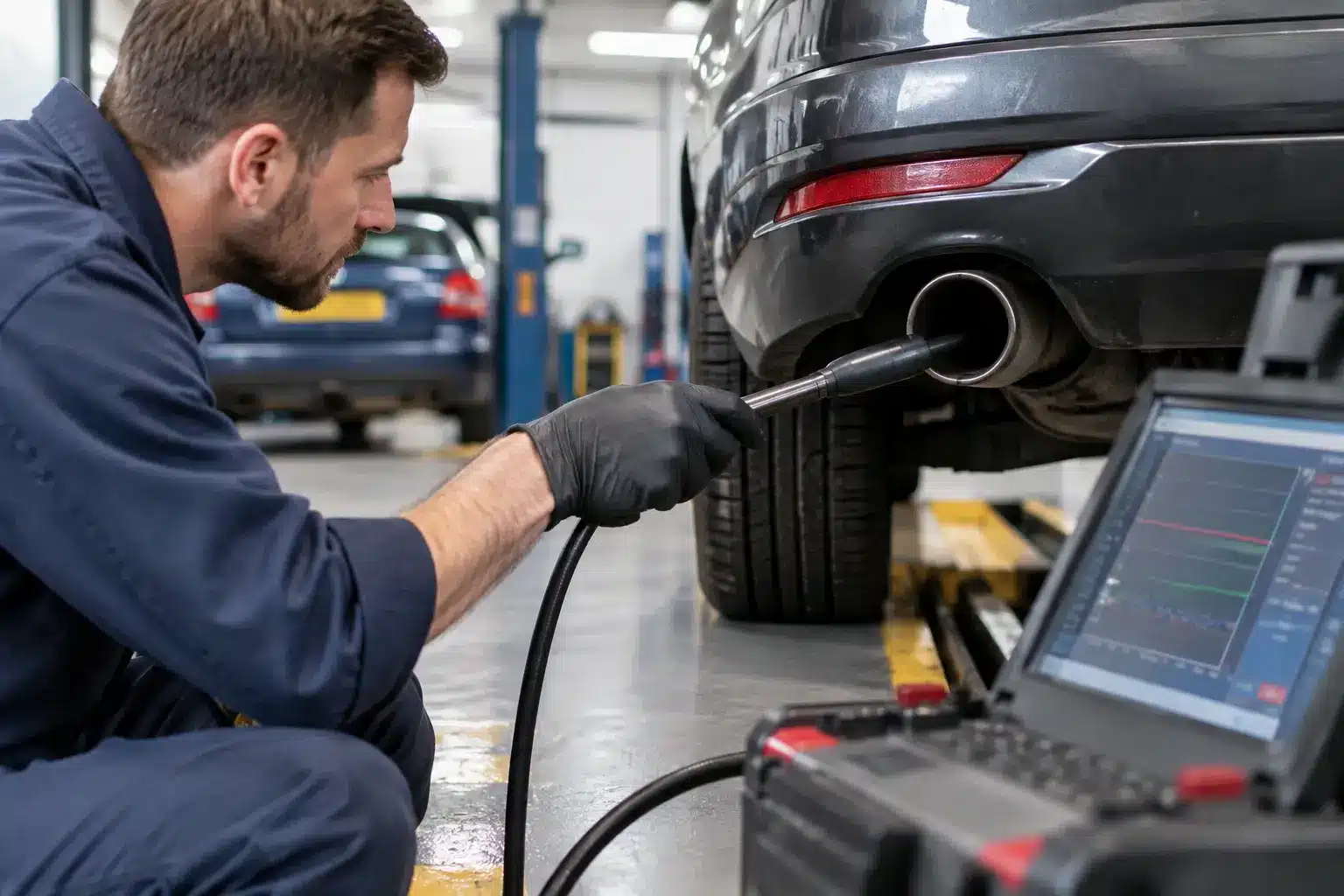
During an MOT, the tester measures what is coming from the exhaust. A petrol vehicle may fail because of high carbon monoxide or hydrocarbons. Put simply, this often means too much fuel is being burned, or fuel is not burning fully. A diesel may fail a smoke test where soot levels are too high, often linked to poor combustion, a blocked DPF or an air supply problem.
The test result points us in a direction, but it does not automatically identify the failed part. Replacing components without checking the fault properly is how drivers end up paying twice.
Common signs of an emissions fault before the MOT
We often see emissions problems arrive with another symptom first. The engine warning light is the obvious one, but not every fault brings a warning straight away. You might notice the car feels flat when accelerating, uses more fuel than usual, idles unevenly or smells stronger than normal from the exhaust.
On diesel vehicles, a DPF warning light, repeated cooling-fan operation after a short journey, limp mode or a rising engine oil level all need attention. These can indicate failed or incomplete DPF regenerations. Continuing to use the vehicle for short runs can make the blockage worse.
A rattling noise underneath the car may point to a loose heat shield or damaged exhaust, although it can also mean the inside of a catalytic converter has broken up. White, blue or heavy black smoke should not be ignored either. The colour alone does not diagnose the fault, but it gives a useful clue about what the engine is doing.
The engine warning light and emissions
The engine warning light can come on for dozens of reasons, from a sensor reading outside its normal range to a misfire. A flashing light is more urgent than a steady one. It can mean unburnt fuel is entering the exhaust and overheating the catalytic converter.
If the light is flashing, reduce load on the engine and arrange for the car to be checked as soon as possible. If it is steady and the car drives normally, you may not need to stop immediately, but do not leave it until the MOT is due. Early diagnostics are usually the sensible option.
Why petrol cars fail emissions tests
On petrol cars, a worn spark plug, failing ignition coil or injector fault can cause a misfire. Fuel is then left partially unburnt, which raises emissions and can damage the catalytic converter. A rough idle, hesitation or noticeable vibration are common clues.
A faulty oxygen sensor can also cause trouble. This sensor helps the engine management system adjust the air-to-fuel mixture. If it gives inaccurate information, the engine may run too rich, meaning it uses too much fuel, or too lean, meaning there is too much air. Either condition can affect performance and MOT emissions.
The catalytic converter itself may be at fault, particularly on older vehicles or cars that have been driven for some time with a misfire. It is not always the first part that needs replacing. We would first check for the underlying reason it has stopped working properly. Otherwise, a new converter can be damaged by the same unresolved problem.
Air leaks, tired vacuum hoses and a restricted air filter can also affect the mixture. These repairs can be relatively straightforward, but only if the actual cause is confirmed.
Why diesel cars produce excess smoke
Diesel engines naturally produce more soot than petrol engines, which is why modern diesels use a diesel particulate filter, known as a DPF. The filter traps soot and periodically burns it away during a regeneration. This process needs the engine to reach the right temperature and run for long enough.
Short local journeys can prevent regeneration from completing. That does not mean every diesel used around town will fail, but it does increase the risk, especially if there is another issue such as a faulty temperature sensor, EGR valve problem or injector fault.
Black smoke under acceleration can be caused by too much fuel, not enough air or a split hose in the turbo system. Loss of power often comes with it. A blocked DPF may put the vehicle into limp mode to protect the engine, leaving you with limited acceleration and a dashboard warning.
A forced regeneration may help in some cases, but it is not a cure for every DPF fault. If the filter is heavily loaded, contaminated or the car has a separate fault preventing regeneration, it needs proper assessment first. Trying to clear a warning without fixing the reason it appeared can lead to the same problem returning quickly.
Car exhaust emissions guide: what a proper check involves
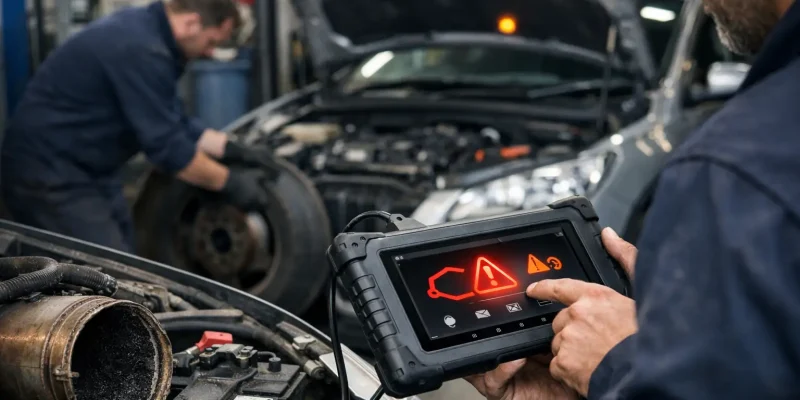
A reliable emissions repair starts with diagnostics. At AutoFix4u, that means reading fault codes, but not stopping there. Fault codes tell us where the system has detected an issue. Live data, visual checks and targeted testing help confirm why it happened.
For a petrol car, we may check ignition performance, sensor readings, fuel trims, intake leaks and catalytic converter efficiency. For diesel vehicles, we may look at DPF soot levels, regeneration history, pressure sensor readings, EGR operation and the condition of boost hoses.
We will also inspect the exhaust itself. A leak before an emissions sensor can pull in outside air and cause misleading readings. Damaged pipework, loose joints or a broken flexi section can affect both noise and emissions.
Once the cause is clear, you should receive a plain-English explanation of what has failed, what needs doing now and what can reasonably wait. There is a difference between an essential repair and a recommendation. Clear pricing and no surprise extras make that decision easier.
Can you drive with high emissions?
It depends on the fault and the symptoms. A car with a steady engine warning light that is otherwise running normally may be safe to drive a short distance to a garage. But it is still producing higher emissions and may be causing damage over time.
Do not keep driving if the warning light is flashing, the vehicle is misfiring badly, there is a strong fuel smell, power has dropped sharply or smoke is excessive. These signs can lead to a breakdown, damage expensive emissions components or create a safety issue.
If your MOT is approaching, avoid relying on a long motorway run or fuel additive as a guaranteed fix. A decent drive may help a diesel complete a normal regeneration, but it cannot repair a failed sensor, a split boost pipe or a damaged DPF. Additives can have a place in maintenance, but they are not a substitute for diagnosis.
Simple habits that help keep emissions down
Regular servicing gives the engine a better chance of running cleanly. Fresh oil, the correct filters and spark plugs changed at the right interval all matter. Using the right oil is particularly important for DPF-equipped diesels, as the wrong type can contribute to ash build-up in the filter.
Try to give a diesel that mostly does short trips an occasional longer run once it is fully warm. If a warning light appears, deal with it promptly rather than hoping it disappears. The longer a vehicle runs with a fuelling, ignition or airflow issue, the more likely it is to affect other components.
If your car has failed an MOT emissions test, has an engine warning light or has gone into limp mode, book diagnostics before replacing parts on guesswork. For drivers in Lowestoft and nearby areas, AutoFix4u can check the fault, explain the repair clearly and help get your car back to reliable daily use. Acting early is usually the quickest route back to a clean-running vehicle.