
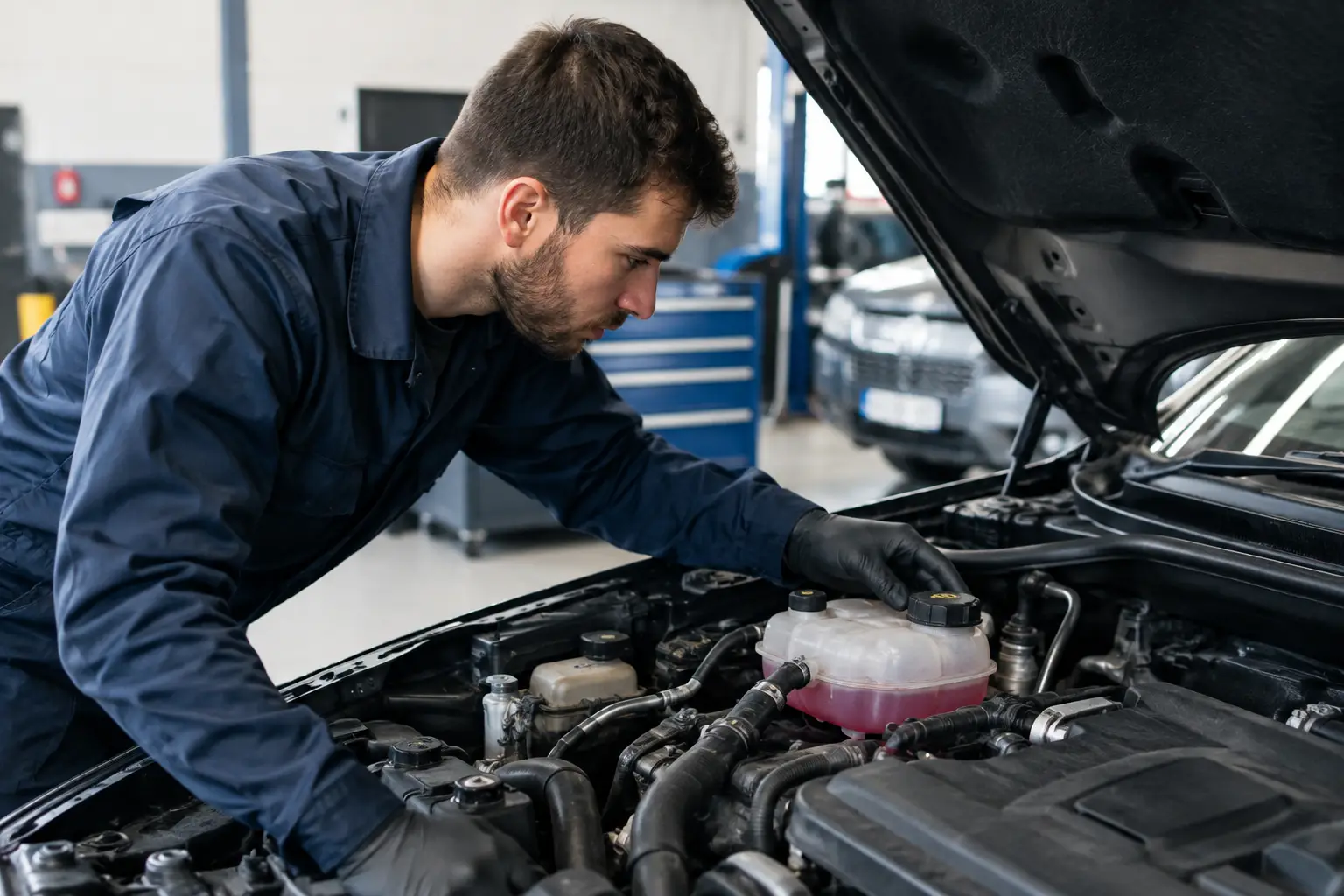
Water Leak Diagnosis: Why Your Car Is Losing Coolant
A puddle under your car can be worrying. You may also notice a coolant warning light, a sweet smell or a rising engine temperature.
Water leak diagnosis helps identify why your vehicle loses coolant. More importantly, it helps determine whether you can drive safely.
Sometimes, a loose hose causes the problem. However, a damaged radiator, water pump or internal engine fault can create similar symptoms.
At AutoFix4u Garage Lowestoft, we help drivers investigate cooling system faults before recommending repairs.
This guide explains the warning signs, likely causes and checks that can help prevent expensive engine damage.
What are the signs of a coolant leak?
Coolant leaks do not always leave a large puddle.
Some faults develop slowly. Others cause sudden fluid loss and overheating.
1. You notice a puddle under your car
Coolant may leave a coloured patch beneath the engine.
Depending on the product, it can appear pink, blue, green, red or orange.
However, colour alone cannot identify the fluid or the correct coolant specification.
A leak may also leave dried residue around hoses or fittings.
Not every puddle indicates a coolant leak.
For example, clear water beneath a car after using the air conditioning is often normal condensation.
If you suspect an air conditioning problem, read our guide to air conditioning leak detection.
2. The coolant level keeps dropping
A healthy cooling system should not need frequent top-ups.
Therefore, repeated coolant loss deserves attention.
You might notice the expansion tank level dropping between journeys.
A small leak may only appear when the engine becomes hot.
However, internal engine faults can also cause coolant loss without a visible puddle.
3. The engine temperature rises
Coolant helps transfer heat away from the engine.
If the system loses too much fluid, it may struggle to control the temperature.
As a result, the temperature gauge may rise above normal.
A serious temperature warning requires immediate attention.
Stop safely and switch off the engine if the vehicle overheats.
Do not continue driving to the garage.
4. You notice a sweet smell or steam
Coolant can produce a distinctive sweet smell.
You may notice it around the engine bay or inside the vehicle.
Steam can also appear when coolant reaches hot components.
However, steam may indicate a serious overheating problem.
Never remove the coolant cap while the engine is hot.
5. Your heater blows cold air
Your car’s heater normally uses heat from engine coolant.
Low coolant or trapped air can sometimes reduce cabin heating.
For example, the heater may blow cold air when the engine is already warm.
However, a heater fault can have other causes.
A mechanic should check the symptoms before replacing parts.
What causes a car to lose coolant?
Several components can develop leaks.
The exact cause depends on the vehicle, its condition and when the problem occurs.
Damaged coolant hoses
Rubber hoses carry coolant between the engine, radiator and other components.
Over time, heat and movement can affect their condition.
A hose may split, crack or leak near a connection.
Sometimes, the leak only appears when the cooling system reaches normal operating pressure.
As a result, the vehicle may look dry when parked overnight.
Loose or damaged hose connections
Hose clips and fittings help seal the cooling system.
If a connection becomes loose or damaged, coolant may escape.
However, tightening a clip will not always repair a damaged hose or fitting.
A mechanic needs to inspect the connection and identify the cause.
Leaking radiator
The radiator helps remove heat from engine coolant.
Road debris, corrosion and age can damage it.
For example, a small crack may allow coolant to escape during a journey.
You may notice damp areas or coloured residue near the front of the vehicle.
However, the leak can travel along surrounding components before reaching the ground.
Therefore, the puddle location does not always reveal the failed part.
Expansion tank or pressure cap problems
The coolant expansion tank allows fluid levels to change as the engine heats and cools.
Plastic tanks can develop cracks around seams or connections.
The pressure cap can also fail.
If the cap cannot control system pressure correctly, coolant may escape.
A mechanic should inspect the relevant components rather than replacing parts by guesswork.
Water pump leaks
The water pump circulates coolant around the engine.
A worn seal or damaged pump housing may cause coolant loss.
Sometimes, a leak leaves stains around the pump.
However, access varies between vehicles.
Certain engines place the pump behind other components, making inspection more involved.
Thermostat housing leaks
The thermostat helps regulate coolant flow.
Its housing and seals can develop leaks over time.
Some vehicles use plastic housings that may crack or distort.
A mechanic can inspect the area and recommend the correct repair.
Heater matrix leaks
The heater matrix transfers heat into the passenger compartment.
If it leaks, you may notice:
- A sweet smell inside the car.
- Damp carpets near the front footwells.
- Windows misting more than usual.
- A greasy film on the windscreen.
- Repeated coolant loss.
However, damp carpets can also result from blocked drains or damaged door seals.
Therefore, a proper inspection matters before removing dashboard components.
Can a head gasket cause coolant loss?
Yes. However, not every coolant leak indicates a failed head gasket.
A damaged head gasket may allow coolant to enter an engine cylinder or mix with other fluids.
Possible warning signs include:
- Repeated engine overheating.
- Coolant disappearing without a visible leak.
- Persistent white exhaust smoke after the engine warms up.
- Unusual cooling system pressure.
- Signs of oil and coolant contamination.
Other faults can create similar symptoms.
For example, some vehicles may suffer coolant loss through an EGR cooler.
Cold weather can also produce normal white exhaust vapour.
Therefore, a mechanic should test the vehicle before recommending major engine work.
How does professional water leak diagnosis work?
A proper diagnosis focuses on finding the source of coolant loss.
At AutoFix4u Garage Lowestoft, we aim to identify the likely cause before discussing repairs.
1. Checking the symptoms
First, the mechanic asks when the problem started.
Does coolant disappear during short journeys?
Does the engine overheat in traffic?
Have you recently replaced a hose, radiator or another cooling system part?
These details can help narrow down the fault.
2. Inspecting the cooling system
Next, the mechanic examines accessible components when it is safe.
They may look for:
- Cracked coolant hoses.
- Damaged radiator connections.
- Leaks around the expansion tank.
- Staining near the water pump.
- Loose fittings.
- Visible signs of coolant loss.
However, some leaks remain hidden until the system reaches operating pressure.
3. Cooling system pressure testing
A pressure test can help reveal leaks that are difficult to find visually.
The mechanic uses suitable equipment and follows the correct vehicle procedure.
The test may expose leaks around hoses, housings and other cooling components.
However, not every internal fault appears during a basic pressure test.
4. Checking engine temperature and cooling fan operation
The mechanic may also review engine temperature behaviour.
For example, overheating in traffic may suggest a cooling fan or circulation problem.
Further checks can help identify whether the fan operates correctly.
5. Using diagnostic equipment
Some cooling system faults trigger dashboard warning lights or fault codes.
In these cases, engine diagnostics in Lowestoft may provide useful information.
However, a fault code does not automatically identify a failed component.
The mechanic must compare the electronic information with the physical inspection.
If a temperature warning appears, our warning lights check service can help investigate the warning.
Do not drive to an appointment if the engine is overheating.
6. Investigating internal coolant loss
Sometimes, the system loses coolant without an obvious external leak.
Further testing may help identify an internal engine problem.
For example, the mechanic may recommend a combustion-gas test or other checks.
The results help determine whether more detailed engine investigation is necessary.
How do you repair a coolant leak?
The repair depends on the confirmed fault.
A damaged hose may need replacement. Meanwhile, a leaking radiator or water pump can require more extensive work.
Possible repairs include:
- Replacing damaged coolant hoses.
- Repairing leaking connections.
- Replacing a faulty expansion tank or pressure cap.
- Repairing or replacing a leaking radiator.
- Replacing a faulty water pump.
- Repairing thermostat housing leaks.
- Investigating heater matrix problems.
- Addressing internal engine faults when testing confirms them.
After completing the repair, the mechanic should check the system again.
The vehicle may also need fresh coolant and the correct bleeding procedure.
This helps remove trapped air and restore proper circulation.
Finally, the mechanic should confirm normal operating temperature and check for further leaks.
Should you use coolant leak sealant?
Leak sealant products may seem like an easy solution.
However, they do not replace proper fault diagnosis.
Some products can create deposits or restrict narrow cooling passages.
As a result, they may complicate later repairs.
A damaged hose, leaking water pump or failed head gasket needs an appropriate repair.
Therefore, ask a mechanic to identify the cause before relying on a temporary product.
Can you drive with a coolant leak?
A coolant leak can become serious without warning.
Even a small leak may worsen when the cooling system heats up.
Therefore, you should not assume the vehicle is safe because the temperature gauge currently looks normal.
When should you stop driving?
Stop safely and arrange professional help if:
- The engine temperature rises into the red.
- A serious coolant or temperature warning appears.
- Steam comes from under the bonnet.
- Coolant escapes rapidly.
- The engine loses power while overheating.
- You hear unusual mechanical noises.
- The vehicle repeatedly overheats.
Do not remove the coolant cap while hot.
Also, do not restart an overheated engine without professional advice.
If the vehicle is unsafe to drive, arrange recovery rather than risking further engine damage.
What if the leak seems small?
A small leak still needs inspection.
For example, you might only notice a little coolant loss over several days.
However, the problem can worsen during a longer journey.
Book a check promptly instead of relying on frequent top-ups.
How can you check coolant safely at home?
Regular checks may help you identify coolant loss early.
However, always follow your vehicle manufacturer’s guidance.
Check the coolant level when cold
Park the vehicle on level ground.
Make sure the engine has cooled completely.
Then check the level against the markings on the expansion tank.
Look for visible leaks
You can inspect the ground beneath the parked vehicle.
Also, look for visible residue around accessible cooling system components.
Do not touch moving parts or open a hot cooling system.
Use the correct coolant specification
Coolant products have different chemical requirements.
Therefore, choose the specification recommended by the vehicle manufacturer.
Do not rely on colour alone.
Keep a record of coolant loss
If you repeatedly need to add coolant, record when and how much you add.
This information may help a mechanic identify an intermittent leak.
However, repeated topping-up is not a substitute for repair.
Can regular servicing help detect coolant leaks?
Routine servicing can identify some early warning signs.
For example, a mechanic may notice low fluid levels, visible staining or damaged hoses.
However, a standard service does not automatically include detailed cooling system pressure testing.
If your vehicle is already losing coolant, it may need a focused fault investigation.
Our car servicing in Lowestoft page explains routine maintenance options.
For general vehicle condition checks, explore our Vehicle Health Check Lowestoft service.
A health check can identify visible fluid leaks. However, it does not replace detailed diagnosis when coolant loss continues.
Water leak diagnosis in Lowestoft: when to book
Repeated coolant loss is a warning that your vehicle needs attention.
Sometimes, the solution is relatively straightforward. However, ignoring a leak may eventually lead to overheating and expensive engine damage.
AutoFix4u Garage Lowestoft helps drivers investigate cooling system concerns, warning lights and related engine faults.
We aim to explain the findings and recommend suitable repairs before additional work begins.
If your car keeps losing coolant, contact us to discuss the symptoms and arrange an inspection.
Call: 07778 979802
WhatsApp: Message AutoFix4u Garage Lowestoft
Request an estimate: Get a Free Estimate
Address: Unit 4, 10 Battery Green Road, Lowestoft, NR32 1DE.
Early water leak diagnosis can help protect your engine and reduce the risk of an unexpected breakdown.


