
When Should You Replace Tyres UK Drivers Use?
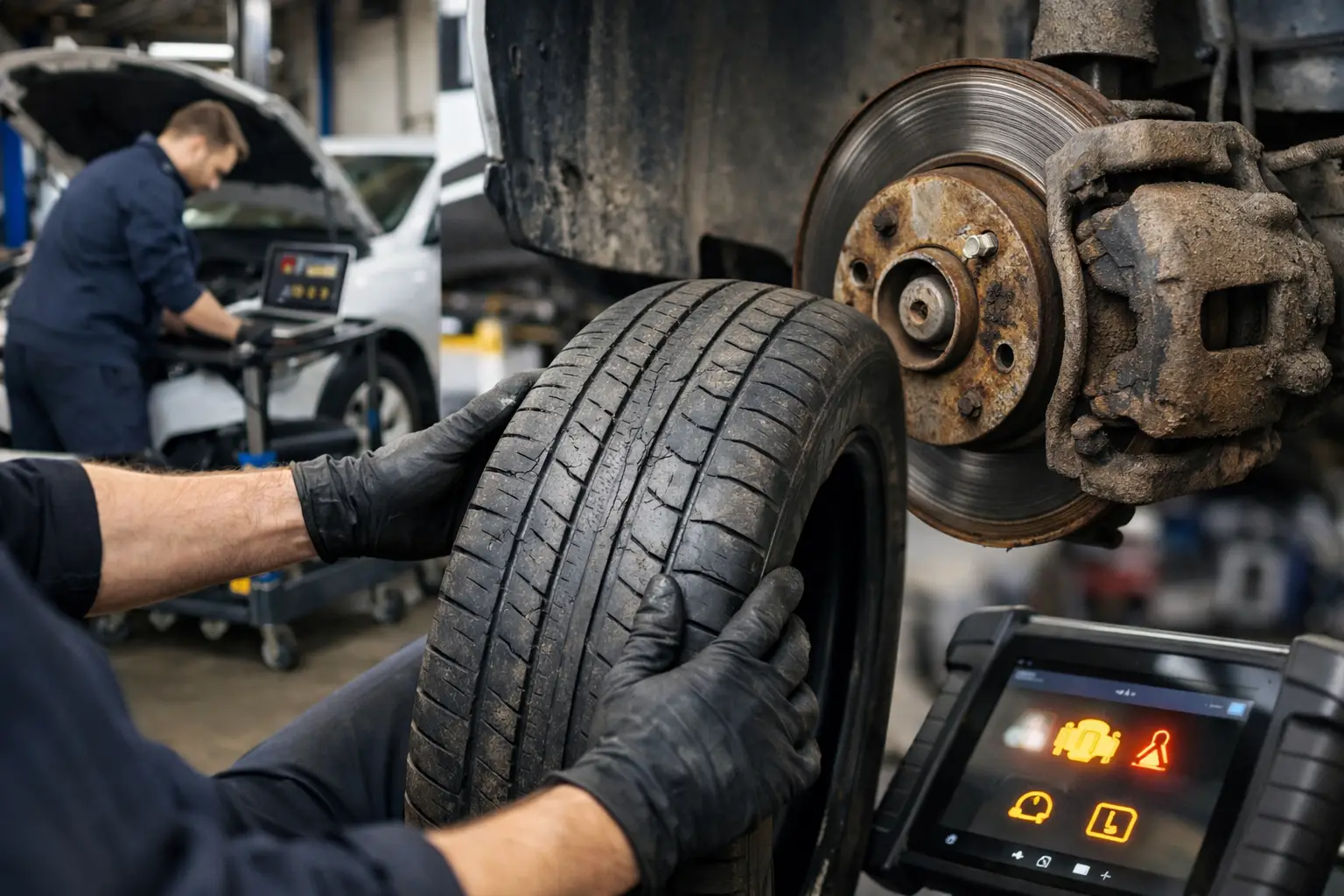
A tyre can look perfectly normal and still have a serious problem. Perhaps the inner edge has worn down, the sidewall has developed cracks, or one tyre keeps losing pressure.
If you are asking when should you replace tyres UK drivers use every day, start with tread depth, visible damage and tyre age. However, the way your car handles also matters.
At AutoFix4u Garage Lowestoft, we regularly help drivers identify tyre wear and related faults. A proper inspection can reveal problems before they cause an MOT failure or affect road safety.
When should you replace tyres in the UK?
UK law requires passenger car tyres to have at least 1.6 mm of tread across the central three-quarters of the tread width. This minimum applies around the entire circumference.
If your tyre falls below that limit, replace it before driving again.
However, legal tread depth is only one part of tyre safety.
As tyres wear, their ability to clear water generally decreases. Therefore, wet-weather braking and grip can become less effective before the tyre reaches the legal minimum.
Many drivers consider replacement at around 3 mm, especially before winter or frequent motorway journeys. This is a precaution rather than a legal requirement.
You should also replace a tyre when structural damage makes it unsafe, regardless of tread depth.
Signs your tyres need replacing
Tyres often show signs of wear before a serious problem develops.
Some changes are easy to spot. Others require a closer inspection.
1. Low tyre tread depth
Low tread is one of the clearest reasons to consider replacement.
A tread depth gauge gives a more reliable measurement than a quick visual check.
Measure several points across the tyre, including the inner and outer areas. Also check different positions around its circumference.
Tyres can wear unevenly. Therefore, one area may fall below the legal minimum while another still looks acceptable.
If you notice excessive wear, book a tyre inspection.
2. Uneven tyre wear
Uneven tread wear can indicate a problem beyond the tyre itself.
For example, incorrect wheel alignment can cause excessive wear along one edge. Similarly, worn suspension components may affect wheel position and tyre contact.
Incorrect pressures can also change the wear pattern.
As a result, simply fitting a replacement tyre may not solve the underlying problem.
If you notice unusual wear, ask the garage to inspect the suspension and steering components.
Our Suspension Repair Lowestoft service can help investigate related issues.
3. Sidewall cracks
Tyre rubber changes as it ages.
Sunlight, temperature changes and everyday use can contribute to cracking.
Some small surface marks may be minor. However, deeper cracks can indicate deterioration that affects tyre safety.
Therefore, do not judge tyre condition by tread depth alone.
If you notice cracks around the sidewall or between tread blocks, arrange an inspection.
A technician can assess the damage and advise whether replacement is necessary.
4. Bulges or deep cuts
A bulge can indicate damage to the internal tyre structure.
For example, hitting a pothole or kerb may damage the tyre casing.
This fault can increase the risk of sudden failure.
Similarly, deep cuts or exposed cords require urgent attention.
Do not continue driving on a tyre with a bulge or visible structural damage. Instead, arrange suitable recovery or professional assistance.
5. Repeated tyre pressure loss
One tyre should not need constant inflation.
Repeated pressure loss may indicate a puncture, faulty valve, damaged rim or bead-sealing problem.
Sometimes a specialist can repair the tyre safely. However, the correct solution depends on its condition and the location of the damage.
A tyre specialist should inspect the tyre before recommending a repair.
For local assistance, see our Puncture Repair Lowestoft information.
6. Vibration or unusual road noise
Tyre damage can sometimes create vibration or noise while driving.
For example, uneven tread wear may produce a humming sound. Wheel imbalance can also cause vibration at particular speeds.
However, suspension and wheel-bearing faults may create similar symptoms.
Therefore, a proper inspection should identify the cause rather than assume the tyre needs replacement.
How old is too old for a car tyre?
Tyre age matters, even when the tread still looks healthy.
Rubber can deteriorate over time. Heat, sunlight, storage conditions and regular use all affect its condition.
There is no universal legal replacement age for ordinary passenger car tyres in the UK.
However, tyre manufacturers and safety organisations recommend regular inspections as tyres age.
Around five years of use, checking the tyres more carefully is sensible. By ten years from manufacture, many manufacturers recommend replacement as a precaution, even if the tread remains acceptable.
Always follow the specific tyre manufacturer’s guidance.
How to check tyre age
Look for the manufacturing date code on the sidewall.
The final four digits identify the production week and year.
For example:
2321 = Week 23 of 2021
However, the date code may appear on only one side of the tyre.
Remember that age alone does not determine tyre condition. A newer tyre can still become unsafe after impact damage or incorrect use.
Will worn tyres fail an MOT?
Yes. Tyre condition forms part of the MOT inspection.
A car can fail if its tyres do not meet the legal tread requirement.
Other tyre defects may also cause failure, including serious structural damage and unsuitable tyre specifications.
However, a valid MOT certificate does not guarantee that tyres will remain safe until the next test.
A puncture, impact or rapid wear can develop at any time.
Therefore, inspect your tyres regularly rather than relying on the annual test.
If your car fails its MOT because of tyre wear, ask the garage to explain the defects clearly.
For more information, read our MOT Failure Guide.
Should you replace tyres in pairs or all four?
You do not always need four new tyres.
The right decision depends on the condition of the existing tyres, their specifications and your vehicle’s requirements.
For example, if one tyre suffers damage while the others remain in good condition, replacing that tyre alone may be suitable.
However, significant tread differences can affect handling.
Some four-wheel-drive vehicles also have particular requirements for tyre matching.
Therefore, follow the vehicle manufacturer’s guidance before replacing individual tyres.
Why tyre matching matters
Different tyres may offer different grip levels.
For example, one worn tyre and one new tyre can behave differently on wet roads.
A technician should consider tread depth, size, construction and manufacturer recommendations.
In some cases, replacing two tyres provides a better overall result.
However, there is no reason to replace serviceable tyres without a genuine safety or compatibility concern.
What causes tyres to wear out early?
Tyres wear gradually during normal driving. However, several faults can shorten their useful life.
Incorrect tyre pressure
Underinflation can increase wear around the tyre shoulders.
It can also raise operating temperatures and affect fuel efficiency.
Meanwhile, excessive pressure may contribute to centre tread wear.
Check pressures against the vehicle manufacturer’s recommendations.
Poor wheel alignment
Incorrect wheel alignment can cause rapid or uneven wear.
For example, excessive toe settings may cause tyres to scrub against the road.
As a result, a relatively new tyre can lose tread much sooner than expected.
Worn suspension components
Damaged bushes, suspension arms and shock absorbers may affect tyre contact and alignment.
Therefore, check unusual suspension noises alongside unexpected tyre wear.
Driving conditions
Potholes, kerb impacts and rough road surfaces can damage tyres.
Aggressive acceleration, hard cornering and repeated heavy braking may also increase wear.
However, normal driving still causes gradual tread loss.
Regular inspections help identify wear before it becomes excessive.
When should you replace tyres before winter?
Wet weather makes tyre condition especially important.
Tyre grooves help move water away from the contact area.
As tread depth decreases, the tyre generally becomes less effective at clearing water.
Consequently, the risk of aquaplaning can increase in suitable conditions.
If your tread is approaching 3 mm, consider your driving needs and upcoming journeys.
For example, regular motorway driving in heavy rain may justify earlier replacement.
However, 3 mm is not the legal minimum for ordinary passenger car tyres.
The law still requires at least 1.6 mm in the specified tread area.
Always combine tread measurements with checks for damage, age and tyre performance.
Can you repair a tyre instead of replacing it?
Some punctures allow a safe repair.
However, a technician must inspect the tyre and follow the relevant repair standard, BS AU 159.
A repair may be possible when damage falls within the permitted central tread area.
Nevertheless, sidewall damage and internal structural faults generally require replacement.
Driving on a severely underinflated tyre can also cause hidden internal damage.
Therefore, a technician should remove the tyre from the wheel and check its internal condition before a permanent repair.
Do not attempt to repair a dangerous tyre using an unsuitable plug or sealant.
How often should you check your tyres?
Regular checks can reduce the risk of unexpected problems.
Inspect tyre pressures at least monthly and before long journeys.
Also examine tread depth, sidewalls and visible wear.
Check sooner if you notice vibration, unusual handling or repeated pressure loss.
If you hit a pothole, inspect the tyre and wheel for visible damage.
However, some impact damage may remain hidden.
Therefore, arrange professional checks if the vehicle behaves differently afterwards.
Our Vehicle Health Check Lowestoft service can help identify tyre and related vehicle concerns.
Tyre replacement in Lowestoft
Drivers around Lowestoft often rely on their vehicles for work, school runs and everyday journeys.
However, worn tyres can affect safety in all driving conditions.
At AutoFix4u Garage Lowestoft, we can inspect tyre condition and explain suitable replacement options.
We also investigate related suspension and steering problems when tyre wear suggests another fault.
Our garage serves Lowestoft, Oulton Broad, Carlton Colville, Pakefield, Kessingland, Beccles and nearby areas.
Tyre availability and fitting appointments depend on stock and workshop capacity.
Therefore, contact us to confirm the correct size and available booking options.
Frequently asked questions about replacing tyres
What is the legal tyre tread depth in the UK?
For ordinary passenger cars, the minimum is 1.6 mm across the central three-quarters of the tread width. This applies around the complete circumference.
Should I replace tyres at 3 mm?
Not necessarily. However, replacement around 3 mm may be sensible for drivers who regularly encounter wet roads. It is a precaution, not a legal requirement.
Can tyres fail an MOT because of age?
Ordinary passenger car tyres do not automatically fail an MOT solely because they exceed a particular age. However, age-related damage or deterioration can make a tyre unsafe.
Do I need to replace all four tyres together?
Not always. The decision depends on tread depth, tyre specifications, condition and vehicle manufacturer requirements.
Can a tyre with a sidewall bulge be repaired?
No. A sidewall bulge can indicate structural damage. Arrange professional assistance rather than driving on it.
How do I know whether tyre wear comes from suspension problems?
Uneven tread wear, knocking noises or unstable handling may suggest a suspension or alignment problem. A proper inspection can confirm the cause.
Book a Tyre Inspection in Lowestoft
If your tyres have low tread, cracks, unusual wear or repeated pressure loss, get them checked.
AutoFix4u Garage Lowestoft can help assess their condition and recommend the next step.
Whether you need a puncture assessment, new tyres or a related suspension inspection, we focus on clear explanations and practical advice.
Call: 07778 979802
WhatsApp: Message AutoFix4u Garage Lowestoft
Contact: Get in Touch
AutoFix4u Garage Lowestoft
Unit 4, 10 Battery Green Road
Lowestoft, NR32 1DE
Contact us to discuss tyre condition, availability and fitting options before your next journey.


2 thoughts on “When Should You Replace Tyres UK Drivers Use?”