
How to Check Coolant Level Safely in Your Car
A low coolant warning can turn a normal school run or commute into an overheating problem very quickly. Knowing how to check coolant level takes a couple of minutes, but checking it safely matters just as much. Never remove a coolant cap from a hot engine. Hot cooling systems are pressurised, and the liquid inside can cause serious burns.
In most cases, you can check the level yourself before booking in. But if it keeps dropping, there is usually a reason. Topping it up may get you moving, but it will not fix a leak, a faulty component or an engine fault.
How to check coolant level when the engine is cold
Park on level ground, switch the engine off and let it cool completely. Ideally, check it before you drive the car in the morning. If you have just been driving, leave it for at least a few hours. The engine, radiator and coolant can stay hot much longer than people expect.
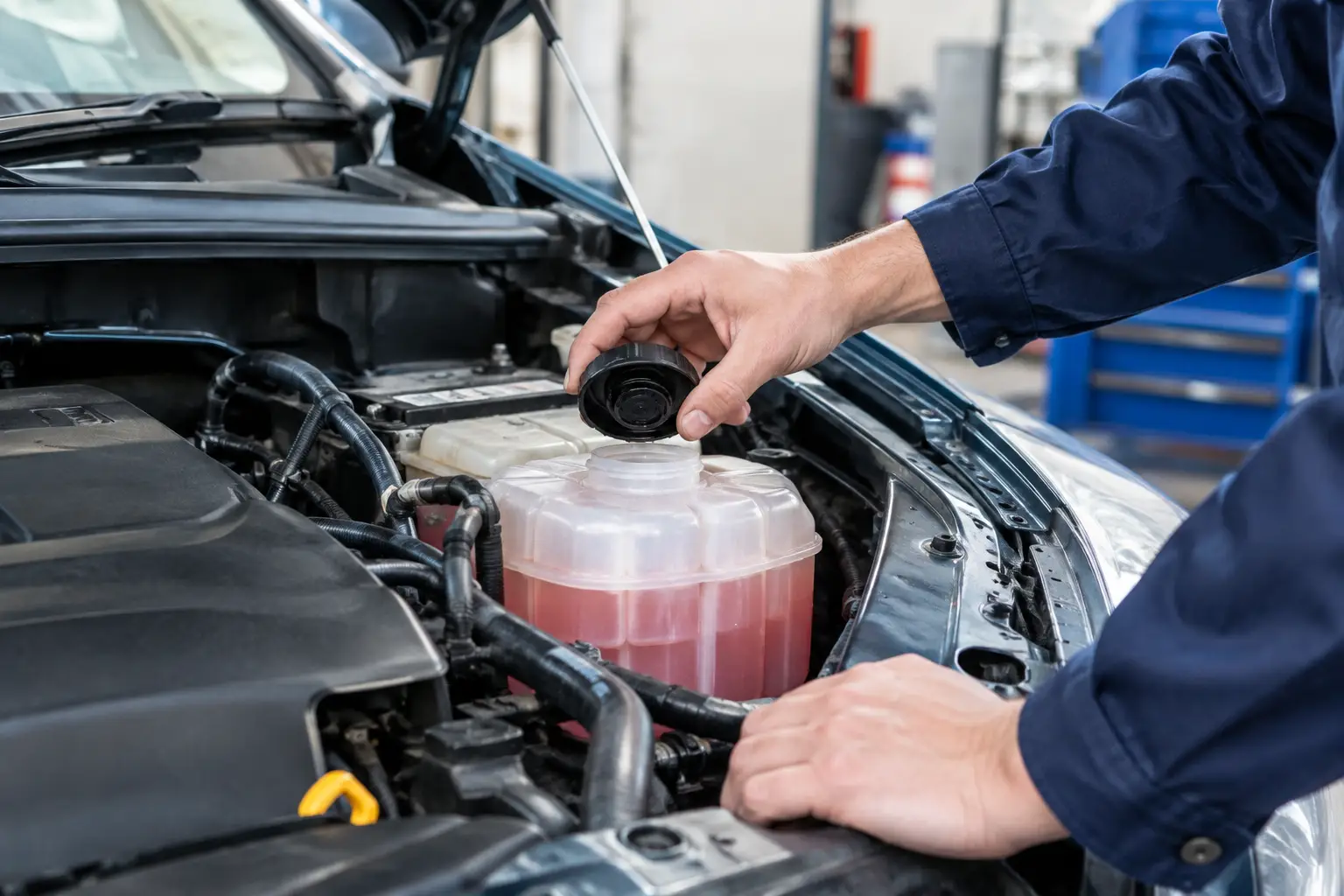
Open the bonnet and look for the coolant expansion tank. This is normally a translucent plastic bottle with a coloured cap, often black, blue or yellow. It may carry a warning symbol or wording that refers to coolant. Do not confuse it with the windscreen washer bottle, which usually has a windscreen symbol on the cap.
The side of the expansion tank should have two markings: MIN and MAX. The coolant should sit between them when the engine is cold. A level near the middle is generally fine. If it is just above MIN, it is not automatically an emergency, but keep an eye on it. If it is below MIN or you cannot see any coolant in the tank, it needs attention before a longer journey.
Some older cars do not have a clear expansion tank, or the markings can be difficult to see. A torch can help. If you still cannot confirm the level, do not guess by opening a hot radiator cap. A garage can check the system properly and confirm whether there is a loss of coolant.
What low coolant can mean
Coolant does more than stop the engine freezing in winter. It carries heat away from the engine and protects parts of the cooling system from corrosion. When there is not enough coolant, the engine can run too hot. That can lead to poor heater performance, warning lights, steam from under the bonnet and, in more serious cases, engine damage.
We often see low coolant caused by a small leak that has built up over time. Common places include a hose, radiator, water pump, expansion tank or its cap. A thermostat housing can also leak, particularly on vehicles with plastic housings that have become brittle with age.
Sometimes there is no obvious puddle under the car. Coolant can leak only when the engine is hot and the system is under pressure. It may dry on the engine or undertray, leaving white, pink, blue or green residue depending on the coolant used. That is why a visual check alone does not always find the real cause.
A low level can also be linked to an internal engine problem. This is less common, but it needs checking promptly. Signs can include repeated coolant loss, white exhaust smoke after the engine has warmed up, a sweet smell from the exhaust, or oil that looks creamy under the oil filler cap. One symptom on its own does not prove a serious fault, but regular coolant loss should never be ignored.
If you need to top up the coolant
First, check the vehicle handbook for the correct coolant specification. Coolants come in different types, and their colours are not a reliable guide. Two pink coolants can be different formulas, for example. Mixing incompatible coolants can reduce corrosion protection and create problems in the system over time.
If you know the right product, add it slowly into the expansion tank until the level reaches between MIN and MAX. Do not fill it to the brim. The coolant expands as the engine warms up, which is why the tank has a maximum mark.
Use ready-mixed coolant, or mix concentrated coolant with deionised water in the ratio stated on the container or in the handbook. Plain water may be useful only as a short-term emergency measure when there is no alternative. It does not provide the same freeze protection or corrosion resistance, so the system should be checked and corrected as soon as possible.
If you do not know what coolant is already in the car, do not pour in whatever is available. Call a local garage for advice or arrange an inspection. Getting the correct fluid is cheaper than dealing with a contaminated cooling system later.
Never open the cap while the engine is hot
This is the part worth repeating. If the temperature gauge is high, a coolant warning light has appeared, or you can see steam, stop somewhere safe and switch the engine off. Do not lift the coolant cap, even if you need to get home. The system can release boiling coolant without warning.
Wait for the engine to cool fully. If the level is empty, or the car has overheated, it is safer not to drive it again until the cause has been checked. Continuing to drive an overheating car can turn a hose or sensor repair into a much larger engine repair.
If the red temperature warning light comes on while driving, pull over as soon as it is safe to do so. Switch off the engine. Do not rely on turning the cabin heater up as a fix. It may reduce heat slightly in some situations, but it does not solve the fault and can give a false sense that the car is safe to continue driving.
Check for these signs after topping up
Once the engine is cold and you have topped up with the correct coolant, check the level again over the next few days. A stable level is reassuring. A level that falls again tells you the system needs investigating.
Look around the vehicle for fresh drips after it has been parked. Check for a sweet smell inside or outside the car, damp carpets in the front footwells, poor cabin heating, or a temperature gauge that climbs higher than normal. These can point to a coolant leak, heater matrix issue, thermostat fault or circulation problem.
Also pay attention to the engine warning light. On many cars, a coolant warning is separate from the engine warning light, but either one can appear when the engine is not running as it should. If a warning light is accompanied by loss of power, misfiring or overheating, arrange diagnostics rather than simply adding more coolant.
When a coolant level check needs a garage inspection
A one-off small top-up can happen, especially after cooling-system work or if the level has not been checked for a long time. Repeated top-ups are different. Coolant is in a sealed system and should not disappear as part of normal driving.
Book an inspection if the level is below MIN again after topping up, if you see leaks, if the car has overheated, or if the heater blows cold while the engine temperature rises. The right next step is a cooling-system pressure test and a proper fault check. This helps identify where the coolant is escaping, rather than replacing parts on guesswork.
At AutoFix4u, we see plenty of drivers who have been topping up coolant for weeks because the car still seems to run normally. Finding the cause early is usually the sensible option. It protects the engine and gives you a clear repair plan, with no surprise extras.
A quick check that can prevent a breakdown
Make coolant level part of your regular under-bonnet checks, along with engine oil, brake fluid and screenwash. Once a month is a sensible routine, and always before a long trip. It only takes a moment when the engine is cold.
If the level is low once, top it up correctly and monitor it. If it drops again, smells of coolant, shows a warning light or starts running hot, do not keep taking chances. Call a trusted local garage in the Lowestoft area, explain what you have noticed, and get the fault checked before the next journey becomes a recovery job.


