A clutch rarely fails without giving you some warning. If the engine revs rise but the car does not pick up speed as it should, you may be wondering how to identify clutch slip before it turns into a breakdown. It is a common problem we see with cars used for commuting, school runs and regular stop-start driving around Lowestoft.
Clutch slip can start subtly, then become much more obvious under load. Acting early can help you avoid getting stranded, protect other drivetrain parts and give you time to arrange a repair around your routine rather than dealing with an urgent recovery.
What clutch slip feels like when driving
The simplest way to describe clutch slip is this: the engine is making power, but that power is not being transferred properly to the wheels. The clutch sits between the engine and gearbox. When it is worn or contaminated, it cannot grip firmly enough.
Most drivers first notice it when accelerating in a higher gear. You press the accelerator, the rev counter climbs quickly, but the car seems slow to respond. It can feel as though the engine is racing ahead of the vehicle.
For example, you may be joining a dual carriageway, overtaking safely, or climbing a hill. In a healthy manual car, speed and engine revs increase together. With clutch slip, the revs flare up first and the speed follows late, if at all. This is especially noticeable in fourth, fifth or sixth gear because the clutch is working harder.
You may also notice a burning smell after pulling away on a steep hill, towing, or sitting in traffic. It is often described as a hot, acrid smell. One brief smell after an awkward hill start does not automatically mean the clutch has failed. If it keeps returning, though, it needs checking.
How to identify clutch slip safely
You do not need to take the car apart or carry out harsh tests on the road. In fact, repeatedly forcing a slipping clutch can make the damage worse. Pay attention to how the car behaves during normal driving.
A likely slipping clutch often shows one or more of these signs:
- Engine revs rise without the expected increase in road speed.
- The problem is worse uphill, with passengers or when accelerating hard.
- A burning smell appears after manoeuvring or heavy acceleration.
- The clutch biting point has moved very high on the pedal travel.
- The car feels hesitant when pulling away, despite the engine running normally.
- Gear changes may feel different, although difficult gear selection can also point to a separate clutch or gearbox fault.
The high biting point is a useful clue, but it is not a diagnosis on its own. Some cars naturally have a higher clutch pedal position than others, and a hydraulic fault can change how the pedal feels. We look at the full picture rather than replacing parts based on one symptom.
If your car has an automatic gearbox, it does not use a conventional clutch pedal, but it can still suffer from transmission slip. The symptoms can be similar – revs rising, delayed drive or poor acceleration. That calls for proper gearbox diagnostics, as the cause may be fluid, electronic or internal rather than a worn manual clutch.
The difference between clutch slip and a lack of engine power
This is where drivers can easily be led in the wrong direction. A car that feels slow does not always have clutch trouble.
With a slipping clutch, the rev counter usually rises freely when you ask for more power. With an engine fault, such as a turbo issue, DPF problem or limp mode, the car often struggles to build revs and may show an engine warning light. You might press the accelerator and get very little response from both the engine and the car.
A blocked DPF, for instance, can cause loss of power but will not normally make the revs jump up independently of road speed. Likewise, a fuel or air intake fault can make the vehicle feel flat, but the clutch may be working perfectly well.
That is why a diagnostic-first check matters. Replacing a clutch when the real issue is engine performance wastes time and money. At AutoFix4u, we check the driving symptoms, fault codes where relevant and the clutch operation before recommending a repair.
Why a clutch starts slipping
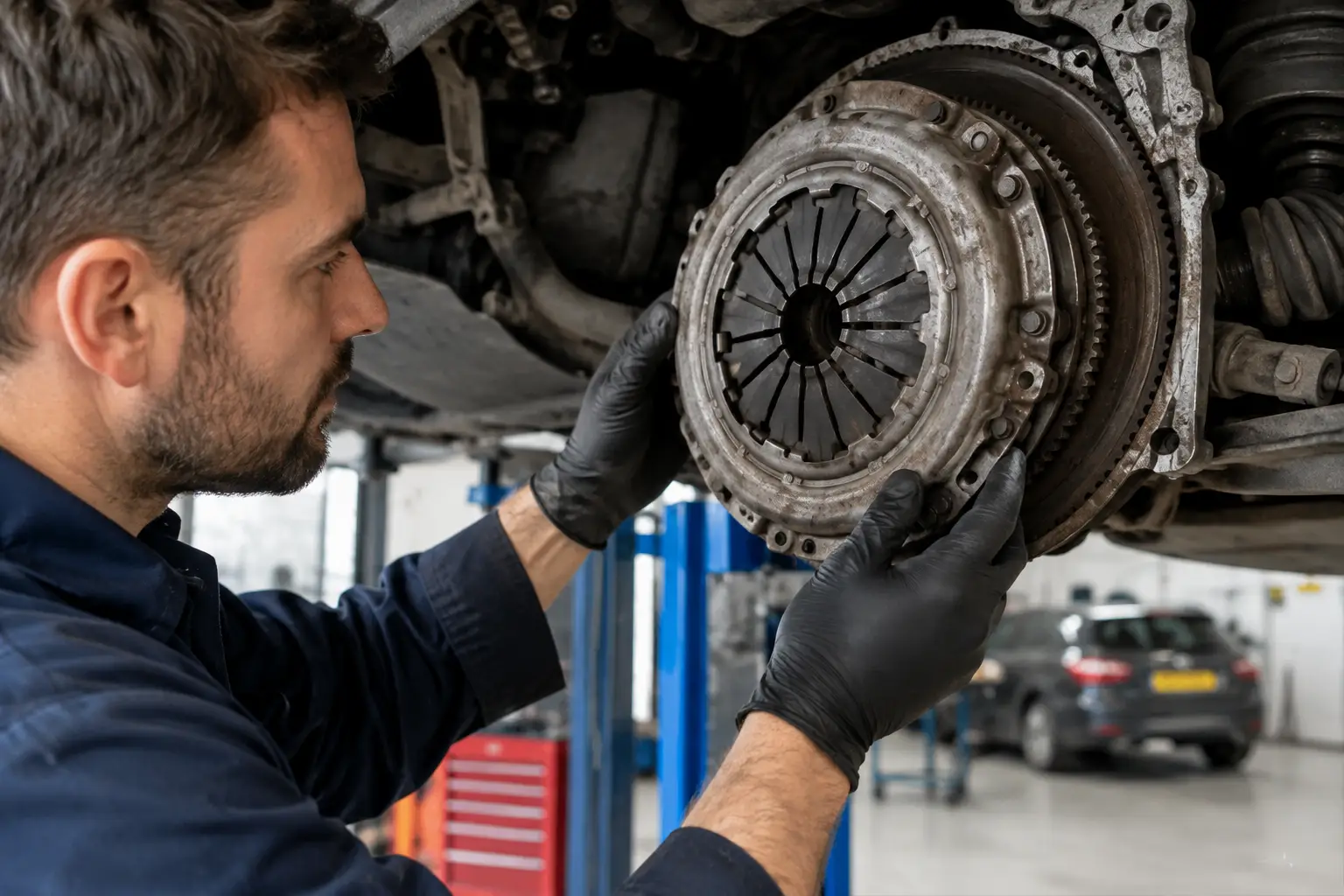
In most cases, clutch slip happens because the friction material on the clutch plate has worn down. Every pull-away and gear change creates a small amount of wear. Eventually, the plate cannot clamp strongly enough between the engine flywheel and pressure plate.
How quickly that happens depends on the vehicle and how it is used. Regular town driving, long queues, hill starts and carrying heavy loads all put more strain on a clutch than steady motorway miles. Resting your foot on the clutch pedal can also cause premature wear, even if the pressure feels light.
Wear is not the only cause. An oil leak from the engine or gearbox can contaminate the clutch plate, making it slip. A weak pressure plate, damaged flywheel or issue with the hydraulic release system can also be involved. On some diesel vehicles, a worn dual-mass flywheel may cause vibration, rattling or harshness alongside clutch problems.
This is why an honest garage should not promise a clutch replacement before inspecting the vehicle. Sometimes the repair is straightforward. Sometimes associated parts need attention to make the repair reliable and avoid paying for the same labour twice later on.
Can you keep driving with a slipping clutch?
For a short journey to a garage, it may be possible if the slip is mild and the car is otherwise safe to drive. But it depends on how severe the problem is and the route you need to take.
A clutch that is slipping badly can lose drive quickly, particularly on a hill or when pulling into faster traffic. It may also overheat and damage the flywheel or pressure plate. The longer it is driven while slipping, the less predictable it becomes.
Avoid hard acceleration, towing, carrying unnecessary weight and holding the car on a hill using the clutch. Use the handbrake for hill starts. If the revs surge badly, there is a strong burning smell, or the car struggles to move away, do not risk a longer journey. Arrange recovery support or call a local garage for advice.
What happens during a proper clutch check?
A good inspection starts with the symptoms you have noticed. When did it first happen? Is it worse when the engine is warm, on hills or in certain gears? Does the pedal feel normal? These details help narrow down the cause.
A technician will road test the vehicle where safe, check the clutch pedal and hydraulic system, and inspect for signs of leaks. If the vehicle has warning lights or a separate lack-of-power complaint, diagnostic equipment may be used to rule out engine or gearbox faults. The gearbox does not always need to come out just to confirm a problem, but removal is normally required to inspect the clutch components fully and carry out the repair.
If replacement is needed, the repair plan should be clear. You should know whether it includes the clutch plate, pressure plate, release bearing or concentric slave cylinder, and whether the flywheel has been checked. There should be no surprise extras halfway through without an explanation and your approval.
Book a clutch diagnostic before it gets worse
If your revs are climbing without the car accelerating properly, do not wait for the clutch to leave you stuck at a junction or unable to get home. A prompt check can confirm whether it is clutch slip, an engine performance issue or something else entirely.
AutoFix4u provides clear clutch diagnostics and repairs for drivers in Lowestoft and nearby areas. We explain the fault in plain English, give you a clear repair plan and only recommend work that is needed. Call now or get a quote to arrange a check – same-day slots may be available when the workshop schedule allows.
The sooner you get the symptoms looked at, the more choice you have about when and how the repair is carried out.