
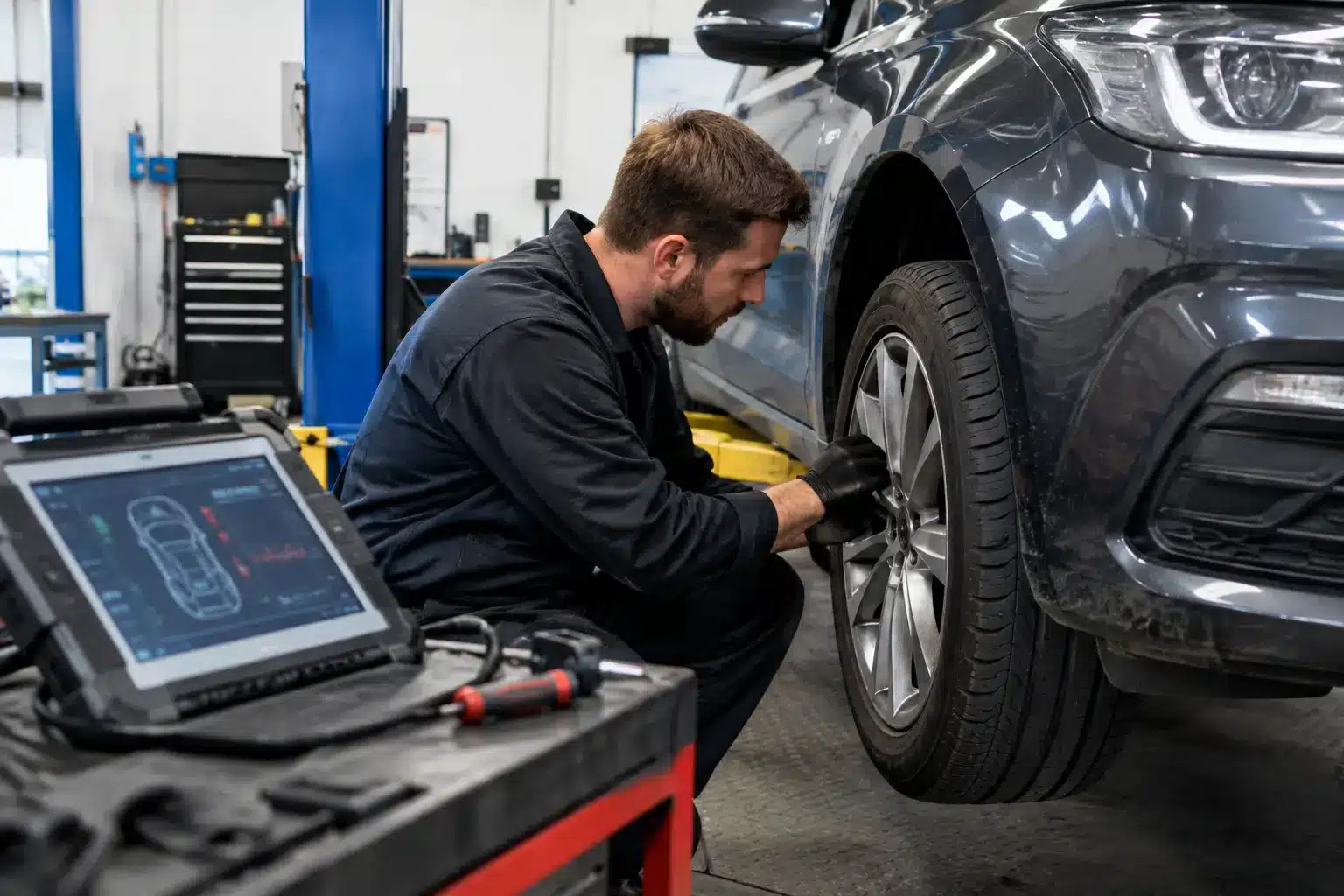
Vehicle Vibration Repair for Shaking Cars
A vibration is not something to ignore just because the car still drives. Whether the steering wheel shakes at 60mph, the brake pedal pulses, or the whole car judders when pulling away, vehicle vibration repair starts by finding exactly when and where it happens. That detail usually points us towards the real fault and avoids replacing parts that are not needed.
In most cases, a vibration comes from tyres and wheels, brakes, suspension, drivetrain components or the engine. The right repair depends on the symptom. A shake only at motorway speed needs a different approach to a vibration that appears under braking or acceleration.
When does the vibration happen?
The quickest way to narrow down a fault is to notice the conditions that bring it on. Try to make a mental note before booking in. Is it felt through the steering wheel, seat, floor or gear lever? Does it happen at a certain speed, when braking, turning, accelerating or even while stationary?
Vibration through the steering wheel at speed
If the steering wheel starts shaking at around 50-70mph, wheel balance is a common cause. Small balancing weights can fall off, particularly after a pothole strike or kerb contact. A tyre may also have an uneven wear pattern, damage to its internal structure, or a bulge in the sidewall.
We often see this issue when a driver has had new tyres fitted elsewhere, clipped a pothole, or driven for a while with tyre pressures out of balance. Wheel balancing may solve it, but it is not always the answer. A bent wheel, worn suspension joint or tracking issue can produce a similar feeling.
Do not assume it is safe simply because the vibration disappears at lower speeds. A damaged tyre can worsen quickly. Check the tyre for obvious bulges, cuts or a low pressure and arrange an inspection rather than continuing with regular high-speed journeys.
Judder or pulsing when braking
A steering wheel shake or brake pedal pulse when slowing down usually points towards the front brakes. Brake discs can develop uneven surfaces after repeated heavy braking, corrosion, or a sticking brake caliper. The pads then do not make smooth contact with the disc, and the vibration travels back through the pedal or steering.
Sometimes the cause is not the discs themselves. A seized caliper slide, worn suspension component or wheel bearing can affect how the brakes work. That is why fitting discs and pads without checking the surrounding parts can lead to the problem returning.
If the car pulls to one side, smells hot after a journey, or a wheel feels unusually hot, avoid driving it until it has been checked. A sticking brake can damage more than the discs and pads, and it can affect stopping distance.
Shaking under acceleration
A vibration that appears when you put your foot down, then eases when you lift off, is often related to the drivetrain. On front-wheel-drive cars, worn driveshaft joints can cause a noticeable shudder during acceleration. A damaged or worn inner CV joint is a regular cause.
Engine or gearbox mounts can also be responsible. These mounts hold the engine and gearbox in place while allowing a controlled amount of movement. When a mount splits or collapses, the engine can move too much under load and send a vibration through the cabin.
This usually happens because a component has worn gradually, rather than failing without warning. You may also notice a clunk when changing gear, pulling away or coming on and off the accelerator. The repair could be a driveshaft, a CV joint or a mount, so proper inspection matters before agreeing to work.
Vibration at idle or when stationary
If the car shakes while stopped with the engine running, tyres and wheel balance are not the cause. This is more likely to be an engine running issue or a worn engine mount.
A rough idle can come from an ignition fault, air leak, fuel issue or sensor problem. The engine warning light may come on, but not always. Modern cars store useful fault information, so diagnostics can show whether the engine is misfiring or receiving incorrect readings.
A failing mount can make a normal engine vibration feel much worse inside the car. We check both the engine’s running condition and the mounts before recommending a repair. Replacing a mount will not fix a misfire, and replacing ignition parts will not fix a split mount.
Common causes of vehicle vibration repair
There is no single repair for a shaking car. The most common causes we find are tyre damage or incorrect wheel balance, worn brake discs or sticking calipers, worn suspension bushes and ball joints, damaged wheels, wheel bearing wear, driveshaft faults and engine or gearbox mount problems.
Suspension faults can be harder to spot from the driver’s seat. A worn lower arm bush or ball joint may allow the wheel to move slightly when braking or travelling over uneven roads. You may hear a knock as well as feeling a vibration. Uneven tyre wear is another clue that should not be ignored.
Wheel bearings tend to cause a humming or rumbling noise that gets louder with speed. In more advanced cases, there may be vibration too. Leaving a worn bearing for too long can lead to more expensive damage and affect safe handling.
The key point is that several faults can feel similar. A wheel balance check is sensible for a speed-related shake, but if the tyres are sound and properly balanced, the next step is a wider inspection rather than repeated balancing.
How we diagnose a shaking car
At AutoFix4u, we start with the symptom, not a guess. We will ask when the vibration happens, how long it has been present, and whether any work has recently been carried out. Those answers help us focus the inspection.
We then inspect the tyres, wheels, brakes and suspension for visible damage, uneven wear, loose components and excessive movement. Where needed, we carry out a road test to reproduce the fault safely. If the vibration is linked to the engine or a warning light, diagnostic equipment helps identify stored fault codes and live data issues.
You should receive a clear explanation of what we have found, what needs attention now, and what can reasonably be monitored. If more than one issue is present, we will explain the order of priority. There should be no surprise extras and no pressure to approve work you do not understand.
Can you keep driving with a vibration?
It depends on the cause and severity. A mild steering wheel vibration may turn out to be wheel balance, but it could also be tyre damage or a loose suspension part. A strong vibration, sudden change in handling, brake judder, pulling under braking or a visible tyre bulge needs prompt attention.
Stop and seek help if the car shakes violently, a tyre looks damaged, the steering feels loose, a brake appears to be binding, or a warning light flashes. A flashing engine warning light can indicate a misfire severe enough to damage the catalytic converter.
For anything less urgent, avoid long or high-speed trips until the vehicle has been assessed. Continuing to drive can turn a manageable repair into worn tyres, damaged brakes or further drivetrain problems.
Get the right repair, not a guess
A smooth drive is not just about comfort. It affects tyre life, braking, steering and confidence behind the wheel. If your car is shaking through the steering wheel, floor or pedals, book a diagnostic inspection with a local garage that will look for the root cause.
AutoFix4u helps drivers in Lowestoft and nearby areas with clear vehicle vibration repair, honest recommendations and quality parts. Same-day slots may be available. Call now or get a quote, and bring us the details of when the vibration occurs – they can save time and get you back to a smoother, safer drive.


