MOT Prep Checklist That Stops Easy Fails
Most MOT failures are not “big” faults. They are the small, obvious things you only notice once the tester points at them – a brake light out, a tyre just under the limit, a wiper that smears instead of clears. The good news is you can catch a lot of this yourself in under an hour, and anything you cannot check safely can be booked in for a quick look.
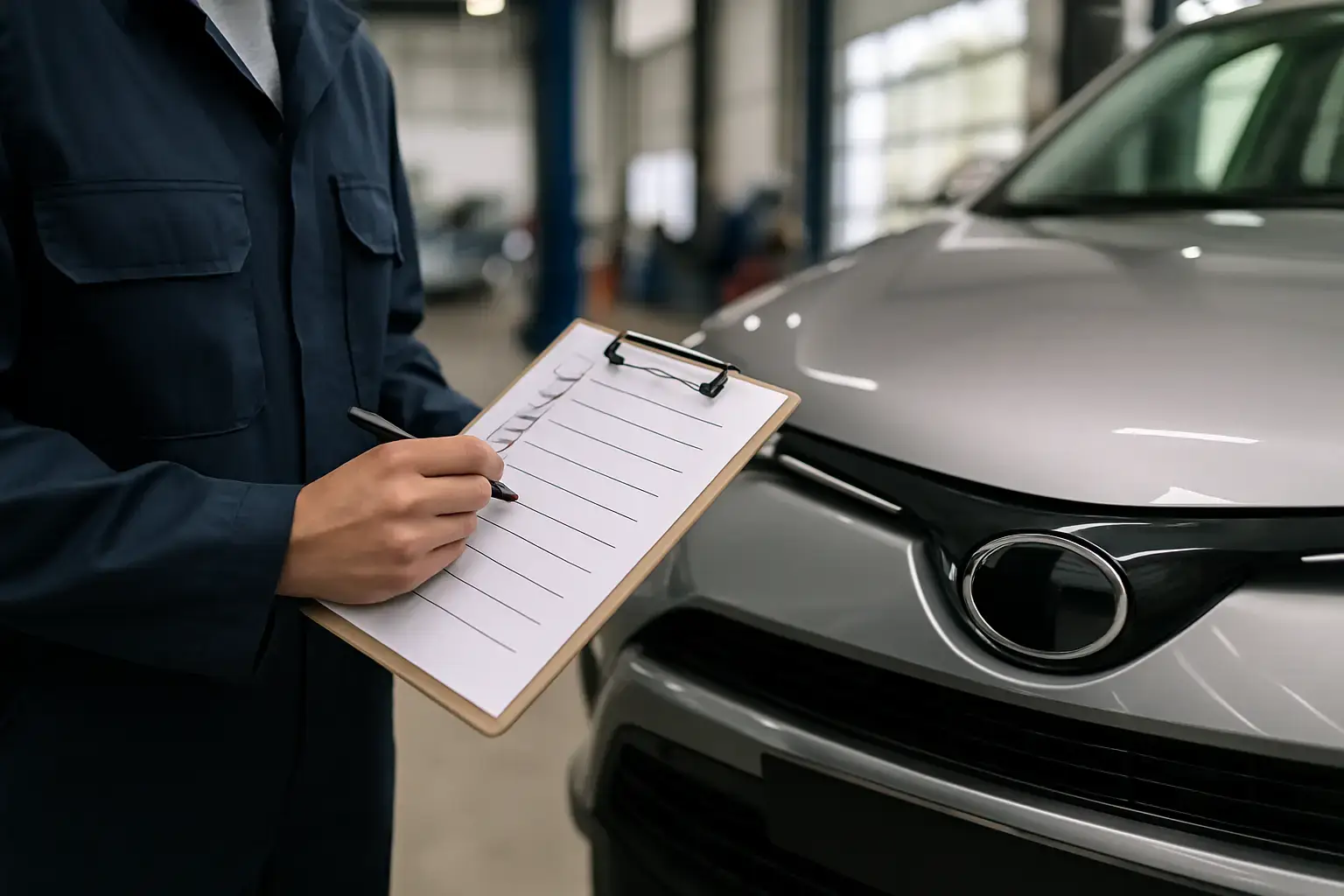
This guide is written for everyday drivers who need the car back on the road with minimal downtime. It is a practical MOT preparation checklist you can run through a few days before the test, so you have time to fix anything that crops up.
MOT preparation checklist: start with the quick wins
Do the fast, visual checks first. They cost nothing and they are the ones that most often cause a fail or an advisory.
1) All exterior lights and indicators
Walk around the car with the lights on. Check dipped beam, main beam, sidelights, number plate lights, brake lights, indicators and hazards. If you are on your own, reverse up near a wall or garage door and press the brake pedal to see the reflection, or ask someone to stand behind the car.
If a bulb is out, fix it properly – correct bulb type, seated correctly, and no loose connections. If lights keep failing, that can point to a blown fuse, a corroded holder, water ingress, or a charging issue.
2) Windscreen, wipers and washers
Your windscreen needs a clear view of the road. Chips and cracks can be an MOT issue depending on where they are and how big they are, but the bigger day-to-day problem is wipers that do not clear.
Top up washer fluid and test the jets. If they spray weakly or in the wrong direction, they might be blocked. Replace wiper blades if they smear, judder, or leave strips. It is a small job that makes the car safer immediately – especially if you are commuting early mornings or driving coastal roads where salt and grit are common.
3) Tyres: tread, damage and matching
Tyres are one of the most common reasons for failure and advisories because the limit is easy to overlook. Check tread depth across the width and around the full circumference. Also look for sidewall damage, bulges, cuts, cracking, or exposed cords.
Do not ignore uneven wear. If the inside edge is worn more than the outside, that often points to alignment, suspension wear, or under-inflation. You might pass the MOT today and still be buying tyres again far sooner than you should. If the car pulls to one side, the steering wheel is off-centre, or you have a vibration at speed, get it looked at before the test.
4) Mirrors, plates and simple visibility items
Make sure mirrors are secure and not cracked. Check your number plates are readable, not peeling, and properly fixed. Remove anything that blocks the driver’s view, including old phone mounts stuck in the swept area of the windscreen.
Safety-critical checks you should not guess
Some items can look “fine” on the drive and still fail under proper inspection. You can do a basic sense-check, but if anything feels off, book a pre-MOT inspection rather than hoping.
5) Brakes: feel, noises, warning lights
On a quiet road, test the brakes gently. The pedal should feel firm, the car should stop in a straight line, and you should not hear grinding. Squealing can be pads, but grinding is often metal-on-metal and can damage discs quickly.
If your brake warning light, ABS light, or traction control light is on, do not assume it will “clear itself”. The MOT will not ignore warning lights that indicate a safety system fault. Brakes are not an area to take chances – if you are unsure, get it checked.
6) Steering and suspension: knocks, clunks and wandering
Listen for knocks over bumps, clunks when turning, or a loose feeling through the steering wheel. These can point to worn drop links, ball joints, track rod ends, bushes, or top mounts. Sometimes the car still drives, but the wear is enough to fail.
A quick driveway check is to bounce each corner of the car and see if it settles quickly. Excessive bouncing can suggest worn dampers, but this is not a definitive test. Real inspection needs the car lifted and the components checked for play.
7) Seatbelts, seats and airbags
Pull each seatbelt out fully and let it retract. It should pull out smoothly and lock when tugged sharply. Check for fraying, cuts, and that the buckle clicks securely.
If the airbag light is on, that is a straight warning sign that needs diagnosis. Sometimes it is a simple connection under a seat; sometimes it is a deeper fault. Either way, it is best handled before test day.
Under-bonnet checks that prevent last-minute stress
You do not need to be a mechanic to spot obvious problems. These checks help avoid preventable failures and reduce the risk of breaking down after the test.
8) Fluids: oil, coolant and brake fluid
Check the engine oil level on the dipstick (if fitted) and top up with the correct grade if it is low. Low oil is not just an MOT concern – it is an engine damage concern.
Check coolant level when the engine is cold. If it is repeatedly dropping, do not keep topping up and ignoring it. Leaks can worsen quickly.
Brake fluid should be between min and max. If it is low, it can indicate pad wear or a leak. A leak is urgent.
9) Battery and charging signs
If the car struggles to start, the battery may be weak. That does not always show up as an MOT failure, but it can ruin your week. Corroded battery terminals, a tired battery, or a charging issue can also trigger warning lights and odd electrical behaviour.
If you have had jump starts recently, treat that as a prompt to get it checked rather than waiting for the next no-start morning.
Exhaust, emissions and warning lights
This is where “it depends” comes in. Some cars fail because of a clear exhaust problem. Others fail because a sensor has pushed emissions out of range, even though the car seems to drive normally.
10) Exhaust condition and noise
With the engine running, listen for blowing noises. Look for a hanging exhaust, missing rubbers, or obvious holes. A small leak can become a bigger one quickly, and it can affect emissions readings.
If you have a diesel and you notice more smoke than usual, or the car feels sluggish, it may be linked to DPF or EGR issues. That is not something to ignore just because the car still gets you to work.
11) Engine management light (and friends)
If any warning light is on – engine management, ABS, airbag, power steering – get it scanned and diagnosed. Clearing codes without fixing the cause is a false economy. The light usually comes back, and you are still left with the underlying fault.
A proper diagnostic check tells you what the car is complaining about and what needs doing next. That keeps costs predictable and avoids replacing parts on guesswork.
Things that catch people out on the day
A few final details can derail an otherwise good test.
12) Doors, bonnet and boot
The tester needs to access the car safely. Make sure doors open from inside and outside, the bonnet latch works, and the boot opens. If the bonnet release is stiff or unreliable, sort it before the appointment.
13) Windscreen demist and heater
If your windscreen does not demist properly, you are going to struggle in winter driving anyway. While the MOT checks around visibility and safety, a weak blower, faulty heater controls, or air con problems often show up when you need them most. If the blower only works on one speed, or you cannot get warm air, get it checked.
14) Paperwork and timing
Bring any paperwork you have if it is relevant to ongoing issues, but the key is timing. Do your checklist 3-7 days before the MOT, not the night before. That gives you time to order parts if needed and still aim for a same-week fix.
If you are tight on time and want a garage to run through it with you, a pre-MOT check is often the quickest route. We do MOT prep and post-test repairs locally, and if you need a clear plan and a firm quote before work starts, you can book in with AutoFix4u.
If you find a problem: what to do next
If it is a simple bulb, wiper blade, washer top-up, or number plate fix, handle it straight away and re-check.
If it involves brakes, steering, suspension, warning lights, or visible leaks, do not gamble. The trade-off is simple: you can roll the dice and risk a fail (and extra downtime), or you can get it inspected and fixed properly once, with the root cause dealt with.
Pick one evening this week, run the checks in good daylight, and you will go into your MOT knowing the car is safe – not just hoping it is.


6 thoughts on “MOT Prep Checklist That Stops Easy Fails”