Why Is My Car Misfiring? Causes and Next Steps
A misfire is usually obvious once it starts. The engine may shake at idle, hesitate when you pull away, feel flat under acceleration, or bring on the engine warning light. If you are asking, “why is my car misfiring?”, the short answer is that one or more cylinders are not burning fuel properly. The real job is finding out why before a small fault turns into a bigger repair.
At AutoFix4u, we often see drivers carry on because the car still gets them to work or the shops. That can be risky. A continuing misfire can damage the catalytic converter, waste fuel and leave you with a breakdown when you least need one.
What a car misfire actually means
Your engine needs the right mix of air, fuel and spark at the right time. When one cylinder does not get one of those things, it cannot produce its share of power. That is a misfire.
On a petrol car, the cause is often linked to the ignition system, such as spark plugs or ignition coils. On a diesel, it may be a fuel injector, an air leak, a sensor fault or an issue affecting the fuel and air supply. Modern cars also have engine management systems that can put the vehicle into limp mode if they detect a serious problem.
The symptoms can come and go. Some cars misfire only when cold, only under hard acceleration, or only after the engine has warmed up. That pattern helps with diagnosis, but it does not identify the faulty part on its own.
Signs your car is misfiring
A rough-running engine is the most common sign, but not every misfire feels the same. You may notice vibration through the steering wheel or seat while stationary, jerking when accelerating, poor fuel economy, a lack of power or a fuel smell from the exhaust.
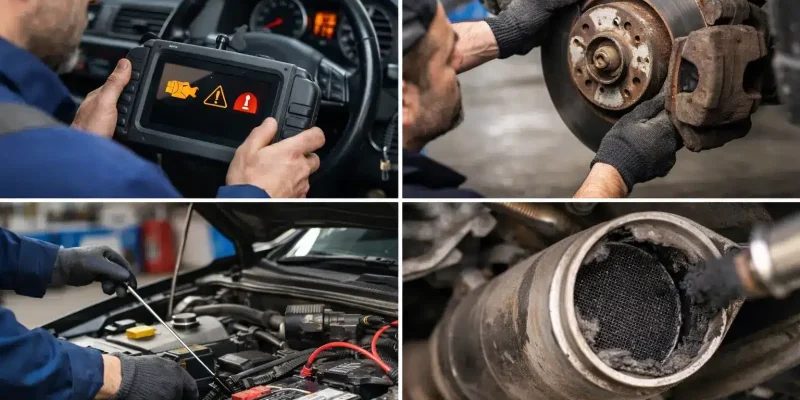
The engine warning light may stay on, flash, or appear only now and then. A flashing engine warning light needs prompt attention. It can mean unburnt fuel is reaching the exhaust system, which can overheat and damage the catalytic converter.
If the car is struggling badly, has lost a lot of power, or the warning light is flashing, avoid unnecessary driving. Call for advice or arrange recovery support rather than hoping it will clear itself.
Why is my car misfiring? The usual causes
Worn spark plugs
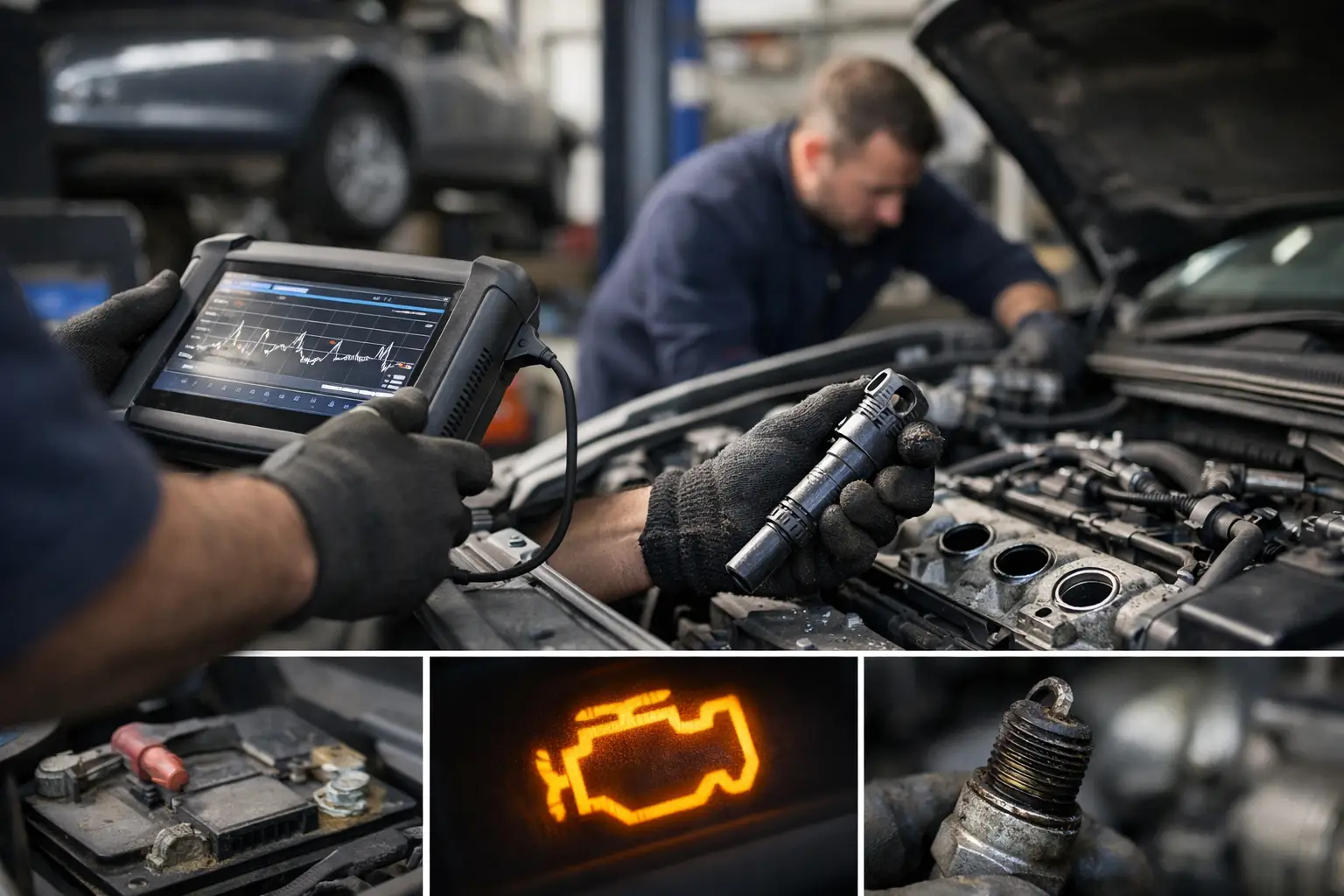
Spark plugs wear over time. As the gap increases, the spark becomes weaker and can struggle to ignite the fuel mixture properly. This is particularly noticeable under load, such as joining a dual carriageway, climbing a hill or carrying passengers.
Spark plugs are a service item, but the correct type and fitting interval matters. Replacing plugs can be a straightforward repair, although it should not be treated as a guess if there are other faults stored in the engine control unit.
Failed ignition coil or damaged wiring
An ignition coil supplies the high voltage needed to create a spark. If a coil starts failing, the engine may misfire intermittently before the fault becomes constant. Moisture, heat and age can all contribute.
We also check the wiring and connectors. A loose connection or damaged wire can produce the same symptoms as a failed coil. Replacing parts without checking the circuit first can lead to unnecessary cost and still leave the real problem unresolved.
Fuel injector problems
Fuel injectors deliver a precise amount of fuel into each cylinder. If an injector is blocked, leaking or electrically faulty, that cylinder may run too weakly or too richly. You may feel a misfire, see increased fuel use, or notice difficult starting.
Injector faults can affect petrol and diesel vehicles. On diesels, fuel system diagnosis needs particular care because the system operates at high pressure. The fault may be an injector itself, but it could also be fuel pressure, contaminated fuel or an electrical issue.
Air leaks and intake faults
The engine needs measured air. A split hose, leaking intake pipe or faulty seal can allow extra air in after the system has measured it. That upsets the fuel mixture and can cause rough idle, hesitation and misfires.
Turbo hoses and intake pipes are worth checking where fitted. A leak can also cause loss of power and put a vehicle into limp mode, so it is easy to mistake for another engine problem.
Sensors giving incorrect readings
Sensors tell the engine control unit what is happening with air flow, temperature, oxygen levels and crankshaft position. If the control unit receives poor information, it may calculate the wrong amount of fuel or the wrong ignition timing.
A fault code can point us in the right direction, but it is not always a final diagnosis. For example, a code relating to a cylinder misfire tells us where the symptom is happening, not necessarily whether the plug, coil, injector, compression or wiring is to blame.
Low compression or mechanical engine faults
Less commonly, a misfire is caused by a mechanical issue inside the engine. Worn valves, head gasket problems, timing faults or piston damage can stop a cylinder from sealing and firing as it should.
These faults need proper testing rather than assumptions. They are not always the first cause we find, but they must be ruled out when ignition and fuel checks do not solve the issue. Acting early can make a real difference to the final repair.
Can I drive with a misfiring engine?
It depends on how severe it is, but it is not something to ignore. A very mild intermittent misfire may allow you to drive carefully to a local garage for diagnostics. If the engine is shaking heavily, the car is losing power, fuel economy has suddenly dropped, or the engine warning light is flashing, stop driving when it is safe to do so.
Continuing to drive can send unburnt fuel into the exhaust. The catalytic converter can then overheat and fail, adding a costly repair to what may have started as a plug or coil fault. A misfire can also make pulling out at junctions or overtaking unpredictable.
Do not keep restarting the car repeatedly in the hope it will reset. If the fault is active, it will normally return. A proper diagnostic check gives you a far clearer answer.
How we find the real cause of a misfire
A good repair starts with confirming the fault. We begin by listening to what the car is doing and when the problem happens. Does it misfire from cold? Is it worse in wet weather? Did it start after a service, a warning light or a loss of power? These details matter.
We then carry out vehicle diagnostics to read fault codes and live engine data. From there, we inspect the likely causes, including plugs, coils, wiring, air pipes and fuel system readings. Where needed, we test individual components rather than replacing them on suspicion.
This approach is especially useful where the problem is intermittent. Clearing a warning light without fixing the cause is not a repair. The aim is to identify the root fault, explain it in plain English and give you a clear repair plan with no surprise extras.
What you can check before booking in
There are a few useful observations you can make safely. Note whether the engine warning light is steady or flashing, whether the issue happens at idle or while driving, and whether it follows rain, a fuel fill-up or a recent repair. If you have noticed poor starting, smoke, unusual exhaust smells or a change in fuel use, mention that too.
Avoid removing ignition components or disconnecting sensors yourself, particularly on a hot engine. Modern engine systems can store extra faults after connectors are disturbed, making diagnosis harder. If the car is due a service, tell the garage when the spark plugs and filters were last changed.
Book misfire diagnostics in Lowestoft
A car misfire is often repairable without drama when it is checked early. The key is not to guess at parts or keep driving until the car stops altogether.
If your car is shaking, hesitating, showing an engine warning light or losing power, book diagnostics with AutoFix4u in Lowestoft. We will check the fault properly, explain what has caused it and give you honest recommendations before work begins. Same-day slots may be available, so call now or get a quote and get your car running properly again.