Vehicle Diagnostics Service Review
A dashboard light comes on during the school run, the car feels flat on the bypass, or it suddenly drops into limp mode on the way to work. That is usually when people start looking for a vehicle diagnostics service review. They do not want a lesson in car electronics. They want to know one thing – will this garage actually find the fault and fix it properly?
That is the right question to ask. A diagnostic service is only useful if it leads to the real cause of the problem. Reading a fault code is the starting point, not the repair. In most cases, the code points you in a direction, but it does not tell the full story on its own.
What a vehicle diagnostics service review should really look at
A proper vehicle diagnostics service review should focus on results, not buzzwords. Many drivers have already had the frustrating version of diagnostics. A warning light is scanned, a vague answer is given, a part is changed, and a week later the same fault is back.
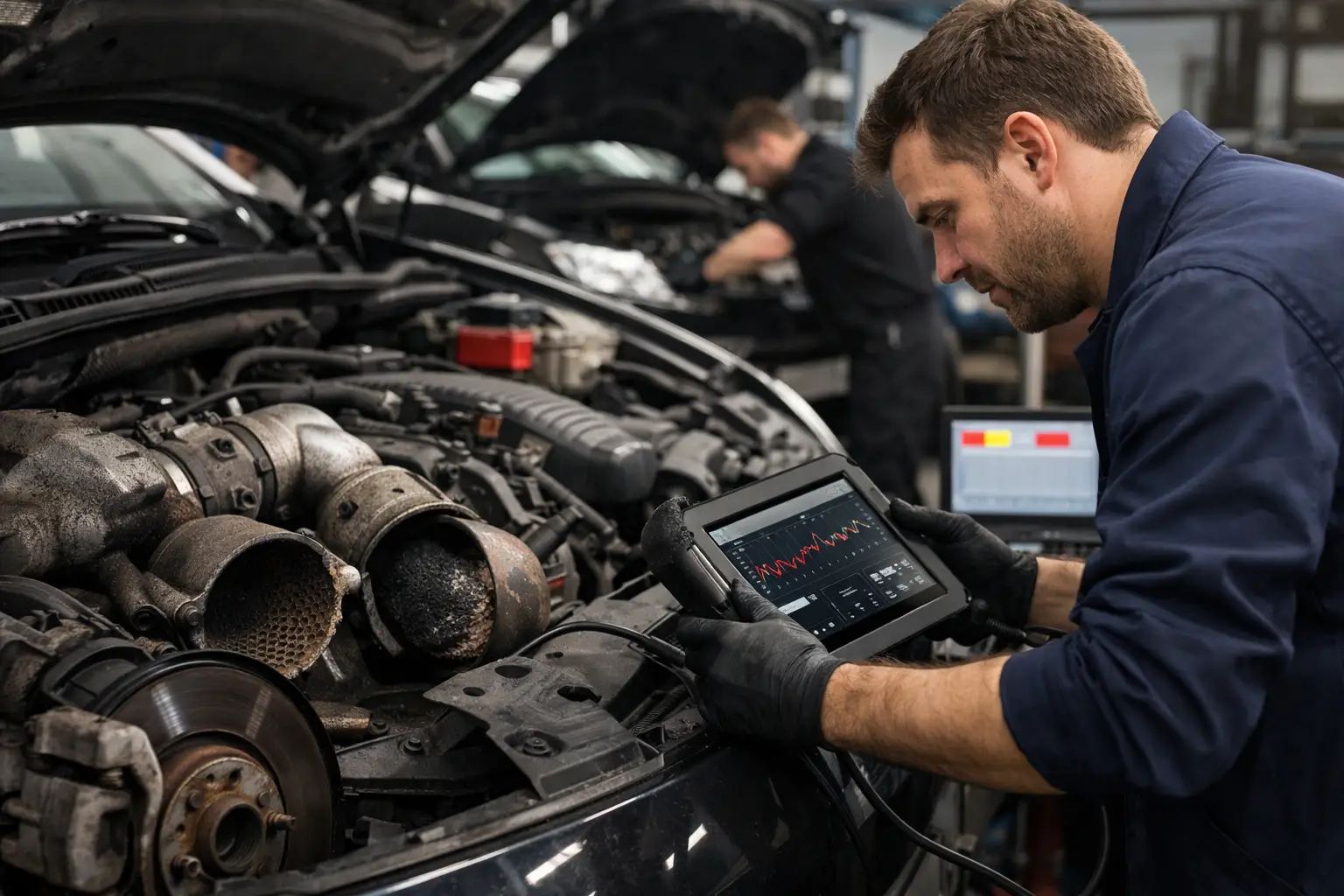
We often see this issue when diagnostics are treated like a quick computer check rather than a fault-finding process. Modern vehicles store useful data, but they still need hands-on testing. Sensors, wiring, air leaks, blocked filters, battery voltage and control units all affect the final answer.
Good diagnostics usually follow a simple path. First, the symptoms are checked. Then fault codes and live data are read. After that, the likely causes are tested one by one. Only then should a repair plan be given. That is what separates a proper workshop from guesswork.
The problems drivers usually bring in
Most people do not book diagnostics because they are curious. They book because something is wrong and they need the car back on the road.
One of the most common issues is the engine warning light. Sometimes the car still drives normally. Sometimes it feels rough, struggles to accelerate or uses more fuel than usual. This usually happens because the fault has been detected early, before the problem gets worse.
Loss of power is another regular one. If the vehicle feels sluggish or goes into limp mode, there may be a problem with boost pressure, the DPF system, a sensor fault or an emissions issue. On diesel vehicles, a blocked DPF is a frequent cause, especially if the car mostly does short trips.
Electrical faults also bring in a lot of drivers. That can be anything from starting problems to battery drain, warning messages, failed sensors or intermittent faults that come and go. These are often the jobs where proper testing matters most, because replacing parts at random gets expensive quickly.
Then there are MOT-related problems. A car fails on emissions, ABS, airbag lights or another warning light, and the owner needs a clear answer fast. In those cases, diagnostics are not just about reading the fault. They are about finding what needs to be repaired so the car can pass properly.
What good diagnostics include
If you are reading a vehicle diagnostics service review, it helps to know what should be included. The best service is usually straightforward.
You should expect someone to listen to the symptoms properly. That sounds basic, but it matters. If the fault only happens when the engine is cold, under load, after a long drive, or during stop-start traffic, that changes the approach.
You should also expect clear explanation. A good garage should be able to tell you what they have found in plain English. Not just what code came up, but what that code means, what they have tested, and what they recommend next.
Most importantly, there should be a line between diagnosis and guessing. Sometimes the answer is obvious and a repair can be quoted there and then. Sometimes extra testing is needed because several faults can trigger the same warning light. Honest garages will say that clearly instead of pretending they know more than they do.
Why fault codes alone are not enough
This is where many drivers get caught out. A code reader might show an EGR fault, a DPF problem or a sensor issue. That does not automatically mean the named part has failed.
For example, a boost pressure fault could be caused by a split hose, a sticking actuator, a vacuum issue or a faulty sensor. A DPF warning could be linked to failed temperature sensors, poor combustion, short journeys, or another engine problem stopping regeneration. An engine warning light for fuel trim might come from an air leak rather than a failed component.
That is why proper diagnostics save money in the long run. Paying for testing once is usually better than paying for the wrong part twice.
When fast diagnostics matter most
Sometimes you can wait a few days to sort a warning light. Sometimes you really should not.
If the vehicle has lost power, struggles to start, cuts out, shows multiple warning lights, or feels unsafe to drive, it needs checking as soon as possible. The same applies if the brakes feel wrong, the clutch is slipping badly, or the engine is overheating. Those are not faults to ignore and hope for the best.
There is also a practical side. For most households, there is one main car doing everything – work, school, shopping, family trips. If that car is off the road for days because nobody identified the issue quickly, it creates bigger problems than the repair itself.
That is why local drivers often want a garage that can diagnose faults quickly, explain the next step clearly, and carry out the repair without dragging things out.
A local garage versus a quick scan
There is a big difference between a proper local workshop and a quick scan offered with no follow-up. The scan might tell you there is a fault stored. It rarely tells you whether the issue is serious, whether it can be repaired the same day, or whether other faults are connected.
A working garage sees patterns. We often see the same symptoms across different makes and models – warning lights caused by weak batteries, limp mode linked to boost leaks, DPF issues caused by driving style, and MOT failures traced back to faults that were ignored too long.
That experience matters because cars do not fail in textbook ways. Sometimes the problem is exactly what the code suggests. Sometimes it is the wiring, a poor earth, carbon build-up, or a separate issue triggering a misleading code.
For drivers around Lowestoft, that local garage approach usually makes more sense than chasing the cheapest scan available. You need someone who can test, explain and fix.
What to ask before you book
A useful review is not just about stars or ratings. It should help you judge whether the service matches the problem you have.
Ask whether the garage investigates the cause, not just the code. Ask whether they deal with warning lights, DPF faults, electrical issues and drivability problems regularly. Ask whether they will explain the findings before carrying out repairs. If your car is off the road or unsafe, ask whether urgent bookings or same-day slots are available.
You do not need a sales pitch. You need straight answers, clear pricing and a realistic timescale.
When diagnostics lead to the right repair
The best outcome from diagnostics is not a printed report. It is a car that runs properly again.
That might mean a sensor replacement, wiring repair, DPF clean, brake fault fix, battery replacement or software-related issue being sorted. It depends on the fault. The important part is that the repair follows evidence, not assumption.
For example, if a vehicle has poor acceleration and an engine warning light, a proper test may show a boost leak rather than a turbo failure. That is a very different repair. If the car keeps flattening the battery, diagnostics may find a parasitic drain rather than a bad alternator. Again, completely different fix.
This is why a good diagnostics service gives value even before the repair starts. It stops the problem becoming a chain of wrong guesses.
Final thought on any vehicle diagnostics service review
If you are choosing a garage based on a vehicle diagnostics service review, look past general praise and focus on whether they solve real faults properly. The best garages are usually the ones that stay calm, explain things clearly, and deal with the cause instead of masking the symptom. If your car has a warning light, loss of power or an unexplained fault, get it checked before it turns into a bigger job. A clear answer now is usually the cheapest and least stressful option later.


One thought on “Vehicle Diagnostics Service Review”