Why Does My Clutch Judder When Pulling Away?
A clutch that shakes or grabs as you pull away can make even a short trip feel rough. If you are asking, why does my clutch judder, the answer is usually that something is preventing the clutch from engaging smoothly. It may be wear inside the clutch, contamination from an oil leak, or a fault around the flywheel or engine mountings.
A small amount of vibration once in a while is not always an emergency. But repeated judder should not be ignored, particularly if it is getting worse, the car is difficult to pull away in, or you can smell burning. In most cases, an inspection will show whether the clutch itself is at fault or whether another issue is causing it.
What clutch judder feels like
Clutch judder is a shuddering, vibrating or hopping feeling as you lift the clutch pedal, usually in first gear or reverse. The car may shake through the seat, floor or steering wheel just as it starts moving. Once you are fully off the clutch and driving normally, the vibration often disappears.
It is different from a slipping clutch. A slipping clutch usually causes the engine revs to rise without the car picking up speed properly. Judder is more about an uneven, jerky take-up when moving off.
We often see this issue after drivers have noticed a gradual change in how the pedal feels. It can start as an occasional shake on a hill, then become more obvious in traffic or when reversing out of a parking space.
Why does my clutch judder? The common causes
A worn or uneven clutch plate
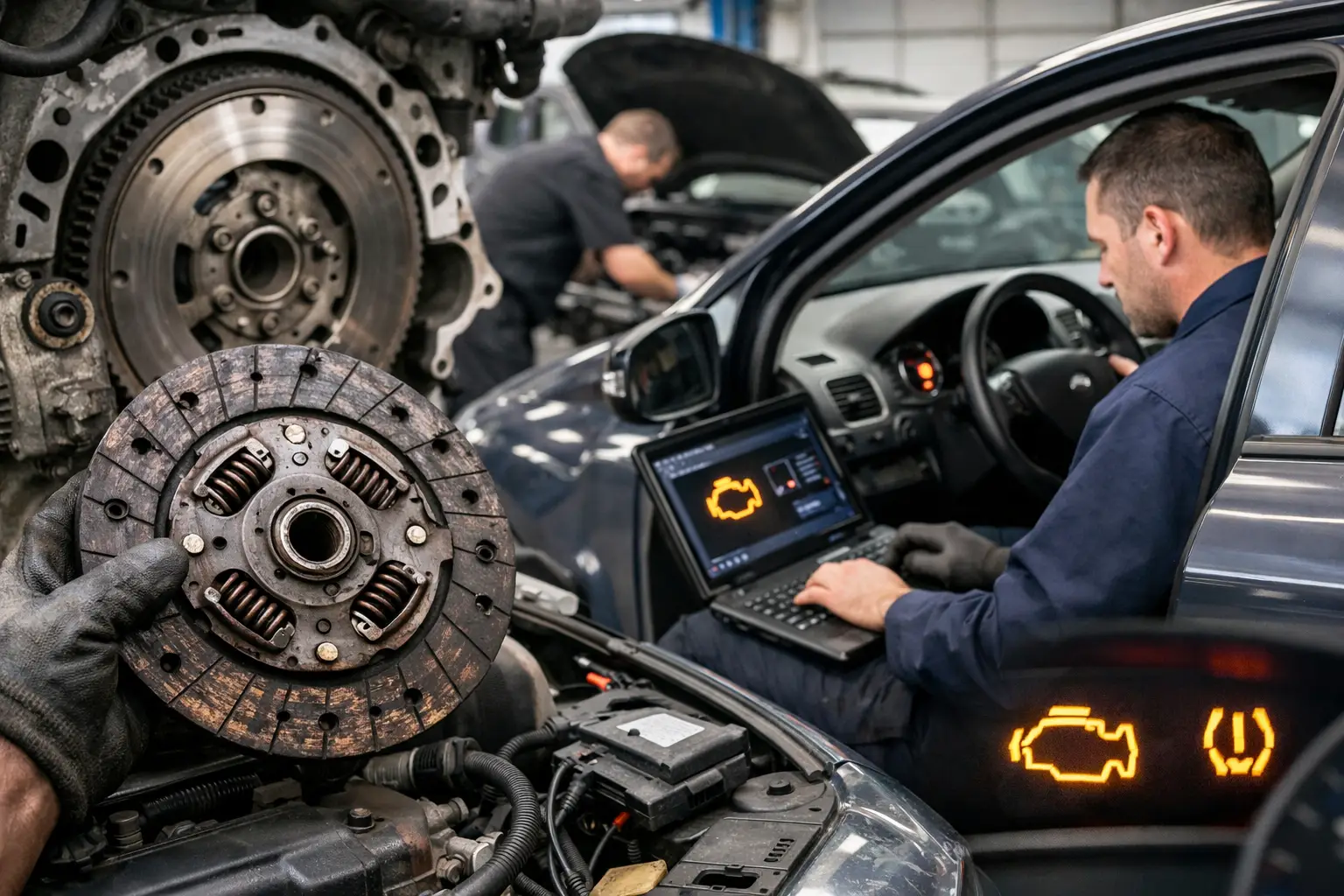
The clutch plate has friction material on it, much like a brake pad. Over time, this surface wears down. It can also become uneven from heat, heavy use or repeated stop-start driving.
When the plate cannot grip the flywheel evenly, it catches and releases in small bursts rather than engaging cleanly. That produces the familiar shudder as you pull away. A worn clutch plate will not repair itself, so replacement is normally the proper fix.
Oil or grease on the clutch
A clutch needs a clean, dry friction surface to work correctly. If engine oil or gearbox oil leaks into the bell housing, it can contaminate the clutch plate. This makes engagement unpredictable and can cause severe judder.
The key point here is that replacing only the clutch may not be enough. The source of the leak must be found and repaired at the same time. Otherwise, the new clutch could become contaminated too. This is why a proper diagnostic inspection matters before any work is authorised.
A damaged or worn flywheel
The flywheel is the large metal component that the clutch grips against. On many diesel cars and some petrol models, it is a dual-mass flywheel designed to reduce vibration from the engine.
If the flywheel surface is warped, badly scored or worn, the clutch cannot engage evenly. A failing dual-mass flywheel can also create rattling, vibration or a clunk when starting or switching off the engine. Sometimes a clutch replacement is all that is needed; sometimes the flywheel needs replacing too. It depends on its condition once the gearbox is removed and inspected.
Weak engine or gearbox mountings
Not every judder comes from inside the clutch. The engine and gearbox sit on rubber mountings that control movement. If a mounting splits or becomes soft, the engine can move excessively as the clutch takes up.
That movement can feel very similar to a clutch fault. You may notice a knock when changing gear, vibration at idle, or a pronounced lurch when moving off. Mountings are generally easier to inspect than the clutch itself, so they should be checked before assuming the clutch needs replacement.
Clutch release or hydraulic problems
A fault in the clutch release system can sometimes lead to poor engagement. This may involve the release bearing, clutch fork, slave cylinder or hydraulic fluid system, depending on the vehicle.
You may also notice a heavy pedal, a pedal that feels spongy, difficulty selecting gears, or a pedal that does not return normally. These signs need checking promptly. Continuing to force gears can create further problems and leave you unable to drive the car safely.
Driving conditions and heat build-up
Holding the car on the clutch on a hill, creeping in heavy traffic, or regularly towing can generate a lot of heat. One difficult manoeuvre will not usually ruin a healthy clutch, but regular clutch slipping speeds up wear.
If the judder only happens after a long queue or repeated hill starts, let the car cool and see whether it improves. If it returns regularly, it is still worth booking an inspection. Heat may be exposing wear that is already there.
Can you keep driving with a juddering clutch?
Usually, you may be able to drive for a short period if the judder is mild and there are no other symptoms. That does not mean it is sensible to leave it for months. Judder can worsen quickly, especially if oil contamination or flywheel damage is involved.
Avoid hard acceleration, towing, holding the car on the biting point, and repeated attempts to pull away at high revs. These can overheat the clutch and increase the damage. Use the handbrake for hill starts rather than balancing the vehicle on the clutch.
Stop driving and arrange help sooner if you notice a burning smell, smoke, loud grinding, a sudden change in pedal feel, trouble selecting gears, or the car struggling to move despite rising revs. Those symptoms can indicate a clutch close to failure.
What a proper clutch inspection involves
A good garage should not simply tell you that the clutch needs replacing based on a quick road test. The symptoms can overlap with engine mountings, gearbox faults and flywheel issues.
At AutoFix4u, the starting point is to confirm when the judder happens and what other symptoms are present. A technician can check the clutch pedal operation, hydraulic system, engine and gearbox movement, and listen for flywheel-related noises. A road test may help identify whether the vibration appears only when cold, after warming up, in reverse, or under load.
The clutch and flywheel cannot always be fully assessed without removing the gearbox. If that is required, you should be told clearly before work begins. Once the parts are visible, the condition of the clutch plate, pressure plate, release bearing and flywheel can be explained in plain English, along with the best repair plan.
Should you replace the flywheel with the clutch?
Not automatically. Replacing parts that are still serviceable adds cost without benefit. However, if a dual-mass flywheel has excessive play, heat damage, noise or surface wear, fitting a new clutch alone can be false economy.
The same applies to oil leaks. If a rear engine seal or gearbox input seal is leaking onto the clutch, it should be dealt with during the repair. The gearbox is already removed, so it is the sensible time to fix the root cause rather than risk paying for the same labour again later.
A transparent repair recommendation should set out what has failed, what is worn but still usable, and what work is advisable while access is available. That gives you the information to make a decision without surprise extras.
Get the judder checked before it becomes a breakdown
A juddering clutch is rarely something to panic about on the day it starts, but it is a clear sign that your car needs attention. The earlier the cause is identified, the more chance there is of avoiding further damage to the flywheel, gearbox or new clutch parts.
If your car shakes when pulling away in Lowestoft, Oulton Broad, Carlton Colville, Beccles or nearby, contact AutoFix4u for a clutch inspection and clear repair advice. Same-day diagnostic slots may be available. You will get an honest explanation of the fault, clear pricing before repairs begin, and a practical plan to get your car driving smoothly again.


