Why Does My Car Shake When Braking? Causes
A steering wheel that judders as you slow down is not something to put off until the next service. If you are wondering why your car shakes when braking, the cause is often within the braking or suspension system – and it needs checking properly. In most cases, the car will still drive normally at first, but braking faults can worsen quickly and affect how safely the vehicle stops.
The key detail is when and where you feel the shake. A vibration through the steering wheel points us in a different direction from a pulse through the brake pedal or a shudder felt through the whole car. That is why a proper inspection matters. Replacing parts based on a guess can cost more and fail to solve the problem.
Why does my car shake when braking?
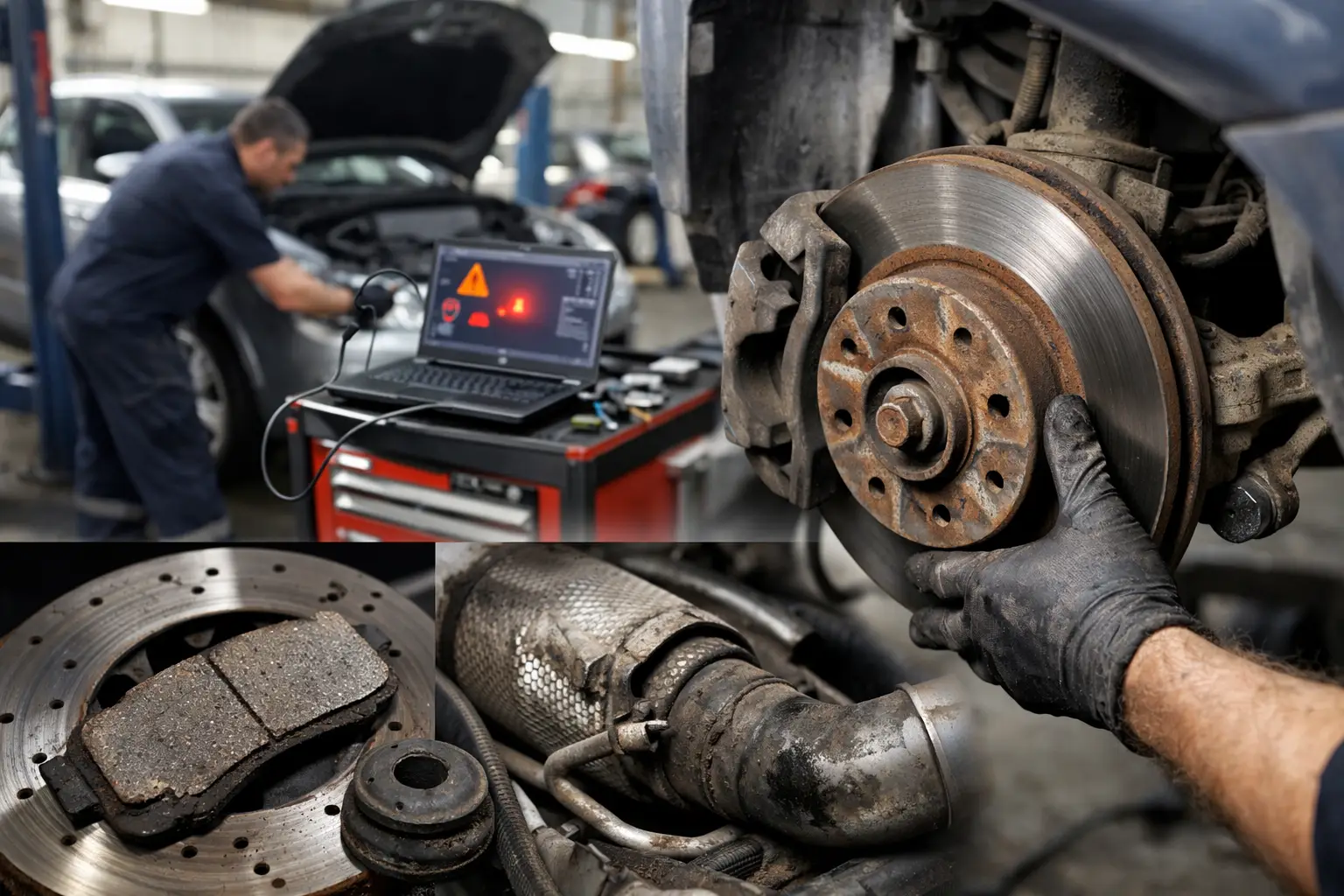
We often see this issue when brake discs are uneven, worn, or have developed excess run-out. Run-out means the disc is not turning perfectly true. As the brake pads clamp onto it, the pressure changes slightly with every rotation. You may feel this as a wobble through the steering wheel, pedal, or seat, usually when braking from higher speeds.
People commonly call this “warped discs”. Heat can play a part, particularly after repeated heavy braking or if a hot disc is held under pressure when the car is stationary. However, the underlying problem is not always a disc that has physically bent. Uneven disc thickness, corrosion between the disc and wheel hub, or a brake caliper that is not releasing correctly can produce the same symptom.
The shake may also be coming from worn suspension or steering components. A braking load puts extra force through the front of the car. If there is play in a suspension arm bush, ball joint, track rod end, or wheel bearing, that movement can become obvious only when you brake.
The most common causes we find
Worn or uneven brake discs and pads
This is the most likely cause when the steering wheel shakes mainly during braking. Brake discs wear over time, and their condition depends on driving style, mileage, road conditions, and the quality of previous parts fitted. A disc that is below its minimum thickness, badly corroded around the braking surface, or uneven will not give the pads a consistent surface to grip.
Pads matter too. If they are worn unevenly, glazed from overheating, contaminated, or fitted poorly, braking can feel rough. Discs and pads generally work as a matched pair on the same axle. Fitting pads to badly worn discs may quieten the issue briefly, but it is rarely a lasting repair.
A sticking brake caliper
A caliper holds the brake pads and uses hydraulic pressure to clamp them onto the disc. It needs to release smoothly once you lift off the brake pedal. If a caliper piston, slider, or carrier is sticking, one pad can keep rubbing against the disc.
This creates excess heat and uneven wear. You might notice the car pulling slightly to one side, a hot smell after a journey, reduced fuel economy, or one wheel producing far more brake dust than the other. In some cases, the wheel itself feels unusually hot, but do not touch it after driving.
The solution may be freeing and servicing the moving parts, replacing the caliper, or replacing damaged discs and pads as well. It depends on how long the fault has been present and how much heat damage there is.
Corrosion or dirt behind the brake disc
On cars used for short trips, parked outside, or driven near coastal roads, corrosion can build up where the disc sits against the wheel hub. Even a small amount of debris or rust can stop the disc sitting flush. This can create run-out and a brake vibration after discs have been replaced.
A good brake repair is not just fitting new parts. The hub faces must be cleaned, components checked for damage, and the assembly fitted correctly. This is one reason a quick parts swap is not always the answer.
Worn suspension and steering parts
If the shake is mostly through the steering wheel, or the car feels vague and unsettled on uneven roads as well, the front suspension and steering need attention. Worn bushes, ball joints, track rod ends, drop links, or wheel bearings can allow a wheel to move when braking force is applied.
You may also hear a knock over potholes, notice uneven tyre wear, or find the car drifts from a straight line. The brake system may be working correctly, but braking exposes movement elsewhere in the vehicle.
Tyre or wheel problems
A damaged wheel, loose wheel nuts, a tyre with a bulge, or severe imbalance can all cause vibration. Usually, tyre balance issues are felt at a particular cruising speed rather than only when braking. But if the tyre or wheel is damaged, braking can make the vibration more noticeable.
Check your tyres visually when the car is cold and parked safely. Look for cuts, bulges, low pressure, or obvious damage. Do not continue driving on a tyre with a bulge or suspected wheel damage.
What the type of vibration can tell you
A shudder through the steering wheel is commonly linked to the front brake discs, front suspension, steering joints, or front wheels. A pulse through the brake pedal can point towards disc run-out or uneven braking surfaces. If you feel the vibration through the seat or floor, the rear brakes, rear suspension, or rear wheels may be involved.
The speed also gives useful clues. A light vibration that appears only when braking from motorway speeds is often an early warning of disc or suspension trouble. A violent shake at low speed, especially with a pulling sensation, grinding noise, or brake warning light, needs urgent attention.
Try to note whether the fault happens every time you brake, only after a longer drive, or only during firm braking. These details help a technician narrow down the cause faster. They do not replace an inspection, but they can make the diagnostic process more efficient.
Is it safe to keep driving?
It depends on how severe the symptom is, but shaking under braking should not be ignored. A mild vibration may mean the car can be driven carefully to a garage for inspection. Leave extra stopping distance, avoid hard braking where possible, and do not plan a long journey before it has been checked.
Stop driving and arrange recovery support if the car pulls sharply when braking, the steering wheel shakes violently, there is grinding or metal-on-metal noise, you smell burning, a wheel is very hot, or a brake warning light appears. These can indicate a serious brake fault or a component that is close to failing.
Do not assume an MOT pass means the issue can wait. An MOT is a snapshot of the vehicle on the day. A brake vibration can develop between tests, and early attention is usually simpler than waiting for discs, pads, calipers, tyres, or suspension parts to suffer further damage.
How a garage should diagnose brake shaking
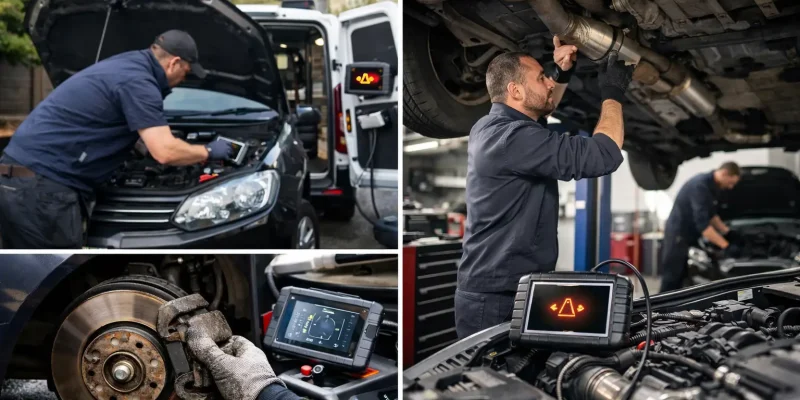
A proper check starts with a road test where safe, followed by an inspection of the brakes, wheels, tyres, steering, and suspension. The technician should check disc and pad wear, look for overheating or uneven contact, inspect caliper movement, and assess whether the wheels and tyres are sound.
If needed, the discs can be measured for thickness variation and run-out. The mounting surfaces and wheel bearings may also need checking. This matters because fitting new discs without fixing a sticking caliper, dirty hub face, or worn suspension joint can bring the vibration back.
At AutoFix4u, the aim is to identify the root cause first, then explain the repair in plain English. You should know what has failed, what needs doing now, and whether any other work can safely wait. Clear pricing and no surprise extras make it easier to decide.
Book a brake check before it gets worse
Brake judder rarely fixes itself. If your car shakes when braking, book a diagnostic brake inspection as soon as you can. For drivers in Lowestoft, Oulton Broad, Carlton Colville, Kessingland, Beccles and nearby areas, AutoFix4u can check the braking system, suspension and wheels, then give you a clear repair plan.
Same-day slots may be available depending on workload and parts required. Call now or get a quote with the car registration, the symptoms you feel, and when they started. A short check now can prevent a more expensive repair and give you confidence every time you press the brake pedal.