
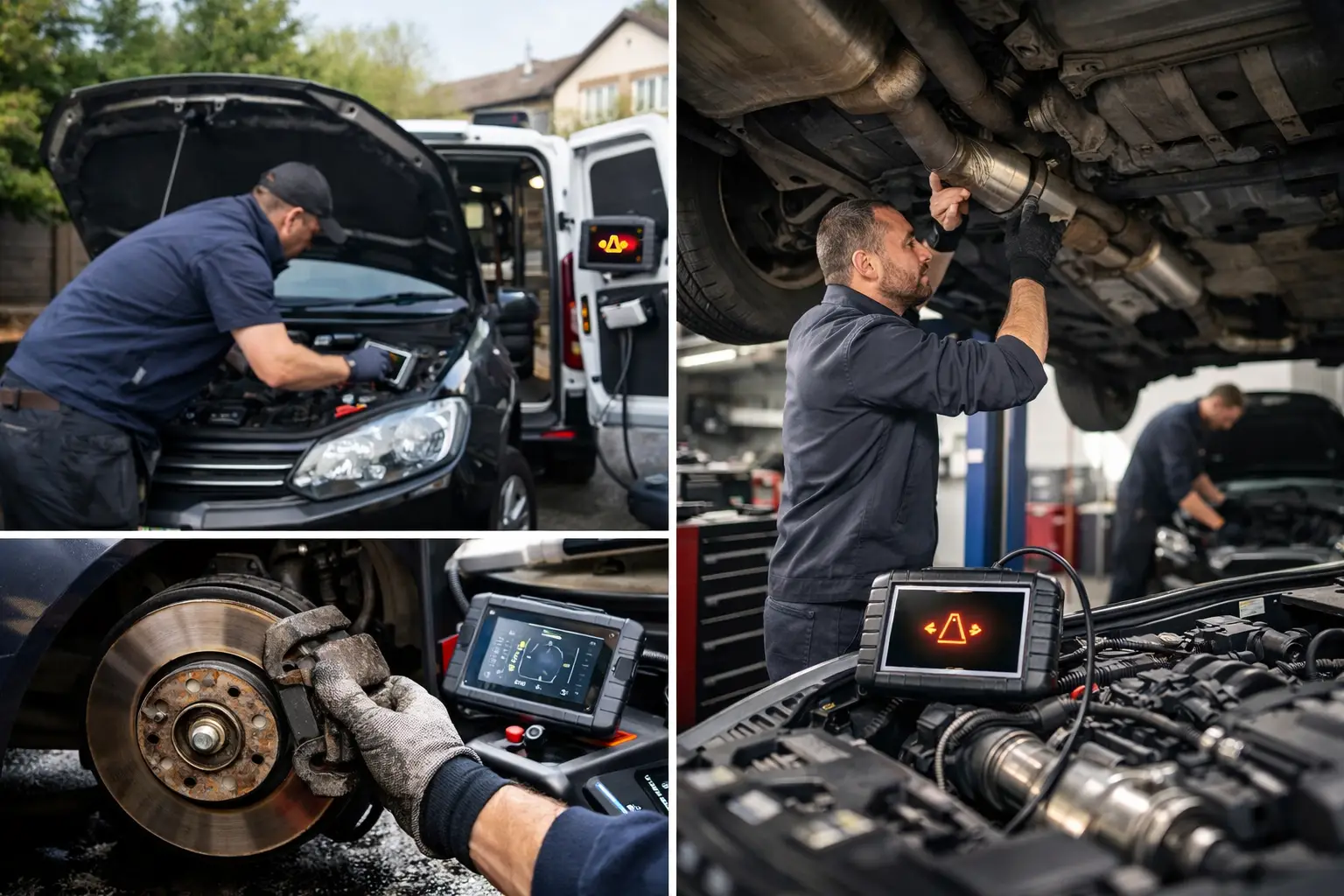
Mobile Mechanic or Local Garage: Which Fits?
Your engine warning light comes on during the school run. Or the car starts making a grinding noise when you brake. At that point, choosing between a mobile mechanic or local garage is not just about convenience. It is about getting the fault identified properly and fixed safely, without wasting money on the wrong repair.
A mobile mechanic can be a very useful option for some jobs. But there are times when your car needs proper workshop equipment, ramps and diagnostic tools. Knowing the difference can save you a second repair, more downtime and a bigger bill later.
Mobile mechanic or local garage: the main difference
A mobile mechanic comes to your home, workplace or roadside location. This can be ideal when the car will not start, you cannot drive it safely, or your day simply does not allow time for a garage visit. Common mobile jobs include battery replacement, jump starts, basic servicing, some brake work and straightforward part changes.
A local garage gives the mechanic access to equipment that cannot sensibly travel in a van. That includes vehicle lifts, advanced diagnostic equipment, tyre machinery, air conditioning machines and tools for working safely underneath the vehicle. It also means the car can be inspected more thoroughly before parts are fitted.
Neither option is automatically better. The right choice depends on the symptom, the likely cause and whether the vehicle is safe to drive.
When a mobile mechanic makes sense
If the issue is clear and the repair can be done safely on your drive, mobile assistance can save time. We often see this with a flat battery, a non-start caused by an ageing battery, or a car that needs a basic service but has no warning lights or running issues.
It can also help when the vehicle is stuck at home. A mobile mechanic may be able to confirm whether a dead battery, loose connection or starter problem is preventing it from starting. That initial check can be useful before arranging recovery.
Convenience is the main benefit. You do not need to arrange a lift, take time off work or wait around at a workshop. For a simple, confirmed job, that can be the sensible route.
There are limits, though. Working outside is not always suitable for safety-critical or involved repairs. Poor weather, restricted access, uneven ground and limited space can all make a difference. A mobile mechanic may also have fewer parts available on the day, particularly if the fault has not been diagnosed first.
When a local garage is the better choice
A garage is usually the better option when the problem is unclear, intermittent or linked to a warning light. Modern cars can store fault codes, but a code alone does not tell you which part to replace. It points a trained technician towards a system that needs testing.
For example, an engine warning light may relate to an air leak, sensor reading, fuel issue, ignition fault or DPF problem. Fitting the part named by a basic code reader can sometimes mask the issue temporarily, but it does not always fix the root cause.
At a workshop, the vehicle can be checked properly. This may involve a diagnostic scan, live data readings, wiring checks, pressure testing or a road test. In most cases, that extra investigation is what prevents unnecessary parts being fitted.
A local garage is also the safer choice for repairs involving brakes, clutches, suspension, exhausts, tyres, cambelts and gearbox issues. These jobs often require the car to be raised securely and inspected from underneath. A lift also helps the mechanic spot related wear that could cause the same problem to return.
Warning lights and loss of power need proper diagnostics
If your car has gone into limp mode, lost power on acceleration or displayed an engine warning light, book diagnostics rather than guessing. This usually happens because the engine management system has detected a reading outside its normal range and reduced performance to protect the vehicle.
DPF faults are a good example. A warning light may mean the filter needs a regeneration, but it could also mean there is another issue stopping the regeneration from completing. Short journeys, a faulty sensor, an EGR-related fault or an engine running problem can all contribute. Simply clearing the warning light does not deal with the cause.
The same applies to electrical faults. A battery may appear to be the problem, but the real cause could be a failing alternator, poor connection or excessive drain while the car is parked. A proper test avoids replacing a good battery and facing the same non-start again next week.
For drivers around Lowestoft, this is where a local independent garage can make the difference. You can bring the car in, explain exactly what it has been doing and get a clear answer on the next step. If it is not safe to drive, arrange recovery support rather than risking further damage.
MOT failures are rarely as simple as they sound
An MOT failure sheet can look alarming, especially when it uses wording you do not recognise. Some failures are straightforward, such as worn tyres or a blown bulb. Others, including brake imbalance, suspension wear or emissions failures, need a closer look before the repair is agreed.
A garage can inspect the vehicle, explain what has actually failed and separate urgent work from advisories that can be planned for later. That clarity matters. You should know what needs doing for a safe, legal car and what can reasonably wait.
Mobile repairs can be useful for certain MOT-related jobs, but a garage is generally more practical if several items need attention. The car can be inspected in one place, parts can be sourced accurately and the work can be checked before it goes back for retest.
Think about the total cost, not just the call-out
A mobile visit may look less expensive because you are not travelling to a garage. But the cheapest first visit is not always the lowest overall cost. If the fault needs more testing, specialist equipment or a second appointment, the job can take longer than expected.
A local garage may be more efficient for diagnostic and repair work because the tools, ramps and parts suppliers are close at hand. That does not mean every repair will be completed the same day. Some faults need time to test properly, and some parts must be ordered. But you should be told this clearly before work goes ahead.
Look for clear pricing, an explanation of the findings and no surprise extras. A good mechanic should be willing to explain why a repair is recommended, what the alternatives are and whether the car is safe to use in the meantime.
A quick way to decide
Choose a mobile mechanic if the repair is simple, the cause is already known and the vehicle can be worked on safely where it is parked. Choose a local garage when the fault is uncertain, a warning light is on, the car has lost power, it has failed its MOT, or the repair involves safety-critical components.
You should also use a garage if the car needs air conditioning diagnosis or regas, tyre fitting, DPF investigation, clutch work, complex electrical testing or anything that needs access underneath. These are jobs where the right equipment is part of doing the repair correctly.
Do not keep driving if the symptoms are getting worse
A flashing engine warning light, grinding brakes, heavy steering, overheating, strong fuel smells or a major loss of power should not be ignored. Stop somewhere safe if you can and get advice before continuing. Driving on may turn a manageable repair into a more serious one.
For less urgent faults, make a note of when the problem happens. Does the warning light appear after motorway driving? Does the car struggle only when cold? Is there a knock when turning or braking? These details help a technician find the cause faster.
If you are unsure whether a mobile mechanic or local garage is right for your situation, start with the symptom rather than the service. Tell AutoFix4u what the car is doing, what warning lights are showing and whether it is safe to drive. You can then get a practical recommendation, clear pricing and the right repair plan instead of paying for guesswork.


