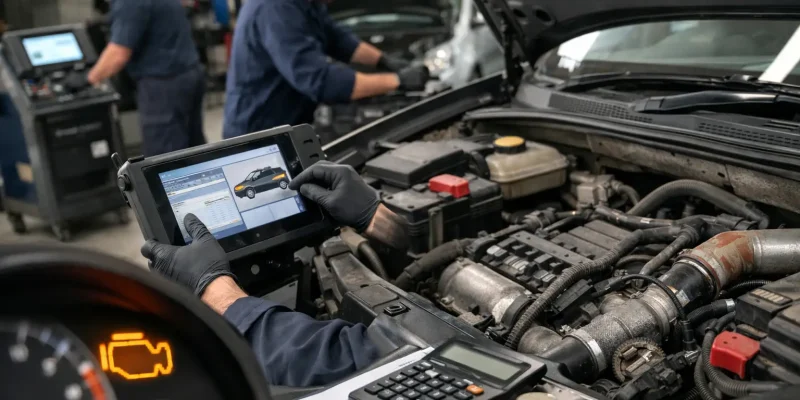

A Transparent Repair Estimate Review That Makes Sense
A warning light appears on your dashboard. Your brakes start grinding, or your car fails its MOT. Suddenly, you need repairs and want to understand the cost.
That is why a transparent repair estimate review matters. Before approving work, you should understand the fault, the recommended repair and the expected price.
At AutoFix4u Garage Lowestoft, we believe clear communication helps drivers make better decisions. Therefore, we explain the repair process and discuss the costs before work begins.
This guide explains what a good estimate includes, which questions to ask and how to avoid unexpected repair charges.
What Should a Clear Repair Estimate Include?
A good repair estimate gives you more than a final price.
First, it should explain the problem your vehicle has developed. Next, it should describe the recommended repair and the parts required.
You should also understand the expected labour cost.
For example, an estimate for brake repairs should explain whether the vehicle needs new pads, discs or other components.
However, not every brake noise means you need a complete brake replacement.
A technician must inspect the system before recommending the correct repair.
Diagnosis and fault identification
Accurate diagnosis helps prevent unnecessary spending.
For example, an engine warning light can indicate several different faults.
A damaged sensor, split hose or electrical connection may cause similar symptoms.
Therefore, a mechanic should investigate the problem before recommending expensive parts.
A diagnostic scan provides useful information. However, the technician must also check whether the readings match the symptoms.
This approach helps identify the actual cause.
Parts and labour costs
Your estimate should explain which parts the repair requires.
It should also make the labour charges clear.
For example, replacing brake pads involves different work from replacing a clutch.
The labour time depends on the vehicle, its design and the condition of the components.
Some repairs also require additional materials or fluids.
Therefore, the garage should explain these costs where they apply.
VAT and the total price
Always check whether an estimate includes VAT.
This matters because the total amount can differ from the initial figure.
Also, ask whether the garage has included all known costs.
An estimate may change if further inspection reveals additional damage. However, the garage should explain this possibility beforehand.
Most importantly, you should approve any additional work before the mechanic carries it out.
Transparent Repair Estimate Review: What to Check
Before accepting an estimate, review the recommended repairs carefully.
Start with the fault description.
Does it explain the problem clearly?
Next, check whether the parts and labour match the work the garage recommends.
You should also understand whether the repair needs immediate attention.
Understand the urgency
Not every vehicle problem requires an immediate repair.
For example, a minor advisory may allow you to plan maintenance for a later date.
However, serious brake faults, dangerous tyre damage and major steering problems require prompt action.
A responsible garage should explain the difference.
Consequently, you can prioritise important repairs without replacing serviceable components unnecessarily.
Ask about replacement parts
Replacement parts vary in quality, price and suitability.
Therefore, ask what type of parts the garage plans to use.
The correct choice depends on your vehicle and the repair.
For example, a safety-related component should meet the required specifications.
Quality parts can also support long-term reliability.
However, an expensive part does not automatically guarantee a better repair.
Correct diagnosis and professional installation matter just as much.
Confirm the work before approving it
A clear estimate should describe the agreed repair.
For example, a clutch replacement may include several related components.
Likewise, cambelt work may involve tensioners, pulleys and a water pump, depending on the engine.
Ask which parts the garage plans to replace.
You should also understand what the price excludes.
This helps prevent confusion when you collect the vehicle.
Why Proper Diagnostics Matter Before a Repair Quote
Some vehicle faults have an obvious cause.
For example, a mechanic may quickly identify a visibly damaged tyre or broken exhaust mounting.
However, other problems require more detailed testing.
An engine warning light, intermittent electrical fault or sudden loss of power can have several causes.
Engine warning lights
An engine warning light does not identify a specific failed component.
Instead, it tells the driver that the vehicle has detected a problem.
A technician can read the stored fault codes and examine relevant live data.
Next, the mechanic checks the suspected components.
For example, a boost-pressure fault may involve a damaged hose, faulty sensor or turbo control issue.
Replacing the turbo without testing could create a large and unnecessary bill.
Therefore, diagnosis should guide the repair estimate.
Diesel and DPF problems
Diesel vehicles may develop blocked DPF warnings, reduced power or limp mode.
However, a blocked filter is not always the original fault.
Short journeys can interrupt regeneration. In addition, sensor problems and engine faults can affect the process.
As a result, the filter may repeatedly become restricted.
Before recommending cleaning or replacement, a mechanic should identify the cause.
Read our blocked DPF symptoms guide to understand the warning signs.
Battery and charging faults
A flat battery can prevent your car from starting.
However, fitting a new battery will not solve every starting problem.
For example, a faulty alternator may fail to recharge the battery.
Damaged cables or poor electrical connections can also create similar symptoms.
Therefore, a technician should test the charging system when the symptoms suggest a wider fault.
Our alternator fault symptoms guide explains these problems in more detail.
Why Repair Estimates Sometimes Change
Even experienced mechanics cannot identify every hidden problem before starting work.
For example, corrosion may affect bolts and surrounding components.
A technician may discover additional damage during dismantling.
However, this does not mean the garage should automatically increase your bill.
Instead, it should explain the new findings and discuss the available options.
Hidden corrosion and damaged components
Suspension repairs sometimes involve seized bolts or damaged mounting points.
Likewise, brake repairs may reveal sticking callipers or heavily corroded components.
These problems can increase the labour or parts required.
Therefore, the mechanic should explain the additional work and provide an updated estimate.
You should then decide whether to approve the repair.
Further diagnostic work
Some electrical problems only appear under particular conditions.
For example, a fault may occur when the engine warms up or when the vehicle travels over bumps.
As a result, the mechanic may need extra testing time.
A clear estimate should explain the initial diagnostic cost.
If further testing becomes necessary, the garage should discuss it before continuing.
This approach keeps you informed throughout the process.
Questions to Ask Before Approving Car Repairs
You do not need detailed mechanical knowledge to understand a repair estimate.
However, asking a few practical questions can help you make the right decision.
Consider the following:
- What fault has the mechanic identified?
- Which tests support the diagnosis?
- What parts does the repair require?
- How much will the labour cost?
- Does the estimate include VAT?
- Is the repair urgent or can it wait?
- What happens if the mechanic finds additional damage?
- What warranty or guarantee applies to the repair?
These questions help you understand the work.
They also give the garage an opportunity to explain the repair clearly.
For example, you may need new front brake pads now. However, the rear brakes might still have useful service life.
A proper inspection helps distinguish the two.
Warning Signs of an Unclear Repair Estimate
A repair estimate should give you enough information to understand the recommended work.
Be cautious when a quote uses vague descriptions without explaining the fault.
For example, the words “engine repair” do not tell you which components require attention.
Similarly, an estimate that lists several expensive parts without a diagnosis deserves further discussion.
However, this does not mean every repair requires a lengthy report.
A simple tyre replacement may need only a straightforward price explanation.
By contrast, major engine or gearbox work needs more detail.
Avoid replacing parts through guesswork
Replacing parts without confirming the fault can become expensive.
For example, a mechanic might replace a sensor because a fault code mentions it.
However, damaged wiring may cause the same code.
The vehicle could then return with the original problem.
Therefore, professional testing can help prevent repeat repairs.
Do not confuse an estimate with a guaranteed final price
An estimate gives an expected cost based on the information available.
However, a fixed quotation may commit the garage to a particular price and scope.
The exact meaning depends on the agreement.
Therefore, ask whether the amount is an estimate or a fixed quote.
Also, confirm how the garage handles unexpected findings.
Clear communication protects both the customer and the workshop.
How AutoFix4u Garage Lowestoft Approaches Repair Estimates
At AutoFix4u Garage Lowestoft, we focus on finding the cause before recommending repairs.
First, we discuss the symptoms with the customer.
Next, we inspect the vehicle and carry out relevant tests.
Once we understand the problem, we explain the recommended repair.
We also discuss the expected cost before starting the agreed work.
If further problems appear during the repair, we explain the findings and seek approval before adding work.
This approach helps drivers understand their options.
Whether your vehicle needs brakes, diagnostics, suspension repairs or MOT failure work, our aim is to provide practical advice.
Getting an Estimate After an MOT Failure
An MOT failure can create extra pressure, especially when you need your car every day.
However, the failure sheet provides a useful starting point.
It identifies the defects the tester found.
The garage can then inspect the relevant components and recommend the necessary repairs.
For example, an MOT may identify a binding brake.
However, the underlying cause could involve a sticking calliper or another brake component.
Therefore, the mechanic should check the fault before confirming the repair cost.
You should also understand which repairs address MOT failures and which relate to advisories.
This helps you plan the work and avoid confusion.
Choose Clear Pricing and Proper Repairs
A transparent repair estimate helps you understand your vehicle’s problems and make informed decisions.
It should explain the fault, the proposed repair and the expected cost.
Furthermore, the garage should communicate clearly if additional work becomes necessary.
At AutoFix4u Garage Lowestoft, we aim to provide straightforward explanations and repair recommendations based on proper checks.
We support drivers in Lowestoft, Oulton Broad, Carlton Colville, Beccles and nearby areas.
If your car has developed a warning light, unusual noise or MOT problem, contact us to discuss the next step.
Call AutoFix4u Garage Lowestoft: 07778 979802
You can also contact us online to discuss your repair requirements.
A clear diagnosis and a well-explained estimate can help you avoid unnecessary work and unexpected costs.