MOT Failure Repair Guide: What to Do Next
A failed MOT can feel like a major problem, especially when you need the car for work, school runs or getting around locally. This MOT failure repair guide explains what the result means, what needs doing first and how to avoid paying for work that does not solve the actual issue.
The first job is not to panic or start replacing parts. Read the failure sheet, establish whether the car is safe to drive, and get the faults checked properly. In most cases, an MOT failure is repairable without turning into a long, expensive ordeal – provided the cause is identified before work begins.
MOT failure repair guide: understand the result
Your MOT certificate will show one of three types of item: dangerous defects, major defects and advisories. The difference matters because it affects whether you can drive the vehicle and how urgently it needs attention.
A dangerous defect means the car should not be driven on the road. This may be a serious brake issue, a damaged tyre, insecure steering component or a fault that creates an immediate safety risk. Arrange recovery or transport assistance rather than taking a chance on driving it to a garage.
A major defect causes an MOT failure, but it does not automatically mean the car is undriveable. You can only drive it if the vehicle remains roadworthy and you are travelling to a pre-arranged repair or MOT appointment. That is not a free pass to use it as normal. If there is any doubt over safety, leave it parked and ask for advice.
An advisory does not fail the MOT, but it is not something to ignore. Advisories often flag wear that may become a failure soon, such as tyres nearing the legal limit, brake discs corroding or suspension bushes starting to deteriorate. Sorting these at the right time can prevent another inconvenient MOT problem later in the year.
Start with the fault, not a guess
An MOT tester identifies what has failed the standard on the day. The sheet may tell you that a brake is binding, an emissions reading is too high or a warning light is on. It does not always explain the root cause.
For example, a brake imbalance could be caused by a sticking caliper, seized slider pins, worn discs and pads, a damaged brake hose or an issue with the parking brake mechanism. Fitting pads alone may make no difference if the caliper is the real problem.
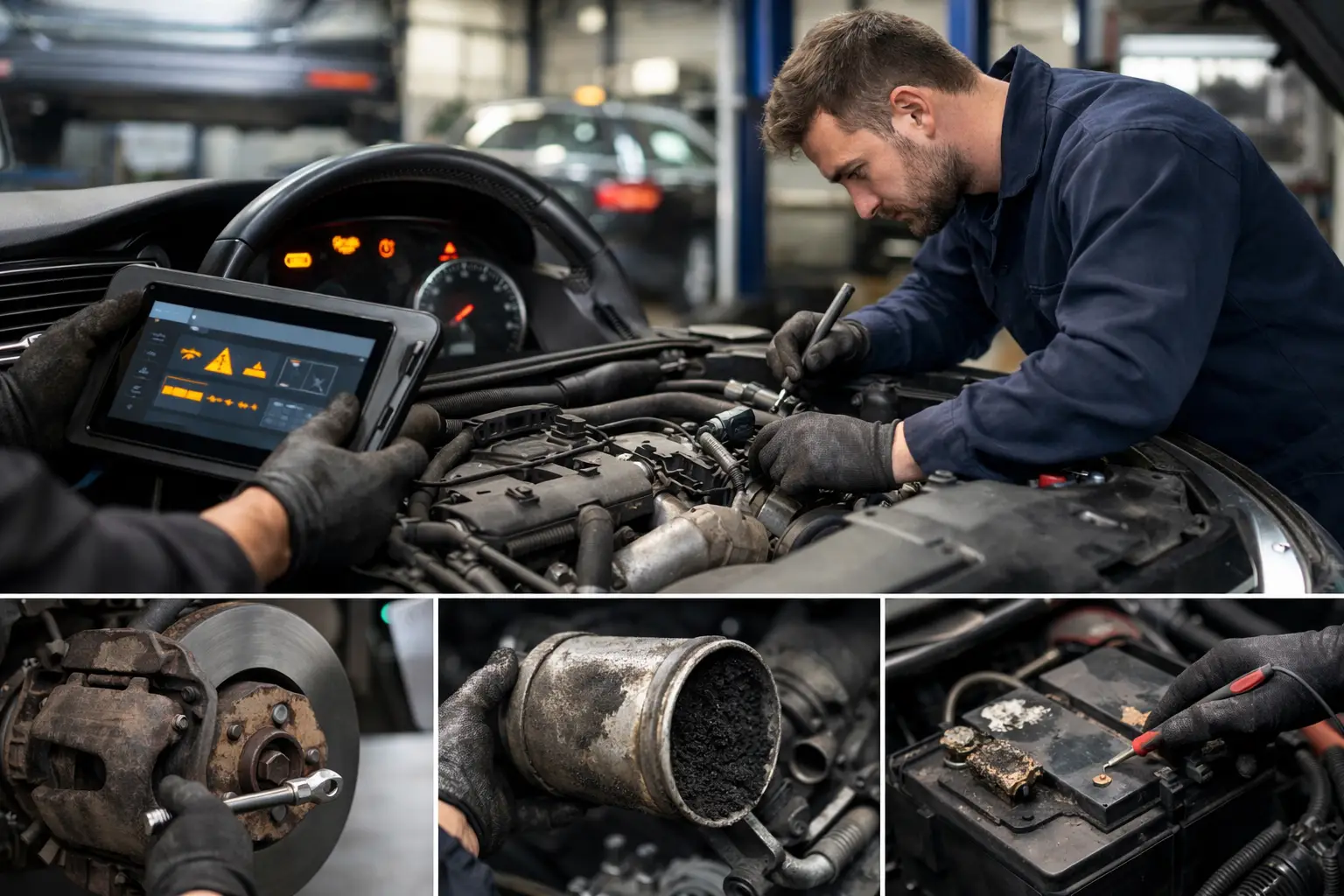
The same applies to emissions failures. We often see drivers assume the car simply needs an additive or a quick clear of the engine warning light. High emissions can come from a number of causes, including a tired sensor, an exhaust leak, a misfire, a DPF issue, an air leak or a fault in the fuel system. The correct repair depends on what the diagnostic checks show.
At AutoFix4u, the approach is to inspect and test the affected system first, then explain the fault in plain English. You should know what has failed, why it has failed, what needs replacing or repairing, and what can safely wait.
The most common MOT failures and sensible repairs
Brakes, tyres and steering
These are among the most common reasons for failure because they are safety-critical and wear with normal use. Worn brake pads, corroded discs, seized calipers, low tyre tread and damaged suspension joints are all regular findings.
A tyre can fail because the tread is below the legal minimum, there is a cut or bulge in the sidewall, or the cords are exposed. Uneven wear is worth investigating too. Replacing the tyre solves the immediate MOT issue, but if the vehicle is pulling, the steering wheel is off-centre or one edge has worn much faster, there may be an alignment or suspension problem behind it.
Knocking over bumps, vague steering and a clunk when braking can point to worn suspension or steering components. These faults should be inspected properly. A small amount of play in one joint can affect handling, tyre wear and the way other parts wear over time.
Lights, visibility and electrical faults
A blown bulb sounds simple, but lighting failures are not always just a bulb. Moisture in a lamp unit, corroded wiring, a poor earth connection or an intermittent switch can cause repeated faults. If a replacement bulb fails again quickly, it needs checking rather than continually replacing bulbs.
Wipers, washers, mirrors and the windscreen are also part of the MOT. A washer bottle may be full but still not spray because the pump, pipes or jets are blocked. A cracked windscreen can fail if the damage is in the driver’s main view or serious enough to affect safety.
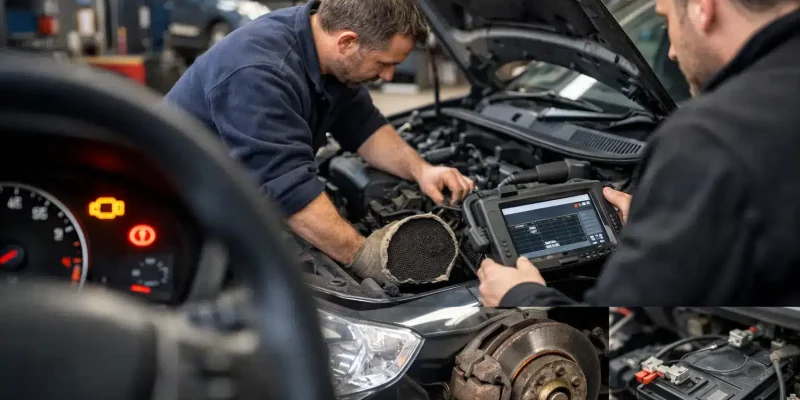
Dashboard warning lights are another common issue. An illuminated engine warning light, ABS light, airbag light or traction control light can result in a failure. Clearing the light without fixing the fault is not a repair. If it returns, the vehicle still has a problem and may fail again. Proper diagnostics identify the stored fault codes and, more importantly, the reason they appeared.
Emissions, DPF and loss of power
Diesel and petrol emissions failures can be frustrating because the car may seem to run normally. On a diesel, a blocked or overloaded DPF can cause a warning light, poor fuel economy, limp mode or failed emissions readings. Short journeys are often part of the picture, but they are not always the full cause.
A forced regeneration or DPF cleaning may help in some cases. If there is a sensor fault, injector issue, boost leak or underlying engine problem, however, the DPF will block again unless that fault is resolved first. This is why diagnostic checks matter before choosing a repair.
On petrol vehicles, worn spark plugs, ignition coil faults, sensors and exhaust leaks can all affect emissions. If the engine is misfiring, running unevenly or struggling under acceleration, mention it when booking in. Those symptoms can help narrow down the cause faster.
Exhaust, suspension and underbody corrosion
An exhaust can fail due to leaks, insecure mountings, excessive noise or emissions problems. A rattle may be a loose heat shield, but it could also be an exhaust bracket or internal damage. An inspection will tell the difference.
Corrosion is assessed on where it is and whether it affects a structural or safety-related area. Surface rust is not automatically a failure. Corrosion near suspension mountings, seatbelt anchorages, steering components or brake lines needs prompt attention. The right repair may involve replacing a part, repairing affected metal or, in severe cases, deciding whether the vehicle is economical to keep.
Decide what must be done now and what can wait
A trustworthy repair plan separates MOT failures from advisories. The failure items need correcting before a pass can be issued. Advisories should be discussed based on their condition, likely lifespan and how you use the car.
For instance, brake pads recorded as worn but still within safe limits may not need replacing that day. If you are already having the car booked in for brake discs and the pads are close to their limit, doing both together can make sense and avoids paying for the same labour twice. On the other hand, replacing parts early without a clear reason is not good value.
Ask for the findings to be explained before authorising work. A clear garage will tell you what is essential, what is recommended and why. You should also receive clear pricing before repairs begin, with no surprise extras added halfway through.
Retest rules and getting back on the road
Once the faults are repaired, the car needs a retest. If repairs are completed promptly at the same MOT station, you may qualify for a partial retest within the allowed period. Rules can vary depending on where the repair was carried out and what was tested, so check with the MOT station before assuming a retest is free.
Keep the failure sheet and any repair invoice. They provide a useful record of what was found and fixed. Before the retest, check the basics as well: all lights working, tyres correctly inflated, washer fluid topped up, number plates clean and wipers clearing the screen properly.
If you have failed an MOT in Lowestoft, Oulton Broad, Carlton Colville, Kessingland or nearby, book the repair inspection as soon as you can. A quick, honest assessment gives you a proper plan, protects your safety and gets your everyday car back where it needs to be – on the road and dependable.