MOT Failure Repairs Guide for Local Drivers
An MOT fail usually lands at the worst time. You need the car for work, school runs or getting around Lowestoft, and now you are staring at a failure sheet full of items that do not mean much on their own. This MOT failure repairs guide is here to make that clearer, so you know what has gone wrong, what needs doing first, and how to get the car back on the road without wasting time or money.
In most cases, the report looks worse than the actual repair. What matters is separating the genuine safety issues from the smaller defects and finding the root cause. We often see cars booked in after a fail where one underlying problem has caused two or three MOT items to show up together.
What an MOT failure really means
An MOT fail means the vehicle did not meet the minimum road safety and environmental standards on the day of the test. It does not always mean the car is in terrible condition, but it does mean something needs attention before it can pass.
The key thing is not to guess. A lot of drivers replace parts based only on the wording on the failure sheet. That can lead to extra cost and no real fix. If the note says a brake is binding, for example, the issue could be the pads, the caliper, a seized slider or a collapsed hose. The symptom is on the sheet. The cause still needs proper checking.
That is why a repair plan should start with inspection, not assumptions. Clear diagnosis saves time and usually saves money as well.
The most common MOT failure repairs
Brakes and braking imbalance
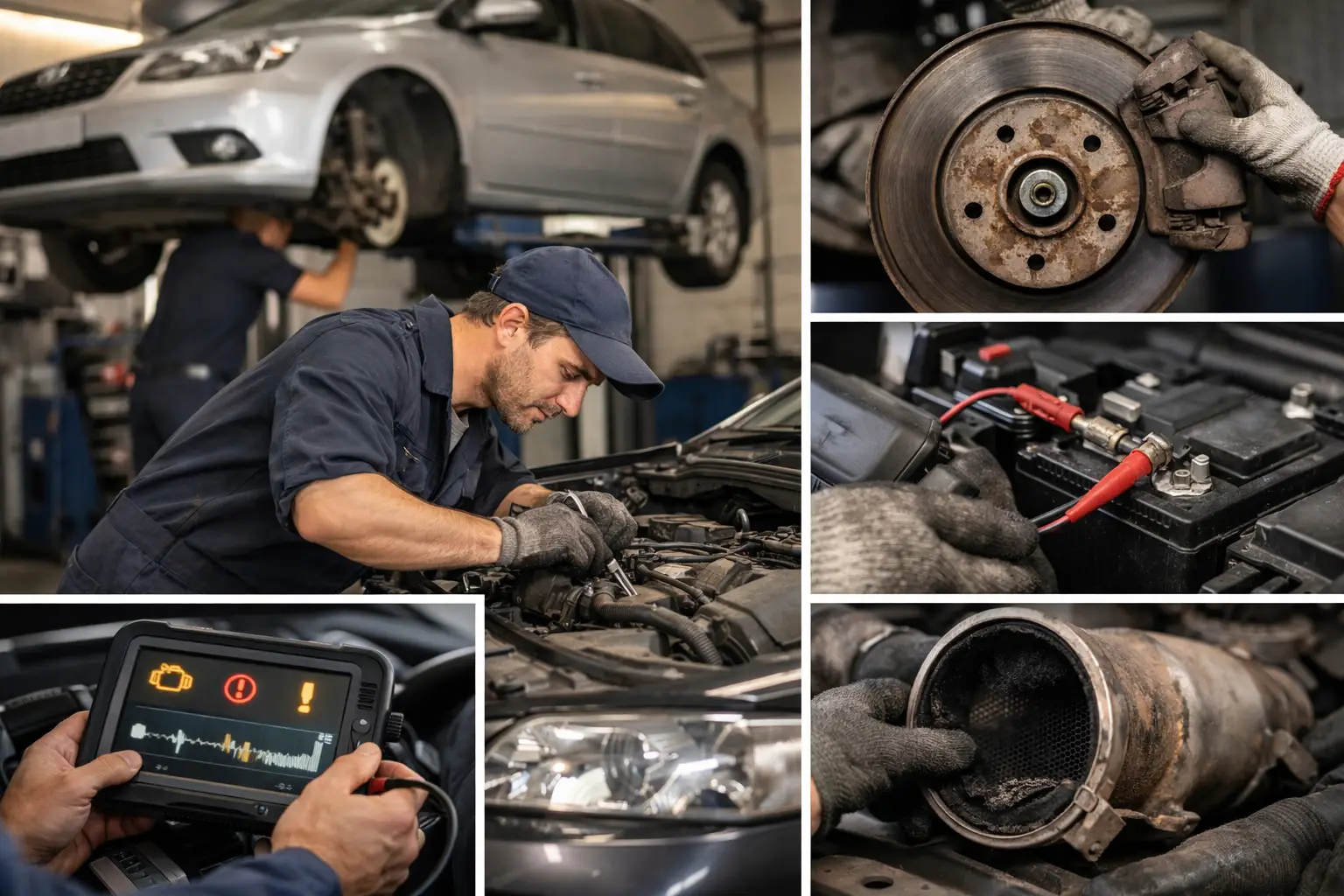
Brake faults are one of the most common reasons for an MOT failure. We often see worn pads and discs, seized calipers, corroded brake pipes and handbrake issues. Sometimes the car still feels mostly normal to drive, which is why these problems catch people out.
This usually happens because braking parts wear gradually. You get used to the change, or the problem affects only one corner of the car at first. During the MOT, the rollers pick up uneven braking force straight away.
The right fix depends on what has actually failed. Some cars need pads and discs. Others need a caliper freeing off or replacing. If the handbrake travel is excessive, the cause might be adjustment, stretched cables or worn rear components. There is no point fitting parts blindly. The repair needs to match the fault.
Suspension and steering problems
If the car has a knock over bumps, pulls slightly, or feels vague through the steering wheel, suspension or steering wear is often behind it. MOT failures in this area commonly include worn ball joints, damaged bushes, broken coil springs, leaking shock absorbers and track rod end play.
We often see this issue when a vehicle has been driven for a while on rough roads or over speed bumps with an existing weak component. Springs can snap without much warning, and bushes can split long before the driver notices a major change.
A proper check matters here because one worn part can mask another. Replacing only the obvious item may not solve the full problem. Once repaired, wheel alignment may also be needed to stop uneven tyre wear and protect the new parts.
Tyres and wheel issues
Tyres fail an MOT for low tread, sidewall damage, cuts, bulges or uneven wear. Uneven wear is the one worth paying attention to because it often points to another issue rather than just an old tyre.
This usually happens because of poor alignment, worn suspension parts or incorrect tyre pressures over time. If you fit new tyres without fixing the cause, the same wear pattern comes back.
A decent garage should explain whether the tyre is simply worn out or whether something else has caused it. That gives you a proper fix rather than a short-term one.
Lights, electrics and warning lights
A failed bulb sounds simple enough, but electrical faults are not always straightforward. MOT failures can include inoperative lights, number plate lamps, indicators, brake lights and dashboard warning lights such as ABS, airbag or engine warning light issues.
In some cases, it is just a bulb or fuse. In others, there is a wiring fault, sensor problem or charging issue behind it. Modern vehicles are more sensitive to voltage and control unit faults than older ones, so quick guesswork can waste time.
If a warning light is on and the car has failed because of it, diagnostics are usually the right next step. That tells you why the light is on instead of just clearing codes and hoping it stays off.
Emissions and exhaust faults
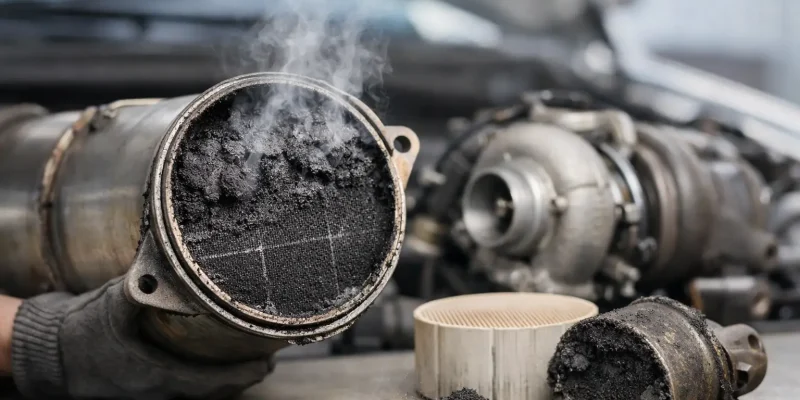
Emissions failures are common, especially on diesel cars that do a lot of short trips. You may see faults linked to smoke, exhaust leaks, oxygen sensors, catalytic converter performance or DPF issues.
We often see this when the car has had a long-standing engine fault, poor combustion, or a blocked DPF that has been ignored. A forced regeneration or sensor replacement may help in some cases, but not all. If the engine is over-fuelling or there is an airflow fault, the emissions issue will keep coming back until the main cause is fixed.
This is where a diagnostic-first approach really matters. Emissions problems are often symptoms, not stand-alone faults.
MOT failure repairs guide – what to do next
If your car has failed, the first step is to read the failure sheet properly. Look at the advisories as well as the failures. Advisories do not stop the car passing, but they often show what is likely to need attention soon.
Next, work out whether the car is safe and legal to move. If it has failed on something serious such as dangerous tyre damage, major brake defects or steering play, do not keep driving it as normal. That only adds risk and can make the repair bigger.
Then get the faults checked by a garage that will explain the problem in plain English. You want to know three things – what has failed, what caused it, and what needs doing now versus later. That gives you a realistic repair plan instead of a rushed decision.
In most cases, the best route is to deal with safety and legal failures first, then sort the advisories in order of urgency and budget. Not every advisory needs immediate action, but ignoring all of them is usually how next year’s MOT turns into a bigger bill.
Repair or replace? It depends on the car
This is the question most drivers ask after a fail. The honest answer is that it depends on the car’s overall condition, mileage, value and what else is coming due.
If the vehicle has one or two straightforward failures and has otherwise been reliable, repair usually makes sense. If it has failed on multiple areas, has ongoing warning lights, poor service history and major wear across tyres, brakes and suspension, it is worth stepping back and looking at the bigger picture.
A good garage should be honest here. Some repairs are sensible. Some are not, especially if the vehicle is likely to need further major work soon. Clear advice matters more than pushing through every job regardless.
How to avoid repeated MOT failures
The easiest MOT repairs are the ones you never need. A pre-MOT inspection can catch worn tyres, brake wear, light faults and suspension issues before test day. That means fewer surprises and more control over timing.
It also helps to act early when the car starts showing signs. Squeaking brakes, a pull through the steering, rattles underneath, warning lights or loss of power are all worth checking before they turn into test failures. We often see drivers leave these issues for months because the car is still moving. By the time the MOT comes around, one fault has turned into several.
Routine servicing helps as well, not because it guarantees a pass, but because it gives someone a chance to spot developing problems early. That is especially useful for brakes, tyres, suspension and emissions-related faults.
Choosing a garage for MOT failure repairs
When your car has failed, speed matters, but so does clarity. You need a garage that can inspect the faults quickly, explain them properly and tell you what is worth doing now. Same-day solutions are possible for some repairs, but only if the parts and fault diagnosis line up.
Look for straightforward communication, clear pricing and no vague promises. If the explanation is full of jargon or the repair list feels padded, ask questions. You should be able to understand what you are paying for and why it is needed.
If you are in Lowestoft or nearby and need fast, honest help after an MOT fail, AutoFix4u can inspect the faults, explain the cause and get you moving again where possible. Call now, get a quote and book your repair before a small failure turns into a bigger job.
An MOT fail is frustrating, but it is usually fixable when the problem is diagnosed properly and dealt with early.


One thought on “MOT Failure Repairs Guide for Local Drivers”