How to Fix Brake Squeal Properly
That sharp squeal when you slow down is hard to ignore. If you are searching for how to fix brake squeal, the first thing to know is this – sometimes it is a simple issue, and sometimes it is your car telling you the brakes need attention before they become unsafe.
We often see this with drivers who use the car every day for work, school runs or commuting. The noise might start first thing in the morning, only happen lightly under braking, or get worse over a few days. The mistake is assuming all brake squeal is harmless. In most cases, the noise has a cause, and the right fix depends on what is actually happening at the wheel.
What brake squeal usually means
Brake squeal happens when vibration builds up between the brake pad and brake disc. Instead of the pad pressing smoothly against the disc, something causes a high-pitched noise. That could be wear, contamination, poor fitting, heat, or simply the type of pad material fitted.
Some squeal is temporary. For example, a bit of moisture on the brakes after rain can make a noise on the first few stops. Surface rust on the discs after the car has been parked overnight can do the same. If the sound disappears quickly and the braking feels normal, that is often not a serious fault.
If the squeal keeps coming back, gets louder, or comes with poor braking, vibration, pulling to one side or a grinding sound, it needs checking properly. That is where a lot of people waste time and money by replacing pads alone when the real issue is elsewhere.
How to fix brake squeal – start with the cause
There is no single fix for every squealing brake. The right repair depends on why the noise is there in the first place.
Worn brake pads
This is one of the most common causes. Some brake pads have wear indicators that make a squealing noise when the friction material gets low. It is designed to warn you before the pads wear right down.
If the pads are worn, the fix is straightforward – replace them before they damage the discs. Leave them too long and the repair usually gets more expensive, because scored or overheated discs may need changing as well.
Glazed pads or discs
Glazing happens when the braking surfaces become hard and shiny from excess heat. We often see this issue when the brakes have been overheated, fitted with poor-quality parts, or not bedded in properly after replacement.
Glazed brakes can squeal even if there is plenty of pad material left. In some cases, cleaning and light preparation of the surfaces may help, but often the proper fix is replacing the affected pads and checking the discs at the same time.
Cheap or poor-quality brake pads
Not all pads perform the same. Some budget pads are more prone to noise, especially if they are fitted to a heavier vehicle or a car that does a lot of stop-start driving.
This usually happens because the pad compound is harder or less refined. The brakes may still work, but the noise becomes a regular nuisance. If everything else checks out, fitting better-quality pads is often the long-term answer.
Contamination on the brakes
Oil, grease, brake fluid or road dirt on the pad or disc can cause squealing. Even a small amount in the wrong place can affect how the pad contacts the disc.
This is common after other repair work if parts have not been handled cleanly, or if there is a leak from a nearby component. In these cases, cleaning alone is not always enough. Contaminated pads usually need replacing, and the source of the contamination must be fixed as well.
Poor fitting or seized hardware
Brake pads need to move freely, but not loosely. If fitting clips are missing, anti-squeal shims have not been installed correctly, or the caliper slider pins are sticking, the pad can sit at the wrong angle and squeal.
We also see brake noise caused by corrosion building up where the pads sit in the carrier. The pads bind slightly, heat builds up, and the noise follows. The fix here is proper strip-down, cleaning, lubrication in the correct places, and replacing any worn hardware.
Brake discs with wear or damage
A disc that is heavily lipped, scored, cracked or warped can make even new pads noisy. This is why changing pads without inspecting the discs properly can be a false economy.
If the disc surface is no longer good enough, new pads may squeal from day one. A matched repair with new pads and discs is often the best route when both parts are worn.
Can you fix brake squeal yourself?
Sometimes, yes. Sometimes, no.
If the squeal only happens briefly on damp mornings and disappears after a couple of brake applications, you may not need any repair at all. If you can safely inspect the wheels and see the pads are low, then you already know the likely next step is replacement.
What you should not do is guess with safety parts. Spraying random products near the brakes, ignoring a persistent squeal, or fitting pads without cleaning and checking the full assembly often leads to the same problem returning. In worse cases, it leads to uneven braking or damage to the discs and calipers.
If you are not sure whether the noise is harmless or a warning sign, a brake inspection is the sensible option. It is quicker than waiting for the noise to turn into a bigger repair.
How a garage should diagnose brake squeal
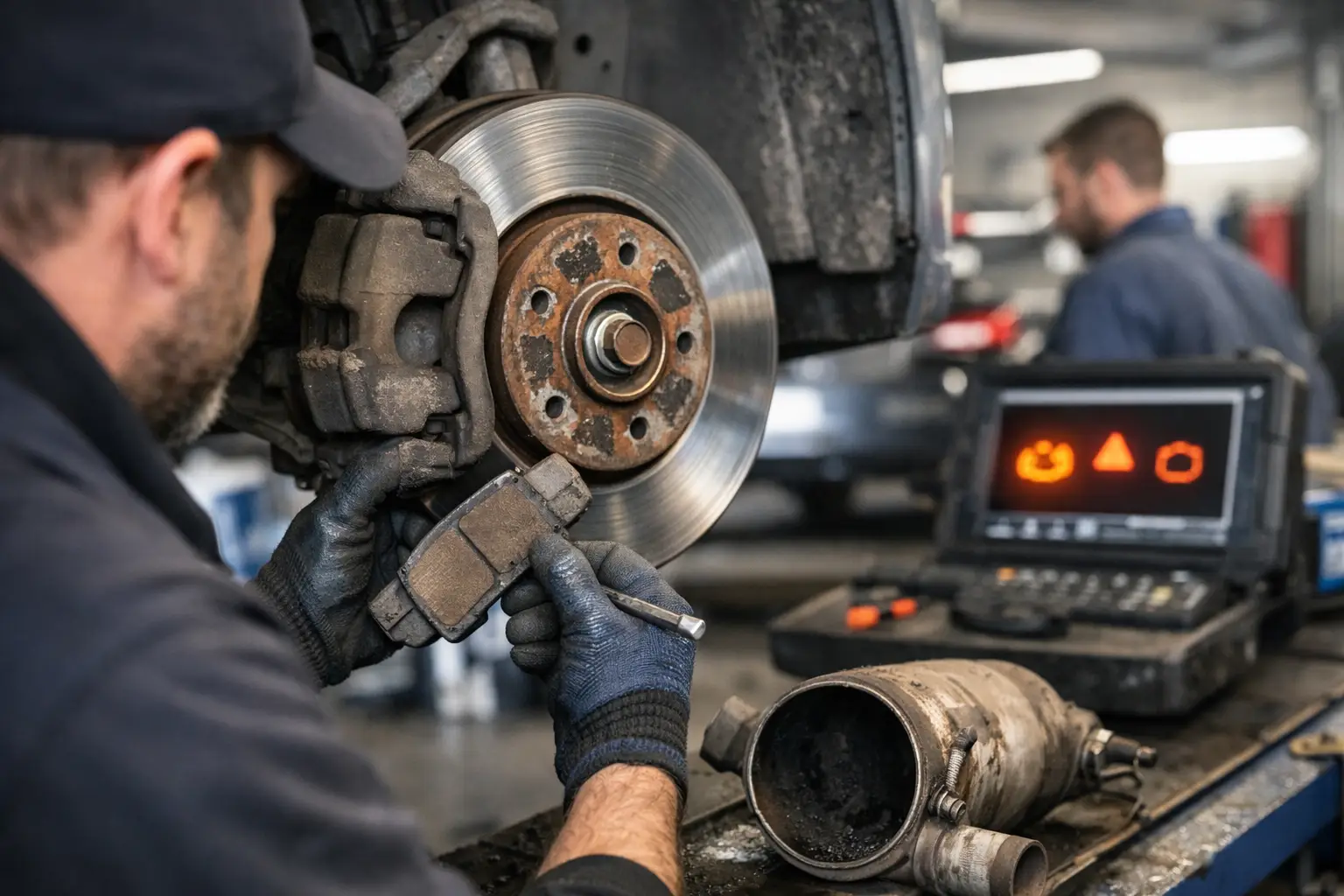
A proper brake noise check should be more than a quick glance through the wheel. The pads, discs, calipers and fitting hardware all need inspection.
In most cases, the garage should check pad thickness, disc condition, heat marks, uneven wear, sticking calipers, damaged shims and signs of contamination. The pattern of the noise matters too. A squeal only when cold points to different causes than a squeal after a longer drive.
That is why a diagnostic-first approach matters. If the real fault is a seized slider or poor-quality recently fitted pads, simply replacing one visible part may not solve it.
When brake squeal becomes urgent
Not every squeal means stop driving immediately, but some signs should not be ignored.
If the car is grinding, the brake pedal feels different, the vehicle pulls under braking, or the noise is constant and getting worse, book it in as soon as possible. The same applies if the steering wheel shakes when braking or if one wheel feels much hotter than the others after a journey. Those symptoms can point to wear, disc problems or a sticking caliper.
This is also worth sorting before an MOT. Brake noise on its own is not always a reason for failure, but the wear or defects causing that noise often are.
How to stop brake squeal coming back
The best way to prevent repeat brake squeal is doing the job properly the first time. That means using decent-quality parts, fitting them correctly, replacing worn hardware where needed, and checking the discs and calipers instead of focusing on pads alone.
It also helps to bed in new brakes correctly. Fresh pads and discs need a short running-in period so the surfaces can mate properly. Heavy braking straight after fitting can create hot spots and glazing, which is one reason new brakes sometimes start squealing soon after replacement.
If you mainly do short local trips, it is worth paying attention to early signs of brake binding or uneven wear. Cars that spend a lot of time parked up or doing stop-start journeys around town are more likely to develop rust build-up and sticking brake components.
Local help if your brakes are squealing
If your brakes are making noise and you rely on the car every day, the safest approach is to get them checked before the problem turns into worn discs, poor stopping or an MOT failure. At AutoFix4u, we see this regularly with drivers around Lowestoft who have been told they just need pads, only for the real fault to be a seized caliper, poor previous fitting or badly worn discs.
We keep it simple – inspect the brakes properly, explain the cause in plain English, and give you a clear repair plan with no surprise extras. Same-day slots are available where possible. Call now or get in touch to book a brake check.
A squeal is not always a disaster, but it is never worth guessing with brakes.