You pull away from a roundabout, press the accelerator and the engine revs rise sharply – but the car does not pick up speed as it should. That is one of the clearest signs you may need clutch slip repair. It can start as an occasional problem under hard acceleration, then quickly become something you notice on every journey.
A slipping clutch is not usually a fault to leave and hope for the best. It can make joining faster traffic difficult, reduce control when towing or carrying passengers, and eventually leave the vehicle unable to drive at all. The good news is that a proper inspection can confirm the cause before work is agreed.
What does a slipping clutch feel like?
The clutch transfers power from the engine to the gearbox. When you release the clutch pedal, the clutch should grip firmly and send that power to the wheels. If the parts are worn, contaminated or not operating correctly, the engine can rev without all of its power getting through.
In most cases, drivers first notice clutch slip in a higher gear. You may be travelling at 40 to 50 mph, press the accelerator to overtake or climb a hill, and see the rev counter jump ahead of the road speed. The revs may then settle once you ease off.
Other common signs include a burning smell after pulling away, especially on hills, poor acceleration despite higher engine revs, or a biting point that has moved very high on the pedal. Some cars may also feel less confident when pulling a loaded trailer or carrying the family and luggage.
Not every loss of power is a clutch problem. Engine faults, turbo issues, blocked DPFs and gearbox faults can all make a car feel slow. The difference is that clutch slip normally causes the engine speed to rise without matching acceleration. This is why diagnosis comes before recommending a repair.
Why clutch slip happens
The most common cause is normal wear. The clutch friction plate wears a little each time it is used. City driving, frequent stop-start traffic and regular hill starts can shorten its life compared with steady motorway use. There is no fixed mileage at which every clutch fails. It depends on the vehicle, how it is driven and whether it has been used for towing.
A worn friction plate is not the only possibility. Oil leaking from the engine or gearbox can contaminate the clutch, preventing it from gripping properly. A fault in the clutch hydraulic system, or an adjustment issue on some older cable-operated vehicles, can also stop the clutch from fully engaging.
On many modern diesel cars, there may also be wear in the dual-mass flywheel. This component is designed to reduce vibration, but it can deteriorate over time. Rattling at idle, vibration through the pedal, judder when moving off, or a clunk as the engine is switched off can point towards flywheel wear. It does not automatically mean the flywheel needs replacing, but it needs checking while the gearbox is removed.
Driving with your foot resting on the clutch pedal can contribute to early wear. So can holding the car on a hill using the clutch instead of the handbrake. These habits create heat and allow the clutch to slip slightly, even when it is not obvious from the driver’s seat.
Can you keep driving with a slipping clutch?
For a short journey to a garage, it may be possible if the slip is mild. But there is a real risk that the fault will worsen without much warning. A clutch that slips under load today may fail to pull away tomorrow.
Avoid hard acceleration, towing, steep hill starts and long journeys if you suspect the clutch is slipping. Do not try to test it repeatedly by accelerating hard in a high gear. That only creates more heat and can damage parts that may otherwise still be usable.
If the car is slipping badly, smells strongly of burning, struggles to move, or the clutch pedal feels abnormal, arrange recovery rather than forcing it. Getting stranded at a busy junction is not worth the risk.
How we diagnose a clutch slipping fault
A good clutch slip repair begins with finding out exactly what has failed. Replacing a clutch is not a quick external adjustment on most modern cars. The gearbox normally has to be removed, so it makes sense to investigate properly and plan the work once.
At AutoFix4u, we start by listening to what the car is doing and when it happens. Does it slip only when cold? Is it worse in higher gears? Has there been a burning smell, difficulty selecting gears or any recent warning lights? These details help separate a clutch fault from an engine performance problem.
We then carry out sensible checks, including a road test where safe, inspection of the clutch operation and checks for leaks or related faults. If removal is needed, the clutch assembly, release bearing, flywheel and surrounding components can be assessed properly. You should be told what has been found in plain English and what parts are recommended before repairs go ahead.
This approach matters because the cheapest-looking option is not always the right one. Fitting only a friction plate when the pressure plate or release bearing is worn can mean paying for the same gearbox removal again later. Equally, replacing extra parts without evidence is not fair on the customer. The aim is a reliable repair with no surprise extras.
What is involved in clutch slip repair?
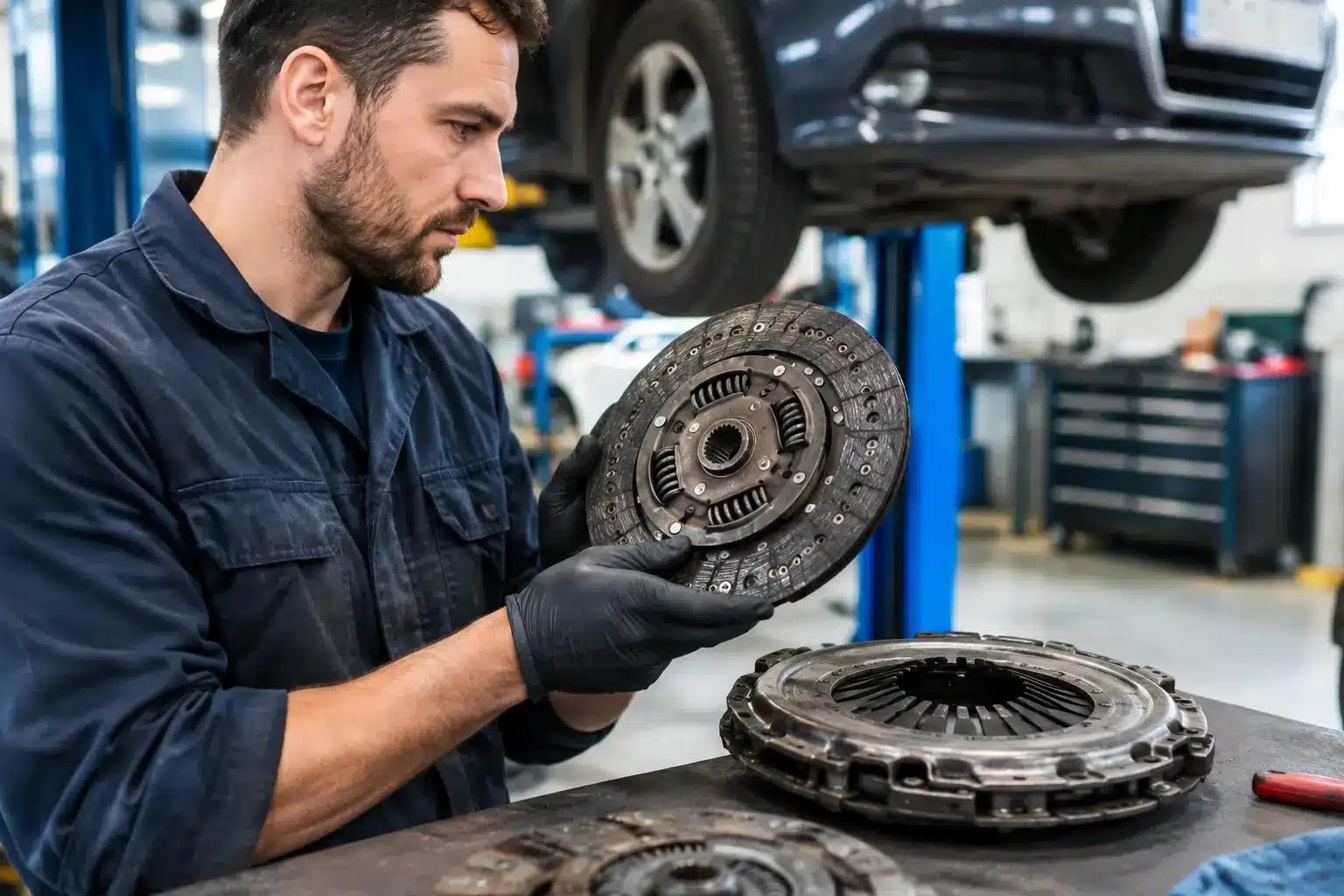
If wear is confirmed, the usual repair is to replace the clutch kit. This commonly includes the friction plate, pressure plate and release bearing or concentric slave cylinder, depending on the vehicle. These parts work together, so replacing the kit is generally the sensible option once the gearbox is out.
The flywheel is inspected at the same time. A standard solid flywheel may only need checking for heat damage or wear. A dual-mass flywheel needs closer assessment for excess movement, heat marks and noise. If it is within specification, it may be reused. If it is worn, replacing it during the clutch job can prevent vibration, noise and another major strip-down later.
Any oil leak found around the engine rear seal or gearbox input area should also be dealt with. Leaving a leak behind can contaminate the new clutch and bring the same problem back. This is a good example of why a root-cause repair matters more than simply fitting parts.
Timescales vary by vehicle. Some clutch jobs can be completed the same day when parts are available and access is straightforward. Others take longer, especially where the gearbox layout is more involved or additional flywheel work is required. A local garage should give you a realistic timescale, not promise a finish time before the vehicle has been assessed.
How much does a slipping clutch repair cost?
The cost depends mainly on the make and model, how difficult the gearbox is to remove, the parts required and whether the flywheel needs attention. Smaller cars with straightforward access are usually less involved than larger vehicles, vans or cars with complex gearbox layouts.
The key thing is to ask what the estimate includes. A clear quote should explain the labour, the clutch parts, any likely additional items such as a flywheel or hydraulic cylinder, and whether those extras will only be fitted with your approval. If the gearbox is already being removed, it is worth discussing any related parts that could cause repeat labour, but only where there is a genuine reason.
Preventing early clutch wear after repair
A new clutch should feel positive and smooth, but it still needs sensible use. Use the handbrake to hold the vehicle on hills rather than balancing it on the bite. Take your foot fully off the pedal once you have changed gear, and avoid resting it there in traffic.
When manoeuvring, use light clutch control rather than holding high revs against a slipping clutch. If you tow regularly, let the garage know when booking. The extra load is relevant when assessing wear and choosing suitable quality parts.
If your car revs without accelerating, has started to smell hot after hill starts, or feels weak under load, get it checked before it becomes a breakdown. For drivers in Lowestoft and nearby areas, AutoFix4u can assess the fault, explain the repair clearly and help you get back to dependable daily driving. A prompt diagnosis now is usually easier than dealing with a failed clutch when you need the car most.