How to Prepare for MOT and Avoid Fails
Most MOT failures are not caused by one big problem. They are usually down to small things the driver did not spot – a blown bulb, worn tyre, empty screenwash or a warning light that has been ignored for weeks. If you are wondering how to prepare for MOT, the best approach is simple: check the obvious, deal with faults early, and do not leave it until the day before.
We see this all the time with local drivers who rely on one car for work, school runs and everyday travel. The MOT itself is a test, but the real stress usually starts after a failure, when you suddenly need repairs fast. A bit of preparation gives you a better chance of passing first time and avoids that last-minute scramble.
How to prepare for MOT before test day
Start with the items you can check yourself on the driveway. You do not need specialist tools for the basics, and catching a fault early often saves time and money.
Lights are one of the first things to look at. Put the sidelights, dipped beams, brake lights, indicators and number plate lights on and walk around the car. If you are on your own, reverse near a wall or window so you can check brake lights by reflection. A failed bulb is a common reason for an MOT fail, and it is one of the easiest jobs to sort before the test.
Tyres matter just as much. The legal minimum tread depth is 1.6mm across the central three-quarters of the tyre, but if they are getting close to that, it is worth replacing them before the test rather than hoping they scrape through. Also check for cuts, bulges and uneven wear. We often see inner edge wear that drivers have not noticed because it is not obvious from standing beside the car.
Windscreen condition is another area that catches people out. Small chips can be fine depending on where they are, but damage in the driver’s line of sight is more likely to be a problem. Wipers should clear the screen properly without smearing, and the washer bottle needs enough fluid in it. If the tester cannot operate the washers, that can lead to a fail.
Number plates should be clean, secure and easy to read. Seats and seatbelts should work as they should. Doors must open properly from the outside and inside where required. The horn needs to sound correctly. These are simple checks, but they are worth doing because they are all part of the test.
Warning lights, noises and other signs to not ignore
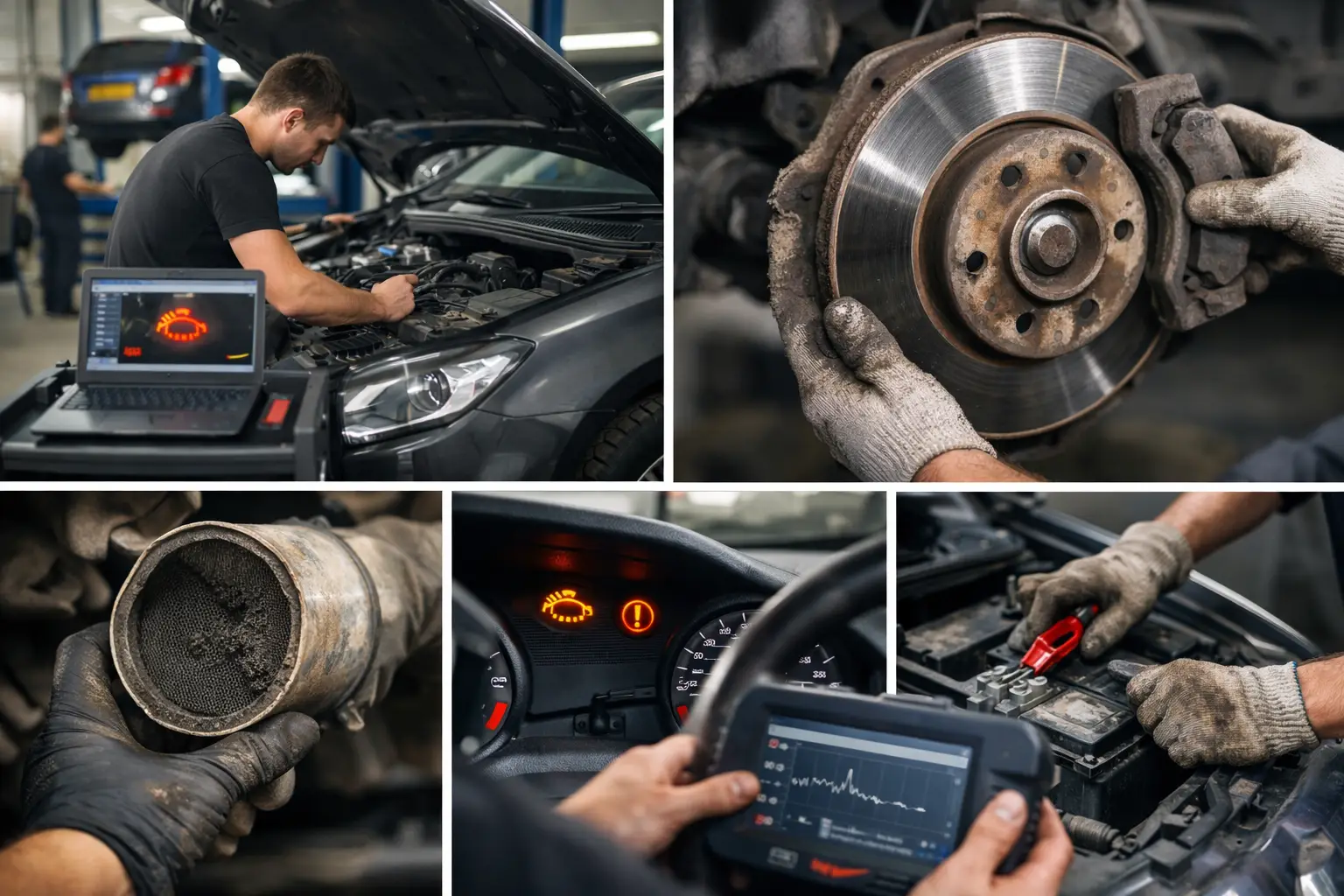
If a dashboard warning light is on, do not assume it will be fine. In most cases, an engine warning light, ABS light, airbag light or traction control fault needs looking at before the MOT. Modern cars are tested more closely for electronic safety and emissions issues, so hoping the light goes out on its own is rarely a good plan.
The same goes for unusual noises. If the brakes are grinding, the suspension is knocking, or the steering feels loose, there is usually an underlying fault that could show up on the MOT. This usually happens because parts have worn over time and the symptoms have been building gradually. Drivers often get used to the sound and stop noticing how bad it has become.
A car that pulls to one side, feels unstable over bumps or takes longer to stop should also be checked. Even if it technically passes, those symptoms point to a safety issue that needs attention. The MOT is a minimum standard, not a sign that everything is in perfect condition.
The most common MOT failure points
If you want a realistic idea of how to prepare for MOT, focus on the areas that fail most often. At garage level, we regularly see the same pattern: lighting faults, tyre wear, brakes, suspension wear, emissions problems and warning lights.
Brakes are a big one. Sometimes the driver has already noticed a squeal or a vibration through the pedal. Other times there are no obvious symptoms until the test picks up poor braking performance or worn components. If your brakes have not felt right for a while, get them checked before the MOT rather than waiting for a fail sheet.
Suspension and steering issues can be harder to spot at home. You may hear a clunk over rough roads, notice uneven tyre wear or feel the car wandering slightly at speed. That can point to worn bushes, ball joints, drop links or track rod ends. These are common wear items, especially on cars used daily on local roads with potholes and rough surfaces.
Emissions are another regular problem, especially on diesel cars. If the car has been doing lots of short trips, the DPF may not be clearing properly. If there is smoke, loss of power, poor fuel economy or a warning light, get it looked at before the test. Leaving a diesel issue too long often turns a simple fix into a bigger repair.
A pre-MOT check can save a lot of hassle
If your MOT is due soon and you are not sure about the car’s condition, a pre-MOT check is often the sensible option. This is especially useful if the vehicle has had warning lights, been off the road, or just does not feel right.
A proper check helps identify faults before the official test. That gives you time to decide what needs doing instead of being put on the spot after a failure. It is also useful if your car is older, has high mileage, or missed its last service interval.
At AutoFix4u, we often help drivers who have left it late and need a clear answer quickly. In many cases, the issue is straightforward once it is diagnosed properly. The main thing is not guessing. If a warning light is on or the car is showing signs of a brake, suspension or emissions fault, it is better to get the root cause confirmed first.
What to do in the week before your MOT
Do not make the mistake of checking the car only on the morning of the test. Give yourself a few days if you can. That way, if you find a bulb out or a tyre on the limit, you still have time to get it sorted without rearranging everything.
Use the week before the MOT to top up fluids, check all lights, inspect tyres, clear out the car enough for the tester to access what they need, and make sure the registration plates are readable. If you have locking wheel nut keys, keep them in the car. If the car has had a recent issue, even if it seems to have improved, mention it before the test.
It also helps to drive the car enough for it to warm through properly before the appointment, particularly with diesel vehicles. A car that has only done a cold two-minute trip beforehand is not ideal, especially if there have been any previous emissions concerns.
When it is better to repair first and test after
Sometimes the best way to prepare is to hold off on the MOT for a few days and fix known faults first. If the tyres are clearly worn, the brakes are noisy, or the engine warning light is on, booking the test immediately usually just creates a second appointment and more disruption.
This is where honest advice matters. Not every issue means the car is unsafe, but some faults are obvious enough that the result is predictable. In those cases, it makes more sense to repair the problem and then present the car for test in a better state.
For busy drivers, that can mean less time off the road and less stress overall. Same-day repairs are not always possible because it depends on the fault and parts availability, but dealing with things in the right order usually keeps the process smoother.
A pass is easier when the car is looked after all year
The easiest MOTs are usually the ones where the car has been serviced properly and faults have not been left to build up. If you wait until test month to deal with every rattle, warning light and worn part, the MOT starts to feel bigger than it is.
Regular servicing helps because it picks up problems while they are still manageable. A worn brake pad, weak battery or suspension issue is simpler to deal with in routine maintenance than in a rush after a failure. It also gives you a clearer picture of what the car may need next.
If your MOT is coming up and you are not fully confident in the car, get it checked before the test. That is usually the quickest route to a pass and a lot less hassle afterwards. Call now, get a quote, and if something does need attention, you will know exactly where you stand with clear pricing and no surprise extras.
A little preparation goes a long way, and it is always easier to sort a problem in advance than explain a failed MOT when you still need the car tomorrow.


