
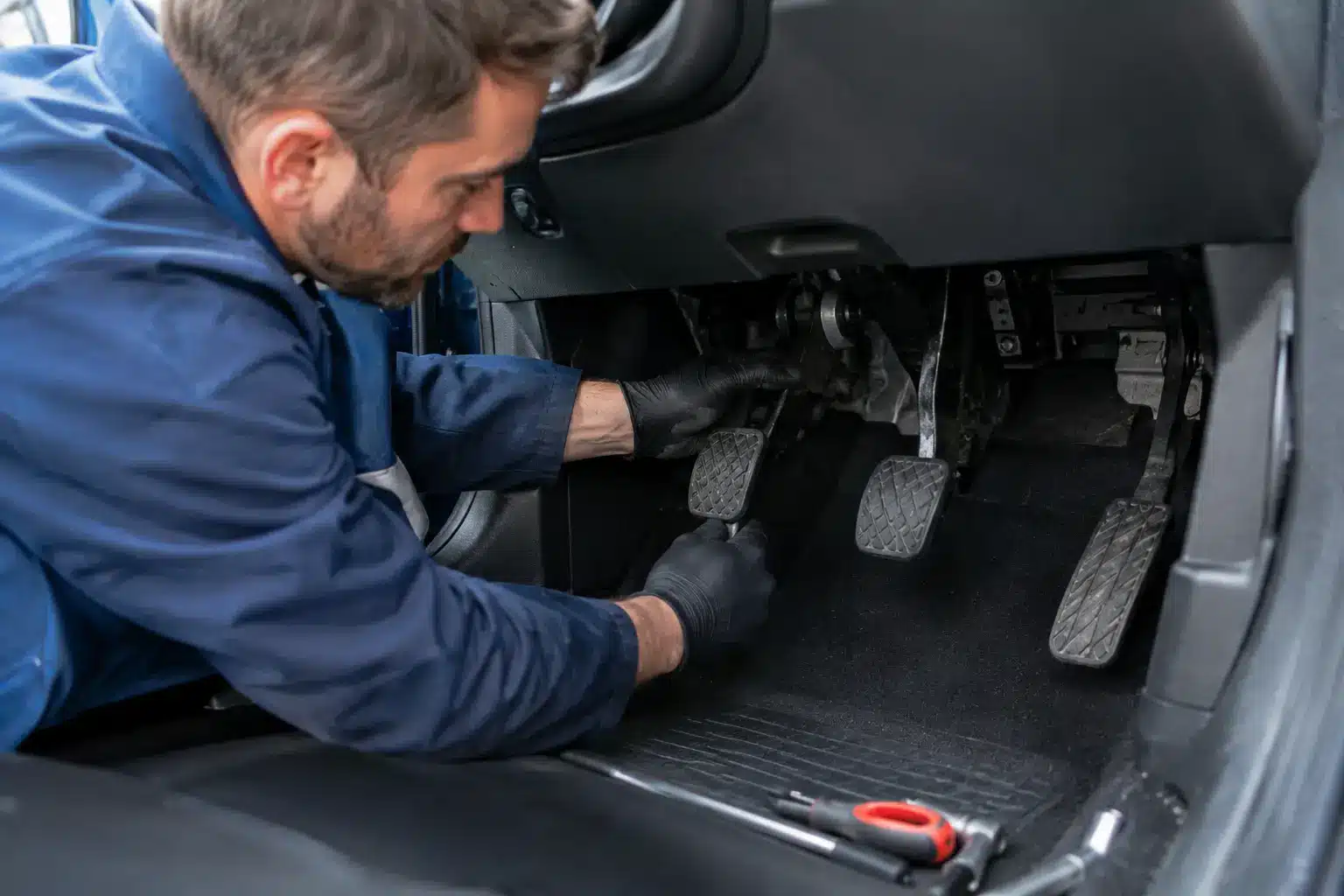
Clutch Pedal Sticking and Difficult Gears
A clutch pedal that stays on the floor can quickly turn a normal journey into a breakdown. You may struggle to select first gear, hear grinding noises or feel the pedal returning slowly.
Clutch pedal sticking can result from a hydraulic fault, damaged pedal mechanism or worn clutch component. However, these symptoms do not always mean you need a complete clutch replacement.
At AutoFix4u Garage Lowestoft, we help drivers investigate clutch and gear selection problems. A proper inspection can identify the cause before a minor fault becomes a larger repair.
What are the signs of a sticking clutch pedal?
Clutch problems can develop slowly or appear without warning.
You may notice several symptoms before the pedal stops working properly.
1. The clutch pedal stays on the floor
You press the clutch pedal, but it does not return when you lift your foot.
Sometimes, you can pull it back up manually. In other cases, it remains stuck.
This may indicate a hydraulic fault, damaged return spring or mechanical problem.
Do not continue driving if you cannot operate the clutch safely.
2. The pedal returns slowly
A healthy clutch pedal should move smoothly through its normal travel.
If it returns slowly, something may be restricting movement or affecting the hydraulic pressure.
The problem might appear only after a long drive. It may also become more noticeable in cold weather.
Describe these changes when booking an inspection.
3. First and reverse gear become difficult to select
You may find it harder to engage first or reverse while the vehicle is stationary.
The gearbox might crunch when you try to change gear.
This can happen when the clutch fails to release fully.
However, worn selector components and gearbox faults can create similar symptoms.
Read our guide to manual clutch versus gearbox faults to understand the differences.
4. The clutch pedal feels soft or spongy
A soft pedal may indicate low hydraulic pressure.
Air in the system, leaking seals or a failing cylinder can cause this change.
You might also notice that pressing the pedal several times temporarily improves its operation.
That does not mean the problem has disappeared.
5. You hear squeaking or unusual noises
A squeak near the pedal may come from a worn pivot or spring.
Grinding or rattling near the gearbox could indicate a different problem.
Pay attention to when the noise occurs.
Does it happen when you press the pedal, release it or select a gear?
This information can help a mechanic identify the cause.
Why is my clutch pedal sticking?
Several parts work together when you operate the clutch.
The problem may come from the pedal, hydraulic system, release mechanism or clutch assembly.
Low clutch fluid or a hydraulic leak
Many modern vehicles use hydraulic pressure to operate the clutch.
When you press the pedal, the master cylinder sends fluid towards the slave cylinder. This helps release the clutch.
A leak can reduce pressure and affect pedal operation.
Common warning signs include:
- A soft or spongy clutch pedal.
- Difficulty selecting gears.
- A pedal that remains on the floor.
- Visible fluid near the pedal or gearbox.
- A falling fluid level.
Some vehicles share a fluid reservoir between the clutch and braking systems.
If the brake fluid level is low or you suspect a brake system fault, stop driving and arrange professional assistance.
Do not simply top up the reservoir and ignore the cause.
Faulty clutch master cylinder
The master cylinder creates hydraulic pressure when you press the pedal.
Internal seal wear may reduce that pressure.
You could notice inconsistent pedal resistance or poor clutch release.
The cylinder may fail without an obvious external leak.
A mechanic can inspect the system and determine whether the master cylinder needs attention.
Failing clutch slave cylinder
The slave cylinder transfers hydraulic pressure to the clutch release mechanism.
A failing cylinder may leak or stop operating correctly.
Some cars have an external slave cylinder. Others use a unit inside the gearbox bellhousing.
An internal cylinder may require gearbox removal.
This can make the repair more involved than replacing an accessible external component.
Worn pedal spring or pivot
Not every sticking clutch pedal points to an expensive gearbox repair.
The pedal mechanism contains moving components that can wear over time.
These may include springs, bushes and pivots.
A damaged spring may prevent the pedal from returning normally.
A worn pivot may cause stiffness, squeaking or uneven movement.
The mechanic should inspect these parts before recommending major repairs.
Clutch cable problems
Some older cars use a cable-operated clutch.
A damaged or worn cable can make the pedal stiff.
You may also notice rough movement or sudden loss of resistance.
The correct repair depends on the vehicle’s clutch design.
Problems inside the clutch assembly
The pressure plate, release bearing and clutch fork help the clutch engage and release.
Wear or damage can affect how the pedal feels.
You may notice a heavy pedal, vibration or unusual noises.
Some faults only become clear after gearbox removal.
Our clutch repair service in Lowestoft focuses on identifying the problem before recommending replacement.
Why does a sticking clutch pedal make gears difficult to select?
The clutch disconnects engine power from the gearbox when you change gear.
If the clutch does not release properly, the gearbox may remain under load.
This can make first and reverse especially difficult to engage.
You may also hear crunching noises or feel resistance through the gear lever.
However, the clutch is not always responsible.
Problems with the gear linkage or internal gearbox parts can affect gear selection.
Our gearbox repair service in Lowestoft covers difficult shifting, gearbox noises and related transmission concerns.
Correct diagnosis helps avoid unnecessary replacement work.
How does a mechanic diagnose a sticking clutch pedal?
A proper inspection starts with the symptoms.
A mechanic should ask when the fault first appeared and whether it happens consistently.
They may then carry out several checks.
Clutch pedal inspection
The mechanic checks pedal movement, resistance and return action.
They also inspect accessible springs, pivots and mounting points.
These checks may reveal a mechanical problem inside the footwell.
Hydraulic system checks
The mechanic looks for fluid leaks and other signs of hydraulic failure.
They may inspect the reservoir, pipework, master cylinder and accessible slave cylinder.
If air enters the system, the mechanic needs to investigate why.
Bleeding the clutch may help restore operation, but it will not repair a leaking component.
Gear selection checks
The mechanic compares gear selection with the engine switched off and running.
This can help show whether the clutch releases correctly.
They may also inspect accessible gearbox linkage components.
A road test may help when the vehicle is safe to drive.
Further mechanical investigation
Some internal clutch faults require gearbox removal.
The mechanic should explain why this work is necessary.
At AutoFix4u Garage Lowestoft, we aim to identify the likely cause and discuss repair options before additional work begins.
Can you drive with a sticking clutch pedal?
A sticking clutch pedal can create a safety risk.
You may lose the ability to change gear or pull away safely.
Stop driving and arrange assistance if:
- The pedal stays on the floor.
- You cannot select gears normally.
- The vehicle creeps forward with the clutch pedal fully pressed.
- You suspect a hydraulic fluid leak.
- A brake warning light appears alongside fluid loss.
- The clutch suddenly stops operating.
Do not force the gear lever.
Avoid driving through heavy traffic or busy junctions if the clutch behaves unpredictably.
If the vehicle becomes unsafe, arrange recovery instead of attempting to reach the garage.
Our guide to vehicle recovery in Carlton Colville explains why recovery may be safer when a vehicle cannot move reliably.
If you need immediate help in Lowestoft, contact AutoFix4u before attempting another journey.
Does a sticking clutch pedal mean you need a new clutch?
Not always.
A worn clutch friction plate often causes slipping under acceleration.
A pedal that stays down may instead indicate a hydraulic or pedal mechanism fault.
The correct repair depends on the symptoms and inspection results.
Possible repairs include:
- Replacing a faulty master cylinder.
- Repairing or replacing the slave cylinder.
- Replacing damaged clutch pipework.
- Repairing a worn pedal spring or pivot.
- Replacing a faulty clutch cable.
- Repairing the clutch release mechanism.
- Replacing the clutch kit when necessary.
If the gearbox needs removal, the mechanic can inspect other accessible clutch components.
However, this does not mean every component automatically needs replacement.
For more information, read Clutch Replacement Signs You Should Not Ignore.
How much does clutch pedal repair cost?
Repair costs vary depending on the cause.
An accessible pedal spring or external hydraulic cylinder may need less labour than an internal slave cylinder.
Some repairs require gearbox removal.
Vehicle design, parts availability and the extent of the fault also affect the estimate.
A diagnosis helps establish what work the vehicle actually needs.
Avoid agreeing to a complete clutch replacement based only on pedal feel.
Ask the garage to explain the likely cause and what the repair includes.
Can you prevent clutch pedal problems?
Not every fault is preventable. However, a few habits can help you notice problems early.
Pay attention to pedal changes
Do not ignore a pedal that suddenly feels softer, heavier or slower.
These changes can provide an early warning.
Avoid forcing difficult gears
A gear lever should not need excessive force.
Repeated grinding or resistance deserves inspection.
Check for fluid leaks
Look for unexplained fluid beneath the vehicle.
A falling brake or clutch fluid level needs professional attention.
Follow the vehicle’s maintenance schedule
Routine servicing helps identify some developing problems.
However, a standard service does not replace a full investigation of clutch or gearbox symptoms.
You can explore our car servicing options in Lowestoft for regular maintenance.
Book a clutch pedal inspection in Lowestoft
If your clutch pedal sticks, stays down or makes gear changes difficult, do not ignore the problem.
AutoFix4u Garage Lowestoft helps drivers investigate clutch and gearbox faults.
We can assess the symptoms, explain the likely cause and recommend suitable repairs.
Whether your vehicle needs hydraulic repairs, clutch work or further gearbox investigation, finding the cause comes first.
Visit our Clutch Repair Lowestoft page to learn more about the service.
Call: 07778 979802
WhatsApp: Message AutoFix4u Garage Lowestoft
Request an estimate: Get a Free Estimate
Address: Unit 4, 10 Battery Green Road, Lowestoft, NR32 1DE.
An early inspection can help you avoid an unexpected breakdown and understand the repair options before committing to the work.


