Car Diagnostics: What Warning Lights Really Mean
A warning light appears during your journey through Lowestoft. Perhaps your car loses power, struggles to start or begins running roughly.
These problems can be frustrating. However, car diagnostics can help identify the cause before you spend money on unnecessary repairs.
A dashboard warning tells you that something needs attention. It rarely identifies the exact part responsible.
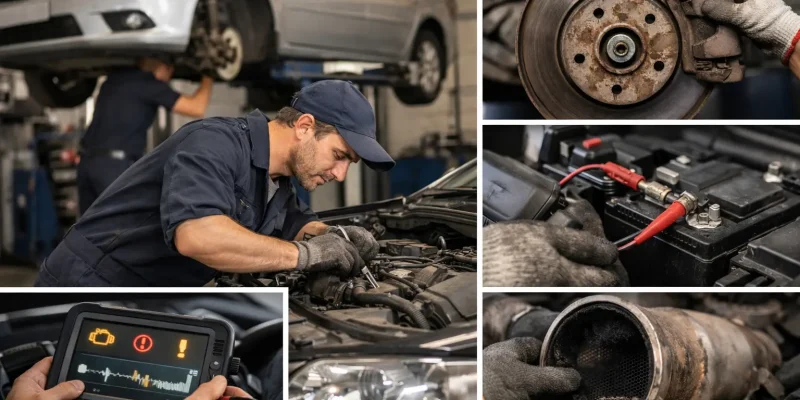
At AutoFix4u Garage Lowestoft, we investigate vehicle faults using diagnostic equipment and practical checks. This guide explains warning lights, fault codes and when to seek professional help.
What can car diagnostics tell you?
Modern vehicles contain electronic control units. These computers monitor the engine and other vehicle systems.
For example, they may monitor fuel delivery, emissions, braking and electrical components.
When a control unit detects a problem, it may store a diagnostic trouble code. It can also activate a dashboard warning light.
However, the code does not always identify the failed part.
Fault codes are a starting point
Imagine that your vehicle stores a low boost-pressure code.
Several faults could cause that reading:
- A damaged turbo hose.
- A boost leak.
- A faulty sensor.
- A sticking actuator.
- A vacuum problem.
- An issue with the turbocharger.
Therefore, replacing the turbo immediately would be a costly guess.
A mechanic should review the code and inspect the related system.
Live data provides more information
Diagnostic equipment can display readings from compatible vehicle sensors.
These readings may include engine temperature, air pressure and other operating information.
As a result, a mechanic can compare the readings with the symptoms.
However, the technician may still need physical tests to confirm the fault.
When should you book car diagnostics?
You do not need to wait for a complete breakdown.
Many vehicle problems develop gradually. Therefore, early checks may help prevent further damage.
Engine management warning light
An engine management light can indicate several problems.
Possible causes include:
- Ignition faults.
- Fuel system problems.
- Air intake faults.
- Sensor problems.
- Emissions system faults.
- Damaged wiring or electrical connections.
A steady amber light often requires a prompt inspection.
However, a flashing engine warning may indicate a more urgent fault.
If the engine shakes badly or loses significant power, stop safely and seek advice.
Our Warning Lights Check Lowestoft service can help identify which system needs attention.
Loss of engine power
Does your car struggle to accelerate?
Perhaps it feels weak when joining the A47 or climbing a hill.
Engine power loss can have several causes.
For example, a boost leak, fuel supply problem or emissions fault may affect performance.
Some vehicles also enter limp mode to limit engine output.
Therefore, a mechanic needs to investigate why the vehicle has reduced power.
Hard starting or a non-starting vehicle
Starting problems do not always mean you need a new battery.
A vehicle may have a faulty starter motor, poor electrical connection or charging problem.
Meanwhile, a cranking engine that will not start may have a fuel delivery or sensor fault.
A proper diagnosis helps distinguish between these problems.
Rough running and misfires
An engine that shakes, hesitates or idles unevenly needs attention.
Possible causes include ignition components, fuel delivery and air intake problems.
However, mechanical engine faults can produce similar symptoms.
A mechanic should check the evidence before recommending parts.
Poor fuel economy
An unexpected rise in fuel consumption can indicate a developing fault.
For example, a sensor problem or poor engine operation may affect efficiency.
However, driving conditions, tyre pressure and short journeys also influence fuel use.
Therefore, increased consumption alone does not confirm an engine fault.
What do common dashboard warning lights mean?
Not every warning light requires the same response.
The colour and symbol provide useful information. However, the vehicle handbook gives the correct meaning for your model.
Red dashboard warning lights
Red warnings often indicate an urgent concern.
Examples include:
- Engine oil pressure warnings.
- Serious overheating warnings.
- Brake system warnings.
- Certain charging system warnings.
Stop somewhere safe and follow the manufacturer’s guidance.
For a red oil pressure or serious overheating warning, switch off the engine promptly.
Do not continue driving simply because the vehicle still moves.
Amber dashboard warning lights
Amber warnings usually indicate a fault that needs attention.
Examples include engine management, ABS and DPF warnings.
However, the urgency depends on the warning and the vehicle’s symptoms.
If the car shakes, overheats or loses significant power, stop safely and seek professional advice.
Green and blue dashboard indicators
These generally show that a vehicle function is active.
For example, a blue indicator may show that the main beam is on.
Nevertheless, consult your handbook if you do not recognise a symbol.
Why does an engine warning light appear?
An engine warning can appear for several reasons.
Sometimes, the fault affects a sensor or electrical circuit.
Other times, the warning reflects a genuine mechanical or emissions problem.
Faulty sensors
Sensors help the engine control unit monitor vehicle operation.
If a sensor fails, it may send inaccurate information.
However, damaged wiring can also affect the reading.
Therefore, a mechanic should check the circuit before replacing the sensor.
Air intake and boost problems
A split hose or air leak can affect engine performance.
You may notice hesitation, poor acceleration or unusual noises.
Diagnostic readings may help identify the affected system.
However, further inspection is often necessary.
Fuel system problems
Incorrect fuel delivery can affect starting and engine performance.
Possible causes include pressure problems, blocked components and faulty sensors.
Consequently, the mechanic may need further tests before recommending a repair.
Emissions system faults
Emissions components help the vehicle meet its operating requirements.
Problems with the EGR system or diesel particulate filter can trigger warnings.
However, the warning does not always mean the filter itself needs replacement.
DPF warning lights and car diagnostics
Diesel particulate filters capture soot from exhaust gases.
Over time, soot builds up inside the filter.
Many vehicles use regeneration to burn off suitable amounts of soot.
However, frequent short journeys may prevent regeneration from completing.
Signs of a DPF problem
You might notice:
- A DPF warning light.
- Reduced engine power.
- Higher fuel consumption.
- Limp mode.
- Repeated regeneration problems.
- An engine management warning.
However, sensor faults and other engine problems can also affect DPF operation.
Therefore, a mechanic should investigate the cause before attempting regeneration.
Our DPF Regeneration Lowestoft service covers DPF checks and regeneration where suitable.
You can also read our Blocked DPF Symptoms Guide for further information.
What happens during professional car diagnostics?
A proper diagnostic appointment involves several stages.
The exact procedure depends on the fault and the vehicle.
Step 1: Discussing the symptoms
First, the mechanic asks what you have noticed.
For example:
- Does the problem happen when the engine is cold?
- Does the warning appear during acceleration?
- Does the car lose power after a longer journey?
- Has the vehicle recently had repairs?
- Does the fault disappear after restarting?
These details help narrow down the investigation.
Step 2: Initial vehicle checks
Next, the mechanic checks relevant systems.
Depending on the symptoms, this may include:
- Battery condition.
- Charging voltage.
- Accessible electrical connections.
- Fluid levels.
- Visible leaks.
- Damaged hoses or wiring.
Sometimes, an obvious mechanical problem explains the fault before detailed electronic testing begins.
Step 3: Reading fault codes
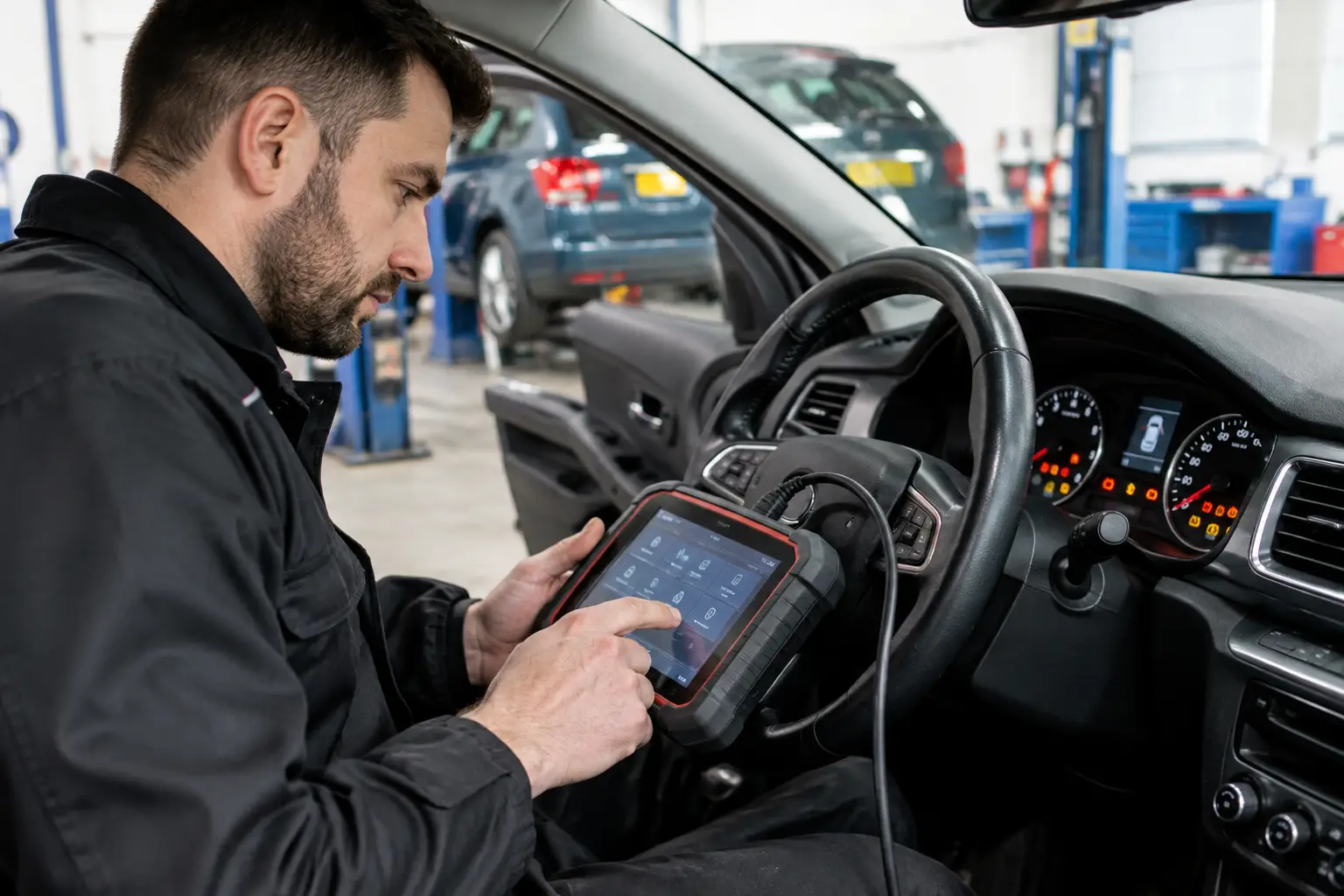
The technician connects suitable diagnostic equipment to compatible vehicle systems.
The equipment can retrieve stored trouble codes.
At AutoFix4u Garage Lowestoft, we use professional Autel and Launch diagnostic tools where appropriate.
However, retrieving codes is only part of the process.
Step 4: Reviewing live data
Next, the mechanic may compare live readings from relevant sensors.
This can help identify unusual operation.
For example, an unexpected pressure reading may indicate an air leak or control problem.
Step 5: Carrying out further checks
Additional tests help confirm the suspected cause.
These may include electrical testing, mechanical inspection or pressure checks.
Sometimes, a controlled road test is useful when the vehicle is safe to drive.
Step 6: Explaining the findings
Finally, the mechanic explains the results.
You should understand what the checks found and why the recommended repair makes sense.
Our Engine Diagnostics Lowestoft service focuses on identifying the cause before recommending repairs.
Is a fault-code scan the same as car diagnostics?
No. A fault-code scan is one part of the diagnostic process.
A basic scanner may identify a stored code.
However, it cannot always determine why the fault occurred.
For example, a sensor-related code may result from:
- A failed sensor.
- Damaged wiring.
- A poor electrical connection.
- A mechanical problem.
- An unexpected reading caused by another fault.
Therefore, replacing the component named in a code description may not solve the problem.
A mechanic needs to compare the code with other evidence.
Why clearing a warning light does not repair the fault
Some scan tools allow users to clear stored fault codes.
This may switch off a dashboard warning.
However, the underlying problem can remain.
As a result, the warning may return after another journey.
Clearing codes can also remove information that helps a mechanic investigate the problem.
Therefore, record the symptoms and seek professional advice before clearing an unexplained fault.
Electrical faults and car diagnostics
Some vehicle problems involve electrical systems rather than mechanical engine parts.
For example, a poor connection may cause intermittent warnings.
You may also notice:
- Repeated battery problems.
- Electrical components working occasionally.
- Charging system warnings.
- Starting problems.
- Unusual sensor readings.
However, these symptoms can have different causes.
Our Auto Electrical Repairs Lowestoft service covers electrical fault finding for cars and vans.
The correct checks depend on the vehicle and the affected circuit.
Car diagnostics or routine servicing?
Routine servicing and diagnostics serve different purposes.
A service follows the vehicle’s maintenance schedule.
For example, it may include an oil change, filter replacement and routine inspections.
Diagnostics investigates an existing fault or unusual symptom.
Therefore, a standard service does not automatically include detailed fault finding.
Our Car Servicing Lowestoft page explains scheduled maintenance options.
However, a vehicle with warning lights or poor performance may need a separate diagnostic appointment.
When should you stop driving?
Some warning lights require immediate action.
Stop safely and seek professional help if:
- A red oil pressure warning appears.
- The engine overheats.
- Braking performance becomes unsafe.
- The engine misfires severely.
- The vehicle loses significant power.
- You notice smoke or a strong burning smell.
- A serious mechanical noise develops.
Do not continue driving through major symptoms.
If the vehicle becomes unsafe, arrange recovery.
For drivers near Carlton Colville, our Vehicle Recovery Carlton Colville page explains how to request assistance.
What happens after a diagnostic check?
The next step depends on what the mechanic finds.
Sometimes, the repair involves a simple electrical connection or component.
However, other faults require more detailed mechanical work.
A vehicle may also have several unrelated fault codes.
Therefore, the mechanic should separate urgent problems from historic or less serious information.
At AutoFix4u Garage Lowestoft, we aim to explain the findings and provide clear repair recommendations.
We also seek your approval before additional work.
Book car diagnostics in Lowestoft
Warning lights, rough running and starting problems can have many causes.
However, guessing which part needs replacing can waste time and money.
AutoFix4u Garage Lowestoft helps drivers investigate vehicle faults using diagnostic equipment and practical testing.
Whether your vehicle has an engine warning, poor acceleration or an electrical problem, we can discuss the symptoms and recommend suitable next steps.
Visit our Engine Diagnostics Lowestoft page to learn more.
Call: 07778 979802
WhatsApp: Message AutoFix4u Garage Lowestoft
Request an estimate: Get a Free Estimate
Address: Unit 4, 10 Battery Green Road, Lowestoft, NR32 1DE.
An early diagnostic check can help identify the problem and reduce the risk of an unexpected breakdown.