Engine Diagnostics When Your Car Feels Wrong
Your car starts normally, but the engine warning light stays on. Perhaps the engine hesitates during acceleration or loses power when joining the A12. These symptoms often mean something needs attention.
Professional engine diagnostics can help identify the cause before a small fault becomes an expensive repair.
At AutoFix4u Garage Lowestoft, we focus on finding the actual problem. Instead of guessing which part has failed, we examine the symptoms and test the relevant systems.
A warning light does not always mean serious engine damage. However, ignoring it can create bigger problems. Therefore, early investigation often saves time and money.
What engine diagnostics actually involve
Modern vehicles use sensors, electronic control units and electrical systems to monitor engine performance.
These components manage fuel delivery, ignition, airflow and emissions. They also help the vehicle operate efficiently.
When the engine control unit detects unusual readings, it may store a diagnostic trouble code. Sometimes, it also activates the engine management light.
However, a fault code does not automatically identify a failed component.
For example, a code may suggest an oxygen sensor problem. Yet an air leak, wiring issue or exhaust leak could cause the unusual reading.
Therefore, proper engine diagnostics involve more than connecting a scanner.
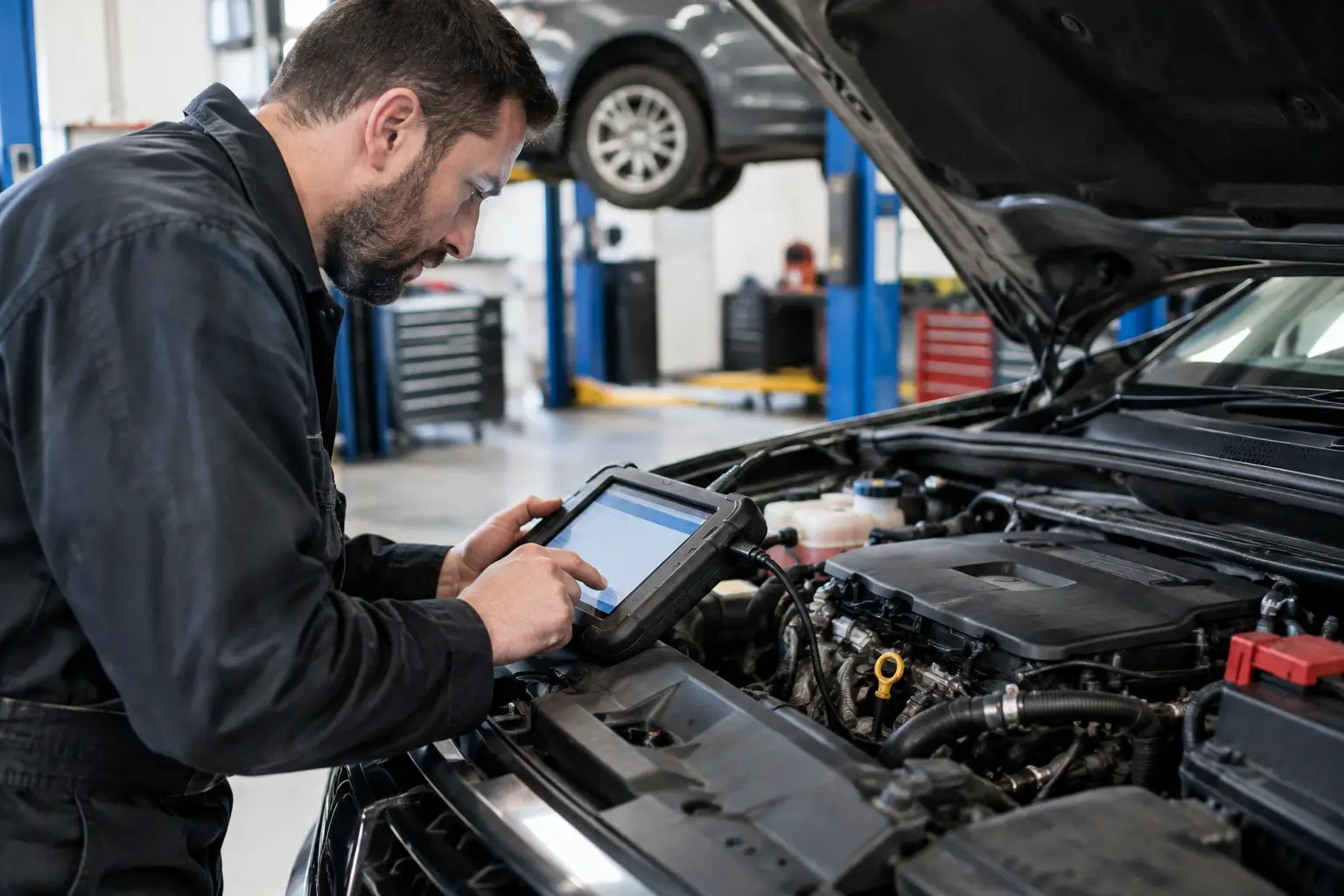
A technician must review fault codes, examine live data and test possible causes.
This process helps confirm which repair the vehicle actually needs.
Common signs your car needs engine diagnostics
Engine problems can appear in several ways.
Some faults trigger warning lights immediately. Others develop gradually and affect how the car drives.
Engine warning light stays on
An illuminated engine warning light is a common reason to book diagnostics.
The light can indicate problems with ignition, sensors, emissions or fuel delivery.
Sometimes the car continues running normally. However, the system has still identified a fault.
If the light remains on, arrange an inspection.
A flashing engine warning light requires more urgent attention. It can indicate a serious misfire that risks damaging the catalytic converter.
If the engine shakes or runs badly, stop somewhere safe and seek professional assistance.
Loss of engine power
A sudden loss of power can make driving difficult.
For example, the car may struggle during acceleration or feel unusually sluggish uphill.
Several faults can cause this behaviour.
These include turbo boost leaks, fuel pressure issues, airflow problems and DPF restrictions.
In some cases, the vehicle enters limp mode to limit further damage.
Consequently, professional testing becomes essential.
Rough idling and engine misfires
A healthy engine should generally run smoothly.
However, faulty ignition coils, worn spark plugs and injector problems can cause misfires.
You may notice shaking, hesitation or uneven engine speed.
Fuel delivery faults and air leaks can also produce similar symptoms.
Therefore, replacing ignition components without checking the cause may waste money.
Difficulty starting the engine
Starting problems do not always mean the battery has failed.
A weak battery, poor electrical connection or starter motor fault may cause the problem.
Alternatively, the issue could involve fuel pressure, engine sensors or the immobiliser.
A diagnostic inspection helps narrow down the possibilities.
This is particularly useful when the vehicle starts intermittently.
Increased fuel consumption
Poor fuel economy can indicate an engine performance issue.
For example, incorrect sensor readings may affect fuel delivery.
A faulty thermostat or emissions problem may also reduce efficiency.
However, tyre pressure, driving conditions and maintenance can influence fuel consumption too.
Therefore, the garage should assess the symptoms before recommending engine repairs.
Why fault code reading is only the beginning
Many drivers believe a diagnostic scanner can identify every faulty component instantly.
However, modern vehicle systems are more complicated.
A diagnostic trouble code usually indicates where the control unit detected a problem.
It does not always explain why that problem occurred.
For example, a boost pressure fault could involve a damaged hose or a control valve.
In other situations, wiring damage or a sensor issue may produce similar readings.
Replacing the turbocharger without further testing could therefore be unnecessary.
A proper diagnosis checks the evidence before recommending parts.
Read our guide about Warning Light Scans vs Diagnostics to understand the difference.
How our engine diagnostic process works
At AutoFix4u Garage Lowestoft, the first step is understanding the symptoms.
We ask when the problem started and how the car behaves.
For example, does it lose power only during acceleration? Does the warning light appear after longer journeys?
These details help identify the relevant checks.
Step 1: Diagnostic fault code scan
First, we examine the stored fault codes.
The scanner can reveal errors involving engine management and related systems.
However, we treat each code as a clue rather than a confirmed repair.
Step 2: Live data analysis
Next, we examine available live data.
This information helps show how sensors and control systems behave during operation.
For example, abnormal airflow or fuel pressure readings may help narrow down a fault.
However, the technician must interpret these readings alongside other evidence.
Step 3: Physical inspection
Electronic testing cannot replace a physical inspection.
Therefore, we examine relevant hoses, connectors, wiring and mechanical components.
A split air intake hose, for example, can cause poor acceleration and warning lights.
Finding that fault may prevent unnecessary sensor replacement.
Step 4: Confirming the cause
After gathering the evidence, we carry out further checks where necessary.
These may include electrical tests, pressure measurements or specific component testing.
The exact process depends on the symptoms.
Once we identify the cause, we explain the recommended repair.
Step 5: Repair and verification
After the customer approves the work, the appropriate repair can begin.
The technician then checks the system again.
Where appropriate, we also confirm that the original symptoms have disappeared.
The aim is to solve the underlying fault, not simply remove a dashboard warning.
Engine diagnostics for diesel vehicles
Diesel engines can develop faults involving the DPF, EGR valve, turbocharger and fuel system.
Short journeys may also prevent normal DPF regeneration.
Consequently, soot can gradually accumulate inside the filter.
However, a DPF warning does not automatically mean the filter needs replacing.
A pressure sensor, thermostat issue or another engine fault may prevent regeneration.
Therefore, diagnostics should identify the cause before any cleaning or regeneration procedure.
You can learn more in our Blocked DPF Symptoms Guide.
If your diesel vehicle has lost power, arrange an inspection before the problem worsens.
Engine diagnostics for petrol vehicles
Petrol engines often experience ignition and fuel mixture problems.
For example, a failing ignition coil may cause rough running.
Worn spark plugs can also affect combustion.
Additionally, intake leaks and oxygen sensor faults may trigger warning lights.
However, similar symptoms can come from several different components.
Therefore, proper testing helps avoid replacing working parts.
A technician can examine fault codes, fuel trim information and other relevant readings.
Further tests may then confirm the cause.
Why clearing an engine warning light is not enough
Some drivers use inexpensive code readers to remove dashboard warnings.
However, clearing the code does not repair the original fault.
If the engine control unit detects the same problem again, the light may return.
For example, clearing a warning caused by an intake leak will not repair the damaged hose.
Likewise, resetting a DPF warning will not resolve an underlying regeneration problem.
In some cases, clearing codes can also remove useful diagnostic information.
Therefore, we recommend identifying the cause before resetting warning lights.
This approach reduces repeat problems and unnecessary spending.
Can you continue driving with an engine fault?
The answer depends on the symptoms.
A steady amber engine warning light may allow a cautious journey to a garage if the car behaves normally.
However, you should arrange diagnostics promptly.
If the light flashes, the engine misfires severely or the car loses significant power, stop safely.
Do not continue driving if the engine overheats, produces heavy smoke or develops unusual mechanical noises.
Driving with a serious fault can increase repair costs.
If you are unsure about safety, contact a garage before moving the vehicle.
Recovery may be the better option.
Why early engine diagnostics can save money
A small fault can sometimes affect several components.
For example, an air leak may cause poor performance and increased fuel consumption.
If the problem continues, it may create further engine management issues.
Likewise, repeated misfires can damage emissions components.
Early diagnosis helps identify these problems before additional damage develops.
Furthermore, accurate testing reduces unnecessary replacement parts.
Instead of paying for several possible repairs, you receive recommendations based on the findings.
This approach also makes repair costs easier to understand.
How long do engine diagnostics take?
Diagnostic time depends on the fault.
Some problems become clear after initial testing and inspection.
However, intermittent faults may require additional checks.
For example, a problem that occurs only during acceleration may need more investigation.
Electrical faults can also take longer when wiring damage is difficult to locate.
Therefore, no garage can guarantee an exact diagnosis time for every vehicle.
At AutoFix4u Garage Lowestoft, we aim to explain the findings clearly.
If further testing is necessary, we discuss the next steps before proceeding.
Frequently asked questions about engine diagnostics
What are engine diagnostics?
Engine diagnostics involve checking electronic systems and testing possible faults.
Technicians use diagnostic equipment alongside physical inspections to identify engine problems.
Can engine diagnostics identify a misfire?
Yes. Diagnostic equipment can help identify misfire information and affected cylinders.
However, further testing may be necessary to confirm the cause.
Will diagnostics tell me which part to replace?
Not always immediately.
Fault codes provide useful information, but technicians must confirm the actual cause before recommending replacement parts.
Can a diagnostic scan detect DPF problems?
Yes. Many vehicles provide DPF-related fault codes and sensor readings.
However, additional checks may be necessary to identify why the problem developed.
Do I need diagnostics if the warning light disappears?
An intermittent warning light can still indicate a stored fault.
Therefore, an inspection may help identify the problem before it returns.
Can engine diagnostics help with starting problems?
Yes. Diagnostics can help investigate starting faults involving sensors, electronics and engine management systems.
Battery, charging and starter circuit tests may also be necessary.
Engine Diagnostics in Lowestoft
If your car feels wrong, do not rely on guesswork.
At AutoFix4u Garage Lowestoft, we investigate engine warning lights, misfires, starting problems and loss of power.
We help drivers from Lowestoft, Oulton Broad, Carlton Colville, Kessingland, Beccles and surrounding areas.
Our approach focuses on identifying the cause before recommending repairs.
Whether your vehicle has entered limp mode or developed an intermittent fault, professional diagnostics can provide a clearer answer.
Book Engine Diagnostics at AutoFix4u Garage Lowestoft
Is your engine warning light on? Does the car hesitate, misfire or struggle during acceleration?
Contact AutoFix4u Garage Lowestoft to discuss the symptoms and arrange an inspection.
We can explain the appropriate checks and provide a repair estimate after assessing the fault.
Call AutoFix4u Garage: 07778 979802
WhatsApp: Message AutoFix4u Garage
Contact us: Book Engine Diagnostics
Professional engine diagnostics help identify the real problem, reduce guesswork and support reliable repairs.
Get your vehicle checked before a small warning turns into a major breakdown.


