Best Tyres for Wet Roads That Keep You Safer
Wet roads can quickly reveal problems with your car’s tyres. A rainy roundabout, standing water or a sudden downpour may reduce grip. Your car might take longer to stop or feel less stable through bends.
The best tyres for wet roads offer reliable grip, effective water drainage and predictable handling. They also need the correct size, pressure and tread depth.
For drivers in Lowestoft and across Suffolk, wet-weather tyre performance matters throughout the year. At AutoFix4u Garage Lowestoft, we help drivers choose suitable tyres and identify problems that may affect road safety.
Why tyre grip matters on wet roads
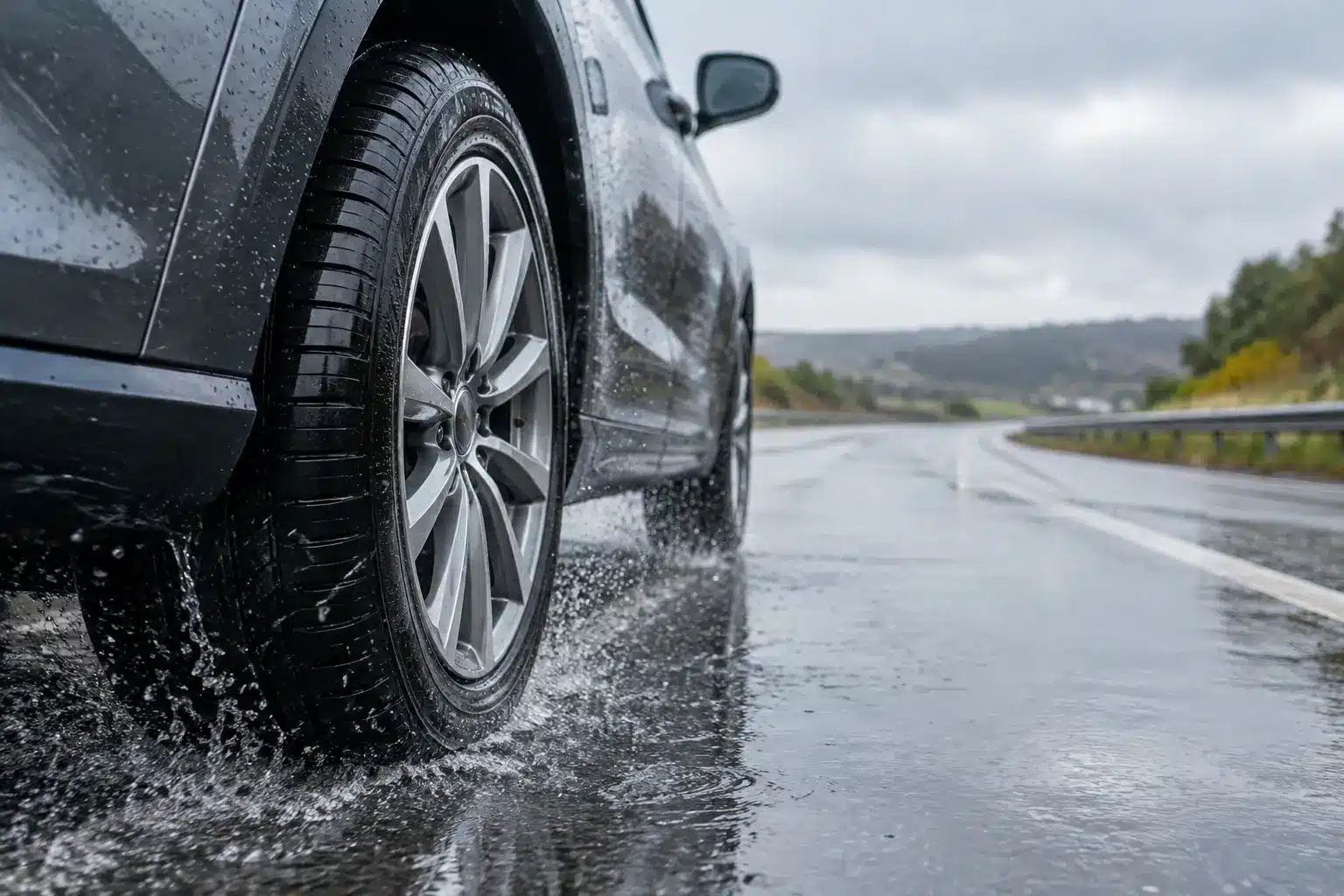
Rain creates a layer of water between your tyres and the road.
Tyre grooves help move this water away. This allows the rubber to maintain contact with the road surface.
However, worn tyres struggle to clear water as effectively. When water builds up beneath a tyre, the vehicle may begin to lose contact with the road. This is called aquaplaning.
What does aquaplaning feel like?
You may notice several warning signs:
- The steering suddenly feels light.
- Your car stops responding normally to steering.
- The wheels lose grip while crossing standing water.
- The vehicle feels unstable during heavy rain.
If aquaplaning occurs, ease off the accelerator smoothly. Avoid sudden braking or sharp steering movements. Keep the steering steady until the tyres regain grip.
Your speed, tyre condition and water depth all affect the risk.
What makes the best tyres for wet roads?
Several factors influence tyre performance in rain.
The most expensive tyre is not automatically the safest choice for every vehicle. You should consider wet-grip ratings, tread depth, tyre design and your normal driving conditions.
1. Good wet-grip performance
Wet grip describes how well a tyre performs when braking on a wet surface.
New tyres carry a label that helps drivers compare performance. The label includes wet grip, fuel efficiency and external rolling noise.
An A-rated tyre achieves stronger wet braking performance in the relevant label test than a lower-rated tyre.
However, the rating does not replace good maintenance.
Even a high-rated tyre can perform poorly if it has insufficient tread or incorrect pressure.
When choosing new tyres in Lowestoft, compare the available wet-grip ratings alongside price, comfort and durability.
2. Suitable tread depth
Tread grooves help clear water from the tyre’s contact area.
As the tread wears down, the grooves have less space to move water away. This can increase the risk of aquaplaning.
For cars and light vans in the UK, the legal minimum tread depth is 1.6mm across the central three-quarters of the tyre and around its full circumference.
However, reaching the legal limit does not mean the tyre still offers strong wet-weather performance.
Many drivers consider replacement at around 3mm, especially before periods of frequent rain. This is a safety consideration rather than a legal requirement.
Check tread depth regularly. Look across the tyre rather than checking only one groove.
If your tyres show uneven wear, low tread or cracking, arrange an inspection.
3. Effective tread patterns
Tyre manufacturers use different tread patterns to manage water.
Wide grooves help move larger amounts of water away. Smaller grooves, known as sipes, can improve contact with damp surfaces.
A tyre’s tread design also affects noise, comfort and handling.
However, no single tread pattern works best for every vehicle.
A small hatchback, family car and loaded work van may need different tyre specifications.
Choose tyres that match your vehicle rather than relying on tread appearance alone.
4. Correct tyre pressure
Incorrect pressure can affect tyre grip and steering.
Under-inflated tyres may overheat and wear unevenly. Over-inflated tyres can also change how the tyre contacts the road.
Check your pressures when the tyres are cold.
Use the manufacturer’s recommended figures from the vehicle handbook or pressure label.
Do not use the maximum pressure on the tyre sidewall as your normal setting.
Summer, all-season or winter tyres: which are best in rain?
Your driving habits and the weather conditions help determine the right tyre type.
Summer tyres
Summer tyres work well in mild and warmer conditions.
Many offer strong wet braking and good steering response. They suit drivers who mainly travel on normal UK roads during warmer weather.
However, their performance may become less suitable as temperatures fall.
All-season tyres
All-season tyres aim to provide balanced performance across changing weather conditions.
They may suit drivers who face frequent rain, cold mornings and occasional light snow.
For everyday driving around Lowestoft and nearby rural roads, they can offer a practical year-round option.
However, performance varies between brands and models. Check the wet-grip rating and other specifications before buying.
Winter tyres
Winter tyres use tread designs and rubber compounds suited to colder conditions.
They can improve traction on snow and ice compared with tyres that are not designed for winter conditions.
However, they are not automatically the best choice for year-round wet driving.
Choose tyres based on the weather you regularly encounter and your vehicle’s requirements.
How to choose the right wet-weather tyres
Before buying replacement tyres, check the vehicle manufacturer’s requirements.
Start with these details:
- Tyre size: Match the approved dimensions for your vehicle.
- Load rating: Choose tyres that can safely support the required weight.
- Speed rating: Follow the appropriate vehicle specification.
- Wet-grip rating: Compare braking performance in rain.
- Driving style: Consider town, rural and motorway use.
- Budget: Compare value without ignoring safety.
Drivers who cover many motorway miles may have different needs from those making short journeys around Lowestoft.
A van carrying tools also needs tyres with the correct load capacity.
Our tyre fitting service in Lowestoft can help you select suitable tyres and arrange professional installation.
Signs your tyres may be unsafe in wet weather
Tyre problems do not always cause an obvious warning light.
Sometimes, changes in handling provide the first clue.
Your car feels unstable in rain
Does your vehicle feel less secure through bends or during braking?
Low tread, incorrect pressure or damaged tyres may affect road grip.
However, worn suspension parts can also cause poor handling.
The steering wheel vibrates
Vibration at certain speeds may indicate an imbalance, wheel damage or tyre problems.
A professional tyre balancing check in Lowestoft can help identify whether wheel imbalance contributes to the vibration.
Your tyres wear unevenly
Check both edges of each tyre.
Excessive wear on one side may suggest incorrect pressure, alignment problems or worn suspension parts.
Replacing tyres without checking the cause may allow the same problem to return.
AutoFix4u can inspect tyre condition and advise whether related mechanical checks are appropriate. We do not currently provide wheel alignment services.
One tyre keeps losing pressure
A slow puncture may cause repeated pressure loss.
You might notice a warning from the tyre pressure monitoring system or find yourself adding air more often.
Do not ignore a tyre that repeatedly loses pressure.
Our puncture repair service in Lowestoft checks whether the damage allows a safe repair.
Not every puncture can be repaired. Sidewall damage, structural problems and damage from driving on a flat tyre may require replacement.
How AutoFix4u checks tyre condition
A proper tyre inspection looks beyond the visible tread pattern.
Our team can examine the tyre’s overall condition and discuss any concerns.
Tread depth inspection
We check the available tread and look for uneven wear.
This helps identify tyres approaching the legal limit or showing unusual wear patterns.
Visible damage checks
We look for cuts, cracks, bulges and other signs of damage.
A tyre with a bulge or exposed cords may no longer be safe to use.
Tyre pressure checks
Correct pressure supports safe handling and tyre life.
We check the recommended figures against your vehicle’s requirements.
Related vehicle concerns
Vibration, steering pull or uneven wear may point towards another fault.
Suspension or steering components sometimes need further inspection.
If tyre wear suggests a mechanical problem, we explain the concern and recommend suitable next steps.
Should new tyres go on the front or rear?
Many drivers assume that the newest tyres should always go on the driven wheels.
However, tyre manufacturers commonly recommend fitting the better pair to the rear axle when replacing only two tyres.
Good rear grip helps reduce the risk of sudden rear-end instability on wet roads.
There may be exceptions for certain vehicles.
Always follow the vehicle manufacturer’s instructions, particularly for four-wheel-drive systems.
Differences in tyre size or rolling circumference can cause problems on some vehicles.
Ask for advice before replacing only one tyre or fitting tyres with significantly different wear levels.
How often should you check your tyres?
Regular checks can help you find problems before they affect driving.
A simple monthly inspection is a useful starting point.
Check:
- Tread depth across each tyre.
- Tyre pressures when cold.
- Visible cuts, cracks or bulges.
- Nails or other objects in the tread.
- Uneven wear on the inner and outer edges.
- Any repeated pressure loss.
Check your tyres again before a long journey.
You should also inspect them after hitting a deep pothole or kerb, especially if the car starts to vibrate or pull to one side.
When should you stop driving?
Some tyre faults need immediate attention.
Do not continue driving on a tyre with visible structural damage, exposed cords or a serious bulge.
A tyre that has gone flat may also suffer internal damage.
If you experience a sudden loss of tyre pressure, pull over safely as soon as possible.
Do not continue driving simply because the vehicle can still move.
Arrange professional assistance if you cannot safely complete the journey.
Get advice on the best tyres for wet roads in Lowestoft
The best tyres for wet roads combine suitable wet-grip performance, adequate tread depth and the correct specification for your vehicle.
Regular pressure checks also make a difference.
If your current tyres feel unstable in rain, show uneven wear or need replacement, AutoFix4u Garage Lowestoft can help.
We supply and fit tyres for cars and vans. We can explain budget, mid-range and premium options so you can choose tyres that match your driving needs.
Explore our new tyres service or book professional tyre fitting in Lowestoft.
Call AutoFix4u Garage Lowestoft: 07778 979802
WhatsApp: Message us about your tyres
Free Estimate: Request a tyre quote
Address: Unit 4, 10 Battery Green Road, Lowestoft, NR32 1DE.
Get your tyres checked before poor wet-weather grip becomes a safety problem.