MOT Repairs Lowestoft Drivers Can Trust
Failed your MOT on something you do not fully understand? That is usually the worst part. Most drivers can deal with a repair. What causes stress is getting a list of faults, not knowing what matters most, and wondering how long the car will be off the road. If you are looking for MOT repairs Lowestoft drivers can sort quickly and properly, the key is finding the actual cause of the failure and fixing it without guesswork.
At a local garage, we often see the same pattern. A car goes in for its MOT, it fails on brakes, tyres, suspension, emissions or lights, and the driver is left trying to piece together what happens next. In most cases, the repair itself is straightforward once the fault has been checked properly. The delays usually come from poor diagnosis, unclear advice, or parts being fitted before anyone has confirmed what has actually failed.
What MOT repairs in Lowestoft usually involve
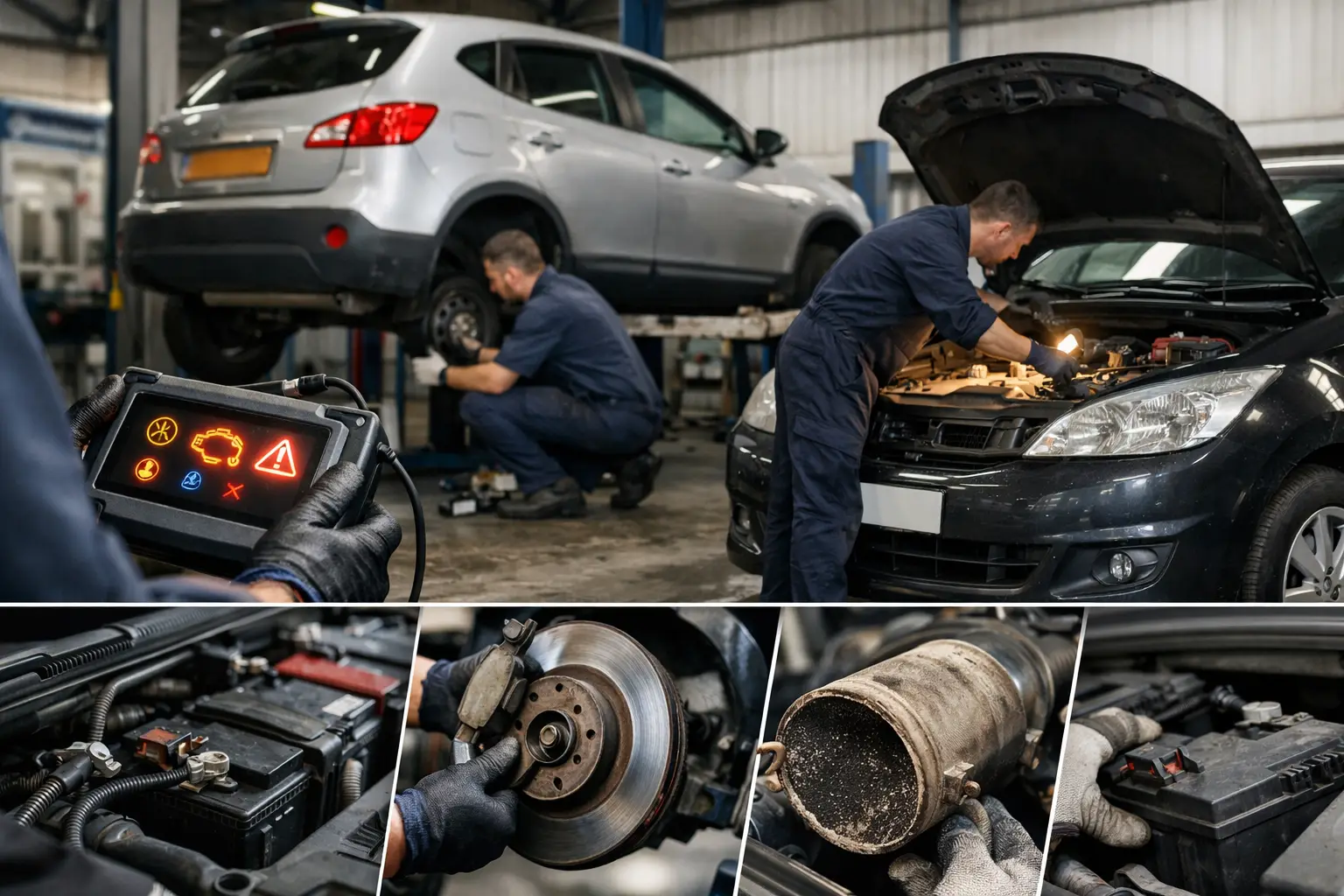
An MOT failure can range from a simple bulb replacement to a bigger safety repair. The most common jobs tend to be worn brake pads and discs, tyres below the legal limit, broken suspension springs, damaged exhaust sections, steering issues, and warning lights that point to an emissions or engine fault.
We often see this issue when a car has been giving small warnings for a while. Maybe the brakes have felt weak, the steering has started knocking over bumps, or the engine warning light has been ignored because the car still drives. Then the MOT brings it to a head.
That does not always mean a major bill. Sometimes one fault causes another test failure. A damaged suspension component can affect tyre wear. An engine fault can trigger emissions problems. A proper inspection matters because replacing parts one by one is where costs and delays start building up.
Why cars fail the MOT in the first place
Most MOT failures are not random. They usually happen because wear has built up slowly and the symptoms have been easy to live with. Daily driving around Lowestoft and the surrounding area means plenty of stop-start use, potholes, short trips and damp weather. That combination is hard on brakes, suspension, batteries and exhaust systems.
Short journeys are a common problem. We see them linked to blocked DPF systems, weak batteries and poor engine running, especially on diesel vehicles. If the car is not getting hot enough or running long enough, faults can build up in the background long before MOT time.
There is also the simple issue of timing. Many people wait until the test date is close before checking anything. If tyres are already borderline, or a warning light has appeared the week before, there is not much room to plan. That is why MOT preparation and quick turnaround repairs make such a difference.
MOT repairs Lowestoft motorists often need fast
When a car is your only way to get to work, do the school run, or keep appointments, speed matters. Not rushed work – just an organised repair process. That starts with identifying what is an MOT fail, what is an advisory, and what needs dealing with first.
Brakes are one of the most common urgent repairs. If pads are worn down or discs are heavily scored, the fix is usually clear. The important thing is checking the full brake condition rather than fitting parts based on one visible issue. If a caliper has started sticking, for example, replacing pads alone will not solve it for long.
Suspension faults are another big one. A snapped spring or worn arm bush can cause handling issues, uneven tyre wear and an MOT failure at the same time. We often see this after drivers mention a knock that has been there for weeks. It is easy to put off until the test picks it up.
Warning lights can be more complicated. If the engine warning light or ABS light is on, the car may fail even if it still feels normal to drive. In those cases, diagnostics come first. The fault code gives a direction, but the real cause still needs confirming. A sensor fault, wiring issue or emissions problem can all trigger a similar warning.
The right way to deal with an MOT failure
The best approach is simple. Find out what failed, confirm why it failed, then repair what is needed with a clear plan. That sounds obvious, but plenty of frustration comes from skipping the middle step.
A failure sheet tells you what the tester found. It does not always tell you the full cause. For example, an emissions fail might be linked to a sensor problem, a DPF issue, poor combustion, or a fault that has put the engine into a less efficient running mode. If you only chase the test result and not the source, the same issue can come back.
That is why a diagnostic-first garage is often the safer choice for MOT failure work. Instead of treating every warning light or emissions issue as a one-part fix, the fault gets checked properly. You get a plain English explanation, a repair plan, and a clearer idea of what needs doing now and what can wait.
Common MOT failure areas and what they usually mean
Lights are often the quickest fix. A failed bulb, poor beam pattern or damaged lens can usually be sorted without too much trouble. Even then, it is worth checking the wider issue if bulbs are repeatedly failing, as that can point to a wiring or voltage problem.
Tyres are straightforward in one sense and easy to miss in another. If tread is low, the tyre needs replacing. But uneven wear matters too. We often see inner edge wear caused by suspension or alignment problems. Replacing the tyre gets the car through the test, but it may not stop the next one wearing out early.
Brake failures vary. Some are simple wear-and-tear items. Others involve seized components, corroded lines or imbalance across the axle. If the pedal has felt different, the car pulls slightly, or there is grinding noise under braking, those are signs not to leave it until test day.
Exhaust and emissions faults depend on the car and how it is used. A small leak, a failing sensor, a blocked DPF or poor combustion can all show up during the MOT. We often see diesel drivers caught out here, especially if the vehicle mainly does short local runs.
Fast turnaround matters, but so does getting it right
Most people looking for MOT repairs are not browsing for interest. They need the car back. That is why same-day solutions, where possible, are genuinely useful. But speed only helps if the repair is done properly the first time.
There is always a balance. Some jobs can be completed quickly because the fault is clear and parts are readily available. Others need more time because the failure has a deeper cause. A suspension spring might be a same-day repair. An engine warning light linked to an intermittent electrical fault may need proper testing before any parts are ordered.
Honest garages will tell you the difference. If something can be turned around quickly, they should say so. If it needs diagnosis first, they should say that too. Clear communication saves more time than vague promises.
Choosing a local garage for MOT failure repairs
For most drivers, trust comes down to clarity. You want to know what failed, what caused it, what it will take to put right, and whether the repair is worth doing now. You do not need a sales pitch. You need straight answers.
A local independent garage usually makes that easier. You are dealing with people who know the area, understand how important one reliable car can be, and are accountable for the work they do. That matters when you are trying to sort a failure without losing days of driving time.
If your MOT has flagged up a warning light, brake problem, suspension issue, emissions fault or something you do not fully understand, the next step is simple. Get it checked properly, get a clear quote, and get the repair booked before a small issue turns into a bigger one.
At AutoFix4u, that means fault diagnosis first, plain advice, transparent pricing and repair work aimed at solving the problem properly – not just getting the car through the test and sending you back with the same issue waiting to return.
If your car has failed and you need a quick answer, call now or ask for a quote. Same-day slots may be available, and a proper diagnosis now usually saves time, money and hassle later.