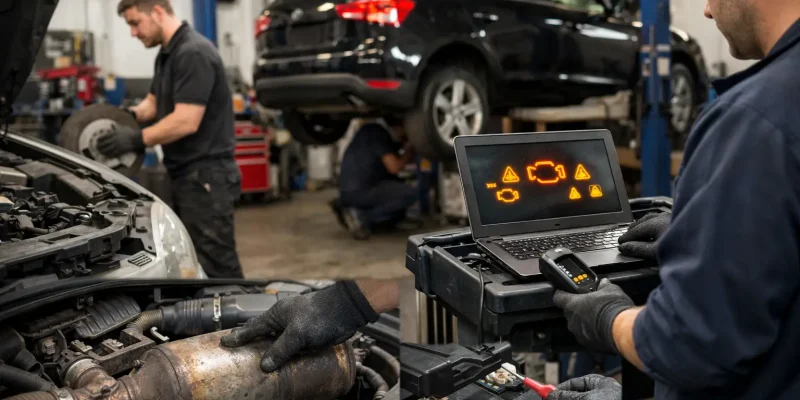
Warning Light Mechanic Kessingland
A dashboard light rarely comes on at a convenient time. You are heading to work, doing the school run, or setting off from Kessingland, then suddenly something lights up on the dash and you are left wondering if the car is safe to drive. If you need a warning light mechanic Kessingland drivers can rely on, the main thing is getting the fault checked properly rather than guessing and hoping it clears itself.
In most cases, the warning light is not the actual fault. It is the car telling you that a system has picked up a problem. That could be something small, like a sensor issue, or something more serious, like a misfire, low oil pressure, brake fault or DPF problem. The key is finding the cause quickly, explaining it clearly, and sorting it before it turns into a bigger repair.
What a warning light usually means
Modern cars monitor almost everything. The engine, brakes, emissions system, battery charging, steering and airbags all have sensors feeding information back to the control unit. When something falls outside the normal range, a warning light appears.
We often see this issue when drivers have already searched online and found ten different answers for the same light. That is the problem with warning lights. The same symbol can point to several different faults depending on the vehicle and the symptoms. An engine warning light might mean a failing ignition coil on one car, but a blocked DPF or faulty EGR valve on another.
That is why proper diagnostics matter. Clearing the light without fixing the fault usually means it will return. Sometimes it comes back the same day. Sometimes it stays off for a week, then the car drops into limp mode or starts running rough.
Warning light mechanic in Kessingland – common faults we see
Some dashboard warnings are more common than others, especially on cars used for short local trips, stop-start driving, or daily commuting around Suffolk and Norfolk.
Engine warning light
This is one of the most common reasons drivers book in. The car may still run normally, or you might notice rough idling, poor fuel economy, hesitation or loss of power. In most cases, this usually happens because the engine management system has detected a fault affecting performance or emissions.
Common causes include ignition faults, sensor failures, air leaks, fuel system issues, and DPF-related problems. If the light is flashing rather than steady, that needs quicker attention, as ongoing driving can cause further damage.
DPF and emissions warnings
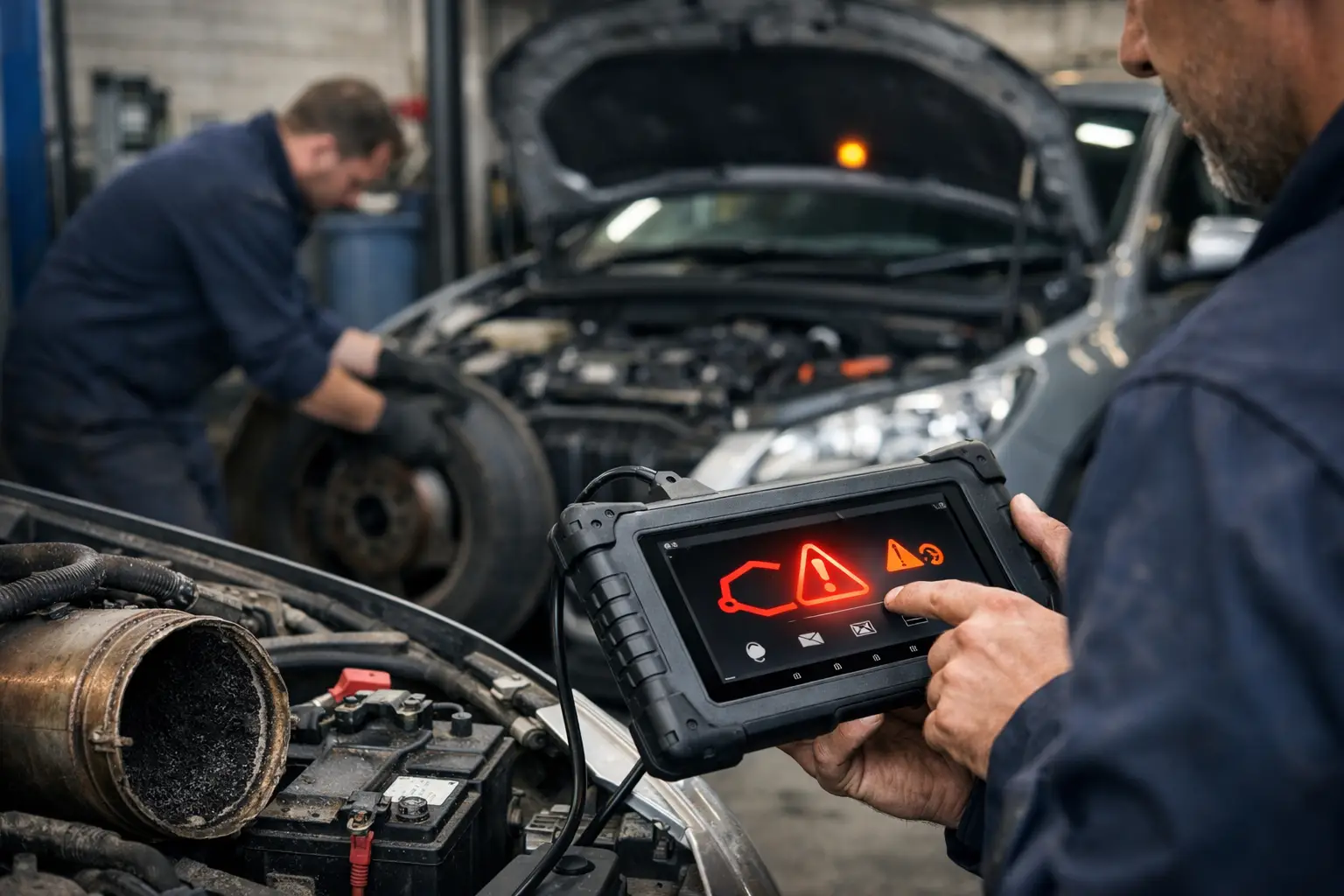
We often see this on diesel vehicles that do lots of short journeys. The filter cannot get hot enough to regenerate properly, soot builds up, and eventually the warning light comes on. If left too long, the car may go into limp mode.
Sometimes a forced regeneration is enough. Other times there is an underlying issue, such as a pressure sensor fault, EGR problem, or injector issue, that needs repairing first. That is why a diagnostic-first approach saves time and money.
Battery or charging light
A battery light does not always mean you need a new battery. It can also point to charging faults, wiring issues, or alternator problems. If that light comes on while driving, the car may keep going for a short time, but once the battery voltage drops too far, it may not restart.
ABS or brake warning lights
These should not be ignored. The car may still brake, but systems designed to help you stop safely in poor conditions may not work as they should. Common causes include wheel speed sensors, damaged wiring, worn components, or issues with the ABS pump.
Airbag or safety system lights
These faults can be caused by wiring under the seats, sensor problems, or module faults. The car might feel fine to drive, but a safety system warning means part of the protection system may not operate properly in an accident.
Why guessing costs more than diagnostics
A lot of drivers understandably hope a warning light is something minor. Some try disconnecting the battery. Others use a basic code reader, see a fault code online, and replace the first part that sounds likely. Sometimes they get lucky. Often they do not.
The fault code only tells part of the story. It points you towards the affected system, but it does not confirm the failed part on its own. For example, a fault code linked to fuel pressure does not always mean the pump has failed. It could be wiring, a sensor, contamination, or another issue affecting the reading.
That is where hands-on testing matters. A proper mechanic does not just plug in a machine and read out a code. They look at live data, check how the car is behaving, inspect the likely fault area, and work through the cause properly. That is how you avoid paying for parts you never needed.
When it is safe to drive – and when it is not
It depends on the warning light and what the car is doing at the time.
If the engine warning light is on but the car feels normal, you may be able to drive it carefully for a short distance to a garage. If the car is misfiring, lacks power, smokes heavily, overheats, or goes into limp mode, it is better to stop using it until it has been checked.
If you see an oil pressure light, serious brake warning, or temperature warning, switch off as soon as it is safe. Carrying on can turn a manageable repair into major engine or safety-related damage.
This is where clear advice matters. Drivers do not always need towing, but they do need an honest answer based on the symptoms, not guesswork. If you are unsure, ask before driving further.
What to expect from a warning light diagnosis
A proper diagnostic visit should be straightforward. First, the fault codes are read and recorded. Then the vehicle is checked in relation to the warning light and any symptoms you have noticed, such as poor starting, rough running, loss of power or unusual noises.
From there, the testing becomes more focused. That might mean checking battery voltage and charging output, testing sensors, inspecting wiring, looking at DPF pressure readings, or examining ignition and fuel system performance. Once the cause is identified, the next step should be explained in plain English.
That matters because most customers do not want a technical lecture. They want to know what is wrong, whether it is urgent, what it will take to fix, and whether the repair is worth doing now. A good garage keeps it simple and gives you a clear plan.
Warning light mechanic Kessingland drivers can trust
If you are looking for a warning light mechanic Kessingland way, local support matters. You do not want to spend days waiting for answers or be passed around a call centre. You want someone nearby who can inspect the vehicle, tell you what the fault actually is, and carry out the repair properly.
That is especially true when the car is your only way of getting to work, taking the children out, or keeping daily life moving. A warning light may seem like a small thing at first, but many of the bigger breakdown jobs start with a light that was ignored for too long.
We often see cars come in after another quick fix has failed. The warning light has been reset, a part has been changed on a hunch, but the original issue is still there. The best outcome usually comes from slowing down for the diagnosis, then fixing the root cause once.
Fast action usually means a simpler repair
There is a big difference between catching a fault early and leaving it until the car starts running badly. A failing sensor may be a relatively simple fix if dealt with straight away. If it is ignored, it can affect fuel mixture, cause poor running, block the DPF, or trigger other faults.
The same goes for battery and charging issues. Sort them early and you may only need one repair. Leave them and you could end up stranded with a non-start, recovery costs, and extra electrical faults caused by low voltage.
That is why the sensible next step is not to wait for another light to come on. It is to book the car in while the issue is still manageable.
If your dashboard warning light has come on and you are near Kessingland or Lowestoft, get it checked properly. Same-day slots may be available, with clear pricing, honest recommendations, and no surprise extras. A quick diagnostic now is often the difference between a straightforward repair and a bigger problem later. If you are not sure whether the car is safe to drive, call and ask before setting off.