Best Dashboard Warning Light Actions to Take
A dashboard warning light can appear without warning. You might notice one during the school run, on the way to work or while driving through Lowestoft.
The best dashboard warning light actions depend on the light’s colour, the symbol and how your car behaves.
Some warning lights mean you should stop as soon as it is safe. Others indicate a problem that needs professional attention soon.
At AutoFix4u Garage Lowestoft, we help drivers investigate dashboard warnings and find the cause. Understanding the warning can help you avoid unnecessary repairs and serious damage.
Best dashboard warning light actions: check the colour first
Most vehicles use colours to show the importance of a dashboard message.
However, the exact meaning can vary between manufacturers. Always check your vehicle handbook when it is safe to do so.
Red warning lights
Red usually signals an urgent problem.
A red warning may involve engine lubrication, overheating or braking safety.
Find a safe place to stop and assess the warning immediately.
Some red lights require you to switch off the engine and arrange recovery.
Amber or yellow warning lights
Amber usually indicates a fault that needs attention.
Your car may still drive normally, but you should not ignore the warning.
Check for unusual noises, reduced power or changes in handling.
A professional warning lights check in Lowestoft can help identify the affected system.
Green, blue and white dashboard lights
These often show that a vehicle system is active.
Examples include indicators, headlights and main beam.
They do not normally indicate a mechanical fault.
However, always confirm unfamiliar symbols in your handbook.
What should you do when a red warning light appears?
Red warnings deserve immediate attention.
Do not ignore a serious warning simply because the vehicle still moves.
Red oil pressure warning light
An oil pressure warning may indicate poor engine lubrication.
Without sufficient oil pressure, moving engine components can suffer serious damage.
Stop safely and switch off the engine immediately.
Do not continue driving to the garage.
Low oil level, oil leaks, oil pump problems and internal faults can all affect oil pressure.
Adding oil may not solve the problem.
Our oil change guide explains routine oil maintenance. However, a red oil pressure warning requires fault investigation, not simply an oil change.
Engine temperature warning
A high engine temperature can indicate overheating.
Possible causes include low coolant, cooling system leaks or fan problems.
If the temperature warning appears, stop somewhere safe and switch off the engine.
Allow the engine to cool.
Never open a hot coolant expansion tank or radiator cap.
Hot coolant can cause serious burns.
Do not restart the engine until you know whether it is safe.
Brake system warning light
A brake warning can have several causes.
In some vehicles, it appears because the parking brake remains applied.
However, low brake fluid and braking system faults can also trigger warnings.
If braking performance changes, stop driving.
Pay attention to:
- A soft or unusually low brake pedal.
- Reduced stopping power.
- The vehicle pulling during braking.
- Unusual grinding noises.
- A brake fluid warning.
Our brake repair service in Lowestoft covers brake inspections and repairs.
If your brakes feel unsafe, arrange recovery rather than driving to an appointment.
Battery charging warning light
A red battery symbol often indicates a charging system problem.
It does not automatically mean you need a new battery.
Possible causes include an alternator fault, damaged belt or poor electrical connection.
The vehicle may continue running briefly on stored battery power.
However, it could stop without warning.
Switch off unnecessary electrical equipment, pull over somewhere safe and seek professional advice. Avoid continuing the journey.
Read our guide to alternator fault symptoms for more information.
Amber engine management light: what should you do?
The engine management light is one of the most common dashboard warnings.
It can indicate problems with engine control or emissions systems.
Steady engine management light
A steady amber light may indicate a fault that needs investigation.
If the vehicle drives normally, you may be able to arrange a careful journey to a garage.
However, check your manufacturer’s guidance.
Avoid hard acceleration and unnecessary journeys until a mechanic has investigated the cause.
Possible problems include:
- Faulty sensors.
- Ignition or misfire problems.
- Fuel delivery faults.
- Emissions system issues.
- Electrical or wiring faults.
A scan may reveal a fault code, but a code does not always identify the failed component.
Our engine diagnostics service in Lowestoft combines fault-code information with further checks where necessary.
Flashing engine management light
A flashing warning can indicate a more serious problem.
For example, a severe misfire may damage the catalytic converter.
The engine may shake, lose power or produce unusual noises.
Reduce speed and find a safe place to stop.
Avoid continuing to drive with a flashing engine light. Seek professional advice and arrange recovery if necessary.
ABS warning light: is it safe to drive?
The ABS system helps prevent wheel lock during heavy braking.
An amber ABS warning may mean this function is unavailable.
Your normal brakes may still operate, but you should not assume that every braking feature works correctly.
Leave extra stopping distance and avoid unnecessary journeys.
If the ABS warning appears alongside a red brake warning, or braking feels unusual, stop driving.
Arrange a professional inspection.
Tyre pressure warning light
A tyre pressure warning may indicate low pressure or a system fault.
Possible causes include:
- A slow puncture.
- A leaking tyre valve.
- Temperature-related pressure changes.
- Tyre damage.
- A faulty pressure monitoring sensor.
Stop somewhere safe and inspect the tyres.
If a tyre looks flat, has a bulge or shows serious damage, do not continue driving.
Our puncture repair service in Lowestoft can assess whether a tyre allows safe repair.
If you need replacement tyres, explore our new tyres service.
Use the vehicle manufacturer’s recommended pressures. Do not rely on the maximum figure printed on the tyre sidewall.
Diesel DPF warning light: what does it mean?
Diesel vehicles use a diesel particulate filter to capture soot from exhaust gases.
A DPF warning may indicate that the filter needs attention.
Short journeys and interrupted regeneration cycles can contribute to soot buildup.
However, sensor faults and other engine problems may also trigger the warning.
You might notice:
- Reduced engine performance.
- Increased fuel consumption.
- An engine management warning.
- Poor acceleration.
- Limp mode.
Read our guide to blocked DPF symptoms to understand the possible causes.
Do not attempt a forced motorway drive if the vehicle has serious warning lights, overheating or major loss of power.
A mechanic should assess the fault before recommending further action.
What should you check before driving again?
When a warning light appears, note the details.
These observations can help a mechanic identify the cause.
Check the warning colour
Is the light red, amber or another colour?
A red warning may require immediate action.
Look for other symptoms
Does the engine run roughly?
Has the car lost power?
Do you notice unusual smells, noises or smoke?
These symptoms can help show whether the fault is urgent.
Check the dashboard message
Some vehicles display a written explanation alongside the warning symbol.
Take a photograph if you can do so safely while parked.
Check the vehicle handbook
Manufacturers sometimes use different symbols or warning colours.
Follow the advice for your exact vehicle.
Avoid clearing the warning without investigation
A basic code reader may switch off some warning lights.
However, clearing a fault code does not repair the cause.
It can also erase useful information before a diagnostic appointment.
How does a garage diagnose dashboard warning lights?
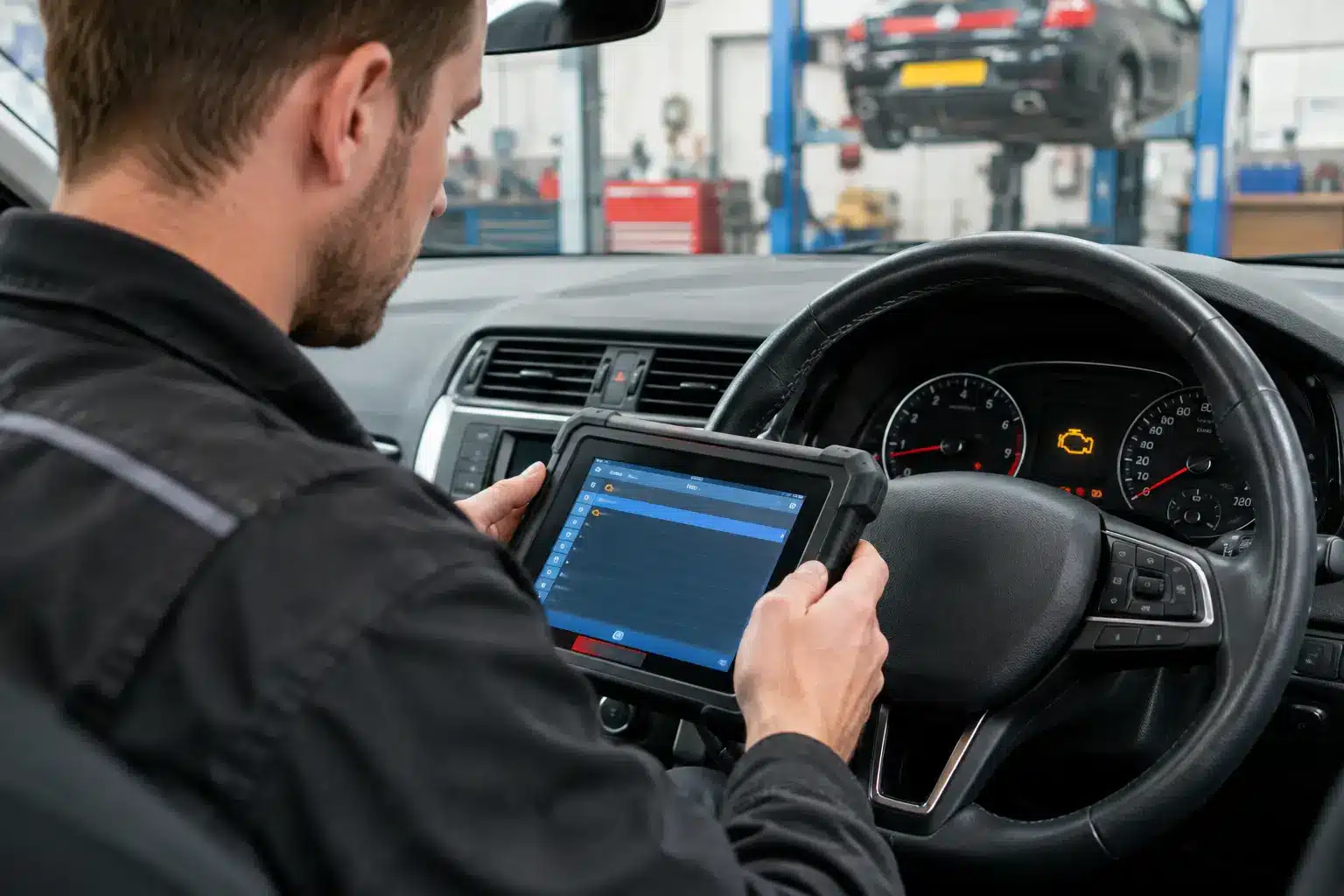
Professional diagnostics involves more than reading a fault code.
A mechanic needs to understand the symptoms and test the relevant vehicle systems.
Reading fault codes
Diagnostic equipment communicates with compatible vehicle control units.
The codes help identify systems that may need attention.
However, a fault code is a starting point rather than a guaranteed diagnosis.
Checking live vehicle data
Live data allows a mechanic to review information from sensors and control systems.
This can help identify unusual readings or inconsistent operation.
Inspecting related components
The mechanic may inspect wiring, connectors, fluid levels or mechanical components.
The checks depend on the warning and the symptoms.
Explaining the findings
A good diagnosis should identify the likely cause and explain the next steps.
At AutoFix4u Garage Lowestoft, we use professional Autel and Launch diagnostic equipment where appropriate.
We discuss repair options and provide a quotation before additional work.
Warning light or service reminder: what is the difference?
Not every dashboard message indicates a fault.
A service reminder usually tells you that routine maintenance is due.
This may include an oil change, scheduled inspections or replacement items.
For regular maintenance, explore our car servicing options in Lowestoft.
However, a red oil pressure warning, overheating message or serious engine fault needs a different response.
Routine servicing does not replace proper fault investigation.
When should you stop driving immediately?
Some warning signs make continued driving unsafe.
Stop somewhere safe and arrange assistance if you experience:
- A red oil pressure warning.
- A serious engine overheating warning.
- Brake failure or major changes in braking performance.
- A flashing engine light with rough running or severe power loss.
- Heavy smoke or strong burning smells.
- A flat tyre or obvious tyre damage.
- Sudden major loss of engine power.
Do not continue driving simply because the vehicle can still move.
If the fault makes the car unsafe, arrange recovery.
Our guide to garage recovery versus jump starting explains why some breakdowns require recovery rather than a temporary restart.
Book a dashboard warning light check in Lowestoft
A dashboard warning does not always mean an expensive repair.
However, ignoring the problem can create additional damage or safety risks.
AutoFix4u Garage Lowestoft helps drivers investigate warning lights, engine faults and electrical problems.
Our team can check the symptoms, assess the diagnostic information and explain the recommended next step.
Visit our Warning Lights Check Lowestoft page to learn more.
Call: 07778 979802
WhatsApp: Message AutoFix4u Garage Lowestoft
Request an estimate: Get a Free Estimate
Address: Unit 4, 10 Battery Green Road, Lowestoft, NR32 1DE.
A timely warning light check can help you identify faults early and make safer decisions about your vehicle.


