
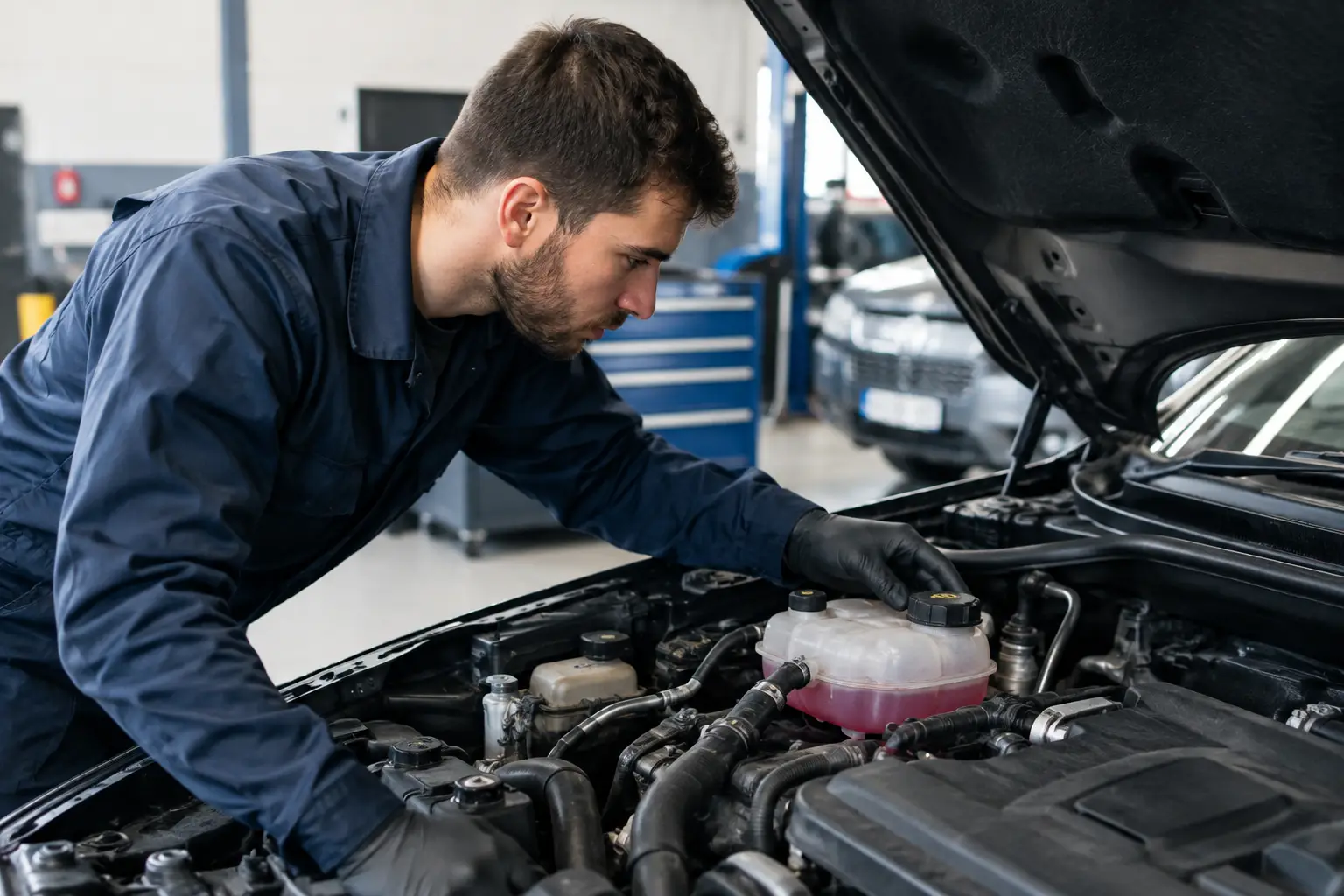
A puddle under the front of the car, a coolant warning light on the way to work, or a temperature gauge creeping higher than normal can quickly turn an ordinary journey into a worry. Water leak diagnosis is not just about finding where liquid is dripping from. It is about working out whether the engine is losing coolant, why it is escaping and whether it is safe to drive.
Many drivers call it a water leak, which is perfectly understandable. In most modern cars, however, the cooling system contains a mix of water and antifreeze coolant. This coloured liquid carries heat away from the engine and helps protect the system from corrosion and freezing. If the level drops repeatedly, the cause needs checking rather than simply topping it up.
What a coolant leak can look like
The obvious sign is a damp patch under the vehicle after it has been parked. Coolant is often pink, red, blue, green or orange, depending on the type used, although it can look clear once diluted by rainwater. It may feel slightly slippery and can leave a white, pink or coloured crust around a hose or engine component once it dries.
Not every puddle is a fault. Clear water dripping beneath the car after the air conditioning has been running is usually normal condensation. A coolant leak is more likely if the expansion tank level keeps falling, there is a sweet smell around the engine bay, or the heater starts blowing cold while the engine temperature rises.
Keep an eye out for these symptoms together rather than relying on one sign alone:
- A low coolant warning light or temperature warning light
- Steam from under the bonnet
- The temperature gauge running hotter than usual
- A gurgling sound behind the dashboard or from the engine bay
- Poor cabin heating, especially at idle
- Frequent need to add coolant
If steam is coming from the engine bay or the temperature warning light appears, pull over safely as soon as possible and switch the engine off. Do not remove the coolant cap while the engine is hot. The system is pressurised and hot coolant can cause serious burns.
Common causes of a car water leak
A leak can come from several places, and the visible drip is not always directly below the failed part. Airflow while driving can push coolant along covers and pipes before it falls to the ground. That is why guessing based on the puddle position often leads nowhere.
Hoses, clips and the radiator
Rubber coolant hoses work hard through heat cycles, vibration and age. They can soften, split near a connection or begin leaking from a tired clamp. A radiator can also corrode or suffer stone damage, particularly at the lower front edge where it is exposed to road spray and debris.
These faults may only leak when the cooling system is hot and pressurised. A car can therefore look dry when cold on the driveway, then lose coolant during a longer journey.
Expansion tank and cap problems
The plastic expansion tank holds excess coolant as the system heats and cools. Small cracks around the seams or hose fittings are fairly common on older vehicles. The cap matters too: it is designed to hold a specific pressure. If it cannot do that, coolant may escape as vapour or be pushed out around the cap without an obvious large leak.
Water pump, thermostat housing and seals
The water pump circulates coolant through the engine. A worn seal can allow coolant to seep from the pump, sometimes leaving staining around it. Depending on the engine design, the pump may be difficult to see and may sit behind timing belt covers.
Thermostat housings, coolant flanges and gasketed joints can also crack or distort over time. Many are made from plastic, which can become brittle after years of heating and cooling. Replacing a visible hose will not fix the problem if the actual leak is from the housing behind it.
Heater matrix leaks
The heater matrix is a small radiator behind the dashboard that provides warm air inside the car. A leak here may cause a sweet smell in the cabin, windows that mist up unusually easily, damp carpets in the front footwells or a greasy film on the windscreen.
This is not always a quick repair because access can involve removing dashboard trim. Proper diagnosis is worthwhile before any work is agreed, as damp carpets can have other causes, including blocked drainage channels or a leaking door seal.
Internal coolant loss
Sometimes there is no puddle at all. Coolant may be escaping internally through an engine fault, such as a failed head gasket, a cracked component or, on some vehicles, an issue involving the EGR cooler. Possible signs include repeated overheating, persistent white exhaust smoke once the engine is warm, unexplained pressure in the coolant system or contaminated oil.
None of these symptoms proves a head gasket has failed. Condensation can produce white vapour on a cold morning, and an oily-looking coolant tank can have different causes. This is exactly why testing comes before replacing major parts.
How professional water leak diagnosis works
A proper water leak diagnosis starts with the basics. At AutoFix4U in Lowestoft, the first step is to listen to what the vehicle has been doing: when the warning appeared, how quickly the level drops, whether it overheats in traffic or on faster roads, and whether there has been any recent repair work.
The cooling system can then be inspected cold for staining, cracked hoses, loose clips, damaged radiators and leaks around the expansion tank. The correct coolant level and condition are checked too. Mixing unsuitable coolant types or filling with plain water for long periods can cause corrosion and make faults harder to trace.
A pressure test is often one of the most useful checks. A technician fits equipment to pressurise the cooling system with the engine off, simulating the pressure it sees in normal use. This can reveal slow leaks from hoses, radiators, water pumps and housings that are not apparent during a quick visual check.
If the system holds pressure but coolant still disappears, further tests may be needed. These can include checking for combustion gases in the coolant, inspecting the engine oil, assessing the cooling fan operation and bringing the engine up to temperature while monitoring for leaks. Diagnostic work is separate from a routine service because it takes targeted investigation to establish the real cause.
Fault codes may also be checked if a warning light is on, but a code alone does not identify a failed part. For example, a temperature-related code could be caused by low coolant, a thermostat issue, a sensor fault, poor circulation or wiring trouble. The result needs to match the physical checks.
Repairs depend on the cause, not the warning light
Once the leak has been identified, the suitable repair may be straightforward, such as replacing a hose, clamp, radiator cap or expansion tank. Other jobs, including a water pump, heater matrix or internal engine repair, can involve more labour and further assessment.
After a repair, the system should be refilled with the correct specification of coolant and bled properly. Air trapped in the system can cause poor heating, temperature fluctuations and repeat warnings, even when the original leak has been fixed. The car should then be checked through a proper warm-up cycle for leaks and normal cooling fan operation.
Avoid relying on bottled leak sealants as a general fix. They may appear tempting when coolant is dropping, but they can block narrow passages in the heater matrix or radiator and can complicate a later repair. They are not a replacement for finding the source of the leak.
Can you drive with a coolant leak?
It depends on how severe the leak is and whether the engine temperature is staying normal, but caution is the sensible approach. A small seep may allow enough time to arrange an inspection, provided you monitor the level only when the engine is cold and do not ignore any warning lights. Even then, the leak can worsen without much notice.
Do not continue driving if the temperature gauge rises into the hot zone, a red temperature warning appears, steam is visible, or coolant is pouring out. Overheating can cause expensive engine damage very quickly. Stop somewhere safe, switch off, and arrange recovery or professional help rather than trying to nurse the car home.
If your car is losing coolant around Lowestoft, Oulton Broad or the surrounding area, get a water leak diagnosis before it becomes an overheating problem. Call AutoFix4U to discuss the symptoms, get clear advice and arrange an inspection. A small leak found early is often far easier to deal with than an engine that has been run hot.


