
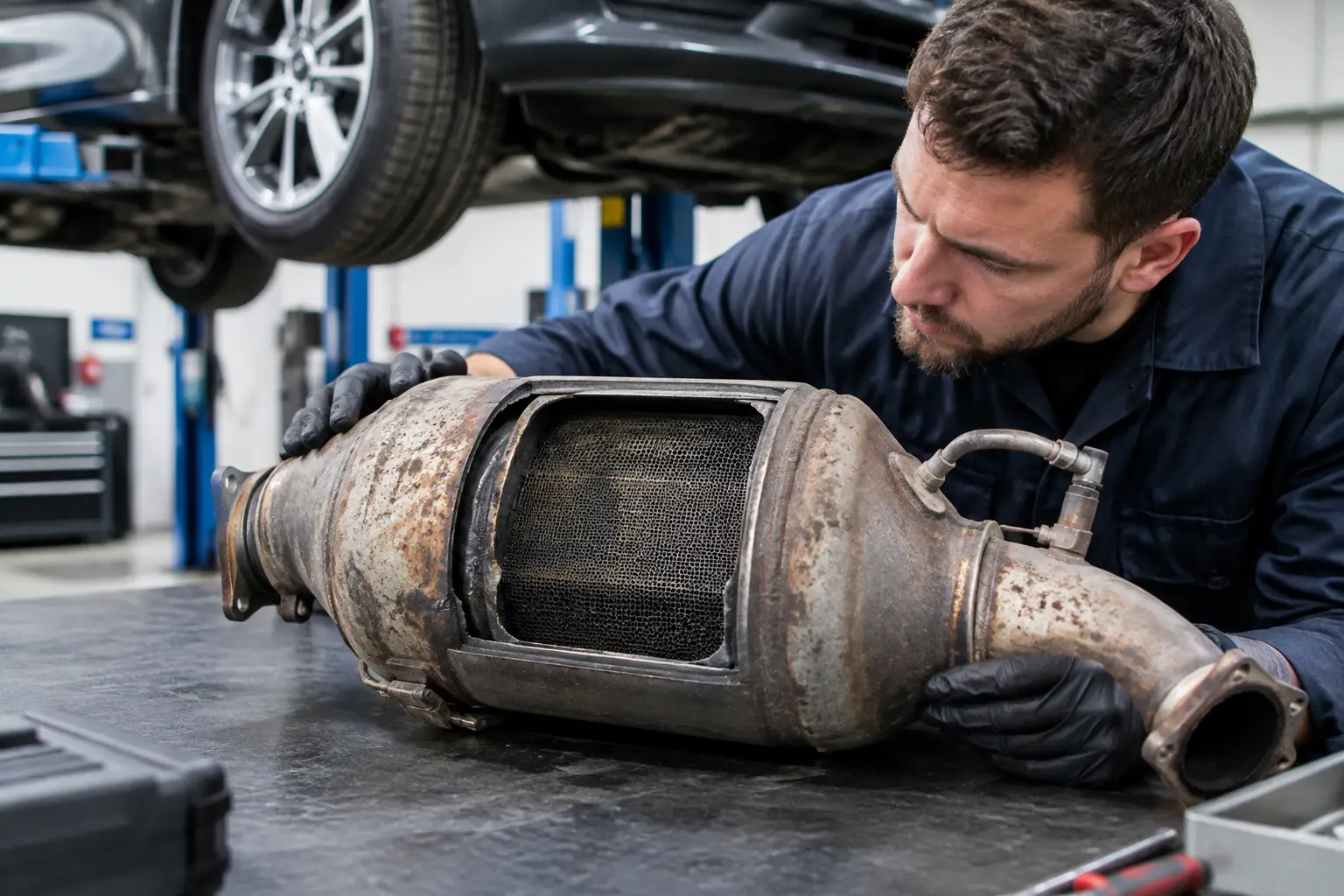
A DPF warning light rarely appears at a convenient time. We often see it when a driver is heading to work, doing the school run or preparing for an MOT. This diesel particulate filter care guide explains what your car is trying to tell you, what you can safely do yourself and when it is time to book proper diagnostics.
The main point is simple: do not ignore a DPF warning light and hope it goes away. A blocked filter can lead to loss of power, limp mode and, in some cases, extra faults that make the repair more involved. Acting early usually gives you more options and helps avoid unnecessary cost.
What a DPF does and why it blocks
The diesel particulate filter, usually called the DPF, is fitted in the exhaust system of most modern diesel cars. It traps soot produced by the engine so fewer harmful particles leave the exhaust.
That soot has to be burnt off from time to time. The car does this through a process called regeneration. When the engine and exhaust get hot enough for long enough, the system raises the exhaust temperature and clears the collected soot.
The problem is that many cars do not get the conditions they need. Short local trips, slow traffic and frequent stopping and starting can interrupt regeneration before it finishes. Over time, the soot level rises and the engine warning light or DPF light may come on.
This is not always a sign that the filter itself has failed. In most cases, the car needs the right diagnosis before anyone recommends cleaning or replacing parts. The underlying cause could be driving pattern, but it can also be a faulty sensor, a split hose, an EGR issue, injector problem or an engine that is not reaching normal temperature.
The warning signs drivers should not ignore
A DPF light is the obvious sign, but it is not the only one. Your car may feel flat when accelerating, struggle up hills or drop into limp mode. Limp mode is the car limiting power to protect the engine and exhaust system. It can feel alarming, but it is a warning to get the fault checked rather than keep pushing the car.
You may also notice increased fuel use, the cooling fan running after you switch off, a stronger hot exhaust smell or a higher idle speed. These can happen while the car is trying to regenerate.
If the engine warning light appears alongside the DPF light, do not assume a long drive will fix it. The car may have logged another fault that is stopping regeneration. A diagnostic check is the sensible next step.
A flashing DPF light, severe loss of power, excessive smoke or a warning telling you to stop should be taken more seriously. Avoid a long journey to “clear it” if the car is struggling. Contact a local garage for advice and arrange diagnostics or recovery support if needed.
Can a longer drive clear a DPF warning light?
Sometimes, yes. If the DPF light has only just appeared, the car is driving normally and there are no other warning lights, a steady run may allow an active regeneration to complete. This generally means driving once the engine is fully warm, at a consistent speed where safe and legal, for around 20 to 30 minutes.
A dual carriageway or clear A-road is usually more suitable than town traffic. You do not need to speed or drive aggressively. The aim is steady engine load and enough exhaust heat, not high revs for their own sake.
There are limits. Do not attempt this if the vehicle is in limp mode, the oil level is over the maximum mark, the engine warning light is flashing, or there are signs of overheating. Also stop if the car develops a new noise, smell or lack of response. Continuing to drive with a heavily blocked DPF can create a bigger problem.
A longer drive will not remove ash from the filter either. Soot can be burnt away during regeneration, but ash is left behind over the life of the vehicle. Eventually, a DPF may require professional cleaning or replacement depending on its condition.
Diesel particulate filter care guide: habits that help
You do not need to change your whole routine to look after a diesel car, but the way it is used matters. A diesel that only does very short trips is more likely to have DPF problems than one that regularly reaches full operating temperature.
Try to give the car a longer, uninterrupted run when your normal driving allows it. This is particularly useful if most journeys are local. Do not leave the engine idling on the drive to warm it up. Modern engines warm up better when driven gently, and idling does not create the conditions needed for a proper DPF regeneration.
Keep up with servicing and use the correct low-ash engine oil specified for your vehicle. The wrong oil can contribute to ash build-up in the filter. It is also worth checking the oil level regularly. Repeated interrupted regenerations can sometimes cause fuel dilution, where diesel gets into the engine oil and the level rises.
Do not rely on fuel additives as a cure for a warning light. Some products may have a place as part of routine maintenance, but they will not fix a failed sensor, an air leak or a DPF that is already severely blocked. If you use an additive, follow the instructions and treat it as support, not a substitute for a diagnosis.
Why forced regeneration is not always the answer
A garage can carry out a controlled or forced regeneration in suitable cases. This uses diagnostic equipment to command the vehicle to raise exhaust temperatures and burn off soot. It can be an effective repair when the filter is loaded but the rest of the system is working correctly.
It is not a button we press on every DPF fault. Before regeneration, we need to check fault codes, live sensor readings, soot loading and the likely cause of the blockage. Forcing a regeneration when there is an injector fault, turbo issue, temperature sensor fault or excessive soot build-up can be ineffective or unsafe.
Where the filter cannot regenerate normally, professional DPF cleaning may be a better option. If the filter is damaged or loaded with too much ash, replacement may be necessary. The right route depends on what the diagnostic results show. Clear answers first, then a clear repair plan.
Common causes we find behind repeat DPF faults
When the DPF light keeps coming back, the filter is often the symptom rather than the whole problem. A thermostat stuck open can stop the engine reaching its correct operating temperature. A failed differential pressure sensor can falsely report that the filter is blocked. EGR faults, boost leaks and injector issues can all increase soot production or prevent regeneration.
This is why simply clearing the warning light is not a repair. It may stay off for a while, but the fault usually returns if the cause has not been fixed. Proper diagnostics can feel like an extra step when you want the car back quickly, but it prevents paying twice for the same issue.
For drivers around Lowestoft, this is particularly common on vehicles used for short commutes and local family journeys. There is nothing wrong with that use, but it may mean the car needs a little more attention when warning lights appear.
What to do when the DPF light comes on
Start by checking whether the car is otherwise driving normally. If it is, and the DPF light is the only warning, a suitable steady run may help as described above. If the light remains on afterwards, book diagnostics rather than repeating long journeys.
If there is reduced power, an engine warning light, limp mode or more than one warning message, arrange a diagnostic check straight away. Tell the garage what lights are on, whether the car has lost power and how it is normally driven. That information helps narrow down the cause before work begins.
At AutoFix4u, we check the fault properly, explain the findings in plain English and only recommend the work the vehicle needs. You will get clear pricing and no surprise extras. Same-day diagnostic slots may be available, depending on the fault and workshop capacity.
A DPF warning is often manageable when dealt with early. If your diesel is losing power, showing warning lights or repeatedly trying to regenerate, call now or get a quote for DPF diagnostics before a small issue leaves you without the car.


