
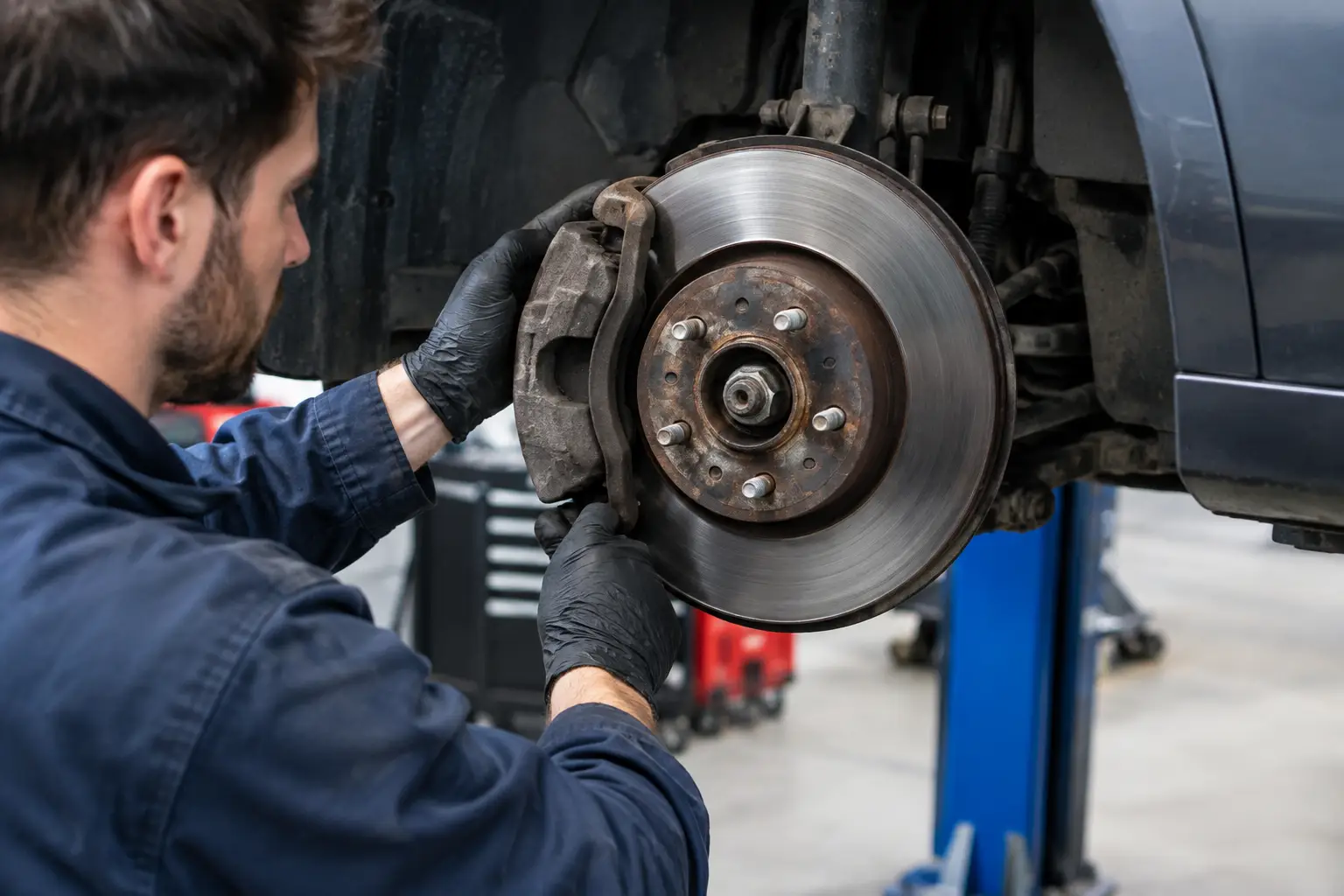
A brake disc replacement is not usually something drivers plan for. It often comes up after an MOT advisory, a grinding noise on the school run, or a worrying vibration through the brake pedal. Your brakes are one of the few systems you rely on every time you drive, so a suspected problem is worth checking promptly rather than hoping it settles down.
At AutoFix4u, we often see customers who have been told they need discs and pads but have not been shown why. In some cases, the repair is clearly needed. In others, the issue may be worn pads, sticking brake components or even a tyre or suspension fault that feels like a brake problem. The right answer starts with a proper inspection.
What brake discs do and why they wear out
Brake discs are the metal discs behind your wheels. When you press the brake pedal, the brake pads clamp onto each disc to slow the car down. This creates heat and friction, so both the pads and discs wear over time.
In most cases, discs gradually become thinner as the vehicle covers more miles. They can also develop a lip around the outer edge, surface corrosion, heat marks or uneven wear. Short journeys can make corrosion worse, particularly if the car stands for a few days. A vehicle used mainly for town driving may wear its brakes differently from one that regularly does longer motorway journeys.
The disc has a minimum safe thickness set by the vehicle manufacturer. Once it gets close to or below that limit, it should be replaced. It is not just about getting through an MOT. Thin or damaged discs cannot manage heat as effectively and may affect how consistently the car stops.
Signs you may need brake disc replacement
A brake problem does not always trigger a dashboard warning light. The first signs are usually what you can hear, feel or notice while driving.
A steering wheel shake when braking, especially from higher speeds, can point to uneven disc wear or a disc that has developed excessive run-out. Drivers often call this a warped disc. The cause can be more complicated than the disc itself, so it is worth having the brakes checked rather than replacing parts on guesswork.
Grinding or harsh scraping when you brake needs attention quickly. It can mean the brake pad material has worn away and the metal backing is contacting the disc. Leaving it longer can damage the disc further and increase the repair needed.
You may also notice a pulsing brake pedal, reduced stopping confidence, a vehicle pulling to one side under braking, or a burning smell after a journey. A pull can be caused by a sticking brake caliper, which is the component that presses the pad against the disc. Fitting new discs without dealing with a sticking caliper will not solve the root cause.
Visible rust is another common concern. A light coating on the disc after rain is normal and often clears after a few gentle brake applications. Heavy pitting, deep corrosion or rough areas that remain are different. These can reduce the effective braking surface and may lead to an MOT failure.
When discs and pads should be replaced together
Brake pads and discs work as a pair. When discs need replacing, fitting new pads at the same time is normally the sensible option. New pads need a clean, even surface to bed into properly. Old pads may already be shaped to the worn disc, which can lead to poor contact, noise and uneven braking if they are reused.
There are exceptions, but they are uncommon. If the discs are still well within their safe thickness and condition, worn pads alone may be all that is required. This is why an inspection matters. A garage should measure the discs, assess their condition and explain what it has found before recommending parts.
On most cars, brake work is carried out as an axle pair. In practical terms, that means both front discs and pads are replaced together, or both rear discs and pads. Replacing only one side can cause uneven braking and is not a good repair.
What happens during brake disc replacement
A proper brake repair is more than swapping visible parts. The wheels are removed and the brakes are inspected for disc thickness, pad wear, corrosion and signs of overheating. We also check that the caliper moves correctly, the sliders are free, and the brake hoses and surrounding components show no obvious issues.
The old discs and pads are removed, and the mounting surfaces are cleaned carefully. This step matters. Dirt or corrosion trapped behind a new disc can stop it sitting flush, which may cause a vibration later on.
Quality replacement discs and pads are then fitted, along with any required fitting hardware. The brakes are reassembled correctly, the wheels are refitted and tightened to the correct specification, and the vehicle is checked before it leaves.
If we find something else that affects the repair, such as a seized caliper, damaged wheel bearing or badly corroded brake pipe, we explain it in plain English. You should know what needs doing, why it matters and what the next step is before extra work goes ahead. No surprise extras.
Can you drive with worn brake discs?
It depends on their condition, but it is not a fault to ignore. Mild surface rust or a small disc lip may not make the car unsafe immediately. Deep scoring, heavy corrosion, serious vibration, grinding noises or discs below the minimum thickness are different and need prompt attention.
If the brake pedal feels unusually soft, the car pulls sharply, the brakes smell hot, or a red brake warning light appears, avoid unnecessary driving. Arrange for the vehicle to be inspected as soon as possible. Continuing to use it can put you at risk and may turn a straightforward brake repair into a bigger job.
Do not assume a recent MOT means the brakes are fine for the year ahead either. An MOT is a snapshot of the vehicle on that day. Brake pads and discs can wear significantly between tests, especially if your mileage has changed.
Brake disc replacement after an MOT advisory
An MOT advisory for brake discs can sound vague, but the wording normally gives a useful clue. It may refer to corrosion, pitting, scoring, wear or a disc close to its minimum thickness. An advisory is not always an immediate failure, but it should not be treated as something to forget until next year’s test.
Bring the advisory in or tell us exactly what it says. We can inspect the brakes and confirm whether the discs need replacement now, whether pads are also due, or whether there is safe service life left. This avoids replacing parts too early while also stopping a known issue from becoming urgent at the worst possible time.
How long should new discs and pads last?
There is no fixed mileage because driving conditions make a real difference. Regular stop-start use, heavy loads, hills, towing, short journeys and a sticking caliper can all shorten brake life. A car that covers long, steady journeys may get more life from its brakes than one doing the same mileage around town.
Once new discs and pads are fitted, give them a short bedding-in period. For the first few journeys, avoid repeated heavy braking where possible and leave extra space from the car in front. This helps the pad material settle evenly against the new disc surface.
If you hear a light noise straight after the repair, it can sometimes be normal while the parts bed in. Persistent squealing, vibration, pulling or a warning light is not something to put up with. Contact the garage that carried out the work so it can be checked.
Get your brakes checked before the problem grows
If your car is vibrating when braking, making a scraping noise or has an MOT advisory for brake wear, book a brake inspection with a local garage rather than guessing what parts it needs. AutoFix4u serves drivers in Lowestoft and nearby areas with clear pricing, honest recommendations and same-day slots where possible.
A quick check now can give you a clear answer and help keep a small brake issue from disrupting work, family plans or the next MOT. Call for a quote or arrange an inspection when you first notice a change in how your car stops.

