
How to Check Tyre Pressure and Spot a Problem
A tyre pressure warning light can appear on the school run, before work or halfway through a journey when you have no time to spare. Knowing how to check tyre pressure gives you a quick way to rule out a simple problem before it turns into poor handling, rapid tyre wear or a puncture at the roadside.
At AutoFix4u, we often see cars brought in with an illuminated tyre pressure warning light where one tyre is only a few PSI down. We also see the opposite: a tyre repeatedly losing pressure because there is a nail in the tread, corrosion around the wheel rim, or a leaking valve. Checking the pressure is easy. Understanding why it has changed is the part that matters.
Why tyre pressure changes more than drivers expect
Tyres lose a small amount of air naturally over time, even when there is no fault. A change in temperature can also lower the reading, which is why warning lights are common during colder spells. If all four tyres are slightly low after a cold night, that does not automatically mean you have four punctures.
A pressure drop in one tyre is more likely to need attention. In most cases, this happens because of a slow puncture, a damaged valve, a poorly sealing wheel rim or damage caused by a pothole. You may not notice it straight away, especially if the car still feels normal around town.
Running tyres too soft increases the amount the sidewalls flex. That creates heat, affects braking and makes the outer edges wear faster. Over-inflation causes its own problems, including a harsher ride and extra wear through the centre of the tread. The aim is not simply to put air in the tyres. It is to set them to the vehicle manufacturer’s correct pressure.
How to check tyre pressure properly
Check your pressures when the tyres are cold, ideally before you drive or after the car has been parked for a few hours. Driving warms the air inside the tyre and raises the pressure reading, so a check after a long journey will not be as accurate.
Start by finding the recommended pressure for your car. It is usually shown on a label inside the driver’s door, behind the fuel flap or in the vehicle handbook. The label may show different figures for a normal load and a fully loaded car. It can also give separate front and rear pressures, so do not assume every tyre needs the same setting.
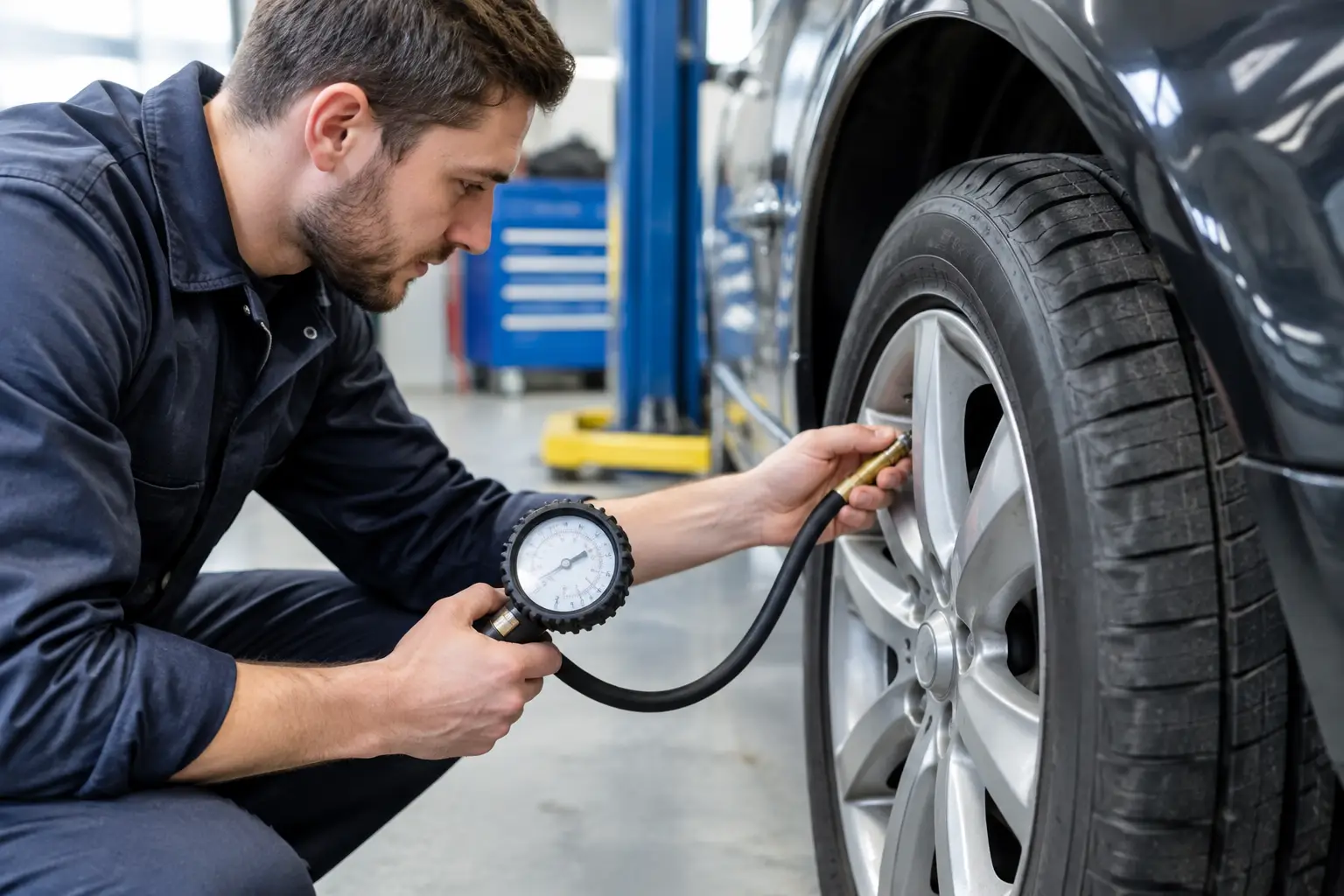
Use a forecourt air machine or a reliable pressure gauge. Remove the valve cap, press the gauge firmly onto the valve and read the result. Set the pressure to the figure on your vehicle label, then refit the valve cap. Repeat this on all four tyres and do not forget the spare if your vehicle has one.
Most UK labels use PSI or bar. Many air machines show both. If you are unsure which figure applies, stop and check the label rather than guessing. A few PSI can make a difference over time, particularly on smaller tyres or a car carrying passengers and luggage.
Check the tyre while you are there
Pressure alone does not tell the full story. Have a quick look around each tyre before you drive away. You are looking for obvious damage, a screw or nail in the tread, cracking in the sidewall, or a bulge in the tyre wall.
A bulge usually means internal tyre damage, often after hitting a pothole or kerb. Do not keep driving on it and do not rely on adding air. The tyre needs replacing because its structure may be weakened.
Also check the tread wear. If one edge is worn much more than the other, incorrect pressure may be part of the issue, but wheel alignment or worn suspension parts could be involved too. Re-inflating the tyre will not cure uneven wear caused by an underlying fault.
What to do when the tyre pressure warning light comes on
Do not ignore the warning light, but there is no need to panic. Pull over somewhere safe when you can and inspect the tyres. If one looks visibly flat, damaged or much lower than the rest, avoid driving any further unless you need to move the car to a safer position.
If the tyres look normal, check and adjust all four pressures as soon as possible. The system monitors changes in tyre behaviour or pressure, depending on the vehicle, and may not always identify which tyre is at fault. Once the pressures are correct, many cars need the tyre pressure monitoring system reset through the dashboard menu. Your handbook will explain the process.
If the light returns after you have reset it, there is usually a reason. We often find a slow leak that was not obvious during a quick visual check. A tyre can lose enough air to trigger the warning light while still looking reasonably inflated.
When adding air is not the solution
Putting air in a low tyre gets you moving again, but it is not a repair if the pressure keeps falling. Check the tyre again after a day or two. If it has dropped noticeably, arrange for it to be inspected.
A puncture through the central tread area can sometimes be repaired safely. It depends on the size and position of the damage, and whether the tyre has been driven while very low. Damage near the sidewall cannot normally be repaired safely. Nor can a tyre that has been run flat enough to damage its internal structure.
We also see leaks caused by old valve stems and corroded alloy wheel rims. These faults can be frustrating because there may be no nail or visible cut in the tyre. A proper inspection identifies where air is escaping, so you are not repeatedly topping it up and hoping for the best.
The pressure changes when the car is loaded
The correct pressure can change when you are carrying several passengers, luggage, tools or towing a trailer. Your car’s pressure label may show a higher setting for this situation, often on the rear tyres. This is normal and helps the tyres support the extra weight safely.
Do not use the maximum pressure written on the tyre sidewall as your target. That is a tyre limit, not the recommended running pressure for your particular vehicle. The manufacturer’s vehicle label is the figure to follow.
If you have fitted non-standard wheel or tyre sizes, the original label may no longer be suitable. This is one of those cases where it is worth getting proper advice rather than copying a number from another car or an online forum.
How often should you check tyre pressure?
For most drivers, once a month is a sensible routine, with another check before a long journey. Check sooner if the warning light comes on, the steering feels different, the car pulls to one side, or you have hit a pothole hard.
It takes a few minutes, but it can prevent a tyre from wearing out early and helps keep the car predictable in wet weather. Good tyre pressures also support fuel economy, although safety and tyre life are the bigger reasons to stay on top of them.
If you are in Lowestoft or nearby and one tyre keeps losing pressure, the warning light will not stay off, or you are unsure whether the tyre is safe, bring the car to AutoFix4u. We can inspect the tyre, valve and wheel properly, explain what we find in plain English and give you clear options before any work is done. A quick check now is far better than finding out there is a problem when you need the car most.


