
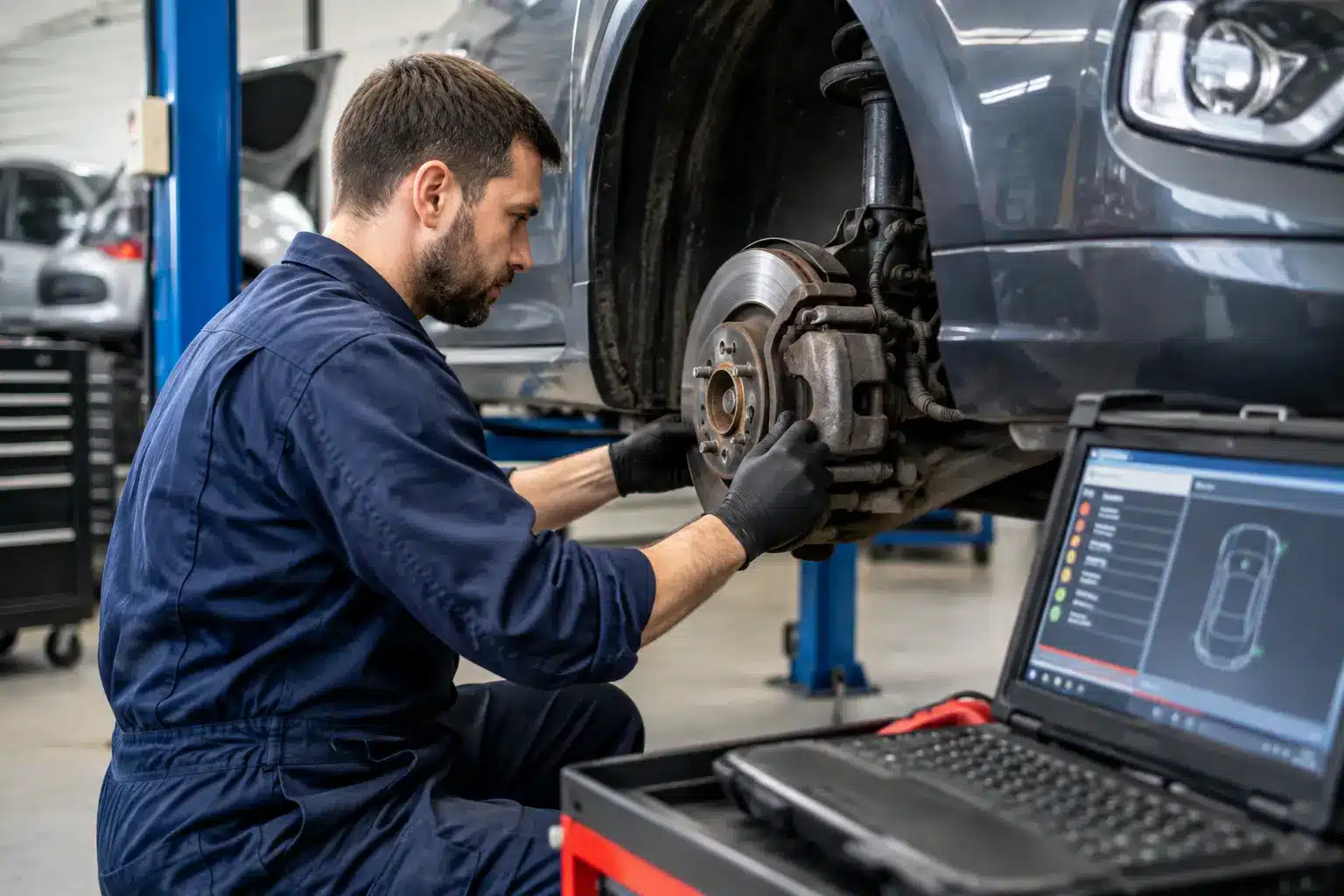
A vibration that was not there last week is worth checking, especially if it gets worse with speed, braking or turning. The common causes of car vibration range from a simple wheel balance issue to worn brakes or suspension parts. The key is noticing when it happens. That gives a garage a much better starting point and helps prevent a smaller fault becoming an expensive repair.
In most cases, a light vibration will not leave you stranded immediately. But if the steering wheel shakes heavily, the car pulls to one side, there is a grinding noise, or the vibration starts when braking, stop driving where it is safe to do so and arrange an inspection. These symptoms can affect how safely the car stops and handles.
Common causes of car vibration at different speeds
The speed and situation make a real difference. A car that vibrates only at 60 mph is likely to have a different issue from one that shudders through the brake pedal at any speed.
Wheel balancing problems
If the steering wheel starts shaking at motorway speeds, usually around 50 to 70 mph, an out-of-balance wheel is one of the first things we would check. Small balancing weights are fitted to the wheel during tyre fitting. If a weight falls off, or the tyre has worn unevenly, the wheel can wobble as it rotates.
You may feel this mainly through the steering wheel if it is a front wheel, or through the seats and floor if it is at the rear. It can feel less noticeable at lower speeds, then become more obvious as you accelerate.
The solution is normally straightforward: inspect the tyres and wheels, then balance the wheels correctly. However, it is still worth checking the tyre condition at the same time. A balance will not fix a damaged tyre or a bent wheel.
Damaged tyres or wheels
Potholes, kerbs and rough road surfaces can damage a tyre or buckle an alloy wheel. We often see this after a driver has hit a pothole and noticed a new vibration on the journey home. A tyre may develop a bulge in the sidewall, a distorted shape, or uneven wear that makes it roll unevenly.
Do not ignore a visible tyre bulge, split or exposed cord. It can fail without much warning. A damaged wheel can sometimes be repaired, depending on where and how badly it is bent. A damaged tyre must be replaced.
Tyre pressures matter too. A severely underinflated tyre can make the car feel unstable and increase wear, although it is less likely to cause a constant high-speed vibration on its own. Check pressures when tyres are cold and use the figures listed for your car.
Uneven tyre wear and alignment faults
Tyres that wear heavily on one edge, have bald patches or develop a saw-tooth pattern can cause vibration and road noise. This usually happens because the wheel alignment is out, or because a suspension component is worn.
Wheel alignment can be knocked out by potholes and kerbs. Worn bushes, ball joints and track rod ends can also allow the wheel to move where it should not. Fitting new tyres without dealing with the cause may only lead to the same wear returning.
A proper inspection should look beyond the tyre itself. If there is play in the steering or suspension, the fault needs repairing before alignment is set. That is how you get a lasting result rather than a short-term improvement.
Why does my car vibrate when braking?
A vibration through the brake pedal or steering wheel when slowing down often points to the front brakes. The most common cause is brake discs that have developed uneven surfaces or excessive run-out. Drivers sometimes describe it as warped discs, but the important point is that the disc is no longer presenting a smooth, even braking surface.
This can happen after repeated heavy braking, sticking brake components, poor-quality parts or corrosion where the disc meets the hub. You may also hear a scraping sound, feel the car pull under braking, or notice reduced braking performance.
Brake vibration should be checked promptly. The repair may involve replacing the brake discs and pads as a matched set, but the caliper, sliders and hub surfaces should also be inspected. Replacing parts without finding why they wore unevenly can mean the problem returns.
If the car shudders under braking and the engine warning light is also on, these may be separate faults. It is best not to assume one issue explains everything. A diagnostic check can identify engine-related faults while the brakes are inspected for the physical cause of the vibration.
Vibration when accelerating or pulling away
A vibration under acceleration can feel as though it is coming through the floor, pedals or whole body of the car. If it eases when you lift off the accelerator, the driveshafts or inner CV joints are possible causes. These joints transfer power from the gearbox to the wheels, and wear in them can show up most clearly when the engine is under load.
A clicking noise on full lock is more commonly linked to an outer CV joint. A shudder while accelerating in a straight line can point towards an inner joint, although a garage needs to inspect it before confirming the fault.
Engine or gearbox mounts can create similar symptoms. These mounts hold the engine and gearbox in position while allowing controlled movement. When a mount is split or worn, you may feel a thump when setting off, changing gear or switching the engine on and off. The engine may move more than it should, which can create vibration through the cabin.
Clutch problems can also cause a judder when pulling away. This is particularly noticeable in stop-start traffic or on a hill. Possible causes include a worn clutch, contamination on the clutch surfaces, a fault with the flywheel, or an engine mount issue. The right repair depends on what the inspection finds. A clutch should not be replaced simply because the car judders once or twice.
Vibration at idle or while parked
If the car vibrates when stopped with the engine running, tyre balance is not the answer. This type of vibration is normally related to how the engine is running or how it is mounted.
A rough idle can be caused by an ignition fault, an air leak, fuel delivery issue or sensor problem. On petrol cars, worn spark plugs or a failing ignition coil are common examples. On diesel vehicles, injector faults, air intake issues and DPF-related problems can affect how smoothly the engine runs.
You may notice the rev counter moving slightly, the engine sounding uneven, reduced power, poor fuel economy or an engine warning light. Modern vehicles store fault codes, but a code is a clue, not a full diagnosis. It still needs checking against live data, the vehicle symptoms and physical tests.
At AutoFix4u, we use diagnostics to narrow the fault down properly before recommending repairs. That means explaining what has failed, what needs doing now and what can safely wait. Clear pricing comes before work starts, with no surprise extras.
Suspension and steering faults that cause shaking
Knocking over bumps, vague steering and vibration through the wheel can all be signs of worn suspension or steering components. Common wear items include drop links, control arm bushes, ball joints, wheel bearings and track rod ends.
A worn wheel bearing may begin as a humming or droning noise that changes with speed. As it deteriorates, it can create vibration or excess movement at the wheel. It needs attention, not just because of the noise, but because it affects the way the wheel is supported.
Suspension faults are not always obvious from the driver’s seat. A car can still feel mostly normal on a short trip while a component is close to failing an MOT. A hands-on inspection is the sensible next step if there are knocks, uneven tyre wear or steering shake.
When should you stop driving?
Book an inspection soon if the vibration is mild but persistent. Do not keep putting it off simply because the car still drives. Tyres, brakes and suspension parts rarely improve on their own.
Stop driving and get assistance if the steering wheel shakes violently, the car pulls hard under braking, a tyre has a bulge or damage, you smell burning from a wheel, or there is a loud grinding or banging sound. If you are unsure, it is safer to ask for advice than risk turning a repairable fault into a breakdown.
For drivers in Lowestoft and nearby areas, a proper inspection can usually identify whether the problem is wheel-related, brake-related, suspension-related or coming from the engine and drivetrain. Same-day slots may be available where possible. Call AutoFix4u for clear advice, a diagnostic booking or a repair quote.
A vibration is your car telling you something has changed. Catch it early, explain exactly when you feel it, and let a qualified technician find the root cause before the next school run, commute or longer journey.


