
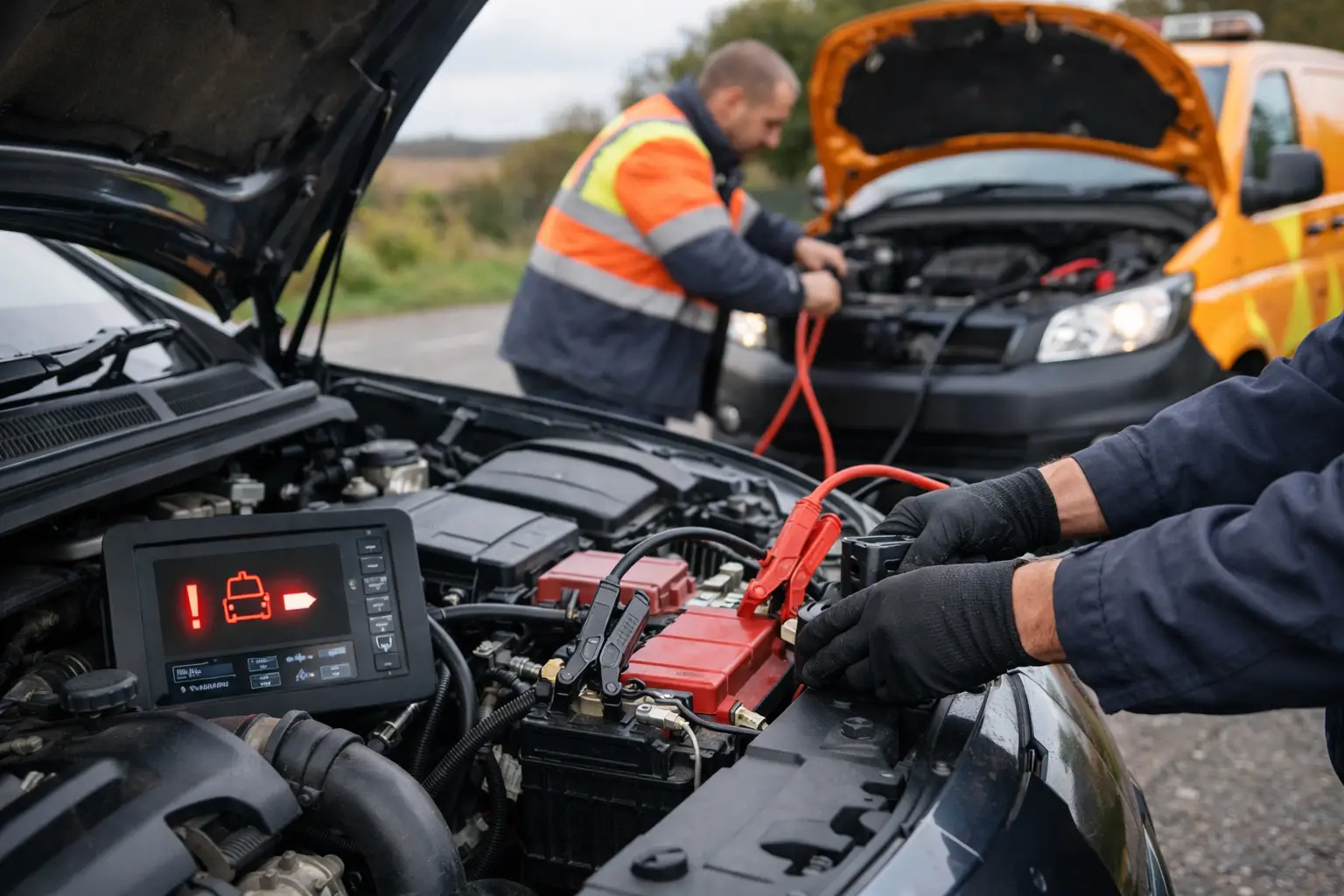
Car Won’t Start? Local Jump Start Service
You turn the key or press the start button, the dashboard lights flicker, and the engine does nothing. When you need a car won’t start jump start service, the priority is getting you moving safely – but also finding out why the battery has gone flat in the first place.
A jump start can be the right immediate solution when you are stranded at home, at work or in a car park around Lowestoft. It is not always the full repair. In most cases, a battery that has gone flat once needs checking, especially if the car has been used normally and there is no obvious reason for it.
Car won’t start? When a jump start can help
A jump start is useful when the battery has enough life left to accept a charge and the rest of the starting system is working properly. Common signs include a slow crank when turning the key, rapid clicking from the engine bay, dim interior lights, or a dashboard that goes blank when you try to start the car.
This usually happens because the battery has discharged. You may have left a light on, made several very short trips, or not used the vehicle for a while. Cold weather also puts extra strain on an older battery, which is why we often see this issue when temperatures drop.
If the engine starts after a jump, do not assume the problem is solved. A healthy charging system should replace the energy used to start the engine. If the battery goes flat again soon afterwards, there is likely a fault that needs proper diagnosis.
When not to attempt a jump start
Do not try to jump start the car if you can smell burning, see smoke, notice damaged battery cables, or find that the battery case is swollen or leaking. Keep clear and arrange recovery support instead. Forcing power into a damaged electrical system can make a smaller problem worse.
The same applies if the engine does not turn over but the lights are bright and working normally. The fault may be with the starter motor, ignition system, immobiliser or another electrical component. A jump start is unlikely to help in that situation.
Modern vehicles can also be sensitive to incorrect jump starting. Connecting leads in the wrong order can damage electrical components, and some hybrid or stop-start vehicles have specific jump points. If you are unsure, it is better to call a local garage rather than risk an expensive repair.
Why your battery has gone flat
The flat battery is the symptom. The cause can be simple, or it can point to a fault that will leave you stranded again if it is ignored.
An ageing or weak battery
Car batteries do not last forever. As they age, they lose their ability to hold charge and deliver the power needed to start the engine. A battery may appear fine one day, then struggle after a cold night or a short journey with the heater, lights and heated screen running.
A battery test can show whether it is simply discharged or no longer holding charge. If replacement is needed, fitting the correct battery matters. The wrong type can cause problems on vehicles with stop-start systems and higher electrical demand.
Charging system problems
Once the engine is running, the alternator charges the battery. If it is not charging properly, a jump start may get the vehicle going temporarily, but the battery will run down as you drive. You may see a battery warning light, dimming lights or electrical systems behaving oddly.
In some cases, the alternator itself is at fault. In others, it may be a worn drive belt, damaged wiring or a poor connection. Proper diagnostics identify which part has failed, so you do not pay for parts that do not fix the problem.
A drain while the car is parked
A parasitic battery drain means something is using power when the ignition is off. It could be a light left on, but it can also be a faulty module, wiring issue, dash camera installation or a boot light that does not switch off.
These faults are frustrating because the car can seem perfectly normal once it has been jump started. Then, after sitting overnight, it is flat again. Testing the vehicle’s electrical draw is the sensible next step.
Short journeys and lack of use
A journey of a few minutes may not give the alternator enough time to replace the power used starting the engine. Repeat that pattern over several days and the battery can slowly lose charge. A car that is only used at weekends can have the same issue, particularly in winter.
That does not automatically mean the battery is faulty. However, if it regularly struggles despite longer runs, it should be checked before it fails completely.
What to do after the engine starts
Once the vehicle has been jump started, avoid switching it straight off. Drive it carefully if the car feels normal and there are no warning lights that indicate a serious issue. A decent run may help recover some charge, but it will not repair a worn-out battery or faulty alternator.
Watch for the battery warning light. If it stays on while the engine is running, stop somewhere safe when possible and arrange assistance. Continuing to drive with no charging can lead to the engine cutting out once the battery is depleted.
If the engine warning light, ABS light or other warnings appear after a flat battery, do not panic. Low voltage can trigger fault messages on some cars. They still need checking if they remain on after a restart, as clearing a warning without fixing its cause is not a repair.
A proper battery and charging check saves repeat breakdowns
At AutoFix4u, we treat a no-start call as more than a quick boost from another battery. The first job is to get a clear picture of the fault. That means checking the battery condition, the charging voltage and visible connections, then looking further if the problem is recurring.
This diagnostic-first approach is useful because several faults can look the same from the driver’s seat. A clicking noise may be a weak battery, a poor earth connection or a starter motor problem. A battery warning light may be caused by the alternator, wiring or a belt issue. Testing first keeps the repair plan clear and avoids guesswork.
If a replacement battery is the answer, we will explain why and fit a suitable quality part. If the vehicle needs further electrical diagnostics or repair, you will know what has been found, what work is recommended and what the next step is before work goes ahead. Clear pricing means no surprise extras.
Local help when your car will not start
For drivers in Lowestoft, Oulton Broad, Carlton Colville, Kessingland, Pakefield, Beccles and nearby areas, a local response matters when one car is needed for school runs, work or family plans. AutoFix4u provides jump starts, recovery support and transport assistance for urgent situations within our local service area.
Availability depends on the day and where the vehicle is, but we aim to offer fast, practical help and same-day solutions where possible. If the car starts, we can advise whether it is safe to drive to the garage for checks. If it will not start or needs recovery, we will explain the sensible options clearly.
Call now before a flat battery becomes a bigger problem
A jump start gets you out of the immediate situation. A battery and charging check helps stop it happening again at the worst possible time. If your car will not start, contact AutoFix4u for local assistance, honest recommendations and a clear repair plan.
Keep your keys, vehicle registration and exact location ready when you call. That small bit of information helps us get the right support to you faster and gives you the best chance of being back on the road without another avoidable breakdown.


