
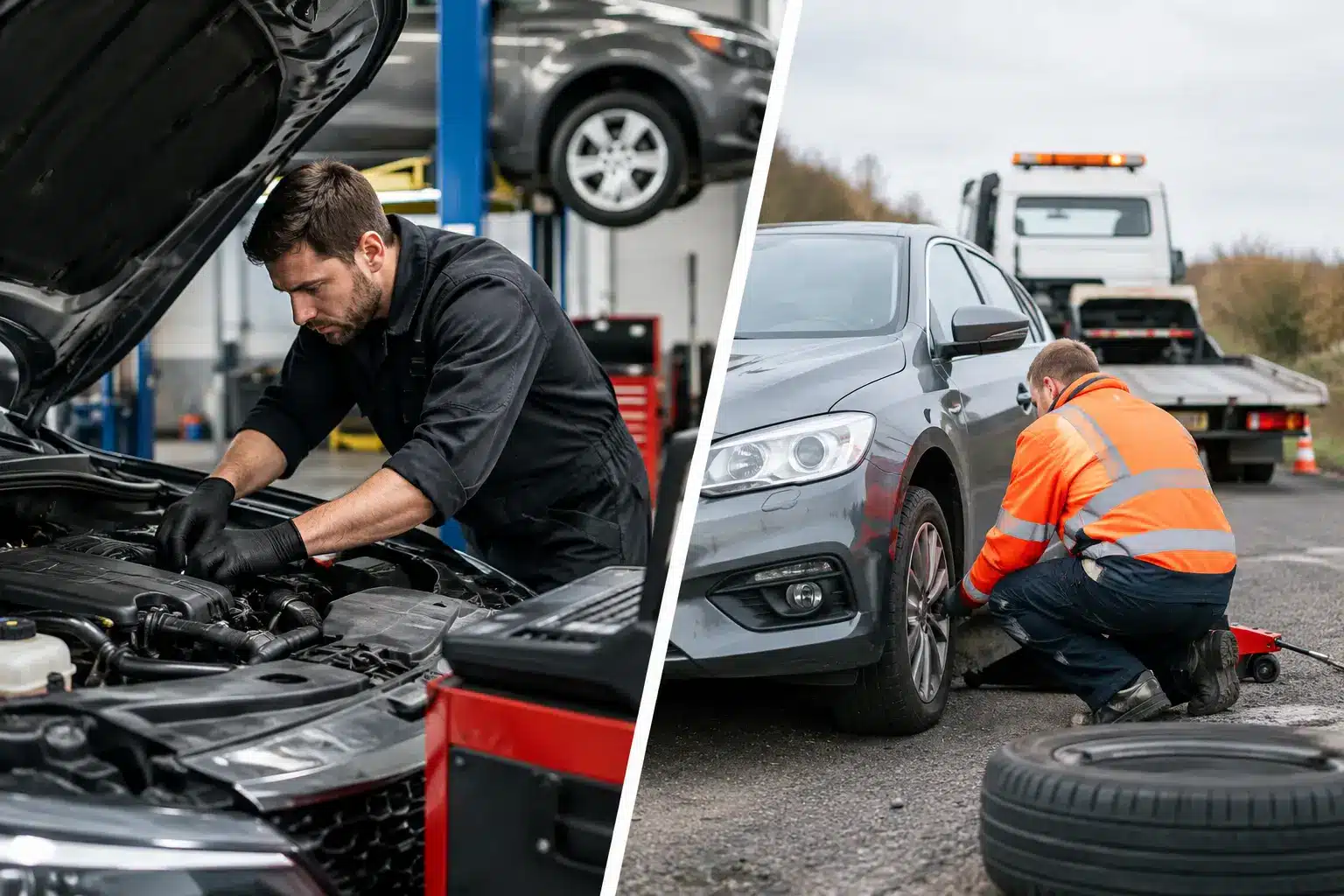
Recovery Versus Roadside Repair: Which Is Right?
A breakdown rarely happens at a convenient time. You may be on the school run, heading to work, or parked outside home with an engine warning light on and a car that will not start. The choice between recovery versus roadside repair comes down to one thing: can the fault be fixed safely and reliably where the car is, or does it need proper diagnosis in a garage?
A quick roadside repair can get you moving again. But a temporary fix is not always the right fix. In most cases, the safest option depends on the fault, your location, and whether the cause can be identified without workshop equipment.
What roadside repair can deal with
Roadside repair is useful when the problem is straightforward and the vehicle is otherwise safe to drive. A flat battery is a common example. If the battery has simply gone flat because a light was left on, a jump start may get the engine running and allow you to drive to a garage for a battery and charging-system check.
A puncture may also be dealt with at the roadside if you have a usable spare wheel, the wheel nuts can be removed safely, and there is no damage to the tyre sidewall. If the car has a tyre repair kit, be aware that it is usually a short-term measure. The tyre still needs checking properly afterwards.
We also see simple issues such as a loose battery connection, a blown bulb-related fuse, or a car that has run out of fuel. These can sometimes be resolved quickly. The key word is sometimes. A car that starts after a jump start, for example, may still have a weak battery, alternator fault, poor connection, or electrical drain that will leave you stranded again.
Roadside repair makes sense when the cause is clear, the work is safe to carry out, and the vehicle can be driven without risking further damage or affecting braking, steering, tyres or visibility.
When recovery is the better option
Recovery is normally the right call when the fault is unknown, the vehicle is unsafe, or driving it could turn a manageable repair into a larger one. This is often the case with loss of power, overheating, unusual engine noises, brake problems, clutch failure and gearbox faults.
If the engine warning light appears with the car going into limp mode, do not assume it is safe to carry on. Limp mode is the vehicle protecting itself after detecting a fault. It may be linked to a DPF issue, turbo problem, sensor fault, fuel-system issue or another engine management fault. The car might still move, but forcing it onwards can cause more damage.
An overheating engine needs the same caution. If the temperature warning comes on, steam appears from under the bonnet, or the coolant level has dropped sharply, stop as soon as it is safe. Continuing to drive can cause serious engine damage. Adding water at the roadside without finding the reason for the loss is not a repair.
Recovery is also sensible if you have a brake warning light, a soft brake pedal, grinding noises, a serious steering issue, a clutch that will not disengage, or a wheel that is damaged or loose. These are safety faults. They need workshop inspection, not guesswork at the kerbside.
Signs you should not drive any further
Stop and arrange recovery if you notice any of the following:
- Red warning lights, especially oil pressure, coolant temperature, brake or battery warnings
- Smoke, steam, a strong burning smell, or a significant fuel leak
- Loud knocking, banging or metal-on-metal noises from the engine, brakes or suspension
- Loss of braking, steering control, or a wheel that feels unstable
- A vehicle that will not select gears properly or keeps stalling in traffic
These symptoms do not always mean the worst-case repair, but they do mean the car needs checking before it is driven again.
Recovery versus roadside repair: the real trade-off
A roadside fix can feel like the quickest answer because you want to get moving. Often, it is. But speed is only useful if the repair solves the actual problem.
For example, a jump start may get your car going in five minutes. If the battery is failing, the alternator is not charging, or an electrical fault is draining power overnight, the problem will return. Recovering the vehicle for diagnostics may take longer on the day, but it gives the fault a proper starting point.
The same applies to warning lights. Clearing a code without testing why it appeared can make the light go away temporarily. It does not repair the failed sensor, air leak, DPF restriction or wiring issue behind it. We often see cars brought in after several unsuccessful quick fixes, when an early diagnostic check would have saved time and repeat call-outs.
There is also the question of location. Even a simple fault is not safe to work on beside a busy road, in poor weather, or where there is limited room around the vehicle. Recovery is not a failure. It is often the sensible way to protect you, your passengers and the car.
Common breakdowns and the practical next step
Car will not start
If the dashboard lights are weak, the engine clicks, or it turns over slowly, a flat or failing battery is likely. A jump start can help confirm this, but the battery and alternator should be tested afterwards. If the engine cranks normally but will not fire, the cause could be fuel, ignition, immobiliser, sensor or electrical related. That needs diagnostics rather than repeated attempts to start it.
Engine warning light and loss of power
If the car drives but feels flat, struggles to accelerate or will not go above a certain speed, it may be in limp mode. Avoid hard acceleration and do not rely on it for longer journeys. Depending on the warning lights and how the vehicle is behaving, recovery to a garage is often the safer option. A diagnostic scan can identify the fault codes, but proper testing is needed to confirm the root cause.
DPF warning light
A DPF warning may sometimes clear with a suitable uninterrupted drive, but only if the vehicle is otherwise running correctly and the warning has just appeared. If there is loss of power, multiple warning lights, repeated failed regeneration attempts or the vehicle is in limp mode, do not keep forcing it. The DPF may be heavily restricted or another fault may be stopping regeneration.
Flat tyre or damaged wheel
Use the spare only if it is safe to fit and properly inflated. Do not drive on a tyre with sidewall damage, a large cut, or a wheel that has been hit hard by a pothole. A damaged tyre or bent wheel can affect handling and may cause a sudden loss of pressure.
Brakes, clutch or gearbox trouble
Grinding brakes, a clutch pedal that stays on the floor, difficulty selecting gears or fluid leaks are not roadside repair jobs. Arrange recovery and have the car inspected. Small changes in pedal feel or gear selection are worth booking in early, before they leave you unable to drive.
What happens after your car is recovered
Once the vehicle is at a garage, the first job should be to identify the fault properly. That means more than plugging in a code reader and replacing the first part mentioned on screen.
At AutoFix4u, the approach is diagnostic first. We check the symptoms, scan the vehicle where needed, inspect the relevant components and explain the findings in plain English. You should know what has failed, what needs doing now, what can wait, and what the repair plan involves before work goes ahead.
This matters with electrical faults, DPF problems, engine performance issues and warning lights in particular. A fault code points a technician in the right direction. It does not always tell the full story. Testing the wiring, live readings, pressure levels or mechanical condition helps avoid replacing parts that were never the real problem.
For drivers in Lowestoft, Oulton Broad, Carlton Colville, Kessingland and nearby areas, recovery support and transport assistance can take the stress out of getting a non-running car to the workshop. Same-day repair may be possible for straightforward faults, depending on diagnosis, parts availability and workshop space. Where it is not possible, you should still receive clear advice and no surprise extras.
If your car is safe and the cause is obvious, a roadside repair may get you back on the road. If there is any doubt about safety, warning lights, overheating or loss of power, choose recovery and get the fault diagnosed properly. Call AutoFix4u for clear advice, recovery support and a practical repair plan that fixes the cause, not just the symptom.


