Same Day Garage Repairs Guide for Urgent Faults
A dashboard light on the school run, brakes that suddenly feel wrong, or a car that will not start before work can throw the whole day off. This same day garage repairs guide explains what a local garage can realistically diagnose and repair quickly, and when a fault needs more time to fix properly.
At AutoFix4u, we know most people are not looking for a lesson in car mechanics. They need to know whether the car is safe, what has caused the problem, how long the repair may take, and what to do next. The answer is not always simply “yes, it can be done today”. A proper diagnosis comes first. Rushing the wrong repair can cost more and leave the real fault unresolved.
What “same-day repair” usually means
Same-day work is most likely where the fault is clear, the replacement parts are available, and the repair does not uncover further damage. Many common problems fit that description. A flat battery, worn brake pads, a failed sensor, a puncture, an air conditioning regas, or a straightforward electrical fault can often be dealt with on the day.
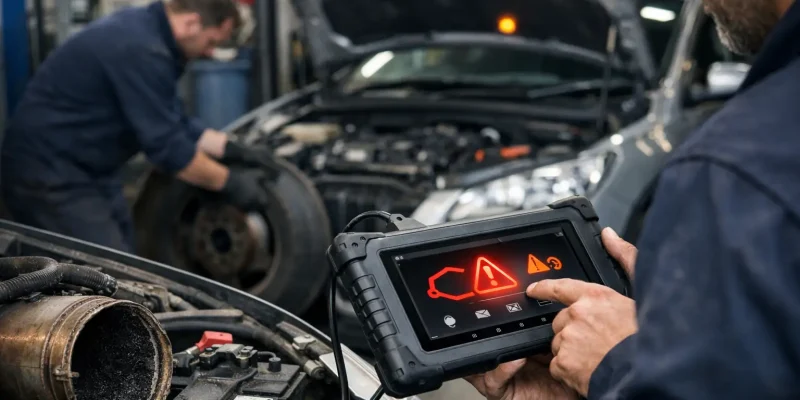
It depends on the vehicle and the problem. A warning light may point to a simple sensor issue, but it can also be the first sign of a wiring problem, DPF blockage or engine fault. The same light does not always mean the same repair. That is why a diagnostic check is more useful than guessing or replacing parts one by one.
A good garage should be clear from the start. If the repair can be completed that day, you should be told what is needed and given a clear estimate before work begins. If it cannot, you should know why, what parts are required, and whether the vehicle is safe to drive in the meantime.
Start with the symptom, not the assumed fix
Customers often arrive saying they need a new battery, DPF clean or set of brakes. Sometimes they are right. In many cases, the symptom has a different cause.
For example, a car that will not start may have a weak battery, but it could also have a charging fault, a poor connection, a starter motor issue or an immobiliser problem. Fitting a battery without testing the charging system can leave you stranded again a few days later.
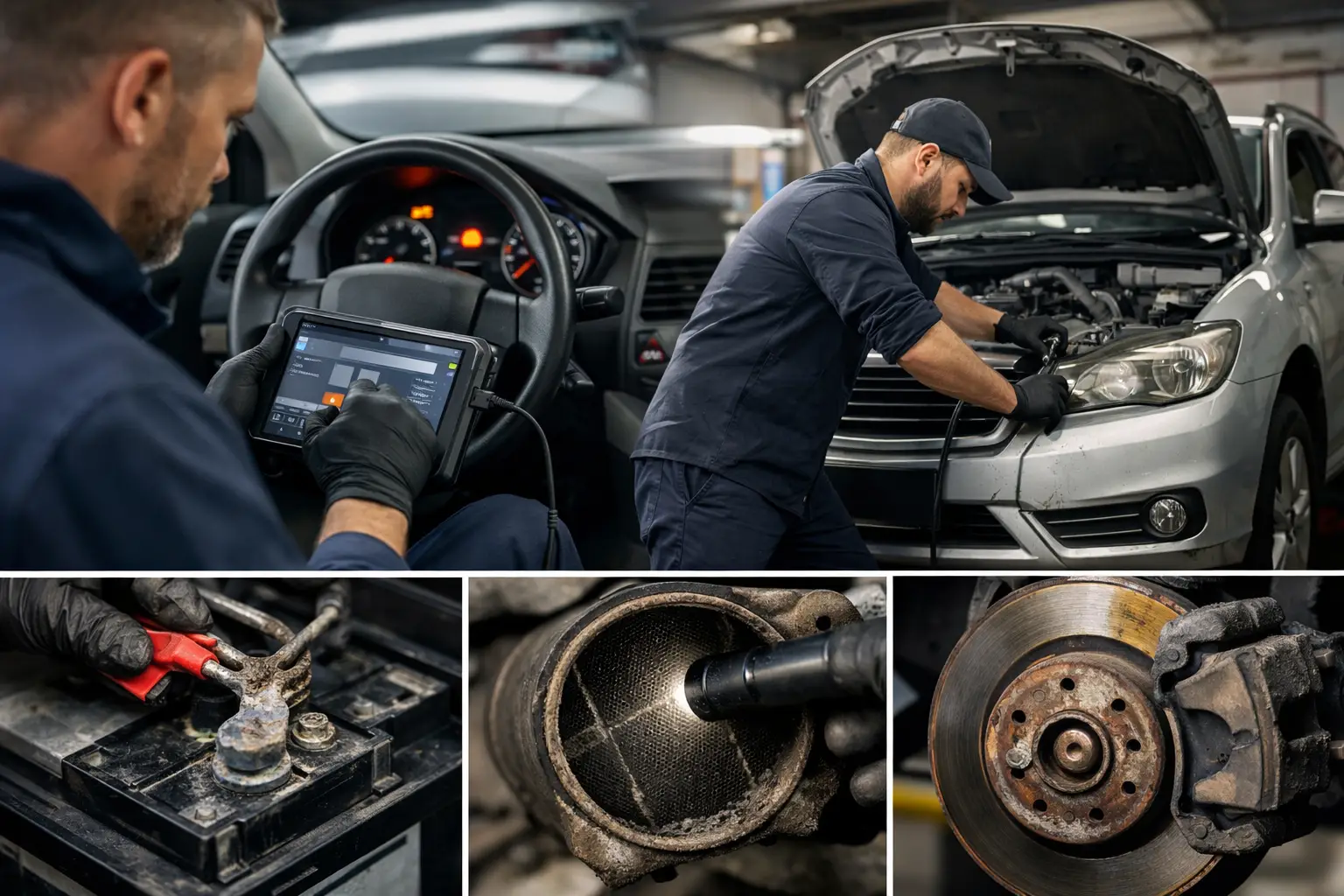
The same applies to an engine warning light and loss of power. We often see this issue when a vehicle has been driven mainly on short trips and the DPF cannot regenerate properly. But a split hose, sensor reading, EGR-related fault or turbo issue can create similar symptoms. The sensible route is to read the fault codes, check live data where needed, inspect the vehicle, then explain the repair plan in plain English.
Faults that can often be repaired on the day
Warning lights and electrical faults
An engine warning light, ABS light, airbag light or battery light needs checking, even if the car still drives normally. Some faults are minor and can wait briefly. Others affect safety systems, charging or engine protection.
A same-day diagnostic appointment can often identify the issue and, where the part is available, resolve it straight away. Common examples include failed sensors, loose connections, battery faults and certain wiring repairs. If a warning light is flashing, the engine is misfiring, or the car has gone into limp mode, stop driving where safe and contact the garage. Continuing to drive can turn a manageable repair into a more expensive one.
Brake repairs
Squealing, grinding, pulling to one side, a soft brake pedal or a brake warning light should never be ignored. Worn pads and discs are regular same-day repairs when parts can be sourced quickly. A seized caliper, damaged brake pipe or ABS fault may take longer, but the first priority is establishing whether the vehicle is safe.
Do not rely on the noise disappearing. Brake problems can change quickly, particularly if pads have worn down to the metal. Get the car checked and ask for an honest explanation of what is worn, what needs doing now, and what can reasonably be monitored.
Batteries, starting and charging issues
A battery that has gone flat after cold weather or lack of use may only need testing and replacement. If the battery warning light has been on while driving, the issue may be the alternator or drive belt instead. This usually happens because the battery is no longer being charged properly.
Testing both the battery and charging system avoids paying for a battery that was not the real problem. For urgent situations, jump-start and recovery support can also help get the vehicle safely to the garage rather than risking repeated failed starts at home or at work.
Tyres, punctures and suspension concerns
A puncture, damaged tyre or uneven tyre wear needs prompt attention. A repair may be possible if the puncture is in a repairable area and the tyre has not been driven flat. If it is too close to the sidewall or the structure is damaged, replacement is the safer option.
Knocking over bumps, a steering wheel that sits off-centre, or uneven tyre wear can point to worn suspension or steering components. Some parts can be replaced the same day. It depends on what has failed and whether there is further wear around it. Leaving it too long can affect handling and wear out tyres faster.
When a repair may take longer than a day
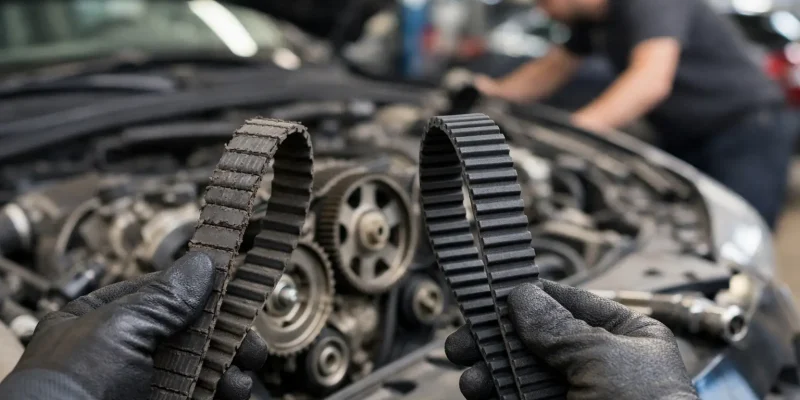
A longer repair is not poor service. Sometimes it is the only honest answer. Cambelt work, clutch replacements, gearbox faults, major engine problems and complicated electrical issues can involve more labour, specialist parts or further checks once components are removed.
MOT failure repairs also vary. A blown bulb or worn wiper is usually straightforward. Corrosion, emissions faults, suspension damage or braking imbalance may need more investigation. The right approach is to prioritise any safety-critical items, give you a clear repair plan, and avoid adding work that is not needed.
DPF issues are another area where quick fixes can be misleading. A forced regeneration or professional clean can help when the filter is blocked, but only after checking why it blocked. If an injector, sensor, thermostat or driving pattern is preventing regeneration, cleaning the filter alone may not provide a lasting answer.
What to tell the garage when you call
A clear description can speed up the booking and help the technician prepare. Mention when the problem started, what warning lights are showing, whether the vehicle drives differently, and whether there were any noises, smells or smoke. If the car has broken down, say whether it starts, moves and stops safely.
It also helps to mention recent work, such as a new battery, service, MOT failure or repair at another garage. This is not about blaming the previous work. It gives useful context and can reduce time spent ruling out obvious causes.
If you can, have the registration number ready. That helps identify the correct parts. Avoid clearing warning lights before the vehicle is checked, as stored fault information can help find the cause.
How to get a faster, safer result
Same-day slots work best when the garage has enough information to assess urgency and order likely parts if needed. Call rather than waiting if you have a brake concern, flashing engine warning light, loss of power, starting issue or an MOT deadline. Explain the symptoms honestly and ask whether the car should be driven in.
Be wary of anyone who promises a repair before inspecting the vehicle. Clear pricing does not mean making up a fixed answer from a phone call. It means explaining the diagnostic cost where applicable, getting your approval before repairs, and telling you if further work becomes necessary. There should be no surprise extras and no pressure to replace parts that are still serviceable.
For drivers in Lowestoft, Oulton Broad, Carlton Colville, Kessingland, Beccles and nearby areas, AutoFix4u offers practical diagnostics and repair support for urgent faults. Same-day availability depends on the job and parts supply, but the aim is always to identify the root cause quickly and get you safely back on the road.
If your car is showing a warning light, losing power, struggling to start or making a new noise, do not wait for it to become a breakdown. Call now, describe the fault, and get a clear answer on the safest next step.