Why Are My Brakes Squealing? Causes and Fixes
A sharp squeal every time you slow down is hard to ignore, especially on the school run or commute. If you are asking, why are my brakes squealing, the answer can be as simple as damp brake discs after overnight rain – or a sign that worn parts need attention. The sound alone does not confirm the fault, but it is worth checking before a small brake repair becomes a safety issue.
At AutoFix4u, we often see customers put up with a brake noise for weeks because the car still stops normally. That can be fine in a few cases, but brakes are not a system to guess at. A proper inspection finds out where the noise is coming from and whether anything needs replacing.
Why are my brakes squealing when I stop?
Your braking system works by pressing brake pads against metal brake discs. Friction slows the wheels, but changes in the pad surface, disc condition or the movement of the brake components can create vibration. That vibration is what you hear as a squeal.
In most cases, the cause falls into one of three groups: normal surface noise, worn brake parts or a brake component that is sticking or fitted incorrectly. The right fix depends on which one applies to your car.
Damp discs and light surface rust
In Lowestoft and the surrounding coastal area, damp air and rain can leave a light film of rust on brake discs overnight. The first few applications of the brakes may squeal or make a light scraping sound as the pads clean the disc surface.
This should clear after a short drive and gentle braking. If the noise remains every time you use the brakes, or the car has been sitting for several days, it needs a closer look. Heavy corrosion can leave the disc surface uneven and reduce how effectively the brakes work.
Worn brake pads
Many brake pads have a small metal wear indicator. When the pad material gets low, this indicator touches the disc and makes a high-pitched noise to warn you that the pads are nearing the end of their life.
Do not wait for the noise to become constant. Pads are far less expensive to replace than pads and discs together. Once the friction material wears away completely, metal can rub on metal. That usually creates a harsh grinding noise and can damage the discs quickly.
Glazed pads or discs
Brake pads can become glazed when they repeatedly get very hot and then cool down. This can happen after heavy braking, towing, driving down long hills or regular short journeys where brakes do not get worked through properly. The pad surface becomes hard and shiny, so it does not grip the disc as it should.
Glazed brakes can squeal, feel less responsive and sometimes produce a slight vibration. Depending on the condition, the solution may be to replace the pads, or both pads and discs if the disc faces are heat-spotted or worn.
Low-quality or unsuitable brake pads
Not every brake pad compound behaves the same way. Some harder pad materials last well but can be noisier, particularly when cold. A set of poor-quality pads may also squeal even when there is plenty of material left.
That does not mean every squeal requires new brakes. We inspect the pad thickness, disc condition and brake fitting hardware first. If the parts are sound, there may be a straightforward fix. If replacement is needed, fitting quality parts suited to the vehicle helps avoid the same problem returning.
Other faults that can make brakes squeal
Sometimes the pads and discs are not the real issue. The noise may come from a part around the brake assembly that is seized, loose or rubbing where it should not.
A sticking brake caliper is one example. The caliper is the component that pushes the pads onto the disc. If its slider pins or piston do not move freely, one pad can stay in contact with the disc after you release the brake pedal. You may notice a hot smell, a wheel that feels unusually warm, reduced fuel economy or the car pulling slightly to one side.
A bent backing plate behind the disc can also rub and create a squeal or scraping noise. Small stones can occasionally get caught between the disc and backing plate too. These faults often sound alarming but can usually be identified quickly during an inspection.
Loose or missing pad shims, anti-rattle clips and fitting hardware can cause vibration. These small parts matter. Replacing pads without checking the caliper movement and hardware may quieten the noise briefly, but it will not deal with the root cause.
When squealing brakes need urgent attention
A brief squeal after rain is usually not an emergency. However, do not continue driving as normal if the noise comes with a change in how the car brakes.
Book a brake check promptly if the squeal is persistent, gets louder under braking or happens alongside a warning light. Treat it as urgent if you hear grinding, feel the brake pedal going soft, notice strong vibration through the pedal or steering wheel, smell burning, or find the car pulling to one side.
If braking performance feels reduced, avoid unnecessary journeys. Leave extra distance from other vehicles and arrange for the car to be checked as soon as possible. A seized caliper or metal-on-metal braking can cause further damage in a short distance.
What you can check safely at home
You do not need to dismantle anything to gather useful information. Notice when the squeal happens: only on the first stop of the day, only when braking gently, or all the time. Also pay attention to whether it comes from the front or rear, and whether it started after new brake work, a long journey or the car being parked for a while.
You can look through the wheel spokes for obvious rust on the discs, but do not touch brake parts after driving. They can be extremely hot. Avoid spraying lubricants or cleaners onto the brakes. Products in the wrong place can contaminate pads and reduce braking performance.
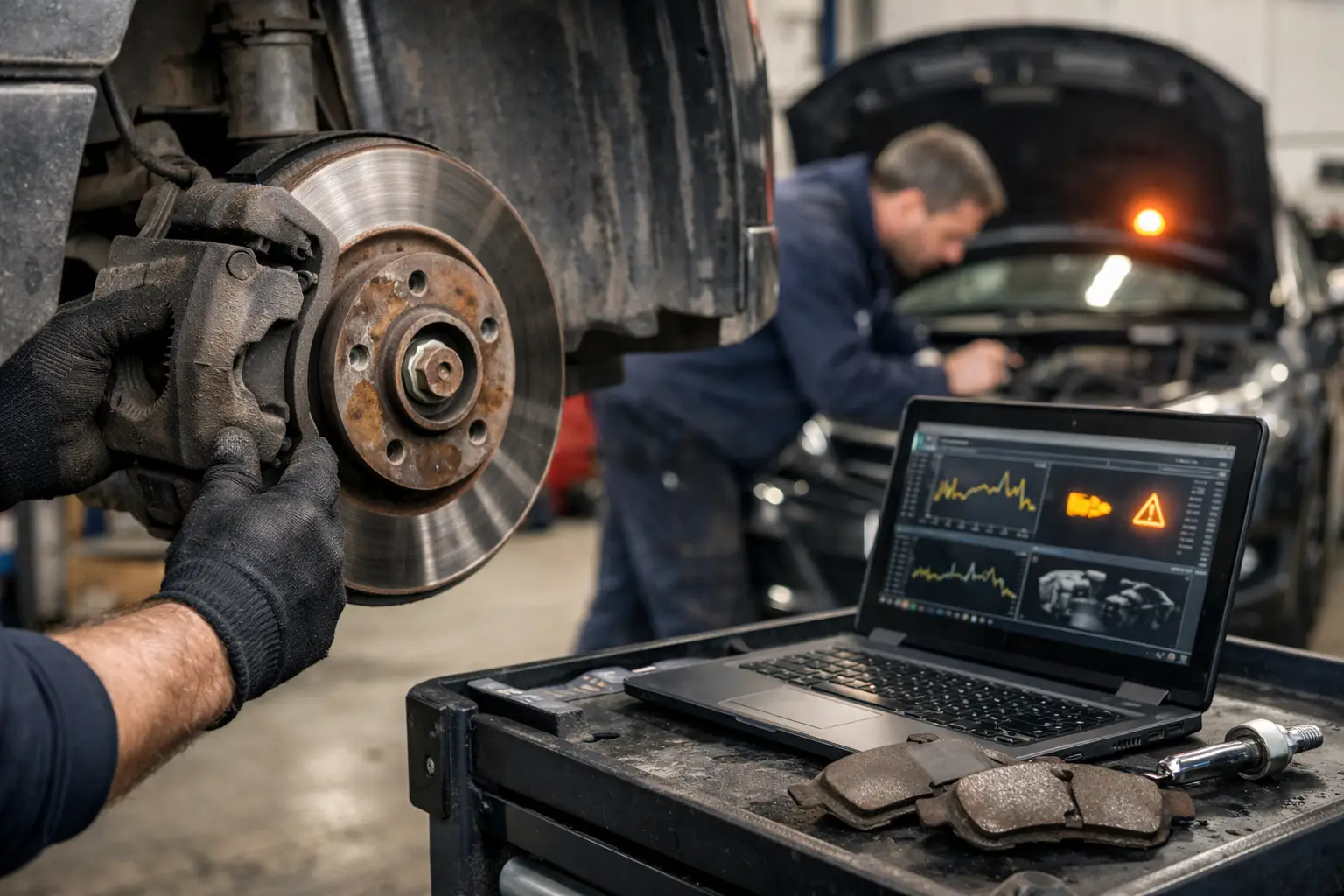
The most useful next step is a visual brake inspection. A garage can measure the remaining pad material, check disc thickness and condition, test caliper movement, and inspect the hardware. That gives you a clear answer rather than replacing parts based on a noise alone.
What a proper brake inspection should find
A good inspection is about more than saying the pads are worn or not worn. We check how evenly the pads are wearing, whether the discs are scored or lipped, and whether the calipers slide and release correctly. We also check brake hoses, pipes and the condition of related suspension components where relevant.
For example, an inner brake pad can wear out faster than the outer one when a caliper slider is sticking. From outside the wheel, the brakes may look fine. Removing and inspecting the pads properly reveals the fault before it turns into disc damage or an MOT failure.
You should be told what has caused the noise, what needs doing now and what can safely be monitored. That is the difference between a clear repair plan and unnecessary work. If pads, discs or calipers are required, ask for the options and the reason for each recommendation.
Do not wait for the squeal to turn into grinding
Brake noise is not always serious, but it is always worth understanding. A short-lived squeal after a wet night may disappear on its own. Persistent noise, grinding or any change in braking feel needs a proper check.
If your brakes are squealing and you are in Lowestoft, Oulton Broad, Carlton Colville, Kessingland, Beccles or nearby, contact AutoFix4u for a brake inspection. We will identify the cause, explain it in plain English and give you clear pricing with no surprise extras. Getting it checked now can protect your discs, your MOT result and, most importantly, your stopping distance.