MOT Repair or Retest: What Should You Do?
An MOT failure can feel like a major problem when you need the car for work, school runs or getting around Lowestoft. But an MOT repair or retest is often more straightforward than it first appears. The key is knowing what has actually failed, whether it is safe to drive, and whether the repair needs doing before a retest.
At AutoFix4u, we often see customers arrive with a failure sheet full of wording that sounds worse than the fault itself. Some issues are quick repairs, such as a blown bulb or worn wiper blade. Others, including brake wear, suspension faults or an engine warning light, need proper diagnosis before anyone can say what the right repair is.
Start with the MOT failure sheet
Your MOT certificate separates problems into different categories. This tells you how urgent the work is and whether a retest is needed.
A minor defect will not fail the MOT, but it is still worth sorting. It may be early tyre wear, a slightly damaged component or another issue that could become more expensive if left alone.
An advisory is not a failure either. It is the tester’s way of saying a part is wearing, corroding or approaching the point where it may need attention. Advisories are useful, but they are not a reason to replace parts blindly. We recommend checking how serious the wear is, how you use the car and whether it is likely to cause trouble before the next service or MOT.
A major defect means the vehicle has failed. It needs repairing and passing a retest before it has a new MOT certificate. Common examples include tyres below the legal limit, ineffective brakes, faulty lights, excessive emissions and worn suspension components.
A dangerous defect is more urgent. This means the car has failed with a fault that presents an immediate risk to road safety or the environment. Do not treat this as something to put off until next week. Arrange repair or recovery rather than continuing to use the vehicle.
MOT repair or retest: which comes first?
A retest only confirms whether the failed item now meets the MOT standard. It does not fix the fault. If the cause is obvious and the repair is simple, you may be able to have the work completed quickly and return for a retest.
For example, a failed headlamp bulb, insecure number plate or perished wiper blade can usually be dealt with without much delay. A tyre replacement is also often a clear repair, provided there are no other issues such as damaged wheels, uneven wear caused by alignment problems, or a suspension fault.
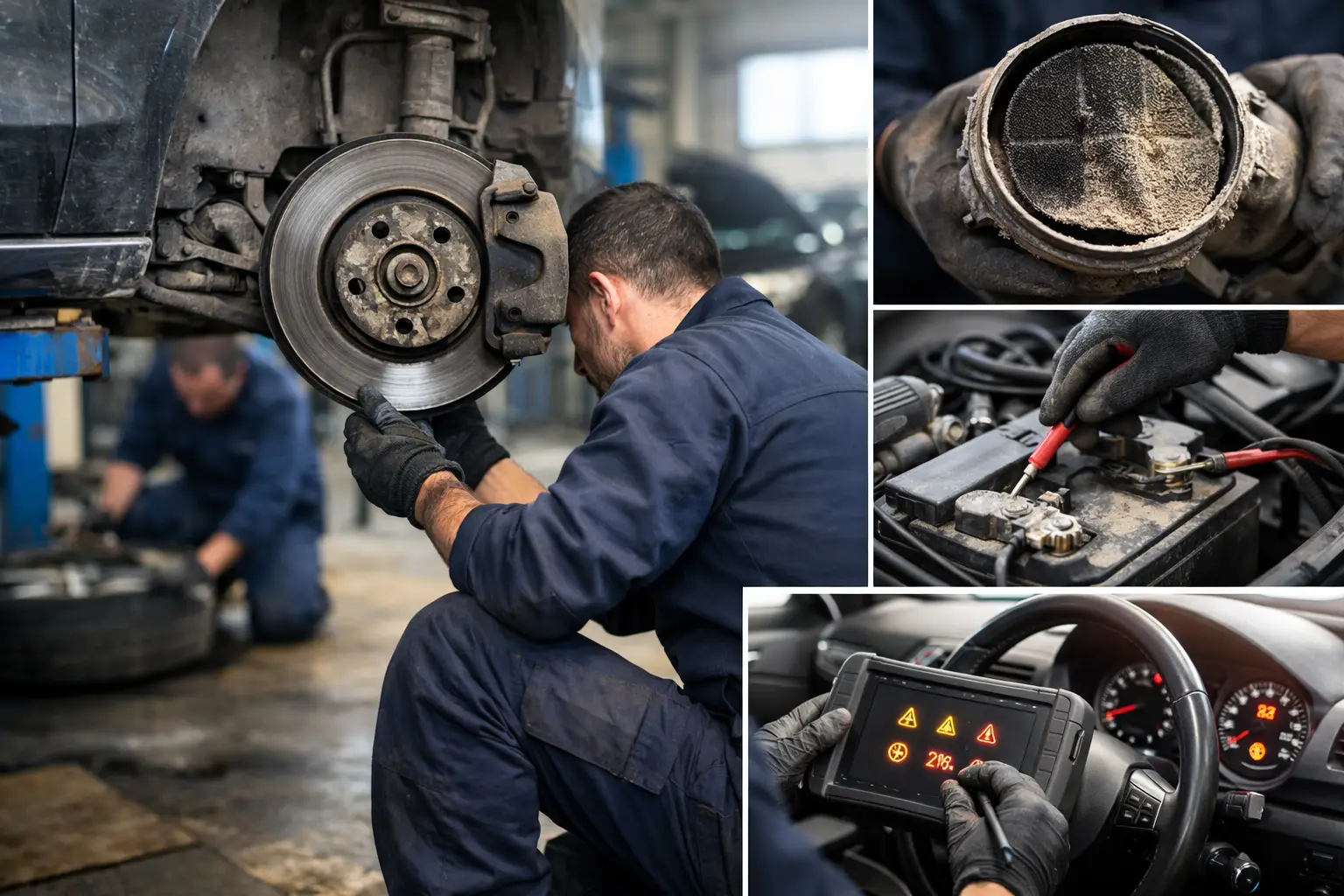
It depends more when the failure relates to brakes, emissions, steering, suspension or warning lights. A failure sheet might say “brake performance below requirements”, but that does not automatically mean you need a full brake replacement. The cause could be worn pads and discs, a sticking caliper, a brake fluid issue or a problem on one wheel. The same applies to emissions. Replacing parts based on a guess can cost more and still leave the original fault unresolved.
That is why a diagnostic-first approach matters. We identify the cause, explain the repair in plain English and give you a clear plan before work starts. You should know what is being repaired, why it has failed, and what is included in the price.
Can you drive after an MOT failure?
This is where many drivers get caught out. A failed MOT does not always mean the car cannot move at all, particularly if there is still time left on the previous MOT certificate. However, the vehicle must still be roadworthy at all times.
If the MOT identifies dangerous defects, you should not continue driving it as normal. A valid older MOT certificate does not make an unsafe car safe or legal to use. Brakes that are seriously compromised, a tyre with dangerous damage, excessive steering play or a major fuel leak all need immediate attention.
There are limited circumstances where you may drive to a pre-booked repair appointment or MOT test, but this is not a workaround for an unsafe vehicle. If there is any doubt, ask the garage first. We can advise whether the issue is suitable for a booked repair visit or whether recovery is the sensible option.
The faults we see most after an MOT
MOT failures are usually caused by everyday wear rather than one dramatic breakdown. The most common jobs involve tyres, lights, brakes, suspension, emissions and visibility.
Brakes and suspension
Brake failures can involve worn pads or discs, but we also see seized calipers, corroded brake pipes and uneven braking across an axle. You may have noticed pulling under braking, a grinding noise or a longer stopping distance. Sometimes there are no clear symptoms until the MOT brake test picks it up.
Suspension failures are also common on local roads, especially where potholes and rough surfaces have taken their toll. Knocking over bumps, uneven tyre wear or a vague feeling through the steering can point to worn drop links, bushes, ball joints or springs. These parts affect handling and tyre life, so it is worth fixing the cause rather than just passing the test.
Tyres, lights and visibility
These are often the quicker MOT repair jobs, but they still need checking properly. A tyre can fail because of tread depth, sidewall damage, a nail, or wear patterns that suggest an alignment or suspension problem. Fitting a new tyre without checking why the old one wore unevenly may mean you are back in the same position sooner than expected.
Lights can fail for something as simple as a bulb, but moisture in the lamp unit, damaged wiring or a warning light on the dashboard can take longer to trace. Wipers, washers and the driver’s view of the road also matter. A split blade, empty washer bottle or cracked windscreen in the wrong area can be enough to fail.
Emissions, DPF and engine warning lights
An emissions failure is one of the areas where guessing gets expensive. On petrol cars, the cause may involve ignition faults, air leaks, sensors or exhaust problems. On diesel vehicles, a blocked DPF, EGR fault, boost leak or a sensor issue can contribute to high emissions or an engine warning light.
We often see this issue when a diesel car has mainly done short journeys. The DPF cannot always regenerate properly, soot builds up and the car may eventually lose power or enter limp mode. A long drive does not fix every DPF problem. First, the fault needs diagnosing to establish whether the filter can regenerate safely or whether another issue is stopping the process.
How MOT retest rules usually work
Retest arrangements depend on where the repairs are carried out and how quickly the vehicle returns. In some situations, returning to the same test station within the allowed time can mean a free or reduced-cost partial retest. In others, a full retest or fee may apply.
The exact arrangement is worth confirming with the MOT station, especially if you are taking the car elsewhere for repairs. Keep the failure certificate and ask what deadline applies. Do not assume a retest is automatically free, and do not rush a repair simply to meet a deadline if the fault needs more investigation.
A good garage will help you make the practical call. If the repair is clear and parts are available, getting it repaired and retested promptly makes sense. If the fault needs diagnostics, it is better to establish the root cause first than fit parts in the hope that the warning light or emissions reading disappears.
What to do when your MOT has failed
First, read the failure sheet and check whether any defect is marked dangerous. If it is, stop using the vehicle and arrange a repair plan. If the faults are less urgent, book the car in promptly while the details are fresh and before a minor issue becomes a breakdown.
Bring the MOT failure sheet with you. It gives us a useful starting point, but we still inspect the vehicle ourselves. For faults involving warning lights, poor performance, DPF messages, brakes or unusual noises, explain exactly what you have noticed. Details such as when the light came on, whether the car loses power on longer journeys, or whether it pulls under braking can save time in diagnosis.
Ask for a clear explanation before authorising work. You should be told what has failed, what caused it where this can be established, and whether there are any sensible options. There is a difference between an essential MOT repair and an advisory item that can be monitored for now.
Get the repair right before the retest
A fast retest is useful, but a proper repair matters more. Replacing a worn part is only half the job if another fault caused it to wear prematurely or if a warning light points to a wider engine issue.
For drivers in Lowestoft and nearby areas, AutoFix4u can inspect MOT failures, diagnose unclear faults and carry out the repairs needed to get the car back to a safe, reliable standard. Call now for clear advice, a quote and available booking slots. A failure sheet is not the end of the road – it is a clear reason to get the right fault fixed properly.


2 thoughts on “MOT Repair or Retest: What Should You Do?”