Car Diagnostics Oulton Broad Drivers Can Trust
A warning light on the dash rarely appears at a convenient time. If you need car diagnostics Oulton Broad drivers can rely on, the main thing is getting the fault identified properly before it turns into a bigger repair, repeated breakdown, or a car that simply will not start when you need it most.
At our workshop, we see this every week. A driver notices the engine warning light, the car feels sluggish, or it drops into limp mode on the way to work. In some cases, the issue is fairly minor. In others, the warning is the first sign of a fault that will keep getting worse if it is ignored. The job is not to guess. It is to test the car properly, find the cause, explain it clearly, and put together the right fix.
Why proper car diagnostics in Oulton Broad matter
Modern vehicles rely on sensors, control units and electrical systems to manage everything from fuel delivery to emissions and braking support. When something goes wrong, the car stores fault codes. That sounds simple, but fault codes are only part of the picture.
We often see this issue when someone has already had a quick code read elsewhere. The printout might point to a sensor, but that does not always mean the sensor itself has failed. Sometimes the real cause is damaged wiring, a blocked DPF, low system voltage, an air leak, or a separate component causing bad readings.
That is why proper diagnostics matter. A basic scan can tell you where to start looking. A real diagnostic process tells you what is actually wrong.
Common problems we diagnose
Most people do not book diagnostics because they are curious. They book because the car is doing something it should not. Usually, the problem falls into one of a few common patterns.
Engine warning lights
This is one of the most common reasons drivers get in touch. The engine warning light can come on for many reasons, from emissions faults and ignition issues to fuel system problems and sensor errors. In most cases, the car may still drive, but that does not mean it is safe to ignore.
Sometimes the car feels normal at first. Then fuel economy drops, it becomes harder to start, or the engine starts running unevenly. The earlier the fault is checked, the better the chance of avoiding a more expensive repair.
Loss of power and limp mode
If the car suddenly feels flat, struggles to accelerate, or will not rev properly, there is usually an underlying system fault. We often see this with turbo issues, boost leaks, DPF problems, EGR faults and sensor-related faults.
Limp mode is the car protecting itself. It limits performance because the system has detected something serious enough to need attention. You might still be able to drive a short distance, but you should not leave it for long.
Starting problems and battery-related faults
A car that clicks, cranks slowly, or starts one day and not the next is not always just a tired battery. It could be the battery, but it could also be a charging issue, an alternator fault, poor earth connections, or an electrical drain.
This usually happens because one part of the starting and charging system is no longer working as it should. Testing matters here. Replacing parts on guesswork often wastes time and money.
DPF and emissions issues
Blocked diesel particulate filters are common on vehicles used for shorter local trips. If the car is not getting hot enough or running long enough to complete a proper regeneration, soot builds up. That can lead to warning lights, loss of power, excess smoke, or repeated failed regens.
In some cases, the filter can be cleaned and the cause corrected. In others, there may be another fault behind it, such as a pressure sensor issue or an engine problem affecting combustion. The key is to find out why the DPF issue happened, not just clear the light and hope for the best.
Electrical faults
Electrical faults can be frustrating because the symptoms often seem unrelated. One driver may have a warning light that comes and goes. Another may have parking sensors, lights, windows or air conditioning behaving oddly.
These faults can come from damaged wiring, poor battery voltage, control module issues, failed sensors or water ingress. They need a methodical approach. Rushing an electrical diagnosis usually leads to misdiagnosis.
What happens during a diagnostic check
When a car comes in with a fault, the first step is listening to the driver. That matters more than people think. Knowing when the warning light came on, whether the issue happens from cold, under load, at motorway speed, or after short trips helps narrow things down quickly.
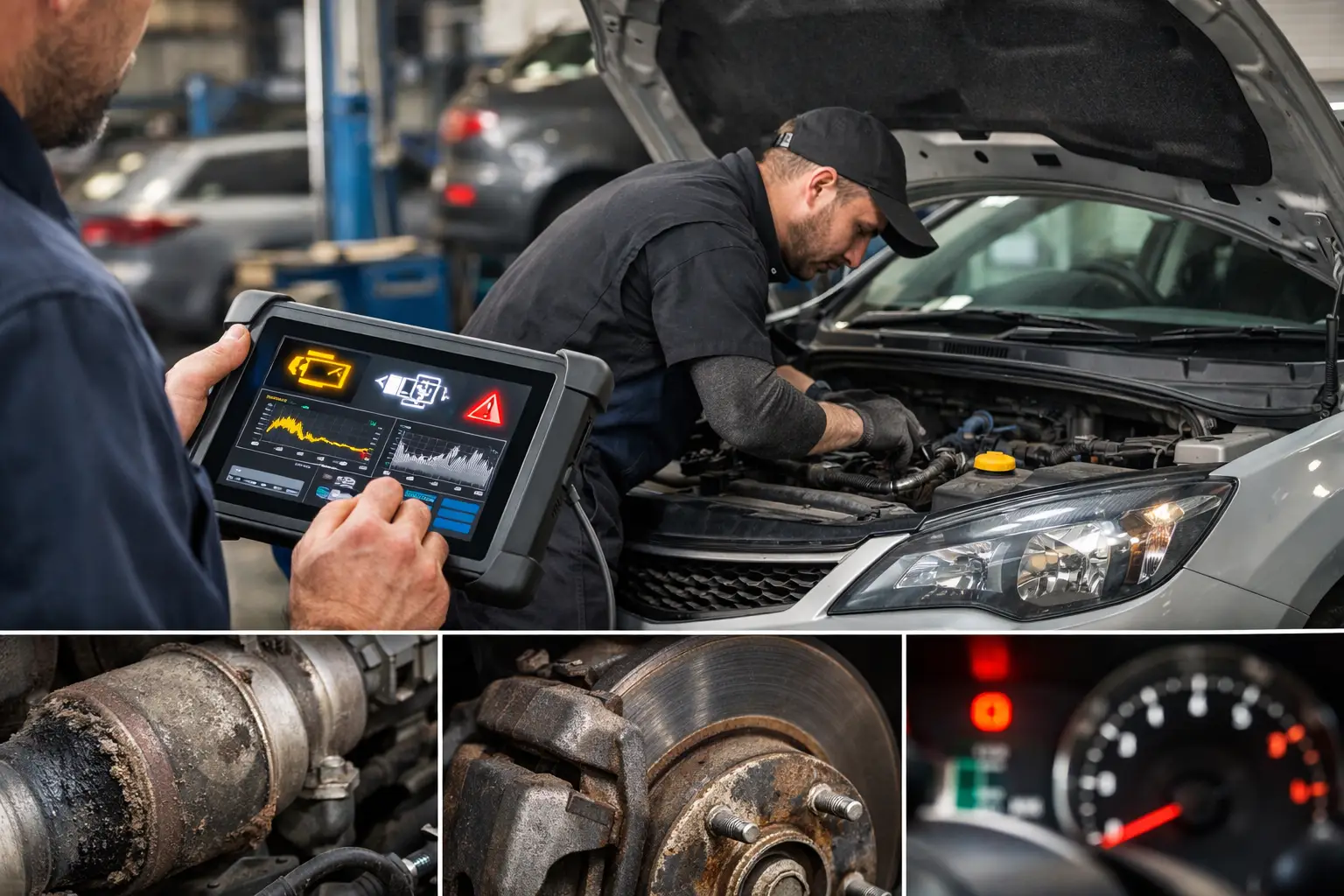
From there, the vehicle is checked using diagnostic equipment, but the scan is only one part of the process. Fault codes are read, live data is reviewed, and we look at how the different systems are behaving in real time. If needed, we carry out further testing on components, wiring, battery voltage, charging output, pressure readings or sensor signals.
That is how you separate a real cause from a symptom. It also means we can explain the fault in plain English. If the issue needs repair work, you should know what has failed, why it has happened, and what the next step is before any work goes ahead.
Car diagnostics Oulton Broad drivers often need fast
A lot of diagnostic jobs are urgent. The car may still move, but the driver is worried it will not make it through the week. That is especially common with warning lights before an MOT, poor starting, sudden power loss, or faults that appear out of nowhere.
For local drivers around Oulton Broad, speed matters, but so does accuracy. There is no benefit in getting a quick answer if it is the wrong one. In most cases, the best approach is to get the vehicle checked as soon as possible, confirm the fault, and deal with it before more damage is caused.
We often help with issues that have already been looked at elsewhere but not solved properly. The same warning light keeps returning, parts have been changed without fixing the problem, or the car has been driven with an intermittent fault until it becomes serious. A proper diagnostic-first approach usually saves money in the long run because it avoids unnecessary repairs.
When you should stop driving and get help
Some faults can wait a day or two. Others really should not. If the car is misfiring badly, has no power, is producing excessive smoke, overheating, or showing multiple warning lights at once, it is best not to keep driving it.
The same applies if the brakes feel wrong, the clutch is slipping badly, or the car keeps cutting out. These are not faults to monitor and hope for the best with. Getting the problem checked quickly reduces the risk of a roadside breakdown or a repair bill that grows because the car was kept in use.
Clear answers, not guesswork
Most drivers are not asking for a technical lesson. They want a straight answer. What is wrong, is it safe, what needs doing, and how soon can it be sorted.
That is exactly how diagnostics should be handled. If the fault is minor, you should be told that. If it is likely to get worse quickly, you should be told that as well. Honest advice matters just as much as the repair itself.
At AutoFix4u, the focus is on finding the root cause, not just clearing codes or replacing parts until the problem disappears. That means clear communication, sensible testing, and a repair plan that makes sense for the vehicle and how you use it.
Book diagnostics before the problem gets worse
If your car has a warning light on, keeps losing power, struggles to start, or has an electrical fault you cannot trust, getting it checked early is usually the smart move. Small issues have a habit of turning into bigger ones when they are left.
For drivers in and around Oulton Broad, a local workshop that can diagnose faults properly, explain them clearly, and carry out the repair without fuss makes all the difference. Call now, get a quote, and book a diagnostic check before the car decides the timing for you.


