
DPF Cleaning Service Review: What Matters
If your car has dropped into limp mode on the school run or the engine warning light has come on just before work, a DPF cleaning service review is usually not about ratings or marketing. It is about one thing – will the garage actually fix the problem, or will you be back with the same fault a week later? That is the real question, especially if you rely on your car every day.
We see this a lot with diesel vehicles used for short trips around town. The owner is told the DPF is blocked, a quick clean is offered, and for a few days the car feels better. Then the warning light returns, the power drops again, and the frustration starts all over. In most cases, that happens because the filter was treated as the problem when it was really the symptom.
A proper DPF cleaning service review starts with diagnosis
A diesel particulate filter blocks up for a reason. Sometimes it is just driving style. Short runs, stop-start traffic and repeated cold starts do not give the system enough heat to burn soot off properly. But that is only part of the picture.
We often see this issue when there is another fault behind it. A failed pressure sensor, a split hose, a sticking EGR valve, an injector issue or a thermostat problem can all stop the regeneration process from working as it should. If that fault is missed, cleaning the DPF alone may only buy you a bit of time.
That is why any honest DPF service should begin with proper diagnostics. The garage should check fault codes, look at live data and confirm why the filter is blocked in the first place. If they jump straight to cleaning without checking the cause, you are taking a risk.
What a good DPF cleaning service should include
Not every DPF job is the same. Some cars need a forced regeneration. Some need the filter removed and cleaned properly. Some should not be regenerated at all until another fault is repaired.
A decent service should explain that clearly. You should be told whether the blockage is light, moderate or severe, whether ash build-up is likely, and whether there are related faults making the problem worse. Plain English matters here. Most drivers do not need a technical lecture. They just need to know what has failed, what needs doing and what happens next.
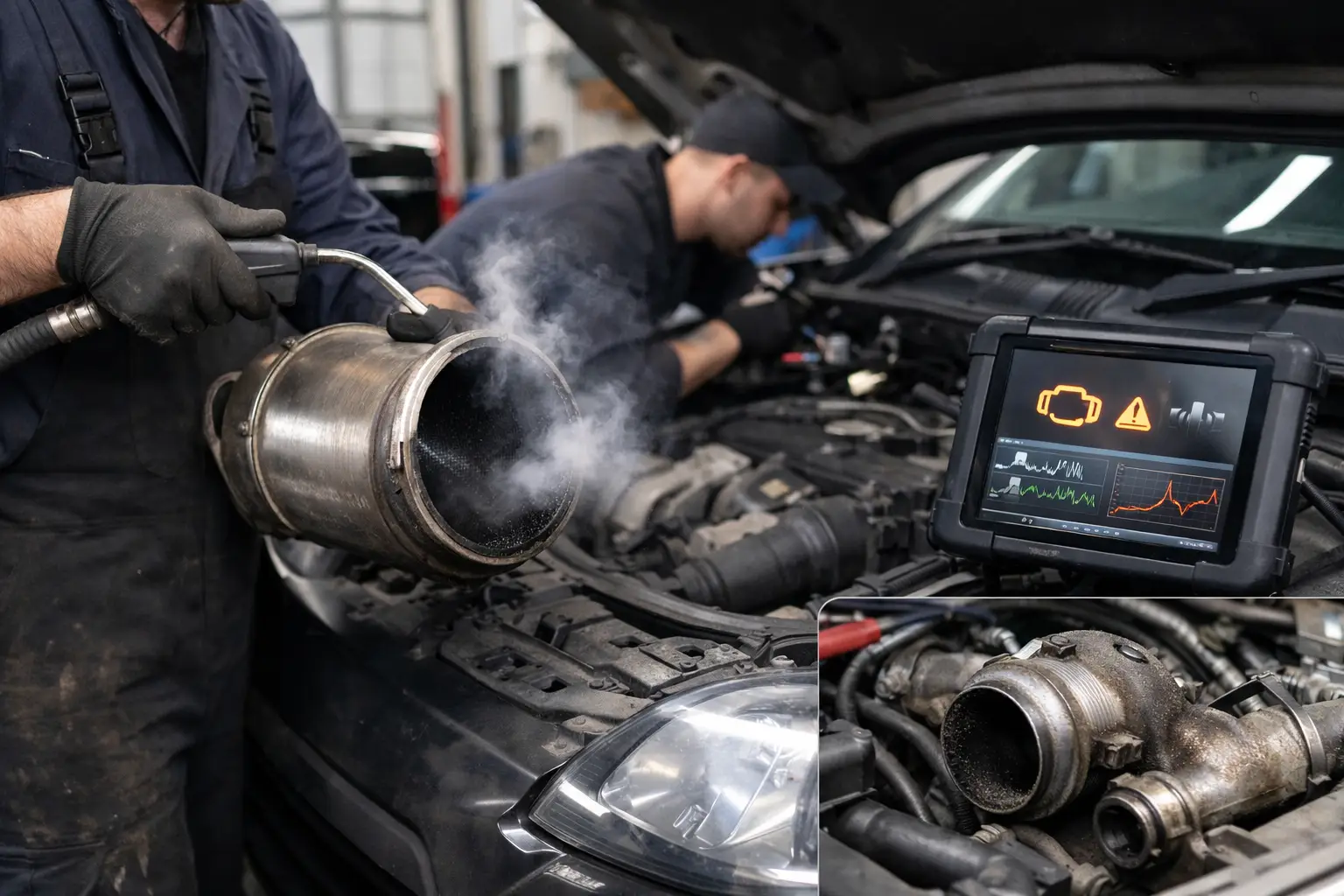
In practical terms, a proper service usually includes an initial diagnostic check, an assessment of soot loading, pressure readings and temperature readings, and then the right cleaning method for the condition of the vehicle. After that, the system should be checked again to confirm the result. If the garage cannot show you before-and-after readings, it is fair to ask why.
DPF cleaning service review – what drivers often get wrong
A lot of people judge the service by one thing only: did the warning light go off? That is understandable, but it is not the full test.
A light can clear temporarily even when the root cause is still there. What matters more is whether the car is regenerating properly afterwards, whether the pressure readings are back in range, and whether the vehicle is driving normally under load. If the car still feels flat, struggles on hills or drops into limp mode again, the job is not really finished.
Another common mistake is assuming every blocked DPF can be saved. Sometimes it can. Sometimes it cannot. If the filter is heavily contaminated with ash, physically damaged or melted internally, cleaning may not be the right answer. A garage should tell you that honestly instead of pushing on with a service that is unlikely to last.
Forced regeneration versus off-car cleaning
This is where a lot of confusion comes from. Drivers are often offered a regeneration and told the DPF has been cleaned. Sometimes that is true in a limited sense. Sometimes it is not enough.
A forced regeneration uses the car’s own system to raise exhaust temperatures and burn off soot. It can work well if the blockage is not too severe and the rest of the system is healthy. It is usually the quickest route when the fault has been caught early.
Off-car cleaning is different. The DPF is removed and cleaned more thoroughly. This is usually a better option when the blockage is heavier or when a simple regeneration has already failed. It takes longer and involves more labour, but in the right case it can be the more sensible repair.
The trade-off is simple. A forced regeneration can be faster and less involved, but it only works when conditions are right. Off-car cleaning is more thorough, but it is not a cure-all if another engine or sensor fault is still present.
Signs the garage understands DPF problems properly
A good workshop will not just say, “Your DPF is blocked.” They will tell you why that matters and what caused it.
That usually means asking the right questions. How is the car used? Mostly short local trips or longer dual carriageway driving? Has fuel economy worsened? Has the cooling system been slow to warm up? Has the engine warning light come and gone before? These details help point to the real cause.
You should also expect clear advice on what happens after the cleaning. If your driving pattern is causing repeated build-up, that should be explained. If a sensor needs replacing first, that should be made clear before money is spent on a service that may not hold.
From a customer’s point of view, transparency is often the best sign you are in the right place. No vague promises. No pressure. Just a clear repair plan.
When DPF cleaning is worth it
In many cases, cleaning is absolutely worth doing. If the filter is structurally sound and the blockage has been caught before serious damage, cleaning can restore performance, improve regeneration and get the car back to normal without replacing major parts.
It is often the right route when the warning light has only recently appeared, the vehicle still runs, and diagnostics show the blockage is mainly soot rather than long-term ash contamination. That is why acting early matters. Leave it too long, and a straightforward clean can turn into a bigger repair.
Drivers who ignore repeated warning lights usually end up with less choice. The car may go into limp mode more often, fuel consumption can rise, and extra heat in the system can put strain on other components. Waiting rarely makes a DPF issue simpler.
When cleaning alone is not enough
There are cases where the cleaning itself is only one part of the repair. This usually happens because the DPF has blocked as a knock-on effect.
For example, if the engine is over-fuelling, producing too much soot, or failing to reach the correct operating temperature, the filter will clog again. The same applies if a sensor is giving false readings and stopping normal regeneration. In those cases, cleaning the DPF without correcting the fault is like emptying a bucket while the tap is still running.
This is where a local diagnostic-first garage makes a real difference. The aim should be long-term reliability, not just getting the car out of limp mode for a day or two.
What local drivers should ask before booking
If you are comparing services, ask a few straightforward questions. Will the garage carry out diagnostics first? Will they explain whether a regeneration or deeper clean is more suitable? Will they check for underlying faults if the DPF is blocked? And will they tell you honestly if cleaning is unlikely to solve it?
Those answers matter more than flashy claims. A good garage should be able to talk you through the process in plain English and give you a realistic next step.
If you are in Lowestoft or nearby and your diesel has an engine warning light, reduced power or repeated DPF faults, do not guess. Get it checked properly. Same-day diagnostic slots may be available, and clear pricing should come before any repair starts.
The best DPF repair is not the one that sounds quickest on the phone. It is the one that finds the real cause, fixes it properly and lets you get back to using your car without wondering when the light will come back on.


