
When Should You Replace Tyres UK Drivers Use?
A tyre can look fine at a quick glance and still be close to causing trouble. We often see cars come in with low tread on the inner edge, cracks in the sidewall, or a slow puncture that the driver had not noticed. If you are asking when should you replace tyres UK rules and road conditions give a clear starting point, but the real answer also depends on wear, age, damage and how the car feels on the road.
For most drivers, the problem starts with something small. The steering feels slightly off. The car takes longer to stop in the wet. There is a vibration at 50 mph. Or the car fails its MOT on tyres when everything seemed fine a week earlier. In most cases, tyres do not suddenly go bad overnight. They wear down gradually, and the warning signs are there if you know what to look for.
When should you replace tyres in the UK?
Legally, the minimum tread depth in the UK is 1.6mm across the central three-quarters of the tyre, all the way round. If your tyres are at or below that, they need replacing straight away. Driving below the legal limit is unsafe, and it can also lead to fines, penalty points and an MOT failure.
That said, waiting until 1.6mm is leaving it late. In real driving conditions, especially on wet roads, grip starts dropping off well before that point. We usually advise drivers to think seriously about replacement once tread gets down to around 3mm. You still have some life left, but braking performance in rain can be noticeably worse compared with a newer tyre.
That matters more than many people realise. Around Lowestoft and surrounding roads, you are dealing with wet mornings, standing water, rough surfaces and potholes. A tyre that is technically legal may still not be giving you the level of safety you want for school runs, commuting or motorway driving.
The signs your tyres need replacing
Tread depth is only one part of it. A tyre may need replacing even if it is still above the legal minimum.
Uneven wear
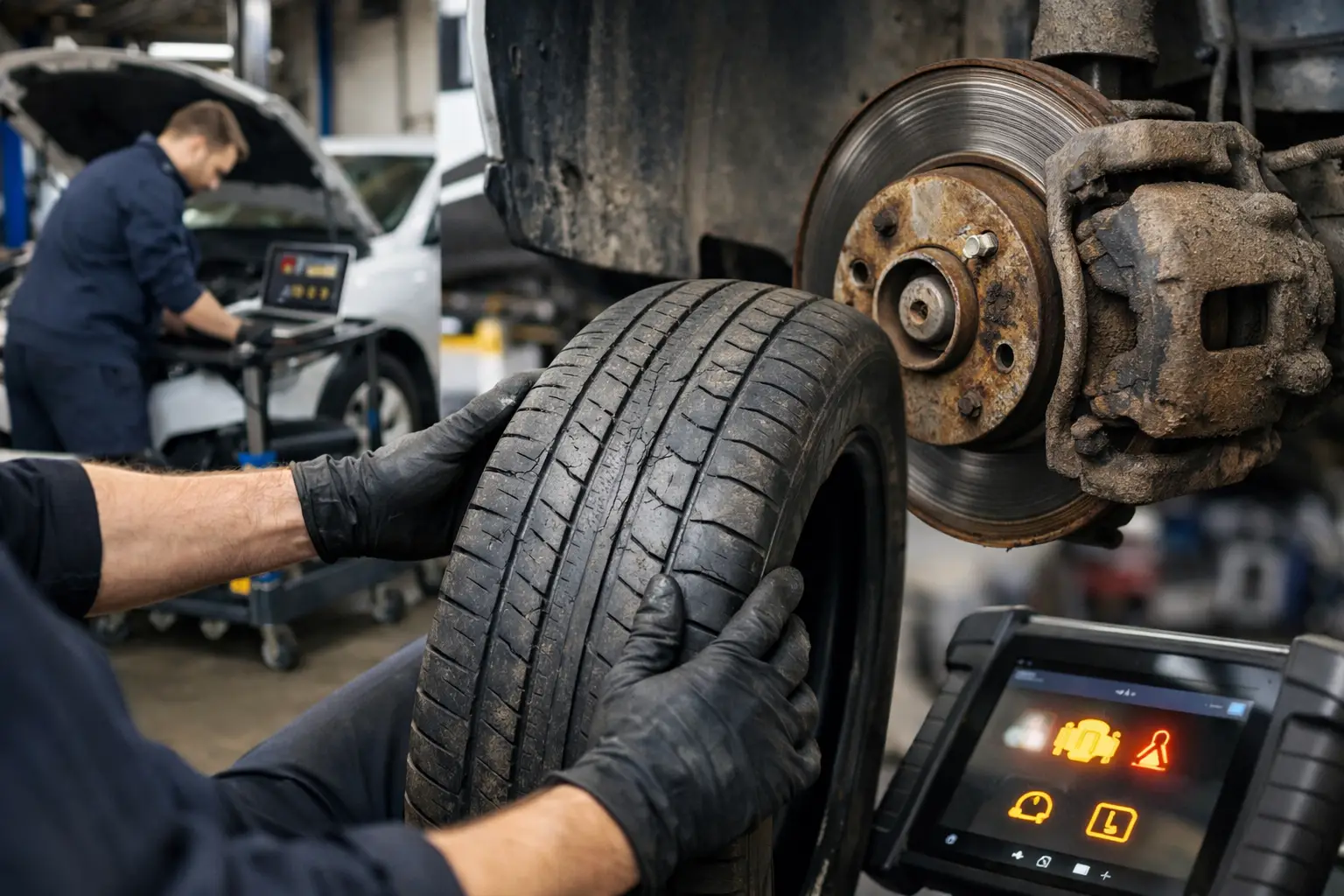
This is one of the most common issues we see. The outside edge may look acceptable, but the inside edge is badly worn. Or one front tyre is wearing much faster than the other. This usually happens because of wheel alignment issues, suspension wear or incorrect tyre pressures.
The problem is simple. If you only look at the visible outer edge, you can miss serious wear on the inner side. That is why a proper check matters. If the wear is uneven enough, the tyre may need replacing sooner than expected, and the underlying cause should be sorted at the same time.
Cracks in the sidewall
Rubber degrades with age, sun exposure and general use. Small surface cracks can turn into a bigger problem if left alone. If there are visible cracks in the sidewall or between the tread blocks, it is usually a sign the tyre is ageing and losing integrity.
This is more common on cars that do low mileage, sit parked for long periods, or are only used for short local trips. The tread may still look decent, but the tyre itself is no longer in good condition.
Bulges or cuts
A bulge in the sidewall usually means internal damage. This often happens after hitting a pothole or kerb. Once that structure is damaged, the tyre is at risk of sudden failure. It is not something to monitor and deal with later. It needs replacing.
The same goes for deep cuts, exposed cords or any visible damage that affects the casing. In these cases, repair is often not suitable or safe.
Repeated pressure loss
If you keep topping up one tyre, there is a reason. It could be a puncture, a damaged valve, corrosion around the wheel rim or a tyre that is no longer sealing properly. Sometimes it can be repaired. Sometimes replacement is the better option, especially if the tyre is already worn or ageing.
A tyre that keeps losing pressure will wear badly, affect fuel use and reduce grip. It is worth getting checked before it turns into a bigger problem.
Road noise, vibration or poor handling
Tyres can tell you a lot through how the car feels. If you notice vibration through the steering wheel, a droning noise that was not there before, or the car feeling unstable in the wet, tyre wear or damage may be part of the cause.
It is not always the tyre alone. Wheel balance, alignment and suspension can all play a role. But tyres are one of the first things we check because they are often where the issue shows up.
How old is too old for a tyre?
There is no simple rule that says every tyre must be replaced after a set number of years, but age does matter. In most cases, once a tyre gets to around five years old, it should be inspected more carefully. By ten years, replacement is usually the sensible option even if the tread still looks usable.
This catches people out with low-mileage cars. A car may pass most of its time on the drive and only cover short trips, so the tread hardly wears. But the tyre rubber still hardens over time, and that affects grip and safety.
If you are not sure how old your tyres are, the date code is printed on the sidewall. It is a four-digit number. For example, 2321 means the tyre was made in week 23 of 2021.
Will worn tyres fail an MOT?
Yes, and it is a very common reason for failure or advisory notes. If the tread is below the legal limit, if there is serious sidewall damage, or if the tyre size or condition is unsuitable, it can fail.
What often frustrates drivers is that the car seemed fine beforehand. That usually comes down to tyres wearing gradually and not being checked closely enough between services or MOTs. If there is uneven wear on the inside edge, you may not spot it without turning the steering or lifting the car.
If your MOT is due soon and you already know the tyres are getting low, it makes sense to deal with them before the test. It avoids the failed MOT, the retest hassle and the risk of driving on tyres that are already at the limit.
Should you replace tyres in pairs or all four?
It depends on the condition of the other tyres. If one tyre is damaged and the matching tyre on the same axle is still in good shape with strong tread, you may only need one. But if both tyres on the same axle are worn, replacing them as a pair is usually the better option.
Matching grip across the axle helps the car brake and handle more predictably. Mixing tyre types or having a big tread difference side to side can affect stability, especially in wet conditions.
Replacing all four is not always necessary, but sometimes it is the right call if the whole set is worn, aged or poor quality. A good garage should tell you honestly what needs doing now and what can wait.
What causes tyres to wear out early?
In many cases, tyres wear out sooner because of something else going on with the car. Incorrect pressures are a big one. Underinflated tyres wear on the edges, run hotter and use more fuel. Overinflated tyres can wear more through the centre and reduce grip.
Wheel alignment is another common cause. If the tracking is out, the tyres can scrub away quickly, sometimes in just a few thousand miles. Worn suspension parts can do the same. We often see this after drivers complain that they have replaced tyres recently and one is already wearing badly again. The tyre was not the whole problem.
Driving style matters too. Heavy braking, fast cornering and frequent pothole impacts all take their toll. But if tyre wear seems unusually fast, it is worth checking for an underlying fault rather than simply fitting another set and hoping for the best.
When should you replace tyres UK weather makes risky?
Wet weather is where worn tyres show their weakness first. As tread gets lower, the tyre cannot clear water as effectively. That increases the risk of aquaplaning and lengthens stopping distances.
So if your tyres are getting close to 3mm and you do regular motorway runs, school trips or early morning driving on wet roads, replacing them before winter or before a long journey is often the safer choice. You are not just replacing rubber. You are keeping proper grip when road conditions get worse.
What to do if you are not sure
If you cannot remember when the tyres were last changed, or the car feels different on the road, get them checked. A quick inspection can tell you the tread depth, whether the wear is even, and if there is any damage that needs dealing with now.
At AutoFix4u, we often find tyre problems as part of a bigger issue – poor alignment, worn suspension parts, or damage from potholes. That is why a proper look matters. You want the cause sorted, not just the symptom.
If you are in or around Lowestoft and your tyres are looking worn, your MOT is coming up, or the car just does not feel right, call now or get a quote. Same-day slots may be available, with clear pricing and honest advice. Better to catch it early than find out the hard way on a wet roundabout.


2 thoughts on “When Should You Replace Tyres UK Drivers Use?”