Engine Diagnostics Lowestoft Drivers Trust
A warning light rarely comes on at a convenient time. It usually happens when you need the car for work, school runs or getting across town. That is why engine diagnostics Lowestoft drivers book most often are not about curiosity – they are about getting answers quickly, before a small fault turns into a breakdown.
In a working garage, we see the same pattern all the time. A customer notices the engine warning light, the car feels sluggish, or it starts cutting into limp mode on the bypass. They want to know one thing first – is it safe to keep driving? The honest answer is that it depends on the fault. Some issues are minor. Others can lead to poor running, increased fuel use, DPF trouble or complete non-start if left too long.
What engine diagnostics actually tells you
A lot of drivers think diagnostics is just plugging in a machine and reading a code. That is only part of it. The scan tool points us in the right direction, but the real job is working out why that fault code has appeared.
For example, a code might suggest a sensor problem. In most cases, that does not automatically mean the sensor itself has failed. We often see this issue when there is damaged wiring, a poor connection, a vacuum leak, a blocked DPF, low battery voltage or another fault upstream causing false readings. If you replace parts without checking properly, you can spend money and still have the same problem.
That is why a proper diagnostic-first approach matters. The fault is identified, the cause is explained in plain English, and then a repair plan is put together. It saves time, avoids guesswork and gives you a clearer idea of what happens next.
Common problems found during engine diagnostics in Lowestoft
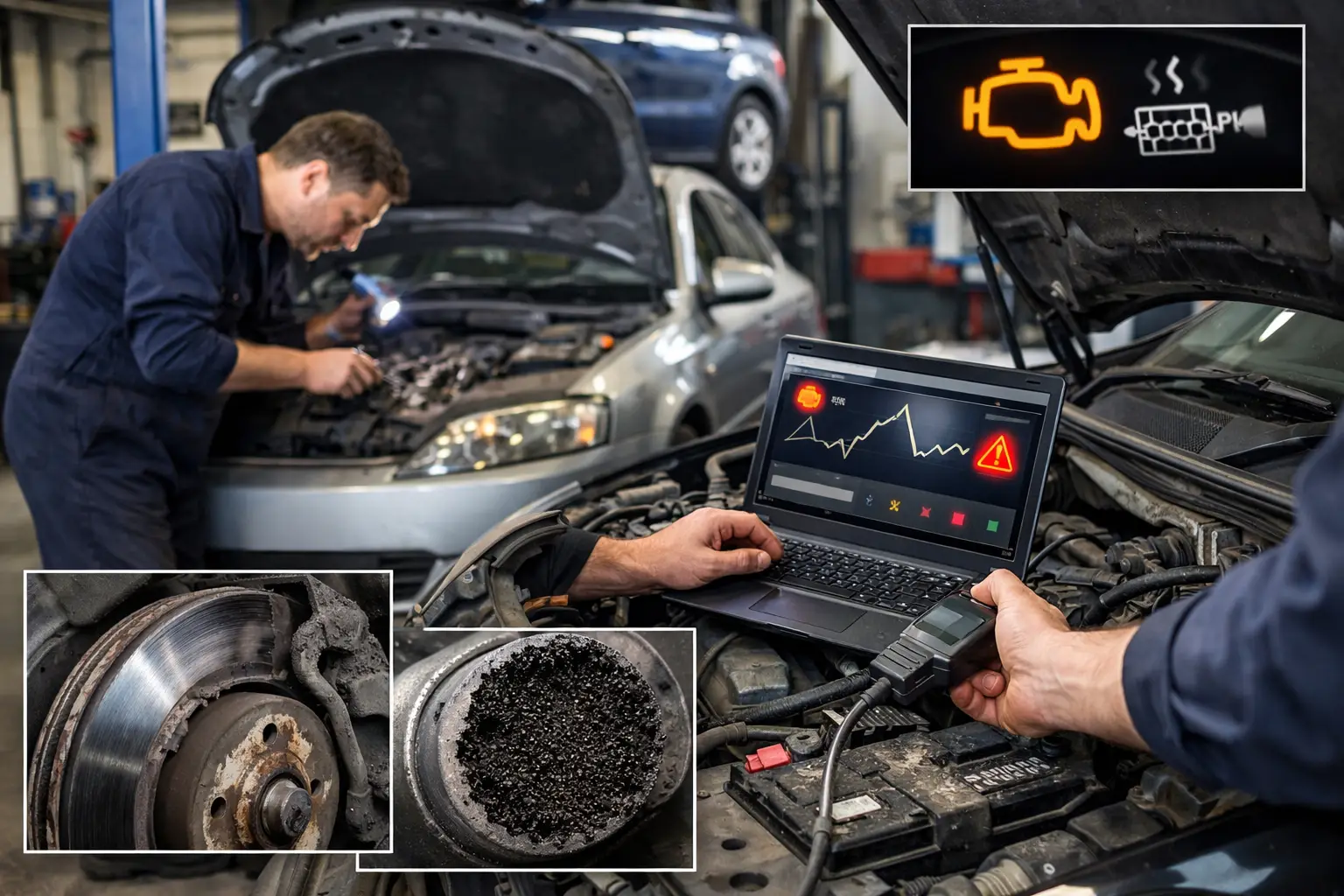
The symptoms vary, but a few faults come up again and again. Warning lights are the obvious one. The engine warning light can be linked to emissions issues, ignition faults, fuel system problems or air intake issues. Sometimes the car still drives normally. Sometimes it feels rough, underpowered or hesitant.
Loss of power is another common reason people book engine diagnostics in Lowestoft. This usually happens because the engine management system has detected something wrong and is protecting the vehicle by reducing performance. You may hear this called limp mode. In real terms, it means the car struggles to accelerate and does not feel safe or practical for normal driving.
Non-start issues are also common. If the car turns over but will not fire, diagnostics can help narrow down whether the problem is linked to fuel delivery, crankshaft or camshaft sensors, immobiliser faults, battery voltage or electrical issues. If it does not turn over at all, the fault may be elsewhere, but the systems still need checking properly rather than guessing.
We also see vehicles with rough idling, misfires, excess smoke, poor fuel economy and repeated DPF warnings. These are all signs that something deeper is going on. The key is to catch it before the fault spreads and affects other components.
Why warning lights should not be ignored
Not every warning light means stop the car immediately. But ignoring it is rarely a good plan. A minor running fault can put extra strain on the engine, increase emissions and lead to failed MOT tests. On diesel vehicles, unresolved engine faults often trigger DPF problems because the car is no longer burning fuel cleanly enough to regenerate properly.
We often see this issue when a customer has driven for weeks with a warning light because the car still seemed usable. Then the DPF blocks, the car loses power, and what started as one manageable repair turns into a more involved job. That is not meant to alarm you. It is simply the reality of how one untreated fault can lead to another.
If the engine warning light is flashing, the car is misfiring badly, or there is a major loss of power, it is best not to keep driving unless you have no safe alternative. Continued use can make things worse very quickly.
Engine diagnostics Lowestoft motorists need when time matters
Most people are not booking diagnostics because they enjoy dealing with car problems. They need a fast answer so they can plan the rest of the day. That is why speed matters, but speed without proper testing is not much use.
A good diagnostic process should give you clarity. What fault has been found? What is likely causing it? Is the vehicle safe to drive? What needs doing now, and what can wait if necessary? Those are the questions most drivers actually want answered.
In many cases, the fault can be identified on the same day and the repair can be carried out quickly if parts are available. That is especially useful when the vehicle is your only way of getting to work, collecting the children or keeping up with everyday life around Lowestoft, Oulton Broad, Carlton Colville or the nearby villages.
What happens during a proper diagnosis
The first step is listening to the symptoms properly. That sounds basic, but it matters. When did the fault start? Does it happen cold, hot, under load or at motorway speed? Has any recent work been done on the car? A short conversation often helps narrow things down before any tools are used.
Next comes the scan and system checks. Fault codes are read, live data is reviewed and the technician looks for patterns that match the customer complaint. After that, further testing may be needed. This could include checking wiring, battery condition, boost pressure, fuel pressure, sensor signals or smoke-testing for air leaks.
That extra step is what separates fault finding from guesswork. You are not just paying for a machine to produce a code. You are paying for someone to interpret the results properly and trace the root cause.
Once the cause is clear, the repair options can be explained in plain English. If the issue is straightforward, the fix may be immediate. If more work is needed, you should know why, what is involved and what the likely outcome will be.
It is not always the engine itself
One thing that catches people out is that engine diagnostics does not always point to a major internal engine problem. In fact, many faults come from supporting systems. A failing battery can upset electronics. Damaged wiring can trigger false readings. A blocked DPF can affect performance. Air intake or EGR issues can cause rough running and warning lights.
That is why replacing parts based on internet advice can be expensive. We often see cars that have already had a sensor, coil pack or battery fitted elsewhere, only for the original fault to remain because the root cause was never confirmed.
Sometimes the cheapest route is not the quickest one. A proper diagnosis at the start often avoids paying twice.
Local drivers need clear answers, not jargon
If your car is playing up, you do not need a lecture. You need someone to tell you what is wrong, whether it is urgent, and what the sensible next step is. That is especially true if the issue has appeared out of the blue and you are already dealing with the stress of being without your car.
A straightforward garage will explain the problem clearly. If the repair is worth doing, they should tell you why. If there are options, they should explain the trade-offs. Some faults need immediate attention because they affect safety or risk further damage. Others can be monitored briefly while parts are ordered or you plan the repair. Honest advice matters.
For local motorists, that practical approach is often the difference between getting back on the road quickly and losing days to uncertainty.
When to book engine diagnostics
If the engine warning light is on, the car has lost power, it is struggling to start, or it is running rough, book diagnostics sooner rather than later. The same applies if your car has failed its MOT on emissions or has repeated DPF problems. Even if the fault seems to come and go, intermittent issues usually become more frequent over time.
AutoFix4u helps drivers in Lowestoft and nearby areas find the real cause of engine faults without the usual runaround. Same-day slots may be available, depending on workload and the type of fault. You will get clear advice, transparent pricing and a practical repair plan.
If your car is showing warning lights or not driving as it should, get it checked before it leaves you stranded. A proper diagnosis now is usually easier than dealing with a bigger repair later.


4 thoughts on “Engine Diagnostics Lowestoft Drivers Trust”