Exhaust Repair Lowestoft – Signs to Act On
That louder engine note on the school run or the rattle you only hear when pulling away usually is not your imagination. When people search for exhaust repair Lowestoft, it is often because the car has suddenly become noisier, started smelling odd, failed an MOT, or just does not feel right. In most cases, the problem starts small, but if you leave it, it can turn into a bigger repair and sometimes a breakdown.
Your exhaust does more than carry fumes away from the engine. It helps manage noise, emissions and engine performance. If part of the system splits, rusts through or comes loose, you can end up with poor running, fumes under the car, warning lights or a failed emissions test. That is why it is worth getting it checked early rather than hoping it settles down on its own.
Common reasons drivers need exhaust repair in Lowestoft
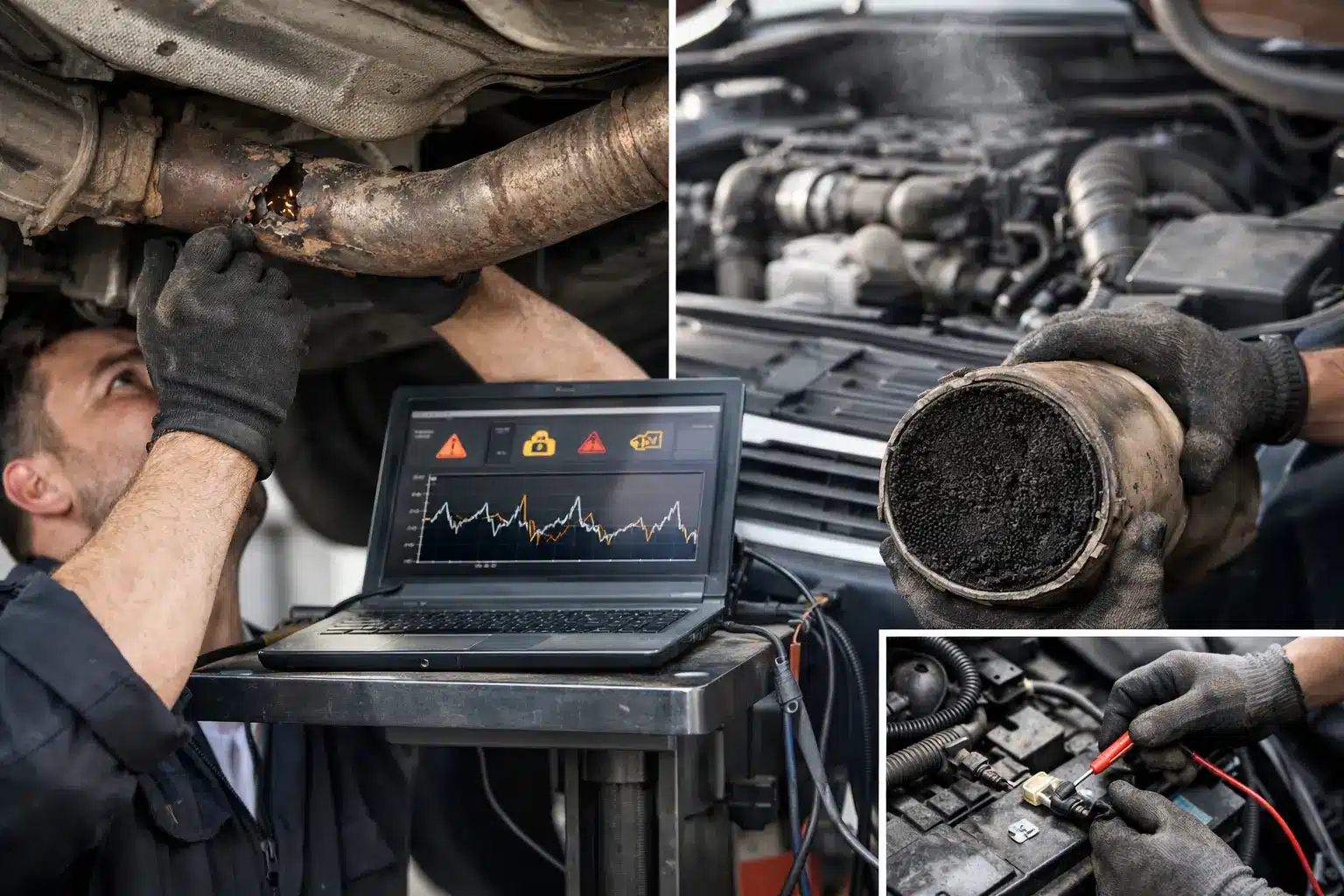
We often see exhaust faults after a driver has noticed a change in noise first. A blowing sound, a deeper rumble than normal, or a metallic rattle is usually the first clue. This usually happens because a joint has started leaking, a bracket has broken, or the metal has corroded around the silencer or centre section.
Short local trips can make exhaust wear worse. If the car rarely gets a proper run, condensation sits inside the system and rust builds up from the inside out. Speed bumps, rough road surfaces and kerb strikes can also damage mountings or knock sections out of place. Around coastal areas, road salt and damp conditions do not help either.
Sometimes the issue is obvious. You might hear a loud blow from underneath and know something has gone. Other times it is less clear. The engine warning light may come on because an exhaust leak is affecting sensor readings. A problem with the catalytic converter or a damaged flexi pipe can also cause running issues that feel like something else.
Signs your exhaust needs attention
A noisy exhaust is the one most drivers spot straight away, but it is not the only sign. If you can smell exhaust fumes in or around the car, get it looked at as soon as possible. Fumes should never be entering the cabin area, and even if the smell is faint, it needs checking properly.
Rattling underneath the vehicle is another common complaint. In most cases, that is a loose heat shield, a broken mounting, or a section of the exhaust moving more than it should. Sometimes the repair is straightforward. Sometimes the movement has cracked another part of the system, so it needs a proper inspection rather than a guess.
You may also notice reduced fuel economy or the car feeling flat when accelerating. This usually happens because the exhaust flow is not right, or because a blocked catalytic converter is creating back pressure. If a warning light has appeared at the same time, diagnostics are often the best next step so the fault is identified properly rather than replacing parts unnecessarily.
What causes exhaust problems?
Rust is still one of the biggest causes. Exhaust systems live underneath the car, deal with heat and moisture every day, and are exposed to road grime all year round. Over time, joints weaken, clamps fail and pipes thin out.
Wear and tear is only part of it, though. We often see this issue when a vehicle has been driven with worn engine mounts or damaged suspension parts. Extra movement can put strain on the exhaust and break hangers or flexi sections. That is why a good garage should check what caused the failure, not just swap the broken bit and send you away.
MOT failures often bring exhaust issues to light as well. A small leak, insecure mounting or emissions problem may not seem urgent when you are still using the car every day, but it becomes urgent once the vehicle is due for test or has already failed. In those cases, speed matters, but so does accuracy. The right repair depends on which section has failed and whether the rest of the system is still sound.
Repair or replace – what is the right fix?
It depends on the condition of the exhaust as a whole. If one clamp has failed or a mounting has come away, a targeted repair may be all that is needed. If the silencer or pipework has rusted through in one place but the surrounding sections are still solid, replacing just that section can make sense and keep the repair cost sensible.
If the corrosion is widespread, patch repairs usually become false economy. You fix one part, then another weak section gives way a few weeks later. The same applies if the catalytic converter has broken up internally or the flexi pipe is badly split. In those cases, replacement is normally the more reliable option.
This is where a straight answer matters. A proper inspection should tell you whether the problem is isolated or whether the whole system is reaching the end of its life. You do not need guessing. You need a clear repair plan, an honest explanation and a fix that lasts.
Why exhaust faults should not be ignored
Some drivers put up with a noisy exhaust for longer than they should because the car still starts and drives. The risk is that small leaks often get worse quickly. What begins as a minor blow can turn into a major split, especially if the system is already weak with rust.
There is also the safety side. If fumes are leaking underneath, they can find their way into the cabin, particularly when the vehicle is stationary or driving slowly. Then there is the legal and MOT side. A damaged or excessively noisy exhaust can lead to a test failure, and emissions faults linked to the catalytic converter or sensors can do the same.
Performance can suffer too. Modern vehicles rely on accurate sensor readings to manage fuel and emissions. If the exhaust system is leaking or blocked, those readings can be thrown off. That can mean warning lights, rough running or poor fuel consumption. In most cases, the longer it is left, the more likely it is to affect other parts.
What to expect from a local exhaust repair service
If you need exhaust repair Lowestoft drivers can rely on, the process should be simple. The first step is identifying where the fault is and what has caused it. That means getting the car up, checking the full system, inspecting mountings, joints and heat shields, and looking for signs that the problem may involve sensors or emissions components too.
After that, you should get a plain English explanation. Not a vague comment about needing a new exhaust, but a clear breakdown of what is damaged, what can be repaired, and what should be replaced. If there is more than one option, the trade-off should be explained properly. A smaller repair may get you back on the road, while a larger replacement may last longer and save repeat visits.
For busy drivers around Lowestoft, Oulton Broad, Carlton Colville, Kessingland and nearby areas, speed matters as well. If the part is available and the damage is straightforward, same-day repair is often possible. If it needs more than an exhaust section because there is also an engine warning light or emissions issue, that should be flagged early so there are no surprises.
When diagnostics matter with exhaust faults
Not every exhaust problem is just a hole in a pipe. If the engine warning light is on, the car is in limp mode, or the fault came on after another repair, diagnostics may be needed before any parts are fitted. We often see this when a leak has affected oxygen sensor readings, or when a catalytic converter issue is being mistaken for a general exhaust problem.
This matters because replacing parts based on noise alone can miss the real cause. A car with poor acceleration and an emissions fault may need more than a back box. A blocked catalytic converter, failed sensor or related engine issue can produce similar symptoms. The best approach is always to confirm the fault first and then repair what is actually causing it.
That diagnostic-first approach saves time and wasted money. It also gives you a better chance of fixing the issue properly the first time.
Book exhaust repair before it gets worse
If your car has become louder, started rattling underneath, smells of fumes, or failed on emissions, do not leave it to chance. Exhaust problems rarely fix themselves, and they usually get more expensive once the damage spreads.
A local garage should be able to tell you quickly whether it is a simple repair or something more involved. AutoFix4u handles exhaust faults the same way as any other repair – find the cause, explain it clearly, and fix it properly with no surprise extras. If you need an answer fast, call now, get a quote, and get the car checked before a small exhaust problem turns into a bigger one.
If something sounds different, feels off, or smells wrong, trust that instinct and get it looked at.


One thought on “Exhaust Repair Lowestoft – Signs to Act On”