7 Signs Your Brake Pads and Discs Need Replacing
That light grinding noise when you slow down at a roundabout is not one to ignore. Brakes rarely fail without warning first. Most cars give you a few clear signs that the pads, the discs, or both are wearing out.
If you know what to look and listen for, you can deal with the problem before it turns into a longer repair, an MOT issue, or a genuine safety risk. Some symptoms are obvious. Others can feel like tyre, suspension or wheel problems at first. That is why a proper check matters.
The most common brake pads and discs replacement signs
When people search for brake pads and discs replacement signs, they are usually noticing a change in how the car feels under braking. It might be a squeal, a vibration through the pedal, or the car taking longer to stop than usual. Those changes should never be shrugged off.
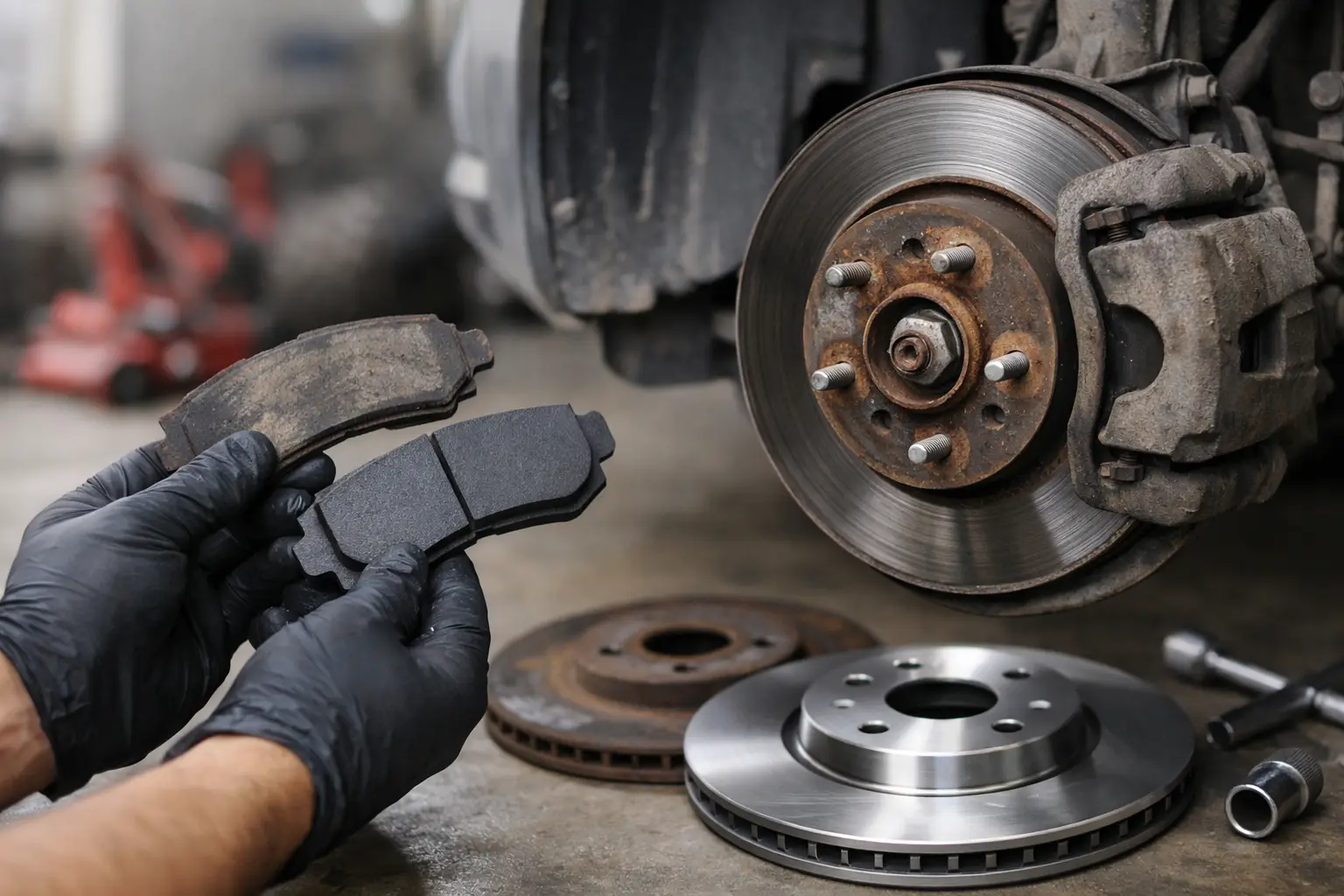
Brake pads are designed to wear down over time. They press against the discs to slow the car. As the friction material gets thinner, stopping performance drops and noise often starts. Discs wear too. They can become scored, lipped, thin or heat-damaged, especially if worn pads have been left too long.
The key point is simple – pads and discs do not always wear at the same rate, and not every symptom means both parts need replacing. Sometimes it is a straightforward pad change. Sometimes the discs are already below the safe limit and need doing at the same time. It depends on wear levels, damage and how long the issue has been left.
1. Squeaking or squealing when braking
A high-pitched squeal is often the first warning. In many cases, it means the pads are getting low. Some pads have a wear indicator that makes this noise on purpose to tell you they are near the end of their life.
That said, not every squeak means immediate replacement. Brakes can make noise in damp weather, after standing overnight, or if there is surface rust on the discs. The difference is persistence. If the noise keeps coming back, especially once the car is warm and dry, book it in.
2. Grinding noise
Grinding is more serious. It can mean the pad material has worn away so far that metal is contacting the disc. Once that happens, disc damage is likely. What could have been a simpler repair can quickly turn into pads and discs together.
If your brakes are grinding, do not keep driving and hope it settles down. Get it checked as soon as possible.
3. Longer stopping distances
If the car no longer feels sharp when you brake, that matters. You may have to press harder than before, or the car may take longer to come to a complete stop in traffic. Worn pads are a common cause, but poor brake response can also point to contaminated parts, overheated brakes, fluid issues or a sticking caliper.
This is where guessing can cost you. The symptom is clear, but the root cause still needs checking properly.
4. Vibration through the pedal or steering wheel
A shaky brake pedal or steering wheel when slowing down often points to disc problems. The discs may be unevenly worn, heat-spotted or warped. Drivers usually notice this more at higher speeds, such as braking on a dual carriageway.
Vibration is not something to leave until your next service. It affects braking consistency and can make the car feel unsettled under pressure.
5. Visible lip or scoring on the discs
You do not need to be a mechanic to spot obvious disc wear. If you can see deep grooves, heavy scoring, rust build-up or a pronounced outer lip on the disc, it is time for a check. A worn lip usually means the disc surface has been thinning with use.
Discs also have a minimum thickness set by the manufacturer. Once they are at or below that limit, they need replacing, even if they still look usable at a glance.
6. The car pulls to one side under braking
If the car pulls left or right when you brake, one side may not be working as it should. That can happen with uneven pad wear, a sticking caliper or a brake fault on one corner. It is not always just pads and discs, but it is absolutely one of the warning signs drivers notice first.
Because this affects control as well as stopping distance, it is worth treating as urgent.
7. Brake warning light or low pad alert
Some vehicles have dashboard warnings for brake wear. Others only show a general brake warning, which can relate to several faults. Either way, warning lights should be checked, not ignored.
A light on the dash does not tell you the full story. It tells you there is a reason to inspect the system properly.
How to tell if it is the pads, the discs, or both
This is where many drivers get stuck. Pads are wear items, so they often need replacing first. But if they have been run too low, the discs may already be damaged. Fitting new pads to badly worn discs is false economy. The new pads may not bed in properly, braking can stay poor, and the parts may wear unevenly.
On the other hand, replacing discs that are still within spec and in good condition is not always necessary. A good garage will measure, inspect and explain what actually needs doing. That matters if you want safe repairs without paying for parts you do not need.
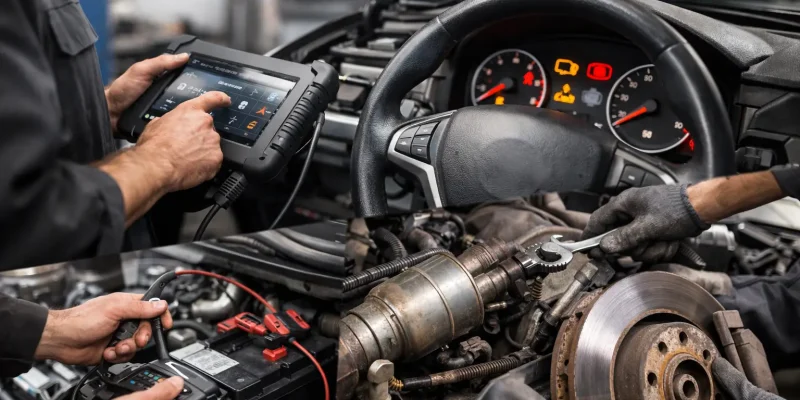
A proper brake inspection usually looks at pad thickness, disc condition, wear pattern, caliper movement and any signs of overheating or contamination. It is not just about whether there is some friction material left.
Brake pads and discs replacement signs you should never ignore
Some symptoms move the issue from inconvenient to unsafe. Grinding noises, severe vibration, a soft pedal, a car pulling under braking, or a warning light paired with poor stopping performance all need prompt attention.
There is also the MOT angle. Worn brakes can lead to advisories or failures, but the bigger concern is what happens before test day. If your daily driving includes school runs, commuting or carrying family members, worn brakes are not something to push back another few weeks.
Short trips, stop-start traffic and heavier loads can all speed up wear. So can driving style. There is no perfect mileage point where every car needs pads or discs. One driver may need front pads far sooner than another using the same model.
What happens during a brake inspection
A decent inspection should be straightforward and clearly explained. The wheels may need to come off for an accurate view of pad thickness and disc condition. The technician should also check for uneven wear, seized components, fluid leaks and anything else that could be causing the symptom.
From there, the next step should be clear. If the pads are low but the discs are still serviceable, that should be explained. If the discs are damaged or below limit, that should be shown and measured. No vague upselling. No surprise extras.
That is especially important with brakes because symptoms can overlap. What feels like worn pads could be a sticking caliper. What sounds like disc wear could be debris or corrosion. You want the actual fault fixed, not a guess.
When to book a brake check
If you have noticed any of the signs above more than once, book it in. Do not wait for the noise to get louder or for the braking to get worse. Brakes almost always cost less and cause less disruption when caught earlier.
For local drivers around Lowestoft, AutoFix4u checks brake faults properly and explains what needs doing in plain English. Clear quotes. Quality parts. No hidden costs. If same-day slots are available, that can make the difference between a quick repair and being off the road longer than expected.
If your car is squealing, grinding, vibrating or simply not stopping as it should, trust that instinct. Brakes are one of those jobs where acting early usually gives you more options, better value and a safer car to drive home in.


One thought on “7 Signs Your Brake Pads and Discs Need Replacing”