Tyre Fitting in Lowestoft for Safer Daily Driving
A tyre can look fine while causing a problem. We often see cars come in after an MOT advisory, a slow puncture, or a driver noticing the steering pulling to one side on the school run or commute. By then, the tyre may be worn unevenly, damaged internally or running at the wrong pressure.
Proper tyre fitting is not simply a case of putting a new tyre on the wheel. It is about fitting the right tyre safely, checking what caused the old one to wear out, and making sure the car feels stable when you leave the garage. For drivers around Lowestoft, that matters when your car is needed every day.
When do you need tyre fitting?
The obvious answer is when you have a flat tyre. But many tyre problems build up slowly, and catching them early can prevent a roadside breakdown or an MOT failure.
If the tread is getting close to the legal limit, the tyre needs attention. The legal minimum is 1.6mm across the central three-quarters of the tread, around the full circumference. In real driving conditions, especially wet roads, it is sensible not to wait until the last possible moment. A tyre with low tread has less grip and takes longer to clear water from the road.
Bulges, cuts and cracks in the sidewall are another reason to stop and get the tyre checked. A sidewall bulge usually means the internal structure has been damaged, often after hitting a kerb or pothole. It cannot be repaired safely. The same applies if the tyre has been driven flat, even for a short distance. The outside may reinflate, but the inside could already be damaged.
We also regularly see tyres that are wearing more on one edge than the other. This usually happens because the wheel alignment is out, suspension parts are worn, or tyre pressures have been neglected. Replacing the tyre without checking the cause can mean the new one wears out far sooner than it should.
Tyre fitting is more than changing a tyre
A safe fitting starts with checking the tyre size, load rating and speed rating specified for your vehicle. These details are on the tyre sidewall and in the vehicle handbook. They are not just numbers. The wrong rating can affect handling, safety and insurance requirements.
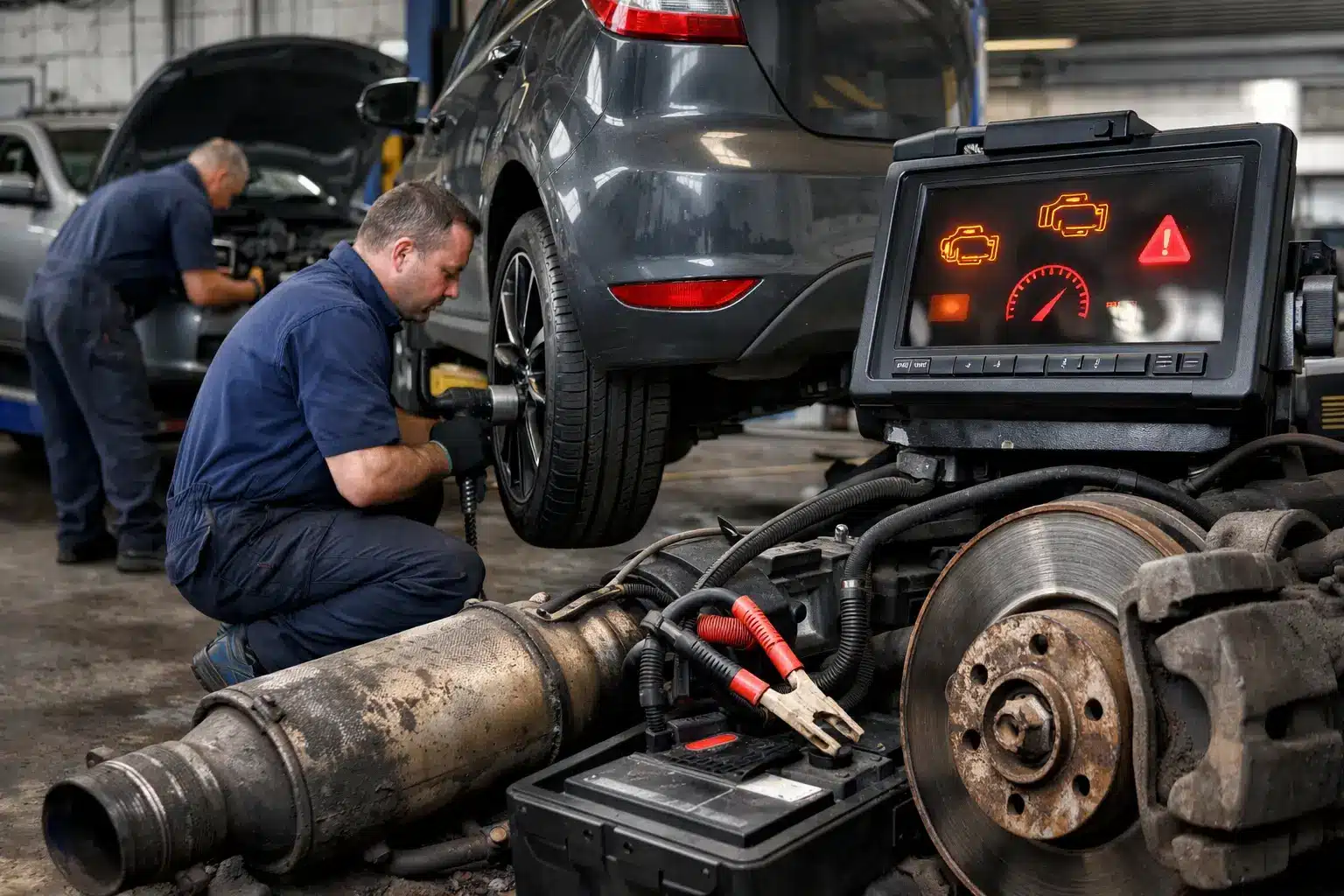
The old tyre is removed from the wheel carefully, and the wheel itself is inspected. Corrosion around the rim can cause a slow air leak. A bent wheel can create vibration or stop the new tyre sealing properly. If there is an issue, it is better to explain it before the tyre is fitted than send you away with a problem still there.
The new tyre is then fitted, inflated to the correct pressure and balanced. Wheel balancing is what stops a steering wheel shake, often most noticeable at motorway speed. Small weights are fitted to balance the wheel and tyre assembly properly. If your steering has started vibrating at 50 to 70mph, an out-of-balance wheel is one possible cause, although damaged tyres, worn suspension or wheel damage can also be involved.
Finally, the wheel bolts are tightened to the correct setting. It sounds basic, but it is a safety-critical part of the job. At AutoFix4u, we treat every tyre job as part of the wider condition of the car, not as a quick transaction.
Choosing the right tyres for your driving
The right tyre depends on the vehicle and how you use it. A car doing short local trips will have different needs from one that covers regular motorway miles or carries a full family and luggage most weekends.
Budget tyres can be suitable for some vehicles and driving patterns, while premium tyres may offer better wet grip, reduced road noise and longer wear. There is no one answer that suits everyone. The important thing is that the tyre meets the correct specification and gives you confidence in the conditions you drive in.
We will explain the available options in plain English, including the difference in tyre labels and expected use. You get clear pricing and honest recommendations, without being pushed into a tyre that does not suit your car or budget.
Uneven tyre wear needs a proper check
A new tyre should wear evenly. If it does not, something may be wrong elsewhere.
Wear on the inside or outside edge often points to wheel alignment. This can happen after a pothole strike, clipping a kerb or general wear in steering and suspension components. If the car pulls left or right on a level road, or the steering wheel is no longer straight when driving ahead, it is worth having it checked.
Cupped or patchy wear can be linked to worn shock absorbers, loose suspension parts or a wheel balance issue. Wear through the centre of the tread can mean the tyre has been overinflated, while wear on both outer edges can mean it has been underinflated.
In most cases, fitting a replacement tyre is only part of the solution. We will look for the reason behind the wear and advise what needs doing now and what can be monitored. That approach helps avoid repeat costs and gives you a safer car.
Can a puncture be repaired?
Sometimes, yes. A simple puncture in the central tread area may be repairable if the tyre has not been driven while flat and the damage meets repair standards. A nail or screw is a common example.
However, punctures close to the sidewall cannot usually be repaired safely. Nor can tyres with a split sidewall, a bulge, exposed cords or internal damage from running with no pressure. A repair may seem like the lower-cost option, but only if it is safe and likely to last.
If your tyre is losing pressure repeatedly, do not keep topping it up and hoping for the best. It could be a puncture, a leaking valve or corrosion around the wheel rim. Bring it in for an inspection before it leaves you stranded.
What to do when you get a tyre warning light
A tyre pressure monitoring system warning light means one or more tyres may be low on pressure. Check all four tyres as soon as it is safe to do so, rather than assuming it is a sensor fault. Look for visible damage, screws or nails, and listen for air escaping.
If the tyre is visibly flat, has a bulge or is damaged, do not drive on it. Use the spare wheel if your vehicle has one and you can fit it safely, or arrange recovery support. Driving on a deflated tyre can ruin the tyre and may damage the wheel as well.
If pressures look normal but the warning light stays on, the system may need resetting after the pressures are corrected. Some vehicles require a reset through the dashboard menu. If the warning remains, we can check the tyre condition and investigate whether there is a sensor issue.
Tyre fitting before an MOT
Tyres are a common MOT failure point because they are easy to inspect and directly affect road safety. Low tread, visible cords, serious cuts, bulges and unsuitable tyres on the same axle can all cause problems.
If you have an MOT due soon, do not wait for the test to find out whether your tyres are legal. A quick check beforehand gives you time to deal with any issue properly. It also gives us a chance to spot related faults, such as worn brakes, suspension knocks or alignment concerns that may have contributed to tyre wear.
For vehicles with four-wheel drive, matching tyre sizes and keeping tread depths reasonably close can be especially important. Significant differences between tyres can put unnecessary strain on the drivetrain on some systems. If you are unsure, ask before replacing just one tyre.
Book a tyre check before a small issue becomes a breakdown
A slow puncture, steering vibration or worn tread rarely improves on its own. If something does not feel right, arrange a tyre inspection and get a clear answer. We provide tyre fitting, puncture checks and practical advice for drivers in Lowestoft and nearby areas, with same-day slots available where possible.
Call AutoFix4u for a quote or to book in. We will check the problem, explain the options clearly and help get your car safe and back on the road.


