You are slowing for a roundabout or coming down the A12 and the steering wheel starts shaking. It is easy to assume the brakes are to blame, especially if it feels worse as you press the pedal. But brake judder versus wheel vibration is not always a straightforward call. The key is usually when the vibration starts, where you feel it and whether it continues once you release the brake pedal.
Getting that distinction right can prevent unnecessary parts being fitted. It also matters for safety. A mild vibration can turn into longer stopping distances, uneven tyre wear or a more serious braking fault if it is left unchecked.
Brake judder versus wheel vibration: spot the difference
Brake judder normally appears only when you apply the brakes. You may feel a pulsing through the brake pedal, a shake through the steering wheel, or a vibration through the seat and floor. It is often most noticeable when braking from motorway or dual-carriageway speeds, although it can be present at lower speeds too.
Wheel vibration is more likely to happen while driving at a certain speed, whether you are braking or not. A common example is a steering wheel that shakes at around 50 to 70 mph, then settles down again as speed changes. If the vibration remains exactly the same after you lift off the brakes, look beyond the brake discs first.
There is some overlap. A wheel or tyre problem can feel more obvious under braking because weight shifts towards the front of the car. Equally, a brake issue at the rear may be felt more through the seat than through the steering wheel. That is why a proper inspection is better than replacing discs or tyres based on one symptom alone.
Signs the brakes are more likely involved
Brake judder may come with a brake pedal that pulses under your foot. The car may pull slightly to one side, especially if a caliper is sticking or one brake is not applying evenly. You might also notice a hot smell after a journey, reduced braking confidence, squealing, grinding or a warning light.
A vibration that starts the moment you brake and disappears when you release the pedal points more strongly towards the braking system. Do not ignore grinding noises or a pedal that feels unusually soft, as those need checking promptly.
Signs it may be a wheel, tyre or suspension issue
A vibration through the steering wheel at a steady speed often points to a front wheel or tyre issue. Missing wheel-balance weights, a bent alloy wheel, a damaged tyre or uneven tyre wear can all cause this. A vibration through the seat can sometimes suggest a rear wheel or tyre issue instead.
Look at the tyres when the car is parked safely. Bulges, cuts, exposed cords, flat spots and visibly uneven tread are reasons not to keep driving until the tyre has been assessed. Low or uneven tyre pressures can also make a vibration more noticeable, although pressure alone is not usually the whole cause.
Suspension and steering wear can add to the problem. Worn bushes, ball joints, track-rod ends or wheel bearings may allow a wheel to move more than it should. In some cases, you may hear a knock over bumps or notice vague steering alongside the vibration.
What can cause brake judder?
The usual cause is uneven braking surfaces. Brake discs need to run true and have a consistent surface for the pads to grip smoothly. If the disc has excessive run-out, thickness variation or uneven pad material on its face, the pad can push back and forth as the wheel turns. That movement is felt as a pulse or shake.
People often describe this as “warped discs”. Heat can contribute to brake problems, particularly after repeated heavy braking, towing or descending steep hills. But discs are not always physically bent. Uneven deposits from brake pads, corrosion between the disc and wheel hub, or a disc fitted onto a dirty mounting face can create a similar sensation.
A sticking brake caliper is another possible cause. If a piston or slider does not move freely, one pad may remain in contact with the disc. This can overheat the brake, wear one pad faster and damage the disc surface. A binding brake may also leave a wheel unusually hot after a short drive, but do not touch the wheel or disc to check it – brakes can become hot enough to burn.
Loose or incorrectly tightened wheel bolts can also cause serious problems and should be checked immediately. This is less common, but any recent wheel removal, tyre fitting or brake work makes it worth considering.
What can cause wheel vibration without braking?
Wheel balancing is a common cause, but not the only one. Each wheel needs its weight distributed evenly around its centre. When balance weights fall off or a tyre is fitted without accurate balancing, the wheel can vibrate at particular road speeds. It may feel fine around town and then become obvious on faster roads.
A wheel can be bent after a pothole strike or kerb impact. Even a small distortion may produce a shake, especially with lower-profile tyres. Tyres can also develop internal damage that is not immediately obvious from the outside. A tyre with a shifted belt may look slightly out of shape as it turns and can cause a repetitive thump or vibration.
Uneven tyre wear is another clue. Feathered tread, cupping or wear concentrated on one edge can be caused by incorrect wheel alignment, worn suspension components or incorrect pressures. Fitting new tyres without addressing the reason they wore unevenly may only delay the same problem.
Sometimes the issue is not at the wheel itself. A worn driveshaft joint, wheel bearing or steering component can create vibration that changes when accelerating, turning or coasting. Those symptoms need diagnosis rather than a guess, because the repair depends on what is actually worn or damaged.
How a garage narrows it down
A sensible inspection starts with your description of the problem. It helps to say whether the shake happens only under braking, at a particular speed, after a pothole, when turning, or after recent tyre or brake work. Mention any pulling, noises, warning lights or burning smells too.
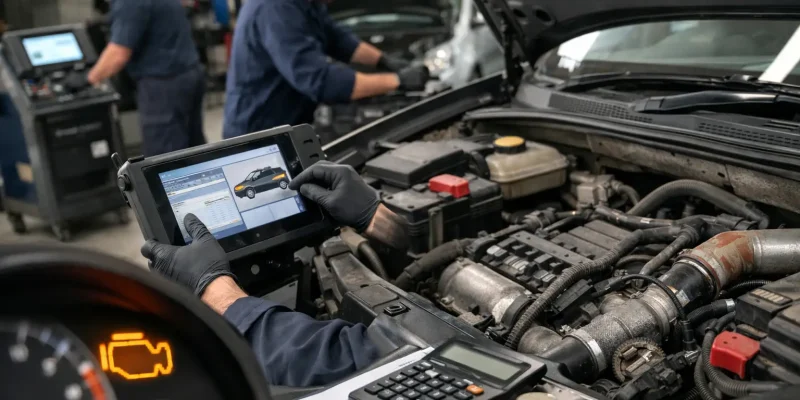
A mechanic will inspect tyre condition and pressures, check that wheels are secure, and look for missing balance weights or obvious wheel damage. They may check the wheels on a balancing machine and measure wheel or tyre run-out where needed.
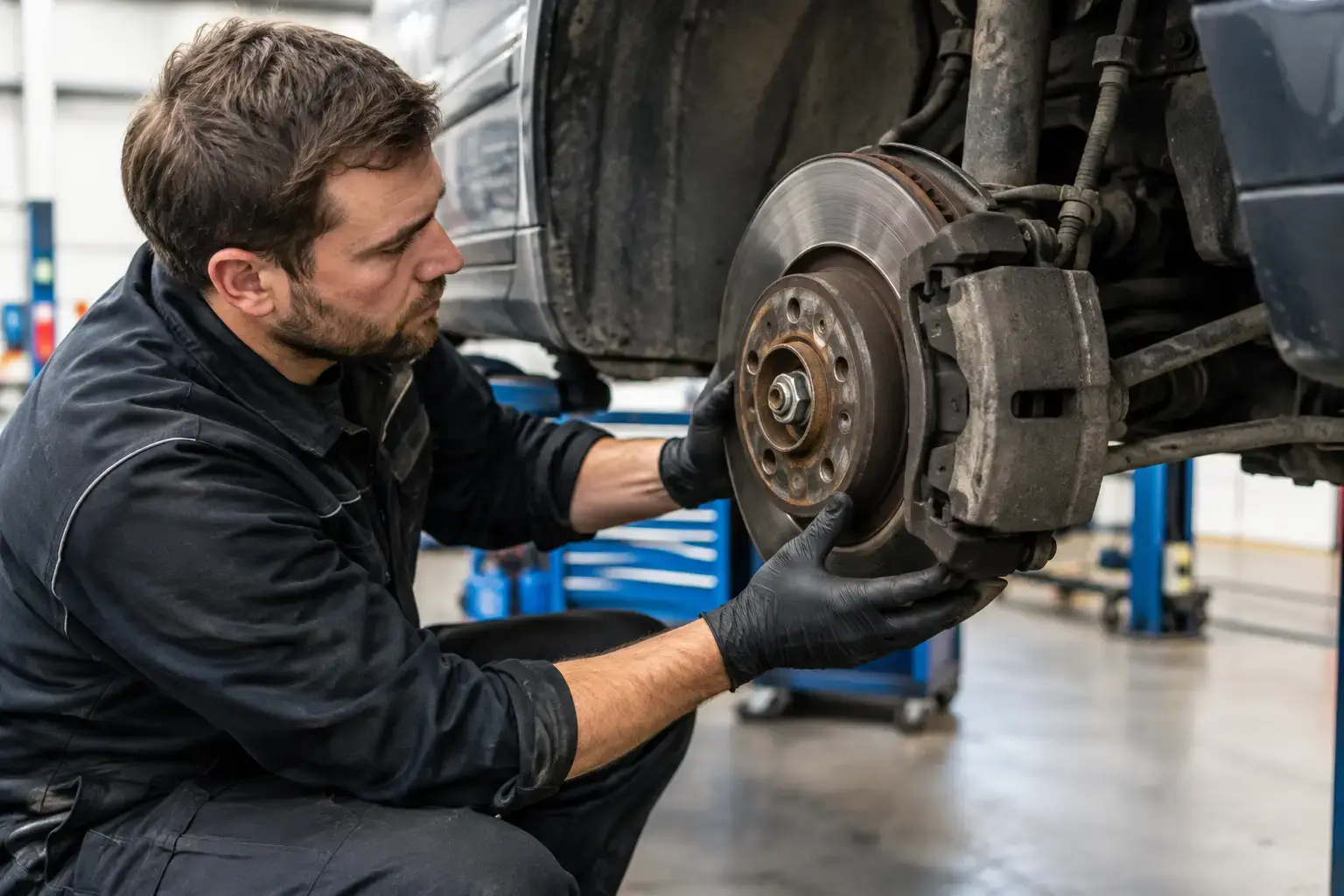
For suspected brake judder, the brake discs, pads and calipers need to be examined. This includes pad wear, caliper movement, disc condition and the mounting surfaces behind the discs. Measuring disc run-out and thickness variation can confirm whether the disc is within tolerance. Steering and suspension joints should also be checked, because worn parts can exaggerate a brake vibration.
This is additional diagnostic work, not something automatically covered by a routine service. A service may identify obvious wear, but intermittent vibration often needs targeted checks and, sometimes, a road test to reproduce it safely.
The right repair depends on the fault
If a wheel simply needs balancing, that is usually a focused job. A bent wheel may be repairable depending on its material and the damage, or it may need replacing. A damaged or distorted tyre should not be treated as a balancing problem – replacement is normally the safer option.
When brake discs are worn, damaged or out of tolerance, discs and pads are normally replaced together on the same axle. Reusing old pads on new discs can affect braking performance and shorten the life of the new parts. If a caliper is sticking, the cause must be addressed as well, otherwise the new discs and pads may soon suffer the same damage.
If worn suspension or steering parts are found, these should be repaired before wheel alignment is carried out. Alignment done with loose components will not hold accurately. The best route depends on the condition of the vehicle, not on a one-size-fits-all parts list.
When to stop driving and get it checked
Arrange an inspection soon if the vibration is mild but repeatable. It is worth doing before a longer journey, an MOT, or before uneven tyre wear becomes expensive. AutoFix4U can assess brake, tyre, wheel and suspension symptoms for drivers in Lowestoft and explain what has been found in plain English before recommending repairs.
Stop driving and seek help if the car pulls sharply under braking, the brake warning light comes on, you hear grinding, the pedal feels soft, a wheel is loose, a tyre has a bulge or damage, or the vibration is severe. These are not symptoms to test repeatedly on the road.
If you are unsure, make a note of the speed, road conditions and whether your foot was on the brake when it happened. That small detail often gives the inspection a useful starting point and helps get you back to quieter, more confident driving.