Dashboard Warning Symbols: What to Do Next
A warning light appears while you drive through Lowestoft. Your car still runs normally, but the symbol on your dashboard makes you wonder what has gone wrong. Should you stop immediately or arrange a garage appointment?
Understanding dashboard warning symbols helps you make safer decisions. Some lights indicate serious faults. However, others simply remind you to check a system or arrange maintenance.
At AutoFix4u Garage Lowestoft, we help drivers investigate dashboard warnings and identify their causes. Therefore, knowing what each warning means can help you avoid unnecessary risks.
What do dashboard warning symbols mean?
Modern vehicles use dashboard warning symbols to communicate important information about different systems.
For example, your car monitors engine performance, oil pressure, braking, emissions and electrical components.
When a system detects a problem, the dashboard may display a warning light.
However, the exact meaning depends on the vehicle manufacturer and model.
Most vehicles use three main warning colour groups.
Red dashboard warning lights
Red lights usually indicate serious safety or mechanical concerns.
For example, low oil pressure can cause rapid engine damage.
Therefore, stop safely and follow the manufacturer’s instructions when a critical red warning appears.
Amber or yellow warning lights
Amber lights usually indicate faults that need attention.
For example, an engine management warning may appear because of a sensor or emissions problem.
However, some amber warnings can also signal urgent faults.
Consequently, always consider the symbol and how your vehicle behaves.
Green, blue and white dashboard lights
These lights generally provide information about active vehicle features.
For example, a blue headlight symbol often indicates main beam operation.
Similarly, green symbols commonly show active indicators or lighting functions.
Nevertheless, check your owner’s manual because manufacturers use different symbols.
Red oil pressure warning light
The oil pressure warning usually looks like an oil can.
If this light appears while driving, your engine may have insufficient oil pressure.
Engine components need adequate lubrication to operate safely. Without it, friction and heat can cause serious damage.
Therefore, stop in a safe location and switch off the engine.
Do not restart the engine simply because the vehicle still appears to run normally.
A low oil level, faulty oil pump or another lubrication problem could cause the warning.
However, the symbol alone cannot confirm the exact fault.
Arrange professional assistance before continuing your journey.
Engine temperature warning light
An engine temperature warning commonly shows a thermometer above wavy lines.
This symbol can indicate excessive engine temperature.
For example, low coolant, a leaking hose or a faulty cooling component may cause overheating.
Additionally, cooling fan problems can affect temperature control.
If the warning appears, stop safely and switch off the engine.
Allow the engine to cool before any further inspection.
Importantly, never open a hot coolant reservoir or radiator cap. Pressurised coolant can cause serious burns.
If the vehicle overheats repeatedly, arrange mechanical checks before driving again.
Brake system warning light
The brake warning symbol often appears as an exclamation mark inside a circle.
Sometimes, the light simply indicates that the parking brake remains engaged.
However, a persistent warning may indicate low brake fluid or another braking system problem.
First, check whether you have fully released the parking brake.
If the warning remains, avoid further driving until you understand the cause.
Additionally, pay attention to changes in braking performance.
Common warning signs include:
- A soft brake pedal.
- Unusual grinding noises.
- Reduced braking performance.
- The vehicle pulling during braking.
- Brake fluid leaks.
These problems can affect vehicle safety.
Therefore, arrange a suitable brake inspection rather than ignoring the warning.
Learn more about our Brake Repair Lowestoft service.
Battery and charging system warning light
A battery-shaped dashboard symbol usually indicates a charging system problem.
However, the battery itself may not be faulty.
For example, a failing alternator can prevent the battery from charging while the engine runs.
Similarly, damaged wiring or a drive belt problem can interrupt charging.
You may also notice:
- Dimming headlights.
- Electrical equipment behaving unusually.
- Difficulty restarting the engine.
- Multiple dashboard warning lights.
- A battery that repeatedly loses charge.
If the charging warning appears while driving, stop safely and seek assistance.
Depending on the fault, the vehicle may lose electrical power and eventually stop running.
Therefore, proper battery and charging system tests help identify the cause.
Engine management light
The engine management light is among the most common dashboard warning symbols.
It usually resembles an engine outline.
Several faults can trigger this warning.
For example, a petrol engine may develop an ignition coil problem.
Meanwhile, diesel vehicles may experience emissions or sensor faults.
Other possible causes include:
- Air intake leaks.
- Fuel delivery problems.
- Faulty engine sensors.
- Ignition system faults.
- EGR valve problems.
- Exhaust emissions faults.
However, the warning does not identify one specific component.
Therefore, diagnostic testing helps narrow down the actual problem.
A steady engine warning may allow limited driving in certain circumstances. However, follow the manufacturer’s guidance and arrange an inspection promptly.
If the warning flashes, stop safely and seek assistance. A serious misfire may damage the catalytic converter.
Visit our Engine Diagnostics Lowestoft service for further information.
ABS warning light
The ABS warning symbol usually contains the letters ABS inside a circle.
This system helps prevent wheel lock during heavy braking.
When an ABS fault occurs, conventional braking may still operate. However, the anti-lock function may no longer provide assistance.
For example, a faulty wheel speed sensor can trigger the warning.
Other causes include damaged wiring or control system faults.
Therefore, arrange an inspection promptly.
If the ABS warning appears alongside a red brake warning, stop safely and seek professional advice.
Airbag warning light
An airbag warning commonly shows a seated person with a circular symbol in front.
This light can indicate a problem with the airbag or seatbelt pretensioner system.
For example, damaged wiring or faulty sensors may trigger the warning.
However, the exact cause requires diagnostic testing.
An illuminated airbag warning can mean that some safety equipment may not operate correctly during an accident.
Therefore, do not ignore the symbol simply because your car drives normally.
Arrange professional checks before the problem becomes a greater safety concern.
DPF warning light on diesel cars
Diesel vehicles use a diesel particulate filter to reduce soot emissions.
However, frequent short journeys can interrupt normal DPF regeneration.
Consequently, soot may accumulate and trigger a dashboard warning.
Drivers may also notice:
- Reduced engine performance.
- Higher fuel consumption.
- Repeated regeneration attempts.
- Engine warning lights.
- Limp mode.
- Unusual cooling fan activity.
However, a DPF warning does not automatically mean the filter needs replacing.
For example, faulty sensors or other engine problems may affect regeneration.
Therefore, proper diagnostics should identify the cause before a technician recommends regeneration or repairs.
Read our DPF Problems Guide to understand common symptoms.
Tyre pressure warning light
The tyre pressure monitoring system often uses a horseshoe-shaped symbol with an exclamation mark.
This warning may indicate low tyre pressure.
For example, a slow puncture can gradually reduce pressure without causing an obvious flat tyre.
Cold weather may also affect tyre pressure readings.
If the warning appears, stop somewhere safe and inspect your tyres.
Look for:
- Visible punctures.
- Sidewall damage.
- Uneven tyre pressure.
- Bulges or cuts.
- Tyres that appear noticeably deflated.
Next, check pressures against the vehicle manufacturer’s recommendations.
However, do not continue driving on a tyre with serious damage or significant pressure loss.
Traction control and stability warning symbols
A traction control warning often shows a vehicle with two curved skid marks.
When the symbol flashes briefly, the system may be helping control wheel slip.
However, a permanently illuminated warning can indicate a fault or an inactive system.
For example, wheel speed sensor problems can affect both ABS and stability control.
Therefore, check whether the system has been manually switched off.
If the warning remains, arrange diagnostic testing.
Can you drive with dashboard warning symbols showing?
The answer depends on the warning and your vehicle’s condition.
For example, a green headlight indicator usually requires no action.
However, a red oil pressure warning needs immediate attention.
Always stop safely if you notice:
- A critical oil pressure warning.
- Severe engine overheating.
- Serious braking problems.
- Heavy smoke.
- Significant engine knocking.
- A flashing engine warning.
- Sudden severe loss of power.
Additionally, follow the vehicle manufacturer’s instructions.
If you cannot confirm whether driving is safe, contact a garage before continuing.
Vehicle recovery may offer the safest option.
Why clearing dashboard warning lights is not enough
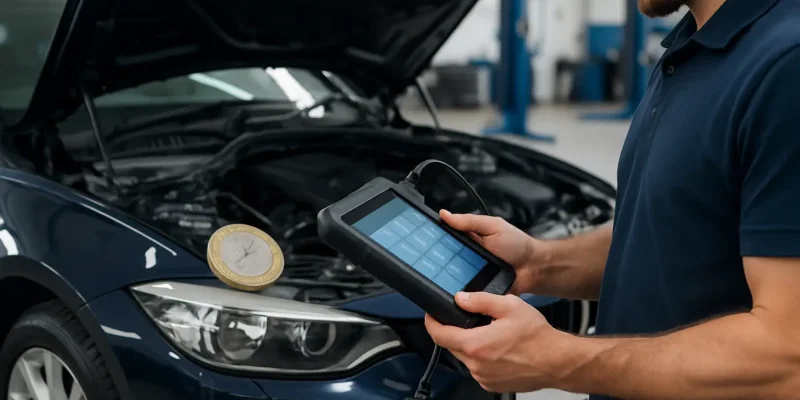
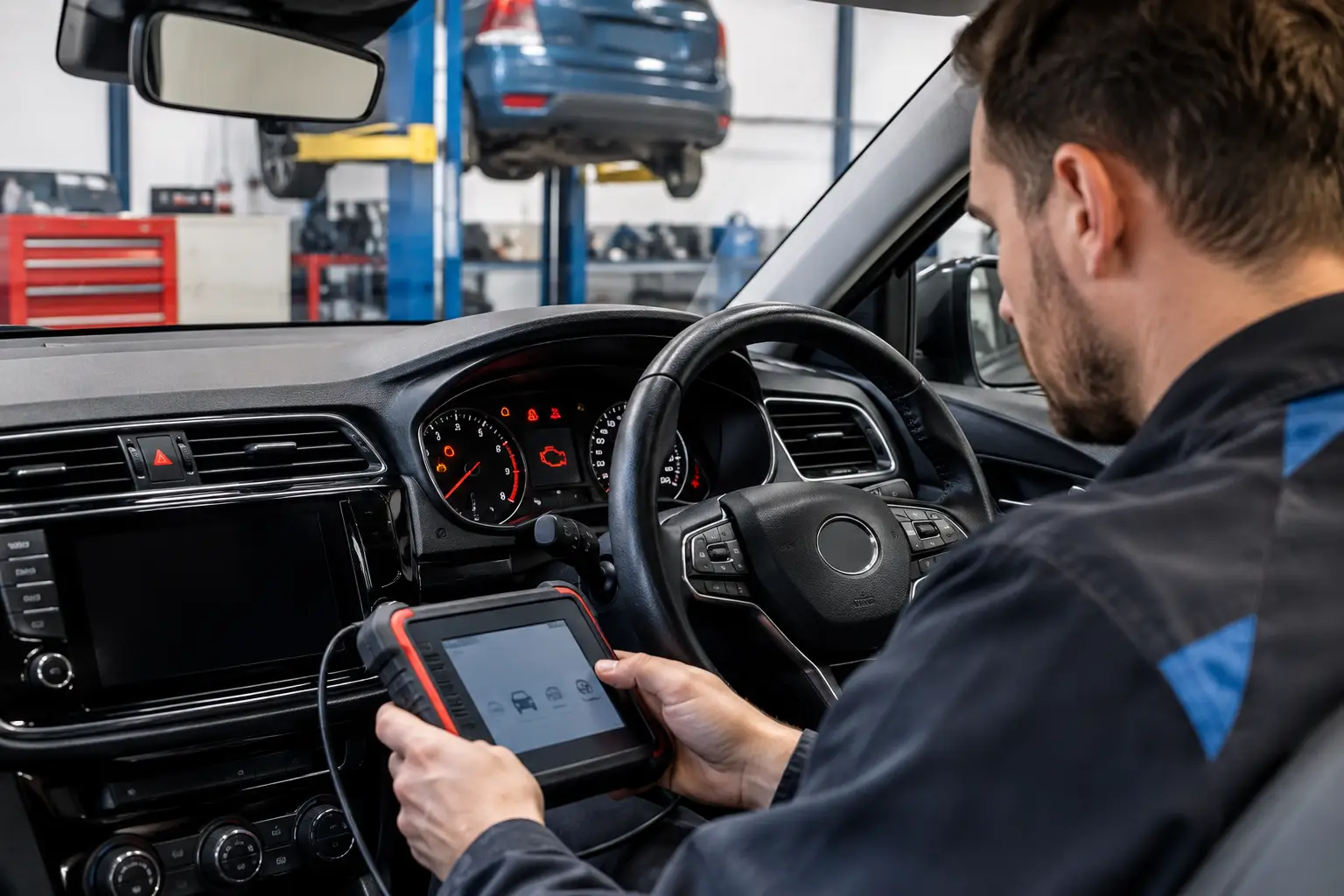
Many drivers use basic diagnostic scanners to clear warning lights.
However, removing a fault code does not repair the underlying problem.
For example, a faulty sensor may continue sending incorrect readings.
Similarly, an air leak can trigger the same warning after you clear the code.
Therefore, proper diagnosis involves more than reading and deleting fault information.
A technician may need to inspect:
- Stored diagnostic trouble codes.
- Live engine data.
- Electrical connections.
- Battery and charging voltage.
- Sensors and wiring.
- Mechanical components.
- Emissions system performance.
These checks help identify the likely cause.
At AutoFix4u Garage Lowestoft, we focus on investigating the fault before recommending repairs.
For more information, see our Warning Lights Check Lowestoft service.
Can dashboard warning lights cause an MOT failure?
Yes, certain dashboard warning lights can affect your MOT result.
For example, relevant ABS, airbag and engine malfunction warnings can cause failures under MOT testing rules.
However, not every illuminated dashboard symbol automatically results in a failure.
The outcome depends on the vehicle and the specific MOT requirements.
Therefore, arrange an inspection before test day if your car displays an unexplained warning.
Early diagnosis can help you identify faults and plan repairs.
Importantly, an MOT test does not replace routine vehicle servicing or mechanical diagnostics.
What should you do when a dashboard warning appears?
First, identify the warning symbol and its colour.
Next, check whether your car behaves normally.
Look for unusual noises, smoke, overheating or braking problems.
If a serious warning appears, stop safely and follow your vehicle manufacturer’s guidance.
For less urgent warnings, arrange a diagnostic appointment promptly.
Also, remember when the warning first appeared.
For example, did it happen during acceleration, after starting or during a long journey?
These details can help a technician investigate the problem.
Finally, avoid replacing components without confirming the cause.
A proper diagnostic process can save time and reduce unnecessary repair costs.
Dashboard warning symbols: frequently asked questions
What does a red dashboard warning light mean?
A red warning usually indicates a serious fault or safety concern. Stop safely and follow the manufacturer’s instructions.
Can I drive with an amber engine warning light?
Sometimes, limited driving may be possible. However, a flashing warning or unusual engine behaviour requires urgent attention.
Can a weak battery cause multiple dashboard warning lights?
Yes. Low voltage can affect several electronic systems. Therefore, battery and charging tests may help identify the problem.
Will clearing a fault code fix the warning light?
No. Clearing the code removes stored information but does not repair the fault.
Can AutoFix4u diagnose dashboard warning lights?
Yes. AutoFix4u Garage Lowestoft offers warning light checks and engine diagnostics. Contact the garage to discuss your symptoms and appointment availability.
Book a dashboard warning light check in Lowestoft
If your dashboard displays an unfamiliar warning symbol, contact AutoFix4u Garage Lowestoft.
We investigate engine management, ABS, battery, charging and other vehicle warning problems.
Additionally, we use diagnostic equipment and targeted checks to help identify the cause.
Our garage supports drivers from Lowestoft, Oulton Broad, Carlton Colville, Pakefield and surrounding areas.
We aim to explain the findings clearly and recommend suitable repair options.
Need help with dashboard warning symbols?
Call: 07778 979802
WhatsApp: Message AutoFix4u Garage Lowestoft
Request an estimate: Contact AutoFix4u Garage
Contact our garage to describe the warning symbol and any unusual vehicle behaviour.
Do not ignore important dashboard warnings. Early diagnosis can help prevent breakdowns and unnecessary repairs.