
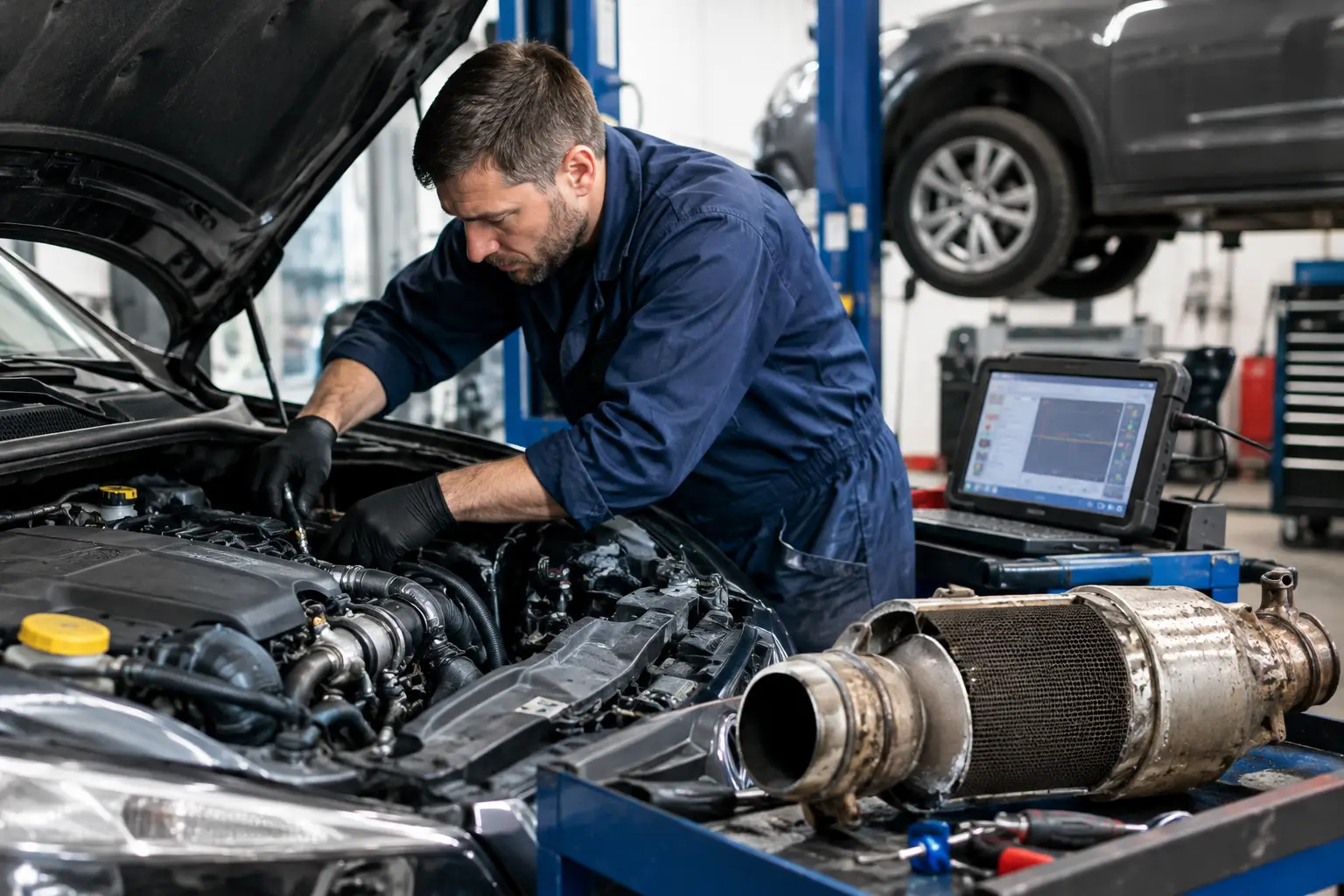
A diesel that suddenly loses power on the A12, brings up an engine warning light, or refuses to clear a DPF warning is rarely suffering from one simple problem. Modern diesel emissions systems work hard in the background to reduce harmful exhaust gases. When one part is not doing its job, the car may limit power to protect itself.
For most drivers, the priority is straightforward: find out what has failed, whether it is safe to drive, and get it fixed without replacing parts that do not need replacing. That is where proper diagnostics matter.
What modern diesel emissions systems actually do
Older diesel engines were known for smoke and soot. Modern diesels use several emissions-control systems to make exhaust gases much cleaner. These systems are effective, but they depend on sensors, correct driving conditions and regular maintenance.
The main components we see causing problems are the diesel particulate filter, usually called the DPF, the exhaust gas recirculation valve or EGR, and the AdBlue system fitted to many newer diesels. There are also pressure sensors, temperature sensors and NOx sensors monitoring what is happening in the exhaust.
Each part has a different job. The DPF collects soot, the EGR reduces certain emissions by returning a controlled amount of exhaust gas to the engine, and AdBlue helps reduce nitrogen oxides in the exhaust. If the engine management system sees a reading outside its expected range, it can switch on the engine warning light or put the vehicle into limp mode.
That does not automatically mean the most expensive part has failed. A warning can be caused by a blocked filter, a split hose, a sensor giving an incorrect reading, a wiring issue, or an underlying engine fault that is creating too much soot in the first place.
DPF problems: why short journeys catch drivers out
A DPF is designed to burn off collected soot during a process called regeneration. For this to happen properly, the engine and exhaust need to reach the right temperature for long enough. Regular short runs, school trips and stop-start town driving can prevent that process from completing.
We often see this issue when a driver has ignored an early DPF light because the car still seemed to run normally. As soot builds up, the vehicle may try to regenerate more often. Eventually, it may show reduced power, poor fuel economy, a strong smell from the exhaust, or a DPF warning that does not go away.
A longer run can sometimes help if the warning has only just appeared and the vehicle is otherwise running correctly. But it is not a cure for every DPF fault. If the filter is heavily blocked, if there is a sensor fault, or if the engine has another issue affecting regeneration, driving it harder can make matters worse.
The sensible next step is a diagnostic check. We can read the fault codes, look at live data such as soot loading and exhaust temperatures, and identify whether the vehicle needs a forced regeneration, DPF cleaning, a repair to another fault, or a replacement part. The aim is to fix the cause, not simply clear the warning light.
Signs your DPF may need attention
Common signs include a DPF or engine warning light, loss of power, limp mode, increased fuel use, cooling fans running after you switch off, or the engine oil level rising. If the oil level is above the maximum mark, avoid putting it off. Diesel fuel can contaminate the oil during failed regeneration attempts, which can lead to further engine damage.
AdBlue and NOx faults are not always low fluid
Many Euro 6 diesel vehicles use AdBlue, a fluid stored in a separate tank and injected into the exhaust system. When it works properly, it reduces NOx emissions. When it does not, the dashboard may display a warning such as “AdBlue range” or “No engine start in X miles”.
Topping up the fluid is the right answer if it is genuinely low. However, a warning that remains after a correct top-up can point to something else. The tank level sensor, heater, pump, injector or a NOx sensor may be at fault. Crystallised AdBlue around the injector can also cause issues.
Do not wait until the remaining start count reaches zero. Some vehicles will prevent the engine from starting once that limit is reached, even if the car drove normally the day before. Booking diagnostics while the vehicle is still mobile is usually simpler than arranging recovery after it will not restart.
Using the correct AdBlue and keeping dirt out of the filler area also matters. It is not an additive for the fuel tank. It goes only in the marked AdBlue filler, which may be beside the diesel cap, under the boot floor or under the bonnet depending on the vehicle.
EGR faults can feel like an engine problem
An EGR valve works in a harsh environment. Soot and oil vapour can build up around it over time, especially on vehicles used mainly for short trips. When it sticks or its control system fails, the symptoms can be confusing.
You may notice rough running, hesitation, poor acceleration, excess smoke, or an engine warning light. In more serious cases, the car can go into limp mode. These symptoms can also be caused by boost leaks, air-flow meter faults, injector issues or turbo problems, so guessing is expensive.
In most cases, we start by checking the stored fault codes and comparing live readings with what the engine should be doing. We then inspect the related pipes, vacuum controls, wiring and intake system where needed. Sometimes cleaning or repairing the EGR system is appropriate. Sometimes the valve itself has failed. The diagnosis should decide the repair, not the other way around.
Why deleting emissions equipment is a bad repair
When a DPF or EGR fault keeps returning, some drivers are tempted by a quick software alteration or removal of emissions equipment. It may sound like an easy fix, but it is not a proper repair.
A vehicle with emissions-control equipment removed or altered can fail its MOT, may no longer meet its type approval requirements, and can create problems with insurance or resale. More importantly, it leaves the original cause unresolved. A vehicle producing excessive soot, for example, may still have a fuelling, air intake or turbo fault that needs attention.
A proper repair protects the vehicle’s reliability as well as its emissions performance.
Can you keep driving with an emissions warning light?
It depends on the warning and how the vehicle is behaving. If there is a steady engine warning light but the car drives normally, it may be safe to make a short journey to a garage. Still, book it in soon. Faults in the emissions system can develop into limp mode, a blocked DPF, or a no-start condition if left too long.
If the warning light is flashing, the car has lost power, smoke is excessive, the engine is running roughly, or there is a message limiting starts, stop using it where safe and get advice. Continuing to drive can turn a manageable repair into damage to the DPF, turbocharger or engine.
Do not clear fault codes with a basic reader and assume the issue has gone away. The light may stay off for a while, but the system will usually detect the fault again. The useful information is in why the code appeared and what the live data shows.
How we diagnose diesel emissions faults
At AutoFix4u, we take a diagnostic-first approach. We listen to the symptoms, scan the vehicle properly, check the relevant live data and inspect the parts around the fault. That helps separate a blocked DPF from a faulty pressure sensor, or a genuine AdBlue problem from a low-fluid warning.
You should receive a plain-English explanation of what we have found, what needs doing now, and whether there are options. We will give you a clear repair plan and transparent pricing before work goes ahead. No surprise extras and no parts changed on a guess.
For drivers in Lowestoft, Oulton Broad, Carlton Colville, Beccles and nearby areas, a warning light or loss of power is worth dealing with early. Same-day diagnostic slots may be available. Call for advice or book a diagnostic check before a small emissions fault leaves you without a usable car.


